Skip to content

accounts

What An MBA Didn’t Teach You About Sales

The sales profession is challenging. You need to work hard at it to succeed. You need to learn from the best. You need to improve your skills continuously. If you think you can sell since you are a hit at parties and have a lot of friends, you may soon find that you are a failure as a salesperson. Blunt truth:

because the sales profession is so hard, you have to focus on doing everything in sales very well, or you will be considered a failure.

I call this blog, Skinned Knees because I try to relate all of the learning that I have done over the past 4+ decades (while skinning my knees in the learning process).

I hope that you learn from my mistakes so that your business will grow!


How to Use AI to Write Personalized Cold Emails at Scale

It’s Sunday night. You’re staring at your CRM and that dreaded task appears: “Prospecting Block: 100 Accounts.” The feeling in your stomach tells you what’s coming. You’ll either blast generic messages and feel like a spammer or spend hours crafting a handful of handcrafted emails that barely move the needle.

This is the central productivity crisis in modern B2B sales. We’re constantly forced to choose between efficiency and relevance. But what if that choice was a false one? What if artificial intelligence could help you achieve both, without sacrificing your authenticity or sanity?

The False Choice: Efficiency vs. Effectiveness

The traditional approaches to sales outreach, templates versus deep personalization, represent the old world of “one-to-many” or “one-to-one.” But the future of sales lies in one-to-one at scale. The key is understanding that AI isn’t replacing salespeople, it’s augmenting them.

Your job is no longer to write every email from scratch. Your job is to be the editor-in-chief of your outreach strategy. The human decides the target, tone, and message. The AI executes your direction at scale.

The Strategic Brief: Your Blueprint for AI-Powered Outreach

To adopt this workflow, replace your 50-email grind with one Strategic Brief containing three sections:

  1. Voice Profile – Teach AI to sound like you. Include examples of your best emails and guidelines for tone, structure, and style.
  2. Prospect Context – Gather simple, factual data on each contact: title, company, recent events, and pain points.
  3. Mission – Define your goal and message direction. What’s the objective of the email: reply, insight, or meeting?
Read the rest of the article…

Stop Researching, Start Connecting: An AI-Powered System for Warm Introductions

Most sales teams begin the week by opening a dozen browser tabs and grinding through scattered research, LinkedIn, Google News, company websites, and databases. Hours later, they emerge with a few generic talking points and a cold list that still feels cold. The deeper issue isn’t inefficiency; it’s invisibility. Warm introductions already exist across your company’s network, in email histories, calendars, and executives’ LinkedIn connections, but you can’t see them on Monday morning.

The Relationship-First approach changes that default. Before a single cold call or email, you perform a deliberate “Warm Path Check.” You ask, “Who do we know who knows them?” This question transforms prospecting from random outreach into a repeatable, data-driven process that prioritizes relationships. When you start as a referred conversation rather than an interruption, skepticism drops, credibility rises, and the sales cycle compresses dramatically.

The Hidden Network You’re Not Using

Every organization has an untapped network, a web of past colleagues, vendors, and clients who could open doors to your dream accounts. The problem is that this network is hidden in plain sight. It lives in the collective memory of your company’s communication patterns, but there’s no easy way to access it manually. That’s where KnowledgeNet comes in.

KnowledgeNet serves as your organization’s “relationship intelligence” layer. It analyzes communication data (emails, meetings, messages) to reveal who knows whom, and how strong those connections really are. Instead of guessing, you can instantly see that a colleague in engineering once worked closely with the CFO of a target account. That’s a warm path waiting to be used.

Read the rest of the article…

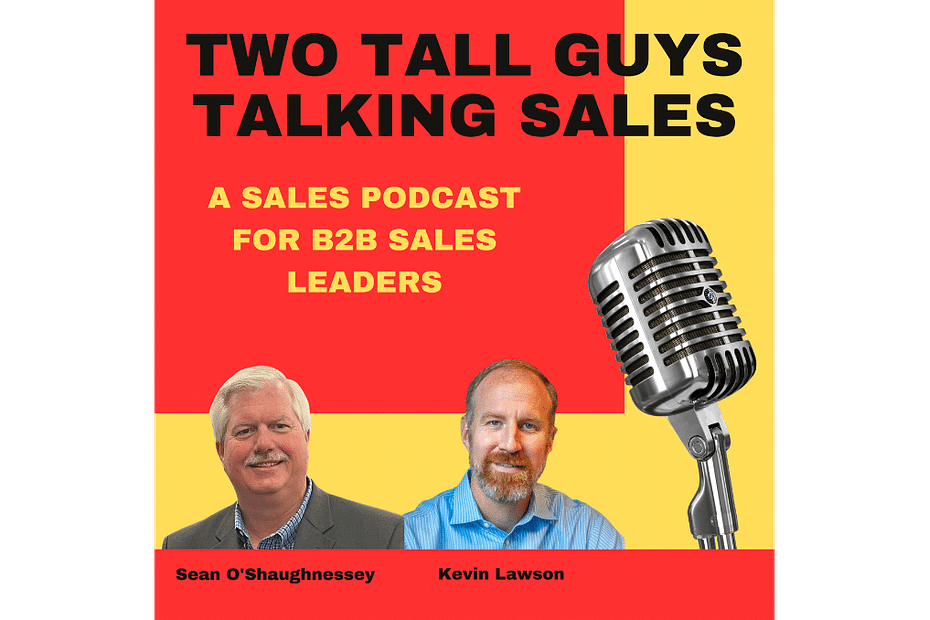
Two Tall Guys Talking Sales – How Sales and Marketing Partnerships Drive Lead Generation and Sales Success – Episode 155

As the year draws to a close, sales leaders and professionals are already looking ahead to the next year. In this episode of Two Tall Guys Talking Sales, hosts Sean O’Shaughnessey and Kevin Lawson dig into the perennial challenge of lead generation, the importance of collaborating with marketing, and why proactive planning is essential for sales success. From refining your messaging to building thought leadership, this conversation is packed with strategies to help you drive revenue generation and sharpen your sales processes.

Key Topics Discussed

  • Why Salespeople Always Say “I Need More Leads” (01:00)
  • The Importance of Partnering with Marketing for Effective Sales Strategies (03:40)
  • Going Beyond Marketing—Referrals, Networking, and Thought Leadership (05:07)
  • Leveraging LinkedIn and Personal Branding to Generate Leads (06:25)
  • The Three Things Every Salesperson Really Sells (09:00)
  • Planning with Intention: Mapping the Next 12 Months for Sales Success (12:57)

Key Quotes

  • Sean O’Shaughnessey (01:48): “You as a salesperson… it’s your job to sit with the marketing people you have and map out the next 12 months of how to get better leads and cover your territory more effectively.”
  • Kevin Lawson (03:40): “Go down the hallway, knock on the door and say, here’s what I’m working on, what are you working on, and how can I help? Be a resource, be a partner to marketing.”
  • Sean O’Shaughnessey (09:24): “There are three things you sell: your product, your company, and—most importantly—you.”
  • Kevin Lawson (13:16): “If you’re only giving 50% effort to your professional practice, you can’t expect championship-level results.”

Additional Resources

  • B2B Sales Lab Community – A peer group for sales professionals to exchange best practices and strengthen their sales management and revenue generation capabilities. Go to https://b2b-sales-lab.com/

A Significant Actionable Item from this Podcast

Schedule a working session with your marketing team this week. Map out the next 12 months of sales and marketing activities, focusing on how you’ll generate leads, build messaging, and increase visibility in your target accounts. Even if it starts with a simple spreadsheet, writing down the plan creates accountability and aligns sales strategies with marketing efforts.

Read the rest of the article…

Two Tall Guys Talking Sales – How to Define Sales Territories for Maximum Revenue Generation – Episode 154

Sales leaders and sales professionals: are your territories setting you up for sales success or holding your team back? 

In this episode, hosts Kevin Lawson and Sean O’Shaughnessey tackle the critical role of defining territories, commission plans, and account strategies. From building fair but effective territories to creating actionable plans that drive revenue generation, this conversation blends sales management insight with practical sales strategies to help you win more consistently and grow with intention.

Key Topics Discussed

  • Defining Territories with Purpose (00:23) – Why intentional design matters more than “spray and pray” selling.
  • Fairness vs. Evenness in Territories (01:27) – Sean explains why territories don’t need to be identical, but they must be logical and fair to prevent turnover.
  • How Salespeople Should Approach New Territories (04:53) – Kevin outlines the mindset and business acumen required to succeed under a new commission plan.
  • Planning Ahead for Sales Success (08:21) – Sean breaks down how early planning impacts Q1 results, revenue management, and long-term sales processes.
  • The Power of Written Territory and Account Plans (12:23) – Kevin explains how documenting your strategies in a CRM enhances value selling and accountability.

Key Quotes

  • Sean O’Shaughnessey (01:10): “When you’re driving down the road, you’re not driving with the mirrors—you’re driving with the windshield. Defining your territory is incredibly important to know where you’re going.”
  • Kevin Lawson (06:00): “A new commission plan is not an indictment of past performance; it’s your executives telling you how and where they want the company to grow.”
  • Kevin Lawson (12:42): “When a plan is written, it’s real. You win more often when your goals and account strategies are captured, documented, and revisited.”

A Significant Actionable Item from this Podcast

Write down your territory and account growth plan before the new year begins. Identify 20 accounts to expand, document the cast of characters (champions, blockers, decision-makers), and map a path to increase revenue generation. Then, enter this plan into your CRM to hold yourself accountable and align with your company’s sales strategies.

Read the rest of the article…

Hiring for Growth: How to Build a Sales Team That Drives Long-Term Success

Building a successful sales team requires more than just filling open seats with available candidates. Company leadership must strategically align its hiring process with business objectives, market needs, and long-term goals. 

Whether you’re a solopreneur transitioning to a team-based approach or a CEO managing a growing sales force, the principles of intentional recruitment and onboarding remain the same. Hiring the right people is an investment in the future of your business.

One of the most common pitfalls in sales hiring is a lack of intentionality. Too often, small businesses hire out of convenience, choosing candidates from their immediate network or taking the first person who seems interested. While this approach may solve an immediate need, it rarely leads to long-term success. 

Hiring a salesperson means selecting someone who can actively drive growth and represent your brand with competence and integrity. The stakes are even higher when you’re working with a lean team; every hire matters, and mediocrity is not an option.

To avoid these missteps, it’s essential to approach hiring with the same rigor you apply to your sales process. Think of recruiting as a parallel to securing a high-value client. Just as you wouldn’t sell your product without qualifying leads or understanding their needs, you shouldn’t hire without a structured process to evaluate candidates. 

Begin by defining what success looks like for the role. What skills and attributes are non-negotiable? What specific outcomes do you expect this person to achieve within their first 90 days? A clear job description and measurable KPIs set the foundation for finding the right fit.

Cultural alignment is another critical factor. Your salespeople are the face of your business to prospects and customers. Their ability to embody your company’s values and mission can make or break the customer experience. A candidate might have a stellar track record, but if their approach clashes with your team’s culture, the partnership is unlikely to succeed. At the same time, skills and experience must align with the specific demands of the role. For instance, if your goal is aggressive market penetration, you need a hunter mentality, someone skilled in building relationships from scratch and closing deals in uncharted territory.

Read the rest of the article…

From Manual to Automated: A Sales Pro’s Guide to Zapier, Make.com, n8n, and Pipedream

A sales manager recently told me something that stuck: “We went from twenty hours per week of manual work to two hours. Our lead response time dropped from four hours to four minutes.” That dramatic transformation wasn’t magic—it was automation. The reality is that sales teams today have more automation tools available than ever before. But with options like Zapier, Make.com, n8n, and Pipedream, the real challenge isn’t whether you should automate—it’s choosing the right… 

Transforming Quota-Setting: Strategies for Sales Leaders to Optimize Performance and Revenue

Quota-setting is one of the most misunderstood elements of sales leadership. Too often, it’s treated as a spreadsheet exercise or a top-down directive, rather than a strategic lever that drives behavior, performance, and growth.

Whether you’re leading a team of 20 or you’re the founder managing three reps, how you define quotas has a direct impact on your revenue trajectory and your team’s motivation.

So, where do you start?

With timing. If you’re not delivering quotas to your team until February or March, you’re already behind. Salespeople need clarity by December. That gives them runway to plan, prioritize, and hit the ground running in January. Delayed quotas create confusion and stall momentum. To achieve a strong Q1, you need to equip your team early.

Quota-setting varies depending on the size of your company. Larger teams offer more flexibility. With 10 or more reps, you can spread risk, balance performance, and model averages. You’ll have top performers who consistently overdeliver, alongside newer reps who are still ramping up. The law of averages works in your favor. You can afford some variance. Smaller teams don’t have that luxury.

When you’re running a small team, maybe two or three reps or founder-led sales, every individual matters. One person missing quota can tank your number.

You can’t rely on averages. You need precision.

That means tying quotas to actual relationships, known opportunities, and real probability. It’s not about slicing up a target evenly. It’s about assigning numbers based on what’s realistically achievable in each territory or account list.

Territory design plays a big role here. Whether it’s geographic, vertical, or named accounts, quota must reflect the market potential. You can’t expect equal performance from unequal opportunity. If Rep A has 500 viable accounts and Rep B has 50, their quotas shouldn’t look the same unless you have data that says Rep B’s accounts are closer to your Ideal Client Profile. Use available market data to inform the number. Don’t assign quotas in a vacuum. 

In larger organizations, quotas often originate from the top down, typically from finance. The CEO and CFO commit a growth number to the board, investors, or in public filings to the SEC. They have no choice but to pass it down. It’s not uncommon for the sales team to receive the number without context. That’s a problem. If you’re in a leadership role, you need to pressure test that number. Can your team realistically hit it? If not, what additional resources are required?

  • More headcount?
  • Better enablement?
  • Marketing support?

In large organizations where the quota is driven by investor expectations, the VP of Sales must establish an organization well before the new year that achieves this year’s goal, while also meeting the expectation of growth for the next year. Planning ahead, sometimes years in advance, is part of the job.

Read the rest of the article…

Two Tall Guys Talking Sales – No Leads, No Problem: Sales Strategies to Reignite Momentum – Episode 148

When your sales pipeline hits a wall—or worse, goes completely flat—it can feel like you’re spinning your wheels. In this episode of Two Tall Guys Talking Sales, hosts Kevin Lawson and Sean O’Shaughnessey dive deep into what to do when your sales team is facing a revenue generation stall. This is a fast-paced, actionable conversation focused entirely on what sales leaders can do to recharge a stalled pipeline—without relying on marketing. Whether you’re in B2B…