Skip to content

annual planning

What An MBA Didn’t Teach You About Sales

The sales profession is challenging. You need to work hard at it to succeed. You need to learn from the best. You need to improve your skills continuously. If you think you can sell since you are a hit at parties and have a lot of friends, you may soon find that you are a failure as a salesperson. Blunt truth:

because the sales profession is so hard, you have to focus on doing everything in sales very well, or you will be considered a failure.

I call this blog, Skinned Knees because I try to relate all of the learning that I have done over the past 4+ decades (while skinning my knees in the learning process).

I hope that you learn from my mistakes so that your business will grow!


Compelling Events: Shorten Sales Cycles & Improve Forecasts

Deals move when the buyer’s business calendar forces a decision.

A real compelling event is the operating discipline that separates pipeline from possibility. It gives urgency a business reason, attaches dates to consequences, and forces both sides to decide whether the opportunity deserves serious time, resources, and executive attention.

Many salespeople confuse need with urgency. That mistake creates bloated forecasts, stalled proposals, and too many “just checking in” follow-ups. A prospect can have a real need and still have no reason to act now. They may need

  • better integrations,
  • stronger reporting,
  • reduced churn,
  • tighter compliance,
  • faster workflows,
  • a cleaner technology stack.

Those needs matter, but they can live on a roadmap indefinitely.

A compelling event changes the conversation because something meaningful happens by a specific date.

  • An audit is scheduled.
  • A contract expires.
  • A board commitment has been made.
  • A market launch is tied to revenue.
  • A facility lease ends.
  • A regulatory requirement becomes enforceable.
  • A major customer is at risk.

These events create pressure because delays have consequences beyond the buying team’s preferences.

That is the standard. A compelling event has a date, an owner, and a consequence.

The Difference Between Interest and Commitment

Interest sounds productive in a sales conversation. Commitment behaves differently.

Interested buyers will schedule meetings, request demos, review capabilities, and discuss future-state improvements. Committed buyers will help you understand the decision path, expose internal constraints, validate timing, and clarify what happens if the outcome is missed.

The difference matters because your forecast depends on the customer’s decision reality, not your sales activity.

A compelling event gives you that reality. It tells you why the buyer is engaged now, who owns the risk, what business outcome must be protected, and which internal processes must be navigated to get there. Without that clarity, the opportunity may still be real, but it should be treated as unproven.

Sales leaders should inspect this with discipline. “They are excited” is not a compelling event. “Budget season” is not enough. “They want to modernize” is too soft. The better question is: what changed in their business that makes inaction costly?

That question protects your time and the buyer’s time.

Read the rest of the article…
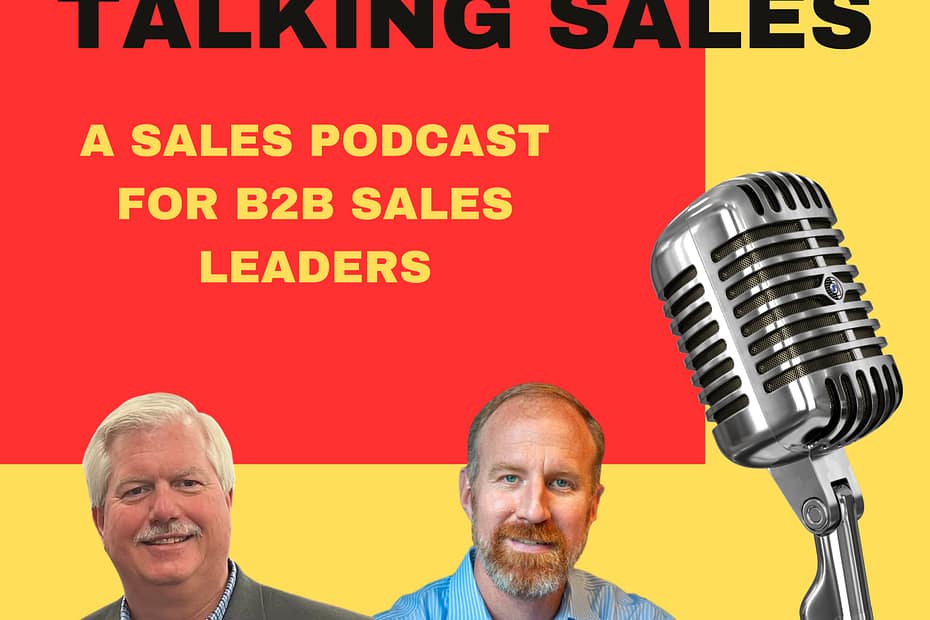

Two Tall Guys Talking Sales Podcast – A Roadmap for Successful Sales: Strategy, Tactics and More – Episode 36

In this dynamic episode of the “Two Tall Guys Talking Sales” podcast, hosts Kevin Lawson and Sean O’Shaughnessey, delve into the importance of strategy in successful sales performance. Using a navigational analogy, the hosts discuss how just like using an app like Waze, successful sales also requires anticipation and understanding of the challenges on the way. Drawing parallels between navigation and sales, Kevin and Sean underscore the value of proactive strategic planning. From the importance… 

Determining Your Company’s Sales Objectives Each Year

As a company owner, one of the most important aspects of running a successful business is setting and achieving sales objectives. But how do you determine what those objectives should be? Here’s a step-by-step guide to help you set realistic and achievable sales goals for your business.

Sales objectives are goals a company sets for its sales team to achieve over a certain period. These objectives can be anything from increasing revenue by a certain percentage to selling a certain number of products or services. Sales objectives should be set annually, but they can also be set for shorter periods such as quarters or months.

Let’s talk about the basic steps first.

  1. Define your overall goal.
  2. Break down your overall goal into smaller, more manageable goals.
  3. Create a timeline for each goal.
  4. Assign responsibility for each goal to a specific team member or department.
  5. Measure progress and revise objectives as needed.
  6. Celebrate accomplishments and learn from failures.
  7. Define your overall goal.

Sales goals are essential for any company regardless of size. They give you a target to aim for and help to motivate your sales team. Without a goal, getting complacent and falling into bad habits is easy.

It’s essential to clearly understand your company’s sales process before setting a goal. You need to know your closing rate, average deal size, and how many leads you need to generate to hit your target. Once you have this information, you can start to play around with different numbers to see what’s realistic.

Read the rest of the article…