Skip to content

coach

What An MBA Didn’t Teach You About Sales

The sales profession is challenging. You need to work hard at it to succeed. You need to learn from the best. You need to improve your skills continuously. If you think you can sell since you are a hit at parties and have a lot of friends, you may soon find that you are a failure as a salesperson. Blunt truth:

because the sales profession is so hard, you have to focus on doing everything in sales very well, or you will be considered a failure.

I call this blog, Skinned Knees because I try to relate all of the learning that I have done over the past 4+ decades (while skinning my knees in the learning process).

I hope that you learn from my mistakes so that your business will grow!


Leadership Styles Differ Based on the Situation: Sales Growth vs. Sales Recovery 

By Sean O’Shaughnessey & Kevin Lawson

As B2B-focused businesses navigate the ever-changing landscape of a post-COVID economy, sales leaders must adopt and institute strategies to meet the demands of a business in growth or recovery mode. 

While the goal for a sales organization may be to sustain the growth trajectory aligned with organizational goals, the year-over-year approach to achieving success can vary significantly. Sales leadership styles depend on the current situation, the starting point, and the existing team charged to accomplish the goal. Good sales leaders find a way to achieve the annual goal; great sales leaders find ways to achieve the goal and systemize the process to allow for repeatable growth, pivots, and rapid scale.      

Growth Focused Leadership

Sales leaders focused on growth must proactively identify new market opportunities, verticals, geographies, platforms, or sales talent. They must invest in new sales channels and technologies, along with onboarding and training programs to support the growth of their sales teams and the acquisition of new client relationships.

When sales teams are in a breakout stage of growth, it can be challenging to gain the discipline to systems and alignment on processes and approaches due to the nature of managing client expectations on a wildly rising revenue outlook. This situation demands that all of the skills of a sales leader be applied consistently and strategically across the team and sales practices.  

Seasoned leaders know that hiring for an increased workload and rapidly scaling teams can be tempting. However, this approach can often lead to problems down the line. Further, we must suppress the desire to hire quickly instead of exercising patience in finding the right candidate to continue to scale teams and culture appropriately. That patience means we must endure the short-term challenges of being under-resourced and under a great deal of pressure to keep performing as if we already had the resources on the team.  Instead, it is essential to focus on finding the right candidate who will not only be able to handle the current workload but also contribute to your team’s culture and help your organization achieve long-term success. Take the time to vet candidates carefully and consider not only their skills and experience but also their values and how they fit into your team’s dynamic. By prioritizing quality over speed, you’ll set your team up for success in the long run.

Another important consideration when building a team is to prioritize scalability. It’s easy to get caught up in your organization’s immediate needs and hire for the present moment, but it’s crucial to think about how your team will grow and evolve. Look for candidates with the potential to take on new responsibilities and leadership roles as your organization expands. Consider investing in training and professional development programs to help your team members acquire new skills and stay up-to-date with the latest industry trends. By prioritizing scalability, you’ll be better equipped to adapt to changing business needs and continue to achieve success over the long term.

Discipline to proven systems is essential for leadership and having transparent KPIs and organizational goal communications. The rigor and discipline of a sales leader in a growth cycle are particularly demanding. One primary concern for leaders in this mode is talent loss due to competitive pressures to grab your resources for their growth. It would help if you had experience and discipline for these growth moments.

Read the rest of the article…
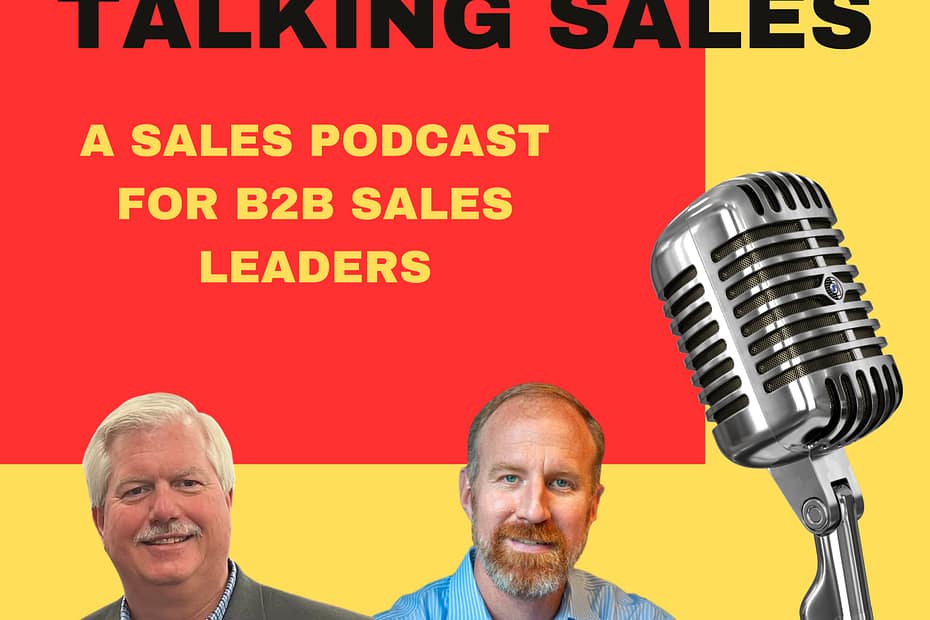
Two Tall Guys Talking Sales Podcast – Part 2 – Building and Scaling Successful Sales Teams: A Conversation with Tim Warren of Helium SEO – Episode 28

In this podcast, Tim Warren, CEO of Helium-SEO, discusses his approach to handling difficult situations in a sales environment. He emphasizes the importance of coaching opportunities and scaling through challenges or problems with existing salespeople. Tim shares his approach to handling a situation where an account manager did not provide the level of service they were supposed to, causing a client to feel that the service level had dropped. He stresses the importance of being… 

Unlocking Your Company’s Potential: The Power of a Strong Sales Organization in Driving Revenue Growth and Boosting Valuation

A strong sales organization is the cornerstone of any successful business. The sales team serves as the company’s lifeblood, driving revenue growth and ensuring long-term financial stability. When a company prepares for a merger, acquisition, or public offering, having a strong sales team can translate into a higher valuation. 

A strong sales organization is the backbone of a thriving business, as it directly impacts revenue generation. When a company’s sales team is well-organized, well-trained, and motivated, they become more effective in closing deals and fostering relationships with clients. This increased effectiveness leads to more sales, ultimately resulting in higher revenues and profits for the company.

By investing in a strong sales organization, businesses can capitalize on opportunities and achieve maximum value. The best sales organizations have a proven track record of success. These teams have established a consistent sales process, streamlined communication channels, and aligned with the company’s overall business goals.

A successful sales team is crucial for driving revenue growth. The following factors contribute to a sales organization’s ability to increase revenues and profits:

  1. A clear sales strategy
  2. A process-oriented approach
  3. High-quality sales training and coaching
Read the rest of the article…

Two Tall Guys Talking Sales Podcast – Building and Scaling Successful Sales Teams: A Conversation with Tim Warren of Helium SEO – Episode 27

In this podcast, Kevin and Sean talk to Tim Warren, the founder, and CEO of Helium SEO. Tim talks about his background and how he got into sales. He discusses his experience building technical engineering-focused SEO and SEM campaigns for mid-size and enterprise clients. He also explains how his company has been able to drive higher ROI for its clients. Tim shares his leadership journey as a sales leader and how he has learned that… 

How Small Businesses Can Compete with Larger Competitors Using the Fragment Sales Strategy

Small businesses often find themselves at a disadvantage when competing with larger, well-established companies. However, they can still succeed. It requires them to think creatively and strategically and to develop unique approaches to win customers over. One approach small businesses can take is implementing the Fragment Sales Strategy. This approach is advantageous when small companies find themselves in David vs. Goliath-type sales campaigns, going up against larger competitors with more resources, references, and success stories.… 

March Madness Teaches Us Great Coaching Techniques

March Madness teaches us great coaching techniques Posts Subscribe March Madness teaches us great coaching techniques Published: Tue, 03/14/23 I hope that you enjoy my latest newsletter View the online version of this email. It is time for March Madness! I hope that your favorite team wins. In addition to doing a bracket pick, you may want to consider supporting a charity. Two of my adult children do a squares-based (i.e., total luck – no… 

Are You A Player, Or A Coach?

March brings March Madness. March Madness is the college basketball tournament where the 64 teams battle to find out who is the best college basketball team of the season.

While you are watching your team this year, I would like you to learn a lesson that every basketball coach has had to learn. The easiest way to learn this lesson is to do a little analysis. I would like you to count the number of times where the game is tight, one team is on the free-throw line, and the coach makes a substitution – himself.

Yes, count the number of times the coach doesn’t trust the player he has been coaching all season and puts himself on the line to make that winning shot.

I can already tell you the number: zero.

During a game, the coach can rant, rave, coach, and cajole but he cannot play the game. He has to trust that the athletes that he has coached all season will take his instruction, remember the skills that they have practiced, and execute those plays as they were taught.

This doesn’t happen in sales. It is almost commonplace for the coach (the sales manager) to step in and drive the conversation. He puts his athlete, whom he has been coaching perhaps for years, on the bench. 

So, let’s explore what would happen if suddenly you were required to stay on the sidelines while you watched your salespeople sell and it was impossible for you to take over the sale.

Read the rest of the article…