Skip to content

expertise

What An MBA Didn’t Teach You About Sales

The sales profession is challenging. You need to work hard at it to succeed. You need to learn from the best. You need to improve your skills continuously. If you think you can sell since you are a hit at parties and have a lot of friends, you may soon find that you are a failure as a salesperson. Blunt truth:

because the sales profession is so hard, you have to focus on doing everything in sales very well, or you will be considered a failure.

I call this blog, Skinned Knees because I try to relate all of the learning that I have done over the past 4+ decades (while skinning my knees in the learning process).

I hope that you learn from my mistakes so that your business will grow!


Stop Betting on Superstars: How Operating Standards Turn Sellers into Predictable Producers

Many teams grow, but few truly scale revenue beyond individual hero efforts. That difference changes everything for leaders today and in the future. Growth relies on hustle; scaling depends on repeatability across segments and individuals. Your strategy must reflect that hard truth in practice.

Are you relying on one standout to win deals month after month? That looks strong until risk turns visible and costly. One resignation can cripple momentum and expose brittle systems that you had previously ignored.

Scalable sales replaces heroics with defined, teachable operating rhythms that everyone follows. It turns chaos into predictable pipeline progress and results. It clarifies markets, messages, motions, and measurable expectations for every seller on a weekly basis. It builds leverage into onboarding and coaching for consistency. It protects margins while systematically accelerating win rates and velocity across territories.

The foundation begins with a clear picture of your ideal customer, including any disqualifying factors. Having an accurate Ideal Client Profile (ICP) helps minimize waste and reduce uncertainty in your efforts. Take time to define firmographics, pain points, triggers, and buying behaviors using consistent language based on shared evidence. Understand who cares about these issues and why it matters to them now. Also, identify negative personas to sharpen your focus and qualification processes in marketing and sales. A well-defined ICP can significantly boost your conversion rates and shorten the sales cycle.

Next, turn your ICP into straightforward messaging and discovery frameworks tailored for each stage. Consider what unique problems you solve for your customers. What outcomes are most important to them, and who are the key stakeholders by role and priority?

Build talk tracks that lead buyers, not chase buyers with purpose always. Anchor questions to the business metrics and risks they feel. Teach a qualification that tests mutual commitment and outlines next steps with attached dates. Avoid fluffy demos; design relevant proofs using their data. Process specificity turns B players into consistent producers without copying another personality.

I suggest you establish a practical, stage-based operating rhythm that everyone can easily understand and follow. By sharing clear definitions and expectations, managing the pipeline becomes a consistent and smooth process each week. Define each stage with specific exit criteria—avoiding vague intentions or subjective feelings. For example, discovery is considered complete when stakeholders confirm the consequences and impact, and solution fit is achieved when success criteria and ownership are clearly aligned. The commit stage should be backed by a shared plan with clear dates and assigned owners. During weekly reviews, focus on assessing quality rather than just quantity or activity counts. Ask yourself:

  • Does evidence from buyers’ backstage moves have a direct impact on their purchasing decisions?
  • Are the next steps specific, mutually agreed upon, and already scheduled on both calendars?
Read the rest of the article…

Differentiating Through Value: Mastering the Art of Consumable Sales

Navigating the competitive landscape of consumable sales calls for a thoughtful and kind-hearted approach. Salespeople, sales managers, and CEOs of small companies should remember that their role is about more than just making transactions. In a market where products often seem very alike in quality and price, what truly sets you apart is your ability to consistently show value. So, how can you create lasting relationships with your customers, even when many options are available?

Consider the analogy of fast-food giants like Burger King and McDonald’s. Both offer similar products, yet they each have a dedicated customer base. The key lies in creating a unique selling proposition that resonates with your target audience. 

As a salesperson, your goal is to become indispensable to your customers. This means transforming from a mere vendor to a trusted advisor who is deeply integrated into the customer’s business operations.

Become Part of Their Team

A critical part of this integration is understanding what a “gatherer” is. A gatherer is more than just an account manager. They build a close, almost inseparable bond with the customer. They become a trusted part of the customer’s team, often turning to them for advice and solving problems together. Building this kind of trust requires a genuine understanding of the customer’s business, enabling you to offer insights and solutions that extend beyond the products you provide.

In the realm of consumable sales, where products are used and replaced regularly, the salesperson’s value lies in their ability to maintain and continually grow the relationship. This involves not just selling a product but also selling yourself and your company. Your expertise, reliability, and ability to anticipate and solve problems become the key differentiators. When customers face challenges, they should instinctively think of you as the go-to person for solutions, regardless of minor price differences or delivery times.

To attain this trusted advisor status, you must focus on three core elements: 

  1. the product, 
  2. the company, 
  3. yourself. 

While the product and the company are essential, the most significant value often comes from you as the salesperson. Your ability to understand the prospect’s needs, guide their purchasing decisions, and challenge them to think differently about their business can set you apart from the competition.

Read the rest of the article…

Sales Management with AI: Chat Interfaces vs. Automation Workflows

Sales organizations today face a critical decision: should they rely on interactive chat interfaces like ChatGPT, Claude, or Gemini, or should they focus on automation workflows? The answer isn’t either/or. Each approach has unique strengths, and choosing the right one directly impacts sales processes, productivity, and revenue generation.

The problem many sales teams encounter is “random implementation.” They hear about a new AI tool, adopt it quickly, and use it for the wrong purpose. The result? Chat interfaces get bogged down with repetitive work, and automation gets tasked with jobs that require creativity and nuance. Misuse not only reduces efficiency but also frustrates teams and erodes trust in artificial intelligence altogether.

So how do you know when chat is the right fit? The decision comes down to task complexity and uniqueness. Chat excels in situations that require creativity, flexibility, and human judgment. Four categories consistently stand out:

  • Creative and strategic tasks: proposals, executive messaging, strategic planning, and competitive positioning.
  • Complex problem-solving: sales opportunity strategy sessions, unique customer needs, and crisis management.
  • Learning and development: role-playing objection handling, skill coaching, and competitive intelligence training.
  • Research and analysis: prospect research, market analysis, and strategic planning.
Read the rest of the article…

Transform Your Sales Team: Strategic Compensation Adjustments for Year-End Momentum

Autumn is the time of year for sales leaders, managers, and CEOs to begin laying the groundwork for next year’s success. Have you considered how your current sales compensation plans impact your team’s motivation and productivity? Now is the ideal moment to evaluate, adjust, and deliver these plans, preferably by December 1st. Doing so can significantly influence your team’s drive to close deals in December and build momentum heading into the next fiscal year.

Sales compensation should be motivating and rewarding for employees. It directly shapes your sales team’s behaviors and priorities. An effective plan incentivizes the right actions and deters the wrong ones.

Consider a common pitfall: salespeople holding back deals to inflate their numbers for the following year. Does your current compensation structure inadvertently reward this practice? If so, you’re unintentionally harming your year-end results.

To counter this, strategically incorporate compensation escalators and cliffs into your plan. Escalators progressively reward increased sales performance throughout the year. Higher performance equals higher commission rates, driving your sales team to push forward continually. 

Commission cliffs reset commission rates at the beginning of each year, creating a sense of urgency to close deals before the end of December. Communicating these compensation details clearly by early December ensures your team understands what’s at stake.

Don’t hold your team back!

Another critical compensation consideration is eliminating commission caps. While some organizations cap commissions to control expenses, this practice can backfire dramatically. Caps tell your top-performing salespeople that their exceptional efforts are neither valued nor rewarded appropriately. This demotivates your top talent and encourages them to seek opportunities elsewhere that offer uncapped rewards. 

Removing commission caps signals that the organization fully supports and rewards outstanding performance. Have you considered how much growth your company might achieve if artificial constraints didn’t limit your sales team?

When evaluating compensation, look beyond simple cost containment. Consider the true profitability of incentivizing increased sales volume. Once salespeople reach their targets and enter accelerators, each additional dollar earned typically comes at a lower incremental cost to your organization. 

Sales transactions earlier in the year have already covered the salesperson’s base salary once they have met their annual quota. In fact, at 100% of quota, the salesperson should have covered all their costs and their share of the overall company’s revenue needs. Thus, every extra sale at escalated commission rates still contributes positively to your overall profitability. 

Read the rest of the article…

Mastering Sales Channels: How to Align Your Strategy for Maximum Impact

Understanding the dynamics of sales channels can transform how businesses approach their markets. Many sales professionals, whether they are salespeople, managers, or CEOs, often miss a critical distinction: the difference between the product they are selling and the value it provides. 

This gap in understanding can lead to suboptimal sales performance, particularly in environments where products are sold through intermediaries, such as distributors, referral partners, or dealer networks. The challenge is not just about knowing your product, but also about understanding how to position it in a way that resonates with every player in the sales chain.

Sales success starts with recognizing who your true customer is. In sales management or channel sales, the end customer is often not the person you interact with directly. Instead, your “customer” might be the intermediary, your distributor, reseller, or even your own sales team. These intermediaries are the ones who ultimately connect your product to its final user. If you don’t understand their challenges, motivations, and context, you risk failing to equip them with the necessary tools to succeed. Are you selling a product’s features, or are you helping them understand how to sell it effectively? This distinction is vital.

When selling through intermediaries, the emphasis should shift from “what the product does” to “how the product can be sold.” Your distributors or referral partners don’t need every technical detail of your product. They need clarity on how it solves problems for their customers, how it fits into their existing offerings, and how they can position it to drive sales. 

The goal is not to overwhelm your partners with information but to provide actionable insights that align with their specific needs. If you’re focusing solely on product features, you’re likely missing the mark.

Salespeople and sales managers must also recognize the game they are playing. Are you selling a commodity, a widely available product, or an exclusive offering? Each scenario demands a different strategy. 

Commodities often compete on price, necessitating bulk sales or value-added services to differentiate themselves. Widely available products often rely on relationships, service quality, or unique add-ons to differentiate themselves. Exclusive products, on the other hand, can often avoid price wars by emphasizing their uniqueness and superior quality. Knowing which game you’re in allows you to tailor your approach and avoid misaligned strategies.

For small businesses and solopreneurs, the challenge lies in effectively managing referral partners. Referral partnerships are a powerful way to generate leads, but they require careful management and oversight. 

Read the rest of the article…

AI Isn’t Replacing Salespeople, It’s Giving Them a Competitive Edge

AI isn’t replacing salespeople, it’s making them more effective. The real risk isn’t losing your job to AI; it’s losing to a competitor who uses AI better than you do. Sales professionals who integrate AI into their workflow will outperform those who don’t. 

It’s not about technology taking over but about using technology to gain an edge. The market is becoming increasingly competitive, and the most efficient salespeople will emerge victorious.

Time is a salesperson’s most valuable asset. 

Every minute spent on administrative tasks is a minute not spent selling. AI helps reclaim those lost hours. Tools that automate writing, scheduling, and research allow salespeople to focus on what matters: building relationships and closing deals. If you’re not leveraging AI to increase productivity, you’re leaving opportunities on the table.

Sales emails need to be clear and professional. AI-powered writing assistants ensure your messages are polished and effective. A poorly written email can cost you a deal. AI tools catch grammatical mistakes, improve clarity, and even suggest more effective phrasing. This isn’t just about looking professional; it’s about being understood. 

If your message isn’t clear, it won’t convert.

Presentations are another time-consuming task. AI can generate professional decks in minutes. Instead of spending hours designing slides, salespeople can focus on developing effective strategies. AI-powered tools create branded, structured presentations based on simple inputs. This ensures consistency while saving time. Sales professionals who utilize AI for presentations can focus on delivering insights rather than formatting slides.

CRM systems are the backbone of sales operations. AI enhances CRM by automating data entry, tracking customer interactions, and suggesting next steps. Salespeople often struggle with keeping CRM data updated. AI reduces this friction by automatically capturing and organizing information. A well-maintained CRM leads to better forecasting and stronger customer relationships. 

If your CRM doesn’t have AI capabilities, it’s time to upgrade.

AI-driven insights enable sales managers to make more informed decisions, rather than relying on instinct. Managers can use AI to analyze performance trends, identify coaching opportunities, and predict revenue outcomes. AI doesn’t replace leadership; it enhances it. 

Sales managers who adopt AI can build stronger teams and achieve better results. Ignoring AI in sales management is a strategic mistake.

Lead generation is another area where AI adds value. AI-powered tools can analyze vast amounts of data to identify high-potential prospects. Instead of spending hours researching leads, salespeople can receive AI-generated recommendations. This allows for more targeted outreach and higher conversion rates. AI doesn’t just find leads, it finds the right leads.

Sales follow-up is often inconsistent. AI ensures follow-ups happen at the right time with the right message. Automated reminders and AI-generated responses keep deals moving forward. 

A well-timed follow-up can be the difference between closing a deal and losing it. AI helps salespeople stay on top of their pipeline without relying on memory.

Read the rest of the article…

From Manual to Automated: A Sales Pro’s Guide to Zapier, Make.com, n8n, and Pipedream

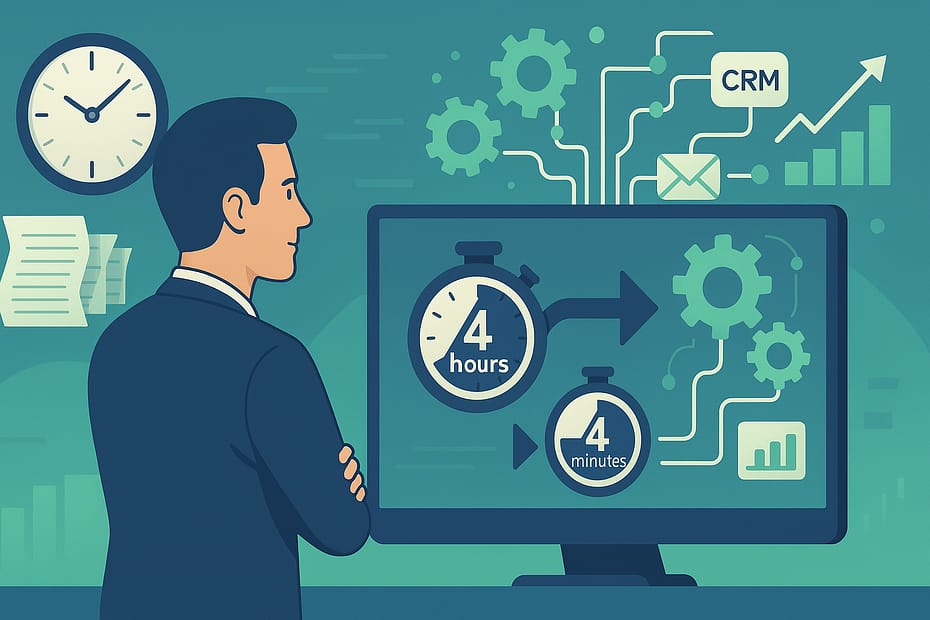
A sales manager recently told me something that stuck: “We went from twenty hours per week of manual work to two hours. Our lead response time dropped from four hours to four minutes.” That dramatic transformation wasn’t magic—it was automation. The reality is that sales teams today have more automation tools available than ever before. But with options like Zapier, Make.com, n8n, and Pipedream, the real challenge isn’t whether you should automate—it’s choosing the right… From Manual to Automated: A Sales Pro’s Guide to Zapier, Make.com, n8n, and Pipedream

Two Tall Guys Talking Sales – Future-Proofing Your Sales Career with AI, Strategy, and Smarter Workflows – Episode 144

Is artificial intelligence coming for your sales job? Not if you understand the power of business acumen, value selling, and strategic adoption of tools that amplify, not replace, human expertise. In this high-impact episode of Two Tall Guys Talking Sales, Kevin and Sean tackle the loud claims of AI-induced layoffs with a grounded, practical message for salespeople and sales managers: evolve or fall behind. This is not a doomsday episode; it’s a wake-up call, a… Two Tall Guys Talking Sales – Future-Proofing Your Sales Career with AI, Strategy, and Smarter Workflows – Episode 144

Two Tall Guys Talking Sales – John McLeod Explains How to Avoid the AI Trap: Using New Tools Without Losing Your Sales Message – Episode 140

In this episode of Two Tall Guys Talking Sales, hosts Kevin Lawson and Sean O’Shaughnessey are joined by veteran fractional VP of Sales, John McLeod. Together, they dive into a critical topic for today’s sales leaders: embracing artificial intelligence tools without compromising your value proposition, messaging, or sales processes. John brings deep expertise in sales management, business acumen, and revenue generation strategies, offering a measured approach to evaluating sales tech, especially AI solutions, through a… Two Tall Guys Talking Sales – John McLeod Explains How to Avoid the AI Trap: Using New Tools Without Losing Your Sales Message – Episode 140

Two Tall Guys Talking Sales – Mastering Sales Hiring with John Lee – Sales Management Insights for Growth-Focused Teams – Episode 138

In this week’s episode of Two Tall Guys Talking Sales, Kevin Lawson and Sean O’Shaughnessey are joined by the “Elder Statesman” of fractional sales management: John Lee. With nearly four decades of experience and a deep track record of helping companies hire top-performing sales professionals, John shares a masterclass in sales hiring strategy. Whether you’re scaling from a two-person team to ten or trying to avoid costly hiring mistakes, this episode delivers practical, field-tested advice… Two Tall Guys Talking Sales – Mastering Sales Hiring with John Lee – Sales Management Insights for Growth-Focused Teams – Episode 138