Skip to content

Prospecting

What An MBA Didn’t Teach You About Sales

The sales profession is challenging. You need to work hard at it to succeed. You need to learn from the best. You need to improve your skills continuously. If you think you can sell since you are a hit at parties and have a lot of friends, you may soon find that you are a failure as a salesperson. Blunt truth:

because the sales profession is so hard, you have to focus on doing everything in sales very well, or you will be considered a failure.

I call this blog, Skinned Knees because I try to relate all of the learning that I have done over the past 4+ decades (while skinning my knees in the learning process).

I hope that you learn from my mistakes so that your business will grow!


Hiring for Growth: How to Build a Sales Team That Drives Long-Term Success

Building a successful sales team requires more than just filling open seats with available candidates. Company leadership must strategically align its hiring process with business objectives, market needs, and long-term goals. 

Whether you’re a solopreneur transitioning to a team-based approach or a CEO managing a growing sales force, the principles of intentional recruitment and onboarding remain the same. Hiring the right people is an investment in the future of your business.

One of the most common pitfalls in sales hiring is a lack of intentionality. Too often, small businesses hire out of convenience, choosing candidates from their immediate network or taking the first person who seems interested. While this approach may solve an immediate need, it rarely leads to long-term success. 

Hiring a salesperson means selecting someone who can actively drive growth and represent your brand with competence and integrity. The stakes are even higher when you’re working with a lean team; every hire matters, and mediocrity is not an option.

To avoid these missteps, it’s essential to approach hiring with the same rigor you apply to your sales process. Think of recruiting as a parallel to securing a high-value client. Just as you wouldn’t sell your product without qualifying leads or understanding their needs, you shouldn’t hire without a structured process to evaluate candidates. 

Begin by defining what success looks like for the role. What skills and attributes are non-negotiable? What specific outcomes do you expect this person to achieve within their first 90 days? A clear job description and measurable KPIs set the foundation for finding the right fit.

Cultural alignment is another critical factor. Your salespeople are the face of your business to prospects and customers. Their ability to embody your company’s values and mission can make or break the customer experience. A candidate might have a stellar track record, but if their approach clashes with your team’s culture, the partnership is unlikely to succeed. At the same time, skills and experience must align with the specific demands of the role. For instance, if your goal is aggressive market penetration, you need a hunter mentality, someone skilled in building relationships from scratch and closing deals in uncharted territory.

Read the rest of the article…

ChatGPT vs. Claude vs. Gemini vs. Copilot: Which AI Wins in Sales?

A few days ago, a sales manager asked me which AI platform to use for writing cold emails. I told him it depends on what kind of emails he’s writing, and he looked confused. That confusion is common and costly. ChatGPT, Claude, Gemini, and Copilot all look similar at first glance, but in reality, they serve very different purposes depending on your sales workflow. Choosing the right platform matters because the wrong choice drains time,… 

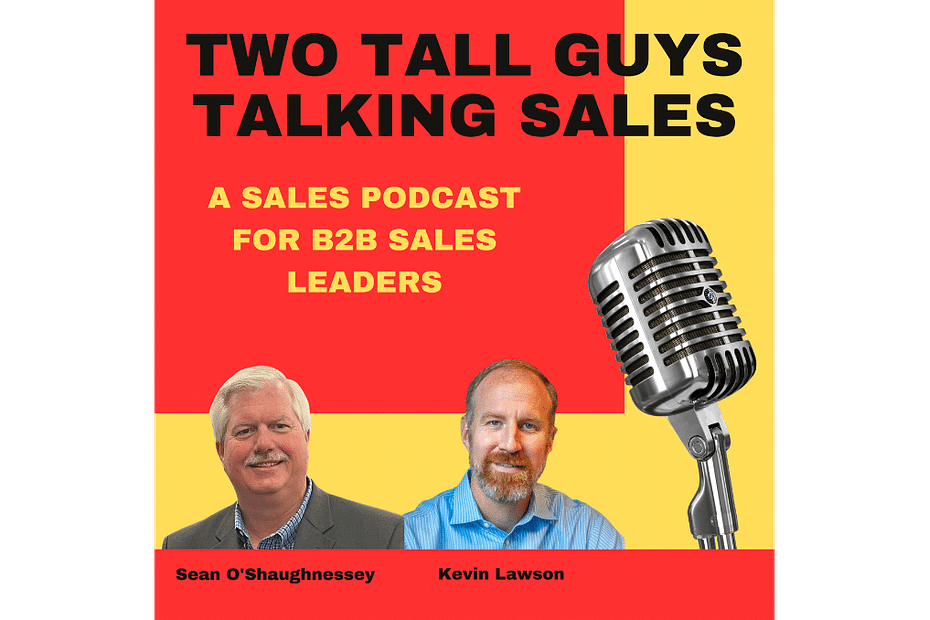
Two Tall Guys Talking Sales – No Leads, No Problem: Sales Strategies to Reignite Momentum – Episode 148

When your sales pipeline hits a wall—or worse, goes completely flat—it can feel like you’re spinning your wheels. In this episode of Two Tall Guys Talking Sales, hosts Kevin Lawson and Sean O’Shaughnessey dive deep into what to do when your sales team is facing a revenue generation stall. This is a fast-paced, actionable conversation focused entirely on what sales leaders can do to recharge a stalled pipeline—without relying on marketing. Whether you’re in B2B… 

AI in B2B Sales Isn’t Optional Anymore

Several months ago, I was serving as a fractional VP of Sales for a $50 million manufacturing company. Their top salesperson was a 15-year veteran who knew the industry inside and out. Yet he was consistently being outsold by a competitor’s much newer hire. At first, it didn’t make sense until we discovered the reason. The competitor’s rep wasn’t just more energetic or aggressive. They were AI-enabled. While my client’s rep was manually scrolling LinkedIn… 

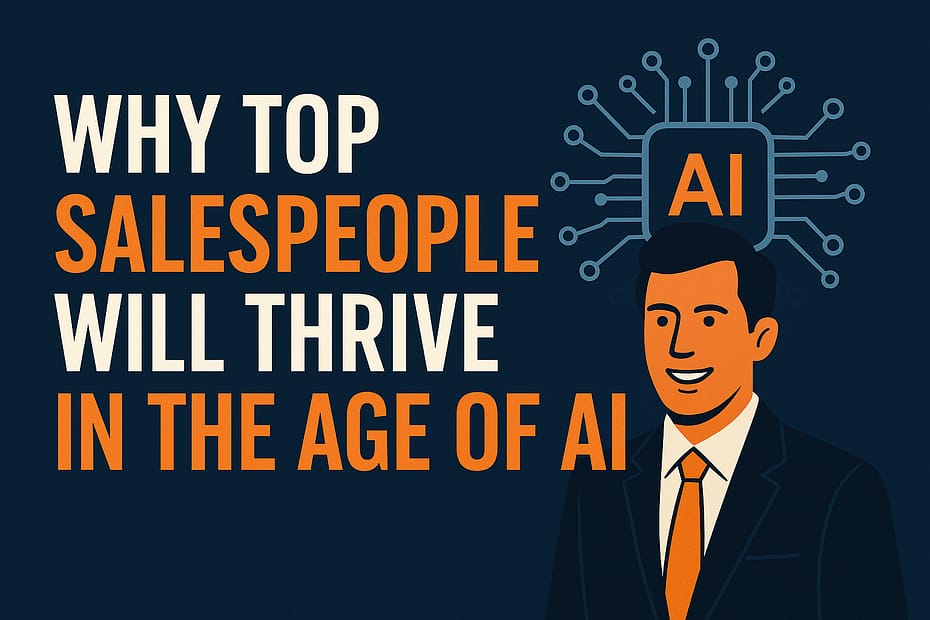
B2B Sales in the Age of AI: Why Top Salespeople Will Thrive While the Repetitive Roles Disappear

The buzz surrounding artificial intelligence has left many professionals wondering about the future of their careers. For B2B sales professionals, the rise of AI presents a fundamental question: Will AI replace salespeople?

The short answer is no, but it will replace some of their work. More accurately, AI will redefine the B2B sales landscape by eliminating lower-value activities, consolidating support roles, and enhancing the capabilities of top performers. In doing so, it will widen the gap between average and great salespeople.

Several years ago, I wrote a similar explanation about the fear that “the internet” would replace salespeople. That didn’t happen. You can find that article on the blog that supports my first sales book. Are salespeople necessary in the Internet age?

This blog post explores how B2B sales is positioned relative to AI disruption, referencing key insights from Benjamin Todd’s article, “How Not to Lose Your Job to AI” (80,000 Hours, 2025). Todd’s framework on skill types that increase in value in the age of AI helps us understand how high-functioning sales teams should evolve and how sales professionals can future-proof their careers.

Understanding AI’s True Impact: Augmentation, Not Replacement

A common misconception about AI is that it simply replaces humans. This isn’t true. AI devalues tasks it can perform while increasing the importance of the skills it cannot. Todd explains this dynamic through examples like the ATM: while the ATM reduced the need for transactional teller tasks, it actually increased demand for bank branch workers by allowing banks to open more branches. AI follows a similar pattern.

In B2B sales, AI will handle the most automatable tasks, such as data entry, follow-ups, list-building, and basic prospecting emails. However, this doesn’t eliminate the sales role; it sharpens its focus.

Instead of dialing hundreds of prospects daily, sales professionals will focus more on strategic engagement, account planning, and using AI-generated insights to elevate conversations. The result? Sales has become a more thoughtful, human, and strategic discipline for those who can keep up.

Four Categories of Skills That AI Will Make More Valuable

In Todd’s excellent article, he identifies four skill types that increase in value in an AI-enhanced workplace:

  1. Hard-to-automate skills
  2. Deployment-related skills
  3. Scarce, high-utility skills
  4. Skills hard for others to learn or replicate

Each of these aligns tightly with the demands of modern B2B sales.

Read the rest of the article…

Level Up Your Sales Prospecting with Advanced Research Techniques

A shoutout to Chris Spanier and Episode #85 of the Practical, Actionable Marketing Podcast

Sales prospecting has always been a grind. What if you could cut your research time in half and dramatically improve your outreach results?

In Episode #85 of the Practical, Actionable Marketing podcast, host Chris Spanier delivers a masterclass on how to do just that. Titled “Advanced Prospecting Research Tools,” the episode is packed with time-saving techniques and tools that help sales professionals build sharper prospect profiles faster.

As someone with over four decades in sales and sales management, I believe this kind of tactical insight makes a difference. If you haven’t already, listen to the episode. Then, come back here for a quick breakdown of what Chris covered—plus a few of my thoughts.


Why Prospect Research Matters More Than Ever

In a market saturated with sales messages, relevance is your only competitive advantage. The days of blasting generic emails to massive lists are over. Today, the winners are the ones who personalize their outreach with precision—and that begins with better research.

Read the rest of the article…

Why Cold Calling is Dead: The Shift to Relationship-Based Selling

Building an effective sales pipeline requires a shift in strategy. Traditional cold calling has become increasingly ineffective, with decision-makers ignoring unsolicited calls and emails.

In the spring of 2021, Bank of America Corp.’s Merrill Lynch Wealth Management unit banned trainee brokers from making cold calls. According to the Wall Street Journal, it is hard to succeed with cold phone calls in an era when no one picks up. Merrill executives said personal referrals lead to a response around 40% of the time, but less than 2% of people who are cold-called even answer the phone.

Sales teams must adopt a more strategic approach, focusing on relationships rather than volume-based outreach. The key is leveraging existing networks to create warm introductions, significantly improving engagement rates and overall success.

Cold outreach has become expensive and inefficient, and the time spent dialing numbers, leaving voicemails, and sending emails that never get opened results in diminishing returns. Many executives no longer answer unknown calls, and email filters automatically sort cold outreach into spam. Even when messages get through, recipients are skeptical, assuming they are generated by automation rather than a genuine human connection. In reality, sales professionals must find a better way to reach their target audience.

Relationship-based selling offers a more effective alternative. Salespeople should focus on leveraging their connections instead of reaching out to strangers. This approach involves identifying key contacts who can provide warm introductions to potential prospects. These “super connectors” are individuals with strong networks and the ability to facilitate meaningful introductions. By tapping into these relationships, sales teams can bypass the skepticism associated with cold outreach and start conversations with credibility.

Read the rest of the article…

Two Tall Guys Talking Sales – Fixing the Funnel – Building a Sales Pipeline That Actually Works – E130

Welcome back to Two Tall Guys Talking Sales with hosts Kevin Lawson and Sean O’Shaughnessey. In this episode, the tall guys dive deep into one of the most critical yet commonly broken elements in any sales organization: the sales funnel. Whether you’re stuck with a clunky three-stage process that tells you nothing or overwhelmed with 35 micro-stages that only confuse your reps, Sean and Kevin offer a practical guide to rethinking and rebuilding your pipeline… 

Two Tall Guys Talking Sales – Sales Prospecting: Are You Chasing Leads or Cultivating Success? – E127

In this episode of Two Tall Guys Talking Sales, Kevin Lawson and Sean O’Shaughnessey dive into the art of sales prospecting using an unusual but powerful analogy—chasing butterflies versus building a garden. Are you tirelessly running after leads or cultivating an environment where ideal prospects naturally come to you? Learn how to create a long-term strategy for consistent revenue growth by positioning your business as the go-to solution for your ideal customers. Key Topics Discussed:…