Skip to content

recruiting

What An MBA Didn’t Teach You About Sales

The sales profession is challenging. You need to work hard at it to succeed. You need to learn from the best. You need to improve your skills continuously. If you think you can sell since you are a hit at parties and have a lot of friends, you may soon find that you are a failure as a salesperson. Blunt truth:

because the sales profession is so hard, you have to focus on doing everything in sales very well, or you will be considered a failure.

I call this blog, Skinned Knees because I try to relate all of the learning that I have done over the past 4+ decades (while skinning my knees in the learning process).

I hope that you learn from my mistakes so that your business will grow!


AI Sales Coaching: How to Stop Rescuing Deals and Start Developing Salespeople

There is a dangerous moment in the growth of many B2B companies. It happens when the best salesperson becomes the sales manager.

The promotion seems obvious. This person consistently exceeds quota, understands customers, knows how to close difficult deals, and has earned the team’s respect. Who could be better qualified?

Six months later, that same person is personally rescuing the team’s largest opportunities, handling difficult customer objections, negotiating with executives, and keeping the forecast alive.

The company’s revenue looks healthy. The owner is satisfied. The sales manager appears indispensable.

And that is precisely the problem.

The company hasn’t developed a scalable sales organization. It has become dependent on one talented individual. Artificial intelligence offers an opportunity to change this pattern. But only if we rethink what sales management should accomplish.

The Difference Between Managing Deals and Developing Salespeople

Traditional sales management relies heavily on inspection and intervention. Managers review pipeline reports, examine forecasts, enforce activity requirements, and intervene when opportunities get into trouble. These activities are necessary, but they are not the same as coaching.

Consider a salesperson who confidently announces during a pipeline review that Mary is the Champion for a major opportunity. The manager suspects that Mary is simply a friendly contact who likes the product. An experienced manager might join the next customer meeting, take control of the conversation, and personally secure executive support. The opportunity might close. Unfortunately, the salesperson hasn’t developed the ability to identify and validate a real Champion.

A better manager asks a different question:

“What has Mary actually done that proves she is your Champion?”

Has Mary introduced the salesperson to important stakeholders? Has she explained the customer’s internal decision process? Has she advocated for the solution when the salesperson wasn’t present? Has she taken any personal risk to help the opportunity advance? If the salesperson cannot identify meaningful actions, the relationship remains an untested hypothesis.

The manager’s next responsibility isn’t to take over. It is to help the salesperson determine how to test that relationship. That coaching conversation improves the salesperson’s judgment, potentially affecting every future opportunity.

The objective of sales leadership is not to make the manager better at closing deals. It is to make the entire team better at closing deals.

Read the rest of the article…


Hiring Your First Sales Leader? Build a Sales Machine, Not a Band-Aid

You are ready to hire your first sales leader when you are prepared to buy leverage, not relief. Titles do not grow revenue. A high-impact sales leader creates durable selling capability, reduces owner dependency, and raises standards through coaching, recruiting, and operating cadence. If what you really want is a second version of you to carry the number and keep deals moving, you are hiring a band-aid, and you will pay for it twice.

Most owners make this hire at precisely the wrong moment. The pressure is real, the pipeline feels fragile, and the business is starting to outgrow informal management. So the owner reaches for the obvious move: “We need a sales manager.” The problem is that the role is designed around short-term comfort rather than long-term capacity. The result is a well-paid administrative firefighter who inherits the chaos instead of fixing the system that creates it.

Before you post a job, clarify the objective. Do you want a revenue driver or a capability builder?

A revenue driver is a manager who helps you hit the number by conducting deal inspections, applying forecast pressure, and holding reps accountable. That can be valuable, but it is often a disguised need for personal production. A capability builder is a leader who creates repeatable performance by improving the quality of selling, tightening hiring standards, and building a coaching system that makes average reps better and good reps consistent. That is the role that changes enterprise value.

Here is the hard truth most owners avoid. If you design a role that combines selling and leading, selling will win. Always. When a leader has a quota, the business trains them to prioritize their own deals over the team’s development. They will “help” reps when a deal is in a late-stage, visible phase, then postpone coaching, recruiting, and onboarding because those activities do not pay this month. Over time, the team remains dependent, the pipeline remains uneven, and the owner remains in the middle.

Assessing readiness: leader or band aid

Readiness is not a revenue threshold. It is an operating decision. The question is whether you will let a sales leader lead.

The owner’s trap is hiring a leader while keeping day-to-day control: still running reviews, intervening in pricing, rewriting emails, jumping on calls, and closing important deals. In that environment, the new leader cannot build authority; they become an assistant with a title. You’ll be frustrated they’re “not taking enough off my plate,” while they’re frustrated at not being able to make decisions without you.

If you want a clean test, look for these warning signs:

  • You are still the primary deal closer and default problem solver.
  • You do not believe the company can make the number without your direct involvement.
  • You step into deals because you do not trust the process, the rep, or the forecast.
  • Your coaching is ad hoc, usually when something goes wrong.
  • Recruiting is episodic, triggered by pain, rather than continuous.
Read the rest of the article…

Hiring for Growth: How to Build a Sales Team That Drives Long-Term Success

Building a successful sales team requires more than just filling open seats with available candidates. Company leadership must strategically align its hiring process with business objectives, market needs, and long-term goals. 

Whether you’re a solopreneur transitioning to a team-based approach or a CEO managing a growing sales force, the principles of intentional recruitment and onboarding remain the same. Hiring the right people is an investment in the future of your business.

One of the most common pitfalls in sales hiring is a lack of intentionality. Too often, small businesses hire out of convenience, choosing candidates from their immediate network or taking the first person who seems interested. While this approach may solve an immediate need, it rarely leads to long-term success. 

Hiring a salesperson means selecting someone who can actively drive growth and represent your brand with competence and integrity. The stakes are even higher when you’re working with a lean team; every hire matters, and mediocrity is not an option.

To avoid these missteps, it’s essential to approach hiring with the same rigor you apply to your sales process. Think of recruiting as a parallel to securing a high-value client. Just as you wouldn’t sell your product without qualifying leads or understanding their needs, you shouldn’t hire without a structured process to evaluate candidates. 

Begin by defining what success looks like for the role. What skills and attributes are non-negotiable? What specific outcomes do you expect this person to achieve within their first 90 days? A clear job description and measurable KPIs set the foundation for finding the right fit.

Cultural alignment is another critical factor. Your salespeople are the face of your business to prospects and customers. Their ability to embody your company’s values and mission can make or break the customer experience. A candidate might have a stellar track record, but if their approach clashes with your team’s culture, the partnership is unlikely to succeed. At the same time, skills and experience must align with the specific demands of the role. For instance, if your goal is aggressive market penetration, you need a hunter mentality, someone skilled in building relationships from scratch and closing deals in uncharted territory.

Read the rest of the article…

Two Tall Guys Talking Sales Podcast – The Art of the Hire: Crafting a Winning Sales Team – E98

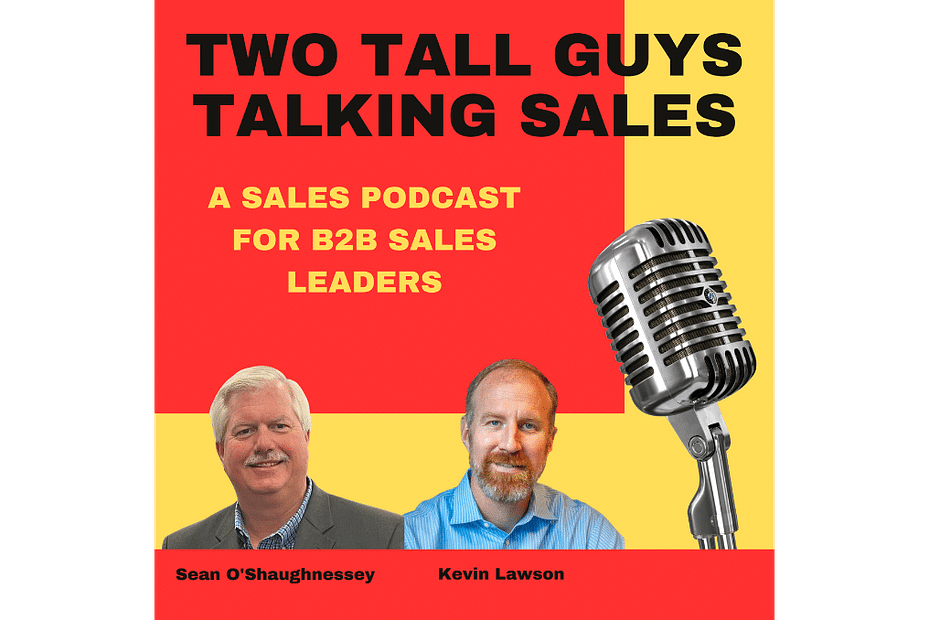
Join hosts Kevin Lawson and Sean O’Shaughnessey on this revealing episode of “Two Tall Guys Talking Sales” where they dive deep into the intricacies of hiring and motivating sales teams. Whether you’re a solopreneur or heading a growing business, this episode delivers crucial insights into creating a robust sales force to propel your business forward. Key Topics Discussed Key Quotes Additional Resources Summary In this episode, Kevin and Sean tackle the often-overlooked but vital elements…