
Skip to content

repeatable sales process

What An MBA Didn’t Teach You About Sales

The sales profession is challenging. You need to work hard at it to succeed. You need to learn from the best. You need to improve your skills continuously. If you think you can sell since you are a hit at parties and have a lot of friends, you may soon find that you are a failure as a salesperson. Blunt truth:

because the sales profession is so hard, you have to focus on doing everything in sales very well, or you will be considered a failure.

I call this blog, Skinned Knees because I try to relate all of the learning that I have done over the past 4+ decades (while skinning my knees in the learning process).

I hope that you learn from my mistakes so that your business will grow!


Two Tall Guys Talking Sales Podcast – 200 Episodes of B2B Sales Advice – The Lessons That Still Drive Sales Success – Episode 200

For the 200th episode of Two Tall Guys Talking Sales, Sean O’Shaughnessey and Kevin Lawson do something they have never done before: record together, in person, with a live studio audience asking the questions. What follows is less a celebration than a wide-ranging examination of what actually drives B2B sales success. Sean and Kevin tackle the resurgence of human relationships in an AI-enabled selling environment, the discipline required to define an ideal client profile, how artificial intelligence and Workflow Automation should eliminate non-selling activities, why great salespeople do not necessarily need industry experience, and what sales management must do differently to coach rather than rescue. They also dig into compensation, value selling, sales productivity gains, and the danger of single-threading Complex Deals. It is 200 episodes of experience compressed into one candid conversation about building sales processes that work when the sales leader is not in the room.

Key Topics Discussed

04:04 – What 200 Episodes Have Revealed About Sales Fundamentals
Sean and Kevin reflect on the recurring problems they continue to see across sales organizations: unclear ideal client profiles, weak Messaging, inconsistent prospecting, and critical sales knowledge that exists in someone’s head instead of in a documented process. Kevin makes the case that documentation turns tribal knowledge into an operating system that can connect sales, marketing, customer service, and delivery. A repeatable sales process must actually be written down before it can be taught, measured, or improved.

14:27 – The Return of Real Relationships in an AI-Enabled Sales World
Asked what has changed most over the life of the podcast—other than AI—Kevin points to the renewed importance of authentic, in-person relationships and value realization. Sean pushes the idea further: when prospects are overwhelmed by email, social outreach, and text messages, effective Sales strategies may sometimes look surprisingly old-fashioned. Knock on the door. Attend the event. Send a thoughtful physical note. The technology may be new, but trust still separates signal from noise.

17:45 – Using AI to Create More Selling Time
James Sayer asks how salespeople should think about artificial intelligence right now, and Sean immediately frames AI as a productivity tool rather than a novelty. Research, CRM administration, account preparation, and other non-selling activities consume enormous amounts of a salesperson’s day. The objective is not to use Generative AI because it is fashionable; it is to use AI, automation, and better tools to create additional opportunities for actual selling. Kevin recommends identifying the most time-intensive task inside prospecting, selling, or customer retention and finding a way to automate it. That is where meaningful sales productivity gains begin.

23:30 – Curiosity, Business Acumen, and Solving Problems Instead of Selling Products
When the audience asks what young sales professionals should learn, Kevin argues that sellers need to stop concentrating on what they want to sell and start understanding the problem the customer needs solved. Sean adds curiosity as a foundational skill: understand the customer’s business, how it makes money, and—critically—how it loses money. That becomes especially important when selling to a CFO or defending ROI. Later, Sean connects the same curiosity to relationship building: ask open-ended questions, stop talking about yourself, and give the prospect room to reveal what is actually driving the opportunity.

33:43 – Hiring Salespeople, Defining the ICP, and Building a System They Can Enter
The discussion turns to one of the most expensive mistakes a business owner can make: hiring a salesperson for an industry Rolodex instead of hiring someone who knows how to sell. Kevin argues that salespeople should be hired into a documented system with clear expectations, onboarding, knowledge checks, and a defined sales process. Sean makes the complementary case that industry knowledge can often be taught far faster than genuine selling skill. The conversation then moves into ICP development: study your friendliest or favorite customers, identify what they have in common, understand their buying signals and psychographics, and use those insights to improve prospecting, Messaging, hiring, and pipeline quality.

49:53 – Sales Leadership, Compensation, Trust, and Multi-Threading Complex Deals
Mary Tutton asks what capability matters most for a sales manager, prompting Kevin to identify consistency and analytical thinking. At the same time, Sean draws a sharp distinction between coaching and taking over the salesperson’s job. The discussion expands into compensation design—simple enough that the seller should be able to estimate the payout mentally—and then into the realities of Enterprise Sales. In a significant B2B opportunity, one relationship is rarely enough. Sean warns against being single-threaded, while Kevin introduces a relationship-mapping exercise to expose gaps across the Buying Committee. In Complex Deals, sales success requires trust across the organization, not dependence on one friendly contact.

Key Quotes

Kevin Lawson — 25:29
“Don’t sell the product you have. Sell the problem you solve.”

Sean O’Shaughnessey — 26:37
“Have you actually asked them, ‘How do they lose money at their company?’”

Audience Guest Al Lindemann — 39:58
“It is so much easier when you find the right person that has a need for what you want to sell.”

Kevin Lawson — 50:24
“The biggest impact a sales leader can have on a team is consistency.”

Sean O’Shaughnessey — 69:19
“Sales is about maybe not making friends, but definitely developing trust.”

Additional Resources

  • The Challenger Sale — recommended by Kevin for developing a stronger perspective on customer-focused selling.

  • Traction — Kevin recommends it for its broader business-management perspective.

  • Atomic Habits — another recommendation for early-career professionals developing stronger personal disciplines.

  • How to Win Friends and Influence People by Dale Carnegie — Sean recommends this classic for interpersonal skills and later connects its lessons directly to developing trust in B2B sales.

  • Strategic Selling by Miller Heiman — Sean recommends finding the original edition and considers it foundational reading for professional salespeople.

  • Grammarly — Sean strongly recommends it as a practical tool for improving written sales communication.

  • B2B Sales Lab — Sean and Kevin discuss the community they created to give salespeople and sales leaders a place to ask questions, compare approaches, and learn from other practitioners. b2b-sales-lab.com

  • If you want to watch the video version of this podcast, go to https://youtu.be/cEUfjs0rsnI

A Significant Actionable Item from this Podcast

Build—or rebuild—your ideal client profile from evidence instead of aspiration.

Identify approximately ten of your friendliest or favorite customers, not simply the ten with the most revenue. Look for the customers who understood your value quickly, successfully adopted what you sold, became good references, and were enjoyable and profitable to serve.

Then ask what they have in common: industry characteristics, business conditions, goals, buying signals, organizational traits, and even psychographic similarities. Do the reverse exercise with your hardest customers to identify characteristics that should disqualify an account.

Finally, reduce the result to a clear ICP that can be explained in a few sentences and certainly in fewer than 100 words. Then use it against the opportunities already in your pipeline. Which deals genuinely fit—and which ones are consuming Pipeline Velocity because your team is trying to force-fit a prospect that was never a good customer in the first place?

An ICP is not merely a prospecting definition. Done correctly, it becomes a decision tool for Revenue generation, hiring, qualification, Messaging, pipeline management, and sales strategy.

Read the rest of the article…
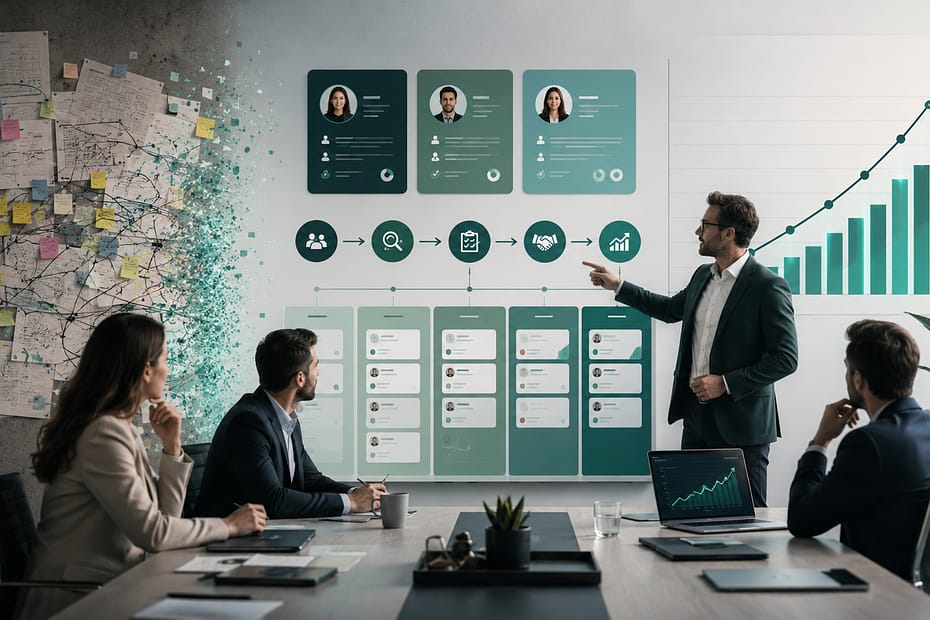
Build a Repeatable Sales Process Using Buyer Personas

In the world of sales, consistency is a cornerstone for success. Salespeople, sales managers, and CEOs alike strive to find a sustainable way to grow their business, and one effective strategy is to focus on buyer personas. Identifying and understanding these personas can streamline the sales process, making it easier to target the right customers and tailor your approach to meet their specific needs.

Consistency is key. When you consistently sell to profitable companies that see value in your solutions, you can standardize your sales processes and messaging. This consistency allows you to tweak and improve your methods incrementally, rather than making wild changes that may not lead to profitability. Many small companies don’t have the luxury of unlimited cash flow. They need to be mindful of their line of credit and ensure that their accounts receivable don’t get out of hand. By focusing on companies that are easy to sell to and where your product or service fits seamlessly, you can make your clients successful and maintain a steady growth trajectory.

The entrepreneurial operating system (EOS) is a valuable framework that helps businesses achieve consistency. By setting firm foundational corners, such as data, people, and core processes, businesses can create a structured environment where everyone can succeed. For sales departments, this means formalizing not only the messaging but also the reporting structure, job descriptions, core goals, and key behaviors. Consistency in these areas leads to reliable and repeatable results.

A repeatable sales process is crucial. If everything is custom, nothing is standardized, and this can lead to chaos. Sales leaders must set the standard for consistency, and both business owners and salespeople need to align themselves with these consistent behaviors. Standardizing the sales process enables better forecasting and a more predictable customer flow.

Read the rest of the article…

Two Tall Guys Talking Sales Podcast – Stop Celebrating B2B Sales Wins Without Learning Why You Won – Episode 188

In this episode of Two Tall Guys Talking Sales, hosts Kevin Lawson and Sean O’Shaughnessey break down a sales management practice that too many teams underuse: reviewing won deals with the same discipline they apply to lost deals. The conversation moves past celebration alone and into the real operating question: did the team win because the sales process worked, or because someone hit a lucky buzzer-beater? For leaders serious about Sales success, Revenue generation, and building repeatable Sales processes, this episode is a reminder that the best wins are not always the dramatic ones. Often, they are the boring, well-managed, properly documented deals that never should have been in doubt.

Key Topics Discussed

Why Won Deal Reviews Matter as Much as Lost Deal Reviews — 00:20
Kevin opens the episode by comparing won deal reviews to a SportsCenter highlight reel. Lost deal reviews help teams understand what went wrong, but won deal reviews reveal whether success came from strong Sales strategies, disciplined execution, or simple luck.

Celebrate the Whole Team, Not Just the Closer — 01:40
Sean emphasizes that a true win often involves more than the salesperson. Proposal writers, credit teams, delivery teams, operations, and others may have played a role. Strong sales management means recognizing the system behind the win, not creating a hero culture around one person.

Buzzer-Beater Wins vs. Controlled Wins — 03:00
Sean challenges leaders to determine whether the deal was won late through a heroic save or whether the team was in control from the beginning. The better business model is not dramatic last-second selling. It is predictable Revenue management through process discipline.

Doing “Winner Stuff” in the Sales Process — 04:06
Kevin lays out the behaviors that separate consistent winners from lucky sellers: good notes, timely follow-up, clear problem statements, expectation management, proper sequencing, and bringing the right people into the deal at the right time. That is where Business acumen meets execution.

Review Wins by Sales Stage, Not Storytelling — 06:41
Sean argues that leaders should avoid letting won deal reviews become casual storytelling sessions. Instead, they should walk the team through each stage in the CRM: discovery, scoping, economic buyer engagement, validation, proposal, and close. That structure turns a win into training, reinforcement, and better future Messaging.

How New Sellers Learn from Won Deal Reviews — 09:27
Kevin explains why won deal reviews are especially valuable for newer reps. They may not yet have their own deep sales stories, but they can learn the questions, positioning, Value selling behaviors, and customer impact examples that successful sellers used.

Key Quotes

Kevin Lawson — 01:09
“You never know until you start doing the analysis, which is the same thing as not doing the analysis on your lost deals.”

Sean O’Shaughnessey — 03:40
“Sure, it makes you, puts you on SportsCenter, but let’s be honest. Let’s be boring. Let’s just bring in the revenue.”

Kevin Lawson — 05:29
“The simple stuff done well at scale becomes quota-busting kind of behaviors and quota-busting kind of performance.”

Sean O’Shaughnessey — 07:53
“Step by step, walk through the story as stages of the sales process.”

Kevin Lawson — 11:17
“How could I instead go value, impact, value, impact, value? Because that’s what drives customer expectation, which drives reputation, which drives stickiness.”

Sean O’Shaughnessey — 13:40
“When you’re doing a win deal, celebrate the win. Really give the right team all of the credit.”

Additional Resources

B2B Sales Lab
Sean refers listeners to B2B Sales Lab, a community where sales professionals and sales leaders can discuss real sales challenges, share wins, and sharpen their Sales processes. Visit b2b-sales-lab.com to learn more.

Moneyball / Billy Beane Reference
Kevin references the Moneyball idea of winning through disciplined, repeatable base hits instead of relying on grand slams. The sales parallel is clear: sustainable Revenue generation comes from consistent execution, not occasional heroics.

A Significant Actionable Item from this Podcast

Pick one recently won deal and run a formal won deal review by CRM stage. Do not ask the salesperson to “tell the story.” Walk through discovery, qualification, scoping, economic buyer access, validation, proposal, negotiation, and close. At each stage, identify what was done well, what was skipped, who contributed, what customer insight was captured, and what should be repeated. The decision you are making is simple: was this win evidence of a repeatable sales process, or was it a lucky outcome dressed up as Sales success?

Read the rest of the article…

Reclaiming 15 Hours a Week: The Sales Professional’s Guide to Surviving and Thriving in the Age of AI

Episode Summary

If you feel like your CRM is turning great sellers into tired administrators, you’re not imagining it. This episode breaks down the administrative drag that steals selling time, distorts forecasts, and quietly taxes revenue generation.

We introduce a practical artificial intelligence approach: automate the inputs, then humanize the output so your messaging stays authentic and effective.

The outcome is simple: higher-quality sales processes, stronger sales management decisions, and better Sales success without adding headcount.


Major Highlights

  • The real productivity crisis in B2B sales: administrative drag, CRM debt, and the “technology trap” of too many tools that create more manual work.
  • Why the old brute-force model is breaking: buyers self-educate earlier, competitors respond faster, and generic messaging gets ignored.
  • The core principle: Automate the Input, Humanize the Output. Use AI for research, data capture, and workflow execution while humans control judgment, voice, and value selling nuance.
  • How Benjamin Todd’s “human bottlenecks” framework applies to sales: as AI automates routine work, business acumen, strategic leadership, and complex social intelligence become more valuable.
  • Orchestration engines (n8n and Make.com) as the nervous system: connecting CRM, email, LinkedIn, and transcripts into cohesive sales strategies and repeatable sales processes.
  • Cognitive Prospecting: use AI listening posts to detect triggers (exec hires, funding, cost containment signals) and arrive with a “why now” dossier instead of starting from scratch.
  • One-to-One-at-Scale outreach: generate hyper-relevant drafts from a strategic brief and prospect dossiers, then apply a human “smell test” so messaging lands.
  • Immediate Recap workflows: transcripts flow into structured CRM updates, follow-up tasks, and recap email drafts, accelerating deal momentum and improving revenue management.
  • Always-On Hygiene: AI deduplication and fuzzy matching to reduce bad data, improve forecasting, and protect downstream automation quality.
  • Predictive intelligence and deal risk: revenue intelligence platforms flag risk signatures earlier than human inspection, improving pipeline accuracy and resource allocation.
  • Sales management evolution: managers move from pipeline inspectors to augmented coaches using call analysis to focus coaching where it changes outcomes.
  • The practical end state: more selling time, faster follow-up, improved win rates, and a human-AI centaur model where humans own the last mile.
Read the rest of the article…