Skip to content

sales forecasting

What An MBA Didn’t Teach You About Sales

The sales profession is challenging. You need to work hard at it to succeed. You need to learn from the best. You need to improve your skills continuously. If you think you can sell since you are a hit at parties and have a lot of friends, you may soon find that you are a failure as a salesperson. Blunt truth:

because the sales profession is so hard, you have to focus on doing everything in sales very well, or you will be considered a failure.

I call this blog, Skinned Knees because I try to relate all of the learning that I have done over the past 4+ decades (while skinning my knees in the learning process).

I hope that you learn from my mistakes so that your business will grow!


Build a Repeatable Sales Process Using Buyer Personas

In the world of sales, consistency is a cornerstone for success. Salespeople, sales managers, and CEOs alike strive to find a sustainable way to grow their business, and one effective strategy is to focus on buyer personas. Identifying and understanding these personas can streamline the sales process, making it easier to target the right customers and tailor your approach to meet their specific needs.

Consistency is key. When you consistently sell to profitable companies that see value in your solutions, you can standardize your sales processes and messaging. This consistency allows you to tweak and improve your methods incrementally, rather than making wild changes that may not lead to profitability. Many small companies don’t have the luxury of unlimited cash flow. They need to be mindful of their line of credit and ensure that their accounts receivable don’t get out of hand. By focusing on companies that are easy to sell to and where your product or service fits seamlessly, you can make your clients successful and maintain a steady growth trajectory.

The entrepreneurial operating system (EOS) is a valuable framework that helps businesses achieve consistency. By setting firm foundational corners, such as data, people, and core processes, businesses can create a structured environment where everyone can succeed. For sales departments, this means formalizing not only the messaging but also the reporting structure, job descriptions, core goals, and key behaviors. Consistency in these areas leads to reliable and repeatable results.

A repeatable sales process is crucial. If everything is custom, nothing is standardized, and this can lead to chaos. Sales leaders must set the standard for consistency, and both business owners and salespeople need to align themselves with these consistent behaviors. Standardizing the sales process enables better forecasting and a more predictable customer flow.

Read the rest of the article…


Revenue Forecasting Should Be Built on Evidence, Not Hope

Most sales forecasts are not really forecasts. They are seller opinions, manager adjustments, CRM fields, historical averages, and optimism packaged into a number that leadership is expected to trust.

That may have been acceptable when forecasting was mostly an internal sales exercise. It is not acceptable when the board, finance, hiring plans, customer success capacity, and investor expectations are all tied to the revenue number.

The core problem is not that sales leaders are careless. The problem is that many revenue teams are still using an architecture that cannot produce predictability. Spreadsheets, commit calls, and stage rollups organize information, but they do not necessarily reveal the buyer’s truth.

The better question is not, “How confident is the rep?”

The better question is, “What did the buyer actually do?”

That shift changes the entire operating model. Forecasting moves from hope-based to evidence-based. Deals are no longer judged by the confidence in a seller’s voice but by observable buyer behavior: recent engagement, executive involvement, mutual action plans, legal or procurement movement, real next steps, and date-driven urgency.

This is where artificial intelligence and revenue intelligence become useful, but only if the management system is ready for them. AI can identify patterns, detect risk, surface stalled deals, and compare buyer behavior against historical outcomes. But it cannot compensate for weak sales processes, vague stage definitions, poor CRM hygiene, or managers who refuse to inspect the evidence.

Read the rest of the article…

Transform Your Sales Team: Strategic Compensation Adjustments for Year-End Momentum

Autumn is the time of year for sales leaders, managers, and CEOs to begin laying the groundwork for next year’s success. Have you considered how your current sales compensation plans impact your team’s motivation and productivity? Now is the ideal moment to evaluate, adjust, and deliver these plans, preferably by December 1st. Doing so can significantly influence your team’s drive to close deals in December and build momentum heading into the next fiscal year.

Sales compensation should be motivating and rewarding for employees. It directly shapes your sales team’s behaviors and priorities. An effective plan incentivizes the right actions and deters the wrong ones.

Consider a common pitfall: salespeople holding back deals to inflate their numbers for the following year. Does your current compensation structure inadvertently reward this practice? If so, you’re unintentionally harming your year-end results.

To counter this, strategically incorporate compensation escalators and cliffs into your plan. Escalators progressively reward increased sales performance throughout the year. Higher performance equals higher commission rates, driving your sales team to push forward continually. 

Commission cliffs reset commission rates at the beginning of each year, creating a sense of urgency to close deals before the end of December. Communicating these compensation details clearly by early December ensures your team understands what’s at stake.

Don’t hold your team back!

Another critical compensation consideration is eliminating commission caps. While some organizations cap commissions to control expenses, this practice can backfire dramatically. Caps tell your top-performing salespeople that their exceptional efforts are neither valued nor rewarded appropriately. This demotivates your top talent and encourages them to seek opportunities elsewhere that offer uncapped rewards. 

Removing commission caps signals that the organization fully supports and rewards outstanding performance. Have you considered how much growth your company might achieve if artificial constraints didn’t limit your sales team?

When evaluating compensation, look beyond simple cost containment. Consider the true profitability of incentivizing increased sales volume. Once salespeople reach their targets and enter accelerators, each additional dollar earned typically comes at a lower incremental cost to your organization. 

Sales transactions earlier in the year have already covered the salesperson’s base salary once they have met their annual quota. In fact, at 100% of quota, the salesperson should have covered all their costs and their share of the overall company’s revenue needs. Thus, every extra sale at escalated commission rates still contributes positively to your overall profitability. 

Read the rest of the article…

Transforming Quota-Setting: Strategies for Sales Leaders to Optimize Performance and Revenue

Quota-setting is one of the most misunderstood elements of sales leadership. Too often, it’s treated as a spreadsheet exercise or a top-down directive, rather than a strategic lever that drives behavior, performance, and growth.

Whether you’re leading a team of 20 or you’re the founder managing three reps, how you define quotas has a direct impact on your revenue trajectory and your team’s motivation.

So, where do you start?

With timing. If you’re not delivering quotas to your team until February or March, you’re already behind. Salespeople need clarity by December. That gives them runway to plan, prioritize, and hit the ground running in January. Delayed quotas create confusion and stall momentum. To achieve a strong Q1, you need to equip your team early.

Quota-setting varies depending on the size of your company. Larger teams offer more flexibility. With 10 or more reps, you can spread risk, balance performance, and model averages. You’ll have top performers who consistently overdeliver, alongside newer reps who are still ramping up. The law of averages works in your favor. You can afford some variance. Smaller teams don’t have that luxury.

When you’re running a small team, maybe two or three reps or founder-led sales, every individual matters. One person missing quota can tank your number.

You can’t rely on averages. You need precision.

That means tying quotas to actual relationships, known opportunities, and real probability. It’s not about slicing up a target evenly. It’s about assigning numbers based on what’s realistically achievable in each territory or account list.

Territory design plays a big role here. Whether it’s geographic, vertical, or named accounts, quota must reflect the market potential. You can’t expect equal performance from unequal opportunity. If Rep A has 500 viable accounts and Rep B has 50, their quotas shouldn’t look the same unless you have data that says Rep B’s accounts are closer to your Ideal Client Profile. Use available market data to inform the number. Don’t assign quotas in a vacuum. 

In larger organizations, quotas often originate from the top down, typically from finance. The CEO and CFO commit a growth number to the board, investors, or in public filings to the SEC. They have no choice but to pass it down. It’s not uncommon for the sales team to receive the number without context. That’s a problem. If you’re in a leadership role, you need to pressure test that number. Can your team realistically hit it? If not, what additional resources are required?

  • More headcount?
  • Better enablement?
  • Marketing support?

In large organizations where the quota is driven by investor expectations, the VP of Sales must establish an organization well before the new year that achieves this year’s goal, while also meeting the expectation of growth for the next year. Planning ahead, sometimes years in advance, is part of the job.

Read the rest of the article…

Validation Events: The Unsung Hero of Sales Process Discipline

In the complex world of B2B selling, trust is built in stages. The challenge in all sales campaigns is ensuring the prospect trusts they are making the best decision for their business.

  1. Do they trust that the salesperson is giving them all of the information?
  2. Do they trust that the company will support them after the sale?
  3. Do they trust that the product will perform as they expect it to perform?

As I have explained in my book, Eliminate Your Competition, as well as the blog for that book and in this blog, the prospect needs to trust all three elements the salesperson is selling:

  1. They need to trust the product.
  2. They need to trust the company behind the product.
  3. They need to trust the salesperson.

Prospects listen to your sales message, review your materials, and hear your claims, but none of that guarantees belief or trust. Trust is validated when your claims are validated. That’s why validation events are crucial to any rigorous sales process.

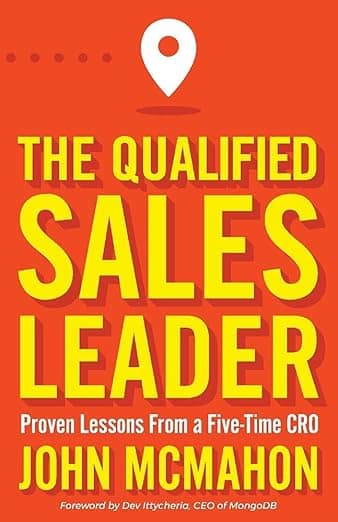
In The Qualified Sales Leader, John McMahon stresses the importance of customer-driven validation. He cautions sales leaders against relying on internal optimism or anecdotal “good signals” from prospects. Instead, McMahon emphasizes observable proof—real buyer behavior that confirms alignment, commitment, and value. Validation events are when the customer takes action to validate that what you’ve promised is accurate and valuable.

An excellent sample sale process flow looks like this:

  1. Discover
  2. Scoping
  3. Economic Buyer Meeting
  4. Validation Event
  5. Business Case and Final Proposal
  6. Negotiate and Close

As you can see, the Validation Event is the last step before creating the final business case, which will be bundled with your final proposal.

Read the rest of the article…