Skip to content

Accountability

What An MBA Didn’t Teach You About Sales

The sales profession is challenging. You need to work hard at it to succeed. You need to learn from the best. You need to improve your skills continuously. If you think you can sell since you are a hit at parties and have a lot of friends, you may soon find that you are a failure as a salesperson. Blunt truth:

because the sales profession is so hard, you have to focus on doing everything in sales very well, or you will be considered a failure.

I call this blog, Skinned Knees because I try to relate all of the learning that I have done over the past 4+ decades (while skinning my knees in the learning process).

I hope that you learn from my mistakes so that your business will grow!


Stop Betting on Superstars: How Operating Standards Turn Sellers into Predictable Producers

Many teams grow, but few truly scale revenue beyond individual hero efforts. That difference changes everything for leaders today and in the future. Growth relies on hustle; scaling depends on repeatability across segments and individuals. Your strategy must reflect that hard truth in practice.

Are you relying on one standout to win deals month after month? That looks strong until risk turns visible and costly. One resignation can cripple momentum and expose brittle systems that you had previously ignored.

Scalable sales replaces heroics with defined, teachable operating rhythms that everyone follows. It turns chaos into predictable pipeline progress and results. It clarifies markets, messages, motions, and measurable expectations for every seller on a weekly basis. It builds leverage into onboarding and coaching for consistency. It protects margins while systematically accelerating win rates and velocity across territories.

The foundation begins with a clear picture of your ideal customer, including any disqualifying factors. Having an accurate Ideal Client Profile (ICP) helps minimize waste and reduce uncertainty in your efforts. Take time to define firmographics, pain points, triggers, and buying behaviors using consistent language based on shared evidence. Understand who cares about these issues and why it matters to them now. Also, identify negative personas to sharpen your focus and qualification processes in marketing and sales. A well-defined ICP can significantly boost your conversion rates and shorten the sales cycle.

Next, turn your ICP into straightforward messaging and discovery frameworks tailored for each stage. Consider what unique problems you solve for your customers. What outcomes are most important to them, and who are the key stakeholders by role and priority?

Build talk tracks that lead buyers, not chase buyers with purpose always. Anchor questions to the business metrics and risks they feel. Teach a qualification that tests mutual commitment and outlines next steps with attached dates. Avoid fluffy demos; design relevant proofs using their data. Process specificity turns B players into consistent producers without copying another personality.

I suggest you establish a practical, stage-based operating rhythm that everyone can easily understand and follow. By sharing clear definitions and expectations, managing the pipeline becomes a consistent and smooth process each week. Define each stage with specific exit criteria—avoiding vague intentions or subjective feelings. For example, discovery is considered complete when stakeholders confirm the consequences and impact, and solution fit is achieved when success criteria and ownership are clearly aligned. The commit stage should be backed by a shared plan with clear dates and assigned owners. During weekly reviews, focus on assessing quality rather than just quantity or activity counts. Ask yourself:

  • Does evidence from buyers’ backstage moves have a direct impact on their purchasing decisions?
  • Are the next steps specific, mutually agreed upon, and already scheduled on both calendars?
Read the rest of the article…

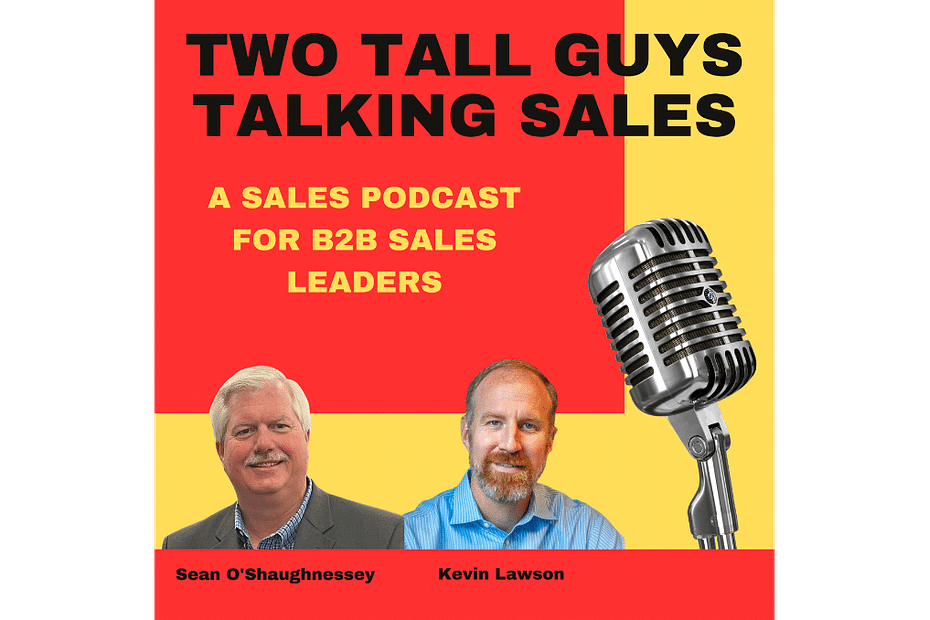
Two Tall Guys Talking Sales – How Sales and Marketing Partnerships Drive Lead Generation and Sales Success – Episode 155

As the year draws to a close, sales leaders and professionals are already looking ahead to the next year. In this episode of Two Tall Guys Talking Sales, hosts Sean O’Shaughnessey and Kevin Lawson dig into the perennial challenge of lead generation, the importance of collaborating with marketing, and why proactive planning is essential for sales success. From refining your messaging to building thought leadership, this conversation is packed with strategies to help you drive revenue generation and sharpen your sales processes.

Key Topics Discussed

  • Why Salespeople Always Say “I Need More Leads” (01:00)
  • The Importance of Partnering with Marketing for Effective Sales Strategies (03:40)
  • Going Beyond Marketing—Referrals, Networking, and Thought Leadership (05:07)
  • Leveraging LinkedIn and Personal Branding to Generate Leads (06:25)
  • The Three Things Every Salesperson Really Sells (09:00)
  • Planning with Intention: Mapping the Next 12 Months for Sales Success (12:57)

Key Quotes

  • Sean O’Shaughnessey (01:48): “You as a salesperson… it’s your job to sit with the marketing people you have and map out the next 12 months of how to get better leads and cover your territory more effectively.”
  • Kevin Lawson (03:40): “Go down the hallway, knock on the door and say, here’s what I’m working on, what are you working on, and how can I help? Be a resource, be a partner to marketing.”
  • Sean O’Shaughnessey (09:24): “There are three things you sell: your product, your company, and—most importantly—you.”
  • Kevin Lawson (13:16): “If you’re only giving 50% effort to your professional practice, you can’t expect championship-level results.”

Additional Resources

  • B2B Sales Lab Community – A peer group for sales professionals to exchange best practices and strengthen their sales management and revenue generation capabilities. Go to https://b2b-sales-lab.com/

A Significant Actionable Item from this Podcast

Schedule a working session with your marketing team this week. Map out the next 12 months of sales and marketing activities, focusing on how you’ll generate leads, build messaging, and increase visibility in your target accounts. Even if it starts with a simple spreadsheet, writing down the plan creates accountability and aligns sales strategies with marketing efforts.

Read the rest of the article…

Transform Your Sales Team: Strategic Compensation Adjustments for Year-End Momentum

Autumn is the time of year for sales leaders, managers, and CEOs to begin laying the groundwork for next year’s success. Have you considered how your current sales compensation plans impact your team’s motivation and productivity? Now is the ideal moment to evaluate, adjust, and deliver these plans, preferably by December 1st. Doing so can significantly influence your team’s drive to close deals in December and build momentum heading into the next fiscal year.

Sales compensation should be motivating and rewarding for employees. It directly shapes your sales team’s behaviors and priorities. An effective plan incentivizes the right actions and deters the wrong ones.

Consider a common pitfall: salespeople holding back deals to inflate their numbers for the following year. Does your current compensation structure inadvertently reward this practice? If so, you’re unintentionally harming your year-end results.

To counter this, strategically incorporate compensation escalators and cliffs into your plan. Escalators progressively reward increased sales performance throughout the year. Higher performance equals higher commission rates, driving your sales team to push forward continually. 

Commission cliffs reset commission rates at the beginning of each year, creating a sense of urgency to close deals before the end of December. Communicating these compensation details clearly by early December ensures your team understands what’s at stake.

Don’t hold your team back!

Another critical compensation consideration is eliminating commission caps. While some organizations cap commissions to control expenses, this practice can backfire dramatically. Caps tell your top-performing salespeople that their exceptional efforts are neither valued nor rewarded appropriately. This demotivates your top talent and encourages them to seek opportunities elsewhere that offer uncapped rewards. 

Removing commission caps signals that the organization fully supports and rewards outstanding performance. Have you considered how much growth your company might achieve if artificial constraints didn’t limit your sales team?

When evaluating compensation, look beyond simple cost containment. Consider the true profitability of incentivizing increased sales volume. Once salespeople reach their targets and enter accelerators, each additional dollar earned typically comes at a lower incremental cost to your organization. 

Sales transactions earlier in the year have already covered the salesperson’s base salary once they have met their annual quota. In fact, at 100% of quota, the salesperson should have covered all their costs and their share of the overall company’s revenue needs. Thus, every extra sale at escalated commission rates still contributes positively to your overall profitability. 

Read the rest of the article…

Two Tall Guys Talking Sales – How to Define Sales Territories for Maximum Revenue Generation – Episode 154

Sales leaders and sales professionals: are your territories setting you up for sales success or holding your team back? 

In this episode, hosts Kevin Lawson and Sean O’Shaughnessey tackle the critical role of defining territories, commission plans, and account strategies. From building fair but effective territories to creating actionable plans that drive revenue generation, this conversation blends sales management insight with practical sales strategies to help you win more consistently and grow with intention.

Key Topics Discussed

  • Defining Territories with Purpose (00:23) – Why intentional design matters more than “spray and pray” selling.
  • Fairness vs. Evenness in Territories (01:27) – Sean explains why territories don’t need to be identical, but they must be logical and fair to prevent turnover.
  • How Salespeople Should Approach New Territories (04:53) – Kevin outlines the mindset and business acumen required to succeed under a new commission plan.
  • Planning Ahead for Sales Success (08:21) – Sean breaks down how early planning impacts Q1 results, revenue management, and long-term sales processes.
  • The Power of Written Territory and Account Plans (12:23) – Kevin explains how documenting your strategies in a CRM enhances value selling and accountability.

Key Quotes

  • Sean O’Shaughnessey (01:10): “When you’re driving down the road, you’re not driving with the mirrors—you’re driving with the windshield. Defining your territory is incredibly important to know where you’re going.”
  • Kevin Lawson (06:00): “A new commission plan is not an indictment of past performance; it’s your executives telling you how and where they want the company to grow.”
  • Kevin Lawson (12:42): “When a plan is written, it’s real. You win more often when your goals and account strategies are captured, documented, and revisited.”

A Significant Actionable Item from this Podcast

Write down your territory and account growth plan before the new year begins. Identify 20 accounts to expand, document the cast of characters (champions, blockers, decision-makers), and map a path to increase revenue generation. Then, enter this plan into your CRM to hold yourself accountable and align with your company’s sales strategies.

Read the rest of the article…

Two Tall Guys Talking Sales – How Sales Leaders Use CRMs to Align Sales Processes, Value Selling, and Revenue Management – Episode 152

In this episode of Two Tall Guys Talking Sales, hosts Kevin Lawson and Sean O’Shaughnessey build on last week’s discussion of qualification methodologies and take the conversation further—into how these frameworks should live inside your CRM. From aligning sales processes with the buyer’s journey to enforcing accountability at each stage, this conversation offers practical strategies that every sales leader and salesperson can implement. Expect a deep dive into sales management, revenue generation, sales processes, and… Two Tall Guys Talking Sales – How Sales Leaders Use CRMs to Align Sales Processes, Value Selling, and Revenue Management – Episode 152

Transforming Quota-Setting: Strategies for Sales Leaders to Optimize Performance and Revenue

Quota-setting is one of the most misunderstood elements of sales leadership. Too often, it’s treated as a spreadsheet exercise or a top-down directive, rather than a strategic lever that drives behavior, performance, and growth.

Whether you’re leading a team of 20 or you’re the founder managing three reps, how you define quotas has a direct impact on your revenue trajectory and your team’s motivation.

So, where do you start?

With timing. If you’re not delivering quotas to your team until February or March, you’re already behind. Salespeople need clarity by December. That gives them runway to plan, prioritize, and hit the ground running in January. Delayed quotas create confusion and stall momentum. To achieve a strong Q1, you need to equip your team early.

Quota-setting varies depending on the size of your company. Larger teams offer more flexibility. With 10 or more reps, you can spread risk, balance performance, and model averages. You’ll have top performers who consistently overdeliver, alongside newer reps who are still ramping up. The law of averages works in your favor. You can afford some variance. Smaller teams don’t have that luxury.

When you’re running a small team, maybe two or three reps or founder-led sales, every individual matters. One person missing quota can tank your number.

You can’t rely on averages. You need precision.

That means tying quotas to actual relationships, known opportunities, and real probability. It’s not about slicing up a target evenly. It’s about assigning numbers based on what’s realistically achievable in each territory or account list.

Territory design plays a big role here. Whether it’s geographic, vertical, or named accounts, quota must reflect the market potential. You can’t expect equal performance from unequal opportunity. If Rep A has 500 viable accounts and Rep B has 50, their quotas shouldn’t look the same unless you have data that says Rep B’s accounts are closer to your Ideal Client Profile. Use available market data to inform the number. Don’t assign quotas in a vacuum. 

In larger organizations, quotas often originate from the top down, typically from finance. The CEO and CFO commit a growth number to the board, investors, or in public filings to the SEC. They have no choice but to pass it down. It’s not uncommon for the sales team to receive the number without context. That’s a problem. If you’re in a leadership role, you need to pressure test that number. Can your team realistically hit it? If not, what additional resources are required?

  • More headcount?
  • Better enablement?
  • Marketing support?

In large organizations where the quota is driven by investor expectations, the VP of Sales must establish an organization well before the new year that achieves this year’s goal, while also meeting the expectation of growth for the next year. Planning ahead, sometimes years in advance, is part of the job.

Read the rest of the article…

From Reporting to Coaching: Elevate Your One-on-One Sales Meetings to Drive Performance and Trust

A one-on-one sales meeting is not a reporting meeting. It’s not about reviewing what already happened. And it’s definitely not about the manager doing most of the talking. The purpose of a one-on-one pipeline review is to develop the salesperson, surface challenges, and accelerate opportunities. If your one-on-ones are anything less, you’re leaving performance on the table.

Sales leaders often default to micromanagement. 

Especially when the rep is new or struggling. But that approach backfires. It creates dependency and stifles problem-solving. The goal is to coach your reps into leading the meeting. That shift changes everything. When reps own the agenda and bring forward deal-level insights, they’re forced to think critically. That’s where growth happens.

If you’re leading a sales team or are a CEO playing the role of sales manager, you need to establish a clear structure. But the rep does the prep. You define the meeting cadence and format. Weekly or bi-weekly, depending on your velocity. You outline the sections: committed deals, stalled deals, and at-risk deals. 

But the rep fills in the content. They come to the meeting ready to walk you through each opportunity, with specific updates and clear asks.

Preparation is non-negotiable. For both sides. 

The salesperson should have updated their CRM before the meeting. The manager should have reviewed that data in advance. If either party shows up unprepared, the meeting becomes reactive. 

A waste of time. And it erodes trust quickly. 

Reps notice when you haven’t read the notes. They know when you’re winging it. And if they feel their effort isn’t valued, they’ll stop putting in the effort.

You want to create a culture where preparation is expected and rewarded. 

The fastest way to management failure is to ask questions that could have been answered by reading the CRM. Instead, use that time: 

  • To probe deeper. 
  • Ask about the deal strategy. 
  • Challenge assumptions. 
  • Help salespeople spot gaps they missed. 

That’s where your experience has real value.

It’s tempting to jump in and solve the problem. Especially when you see the red flags before the rep does. But resist the urge. Let them talk it through. Coach them toward the insight. Your job isn’t to close the deal; it’s to build someone who can. That means teaching them how to identify weak spots, how to pressure test a deal, and how to re-engage a stalled buyer. The real value of one-on-ones is in that development.

Think about how you coach. 

Are you diagnosing for them? Or are you helping them diagnose for themselves? When a rep says “this deal is solid, no issues,” that’s a red flag. Every deal has risk. Your job is to help them uncover it. Ask: “What’s the biggest thing that could derail this?” Or “What’s the last thing the buyer said that gave you pause?” These questions surface the truth. And they teach reps to self-assess more effectively.

There’s a fine line between coaching and grading. You want reps to be honest about their pipeline without fear of judgment. 

If a deal is weak, that’s not a character flaw. It’s a coaching moment. 

Read the rest of the article…

Two Tall Guys Talking Sales – No Leads, No Problem: Sales Strategies to Reignite Momentum – Episode 148

When your sales pipeline hits a wall—or worse, goes completely flat—it can feel like you’re spinning your wheels. In this episode of Two Tall Guys Talking Sales, hosts Kevin Lawson and Sean O’Shaughnessey dive deep into what to do when your sales team is facing a revenue generation stall. This is a fast-paced, actionable conversation focused entirely on what sales leaders can do to recharge a stalled pipeline—without relying on marketing. Whether you’re in B2B… Two Tall Guys Talking Sales – No Leads, No Problem: Sales Strategies to Reignite Momentum – Episode 148

Two Tall Guys Talking Sales – Breaking the Silos: Aligning Sales and Marketing for Real Revenue Growth – Episode 147

In this episode of Two Tall Guys Talking Sales, Kevin Lawson and Sean O’Shaughnessey dive deep into one of the most misunderstood dynamics in business: the relationship between sales and marketing. Pulled directly from a thought-provoking question inside the B2B Sales Lab community, this conversation explores how sales teams can contribute meaningfully to marketing efforts and why that collaboration drives better revenue generation. Whether you lead a sales team, run marketing campaigns, or wear both… Two Tall Guys Talking Sales – Breaking the Silos: Aligning Sales and Marketing for Real Revenue Growth – Episode 147