Skip to content

B2B sales

What An MBA Didn’t Teach You About Sales

The sales profession is challenging. You need to work hard at it to succeed. You need to learn from the best. You need to improve your skills continuously. If you think you can sell since you are a hit at parties and have a lot of friends, you may soon find that you are a failure as a salesperson. Blunt truth:

because the sales profession is so hard, you have to focus on doing everything in sales very well, or you will be considered a failure.

I call this blog, Skinned Knees because I try to relate all of the learning that I have done over the past 4+ decades (while skinning my knees in the learning process).

I hope that you learn from my mistakes so that your business will grow!


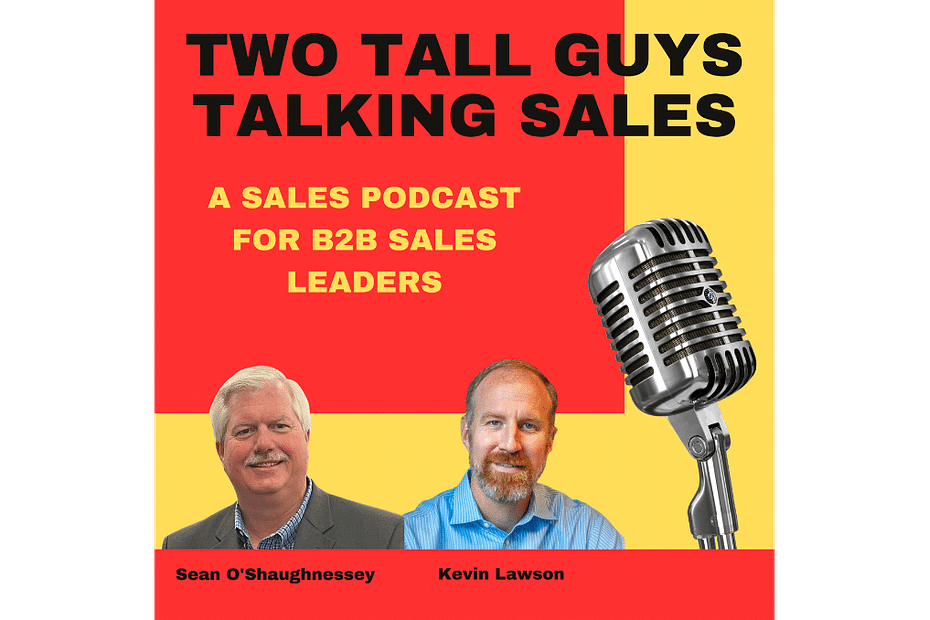
Two Tall Guys Talking Sales – Workflows, Automation, and AI: Building a Smarter Sales Organization – Episode 145

In this compelling episode, co-hosts Kevin Lawson and Sean O’Shaughnessey delve into the crucial distinctions between workflows, automations, and artificial intelligence (AI), and why understanding these differences isn’t just technical trivia, but foundational to improving sales processes, enhancing sales management, and accelerating revenue generation. If you’re a sales leader, business owner, or B2B rep striving to improve how you use technology to boost sales success, this episode is a must-listen. Packed with real-world examples and… Two Tall Guys Talking Sales – Workflows, Automation, and AI: Building a Smarter Sales Organization – Episode 145

Two Tall Guys Talking Sales – Future-Proofing Your Sales Career with AI, Strategy, and Smarter Workflows – Episode 144

Is artificial intelligence coming for your sales job? Not if you understand the power of business acumen, value selling, and strategic adoption of tools that amplify, not replace, human expertise. In this high-impact episode of Two Tall Guys Talking Sales, Kevin and Sean tackle the loud claims of AI-induced layoffs with a grounded, practical message for salespeople and sales managers: evolve or fall behind. This is not a doomsday episode; it’s a wake-up call, a… Two Tall Guys Talking Sales – Future-Proofing Your Sales Career with AI, Strategy, and Smarter Workflows – Episode 144

B2B Sales in the Age of AI: Why Top Salespeople Will Thrive While the Repetitive Roles Disappear

The buzz surrounding artificial intelligence has left many professionals wondering about the future of their careers. For B2B sales professionals, the rise of AI presents a fundamental question: Will AI replace salespeople?

The short answer is no, but it will replace some of their work. More accurately, AI will redefine the B2B sales landscape by eliminating lower-value activities, consolidating support roles, and enhancing the capabilities of top performers. In doing so, it will widen the gap between average and great salespeople.

Several years ago, I wrote a similar explanation about the fear that “the internet” would replace salespeople. That didn’t happen. You can find that article on the blog that supports my first sales book. Are salespeople necessary in the Internet age?

This blog post explores how B2B sales is positioned relative to AI disruption, referencing key insights from Benjamin Todd’s article, “How Not to Lose Your Job to AI” (80,000 Hours, 2025). Todd’s framework on skill types that increase in value in the age of AI helps us understand how high-functioning sales teams should evolve and how sales professionals can future-proof their careers.

Understanding AI’s True Impact: Augmentation, Not Replacement

A common misconception about AI is that it simply replaces humans. This isn’t true. AI devalues tasks it can perform while increasing the importance of the skills it cannot. Todd explains this dynamic through examples like the ATM: while the ATM reduced the need for transactional teller tasks, it actually increased demand for bank branch workers by allowing banks to open more branches. AI follows a similar pattern.

In B2B sales, AI will handle the most automatable tasks, such as data entry, follow-ups, list-building, and basic prospecting emails. However, this doesn’t eliminate the sales role; it sharpens its focus.

Instead of dialing hundreds of prospects daily, sales professionals will focus more on strategic engagement, account planning, and using AI-generated insights to elevate conversations. The result? Sales has become a more thoughtful, human, and strategic discipline for those who can keep up.

Four Categories of Skills That AI Will Make More Valuable

In Todd’s excellent article, he identifies four skill types that increase in value in an AI-enhanced workplace:

  1. Hard-to-automate skills
  2. Deployment-related skills
  3. Scarce, high-utility skills
  4. Skills hard for others to learn or replicate

Each of these aligns tightly with the demands of modern B2B sales.

Read the rest of the article…

Two Tall Guys Talking Sales – Chris Spanier Explains Marketing Professional Services: Sales Strategies That Actually Work – Episode 142

When marketing professional services, the playbook isn’t the same as product sales, and today’s episode dives into exactly why. Sean O’Shaughnessey and Kevin Lawson are joined by returning guest Chris Spanier, CEO of Carpe Diem Consulting Group and host of the Practical Actionable Marketing podcast. This conversation tackles the nuances of sales strategies for service-based businesses, blending value selling with measurable marketing and aligning both functions for stronger revenue generation. If you’re a business owner,… Two Tall Guys Talking Sales – Chris Spanier Explains Marketing Professional Services: Sales Strategies That Actually Work – Episode 142

Two Tall Guys Talking Sales – Elevate Your Sales Game with B2B Sales Lab: A New Resource for Revenue Growth – Episode 141

When sales professionals hit a roadblock, where do they turn? In this episode of Two Tall Guys Talking Sales, Kevin Lawson and Sean O’Shaughnessey unveil an exciting new initiative: B2B Sales Lab, a private peer networking community designed to support salespeople, sales managers, and business owners in their journey toward revenue generation excellence. This isn’t just a conversation; rather, we are offering an invitation to join something powerful. If you’ve ever felt alone in a… Two Tall Guys Talking Sales – Elevate Your Sales Game with B2B Sales Lab: A New Resource for Revenue Growth – Episode 141

Validation Events: The Unsung Hero of Sales Process Discipline

In the complex world of B2B selling, trust is built in stages. The challenge in all sales campaigns is ensuring the prospect trusts they are making the best decision for their business.

  1. Do they trust that the salesperson is giving them all of the information?
  2. Do they trust that the company will support them after the sale?
  3. Do they trust that the product will perform as they expect it to perform?

As I have explained in my book, Eliminate Your Competition, as well as the blog for that book and in this blog, the prospect needs to trust all three elements the salesperson is selling:

  1. They need to trust the product.
  2. They need to trust the company behind the product.
  3. They need to trust the salesperson.

Prospects listen to your sales message, review your materials, and hear your claims, but none of that guarantees belief or trust. Trust is validated when your claims are validated. That’s why validation events are crucial to any rigorous sales process.

In The Qualified Sales Leader, John McMahon stresses the importance of customer-driven validation. He cautions sales leaders against relying on internal optimism or anecdotal “good signals” from prospects. Instead, McMahon emphasizes observable proof—real buyer behavior that confirms alignment, commitment, and value. Validation events are when the customer takes action to validate that what you’ve promised is accurate and valuable.

An excellent sample sale process flow looks like this:

  1. Discover
  2. Scoping
  3. Economic Buyer Meeting
  4. Validation Event
  5. Business Case and Final Proposal
  6. Negotiate and Close

As you can see, the Validation Event is the last step before creating the final business case, which will be bundled with your final proposal.

Read the rest of the article…

The Three Pillars of Sales Success: Ideal Client Profiles, Effective Messaging, and Aspirational Offers

Let’s start this article with a rhetorical question to the sales professionals, sales managers, or CEOs: Have you ever found yourself guilty of sending messages to prospects without fully considering their specific needs or how your offer aligns with them?

If so, you’re not alone—this is a common pitfall in sales. The good news is, it’s entirely fixable by developing a straightforward, strategic approach.

An effective sales strategy hinges on three core components: defining your ideal client profile (ICP), crafting a resonant message, and presenting a compelling offer. These elements are interconnected. Mastering their alignment will significantly enhance your sales effectiveness.

Ideal Client Profile

Let’s start with the ideal client profile. How well do you know the companies you’re targeting? Identifying your ideal customer is foundational to your entire sales approach. It’s not enough to say that your market is “small businesses” or “tech companies.” Instead, think about your best clients—the ones you genuinely enjoy working with, who value your product, and who generate profitable, sustainable business. Think about companies that rarely devalue your product or service by asking for a discount. What do these clients have in common?

Now that you have your favorite customers from above, reflect on your top five or ten accounts. Are they in the same industry? Do they share similar challenges or company structures? Perhaps they all have common goals that your product consistently solves. Pinpoint these commonalities. This process will help you create a precise and actionable ideal client profile.

But don’t stop at company-level characteristics. Remember, even in B2B sales, you’re ultimately selling to individuals. Identify the specific roles or buyers within these organizations that are responsible for making buying decisions. Who are these decision-makers? What motivates them personally and professionally? Do they all have the same kind of college education? Do they all have similar career paths? Understanding the people behind the logo makes your outreach more personal, targeted, and effective.

What is your message?

Once you’ve developed a clear picture of your ideal client and the people within those companies, the next step is crafting a message that reflects your value-selling message. This message is how you communicate your value proposition—it’s the bridge between your product and your prospect’s needs. Too often, sales messaging falls flat because it focuses heavily on the seller rather than the buyer. Statements that emphasize “we,” “I,” or “our product” rarely resonate deeply. Instead, effective messaging highlights the customer’s perspective, clearly communicating the benefits they will experience.

Read the rest of the article…

Level Up Your Sales Prospecting with Advanced Research Techniques

A shoutout to Chris Spanier and Episode #85 of the Practical, Actionable Marketing Podcast

Sales prospecting has always been a grind. What if you could cut your research time in half and dramatically improve your outreach results?

In Episode #85 of the Practical, Actionable Marketing podcast, host Chris Spanier delivers a masterclass on how to do just that. Titled “Advanced Prospecting Research Tools,” the episode is packed with time-saving techniques and tools that help sales professionals build sharper prospect profiles faster.

As someone with over four decades in sales and sales management, I believe this kind of tactical insight makes a difference. If you haven’t already, listen to the episode. Then, come back here for a quick breakdown of what Chris covered—plus a few of my thoughts.


Why Prospect Research Matters More Than Ever

In a market saturated with sales messages, relevance is your only competitive advantage. The days of blasting generic emails to massive lists are over. Today, the winners are the ones who personalize their outreach with precision—and that begins with better research.

Read the rest of the article…

How to Create an Elevator Pitch That Opens Doors

In business, every introduction matters—especially when time is short. This post explores how to craft an effective elevator pitch or Unique Selling Proposition that captures attention, sparks curiosity, and opens the door to future conversations. Learn the key elements of a winning pitch and how to use real-world success stories to make a lasting impression.

Becoming a Trusted Advisor: Solve Problems, Not Just Sell Products

In B2B sales and sales leadership, problem-solving is an art that goes beyond selling a product or service. The secret to becoming a trusted advisor is addressing business problems, not just selling a product. This concept resonates with salespeople, sales managers, and small business CEOs who sell themselves or manage a team of salespeople. 

Sales is not just about pushing a product or closing a deal; it’s about forging relationships, understanding businesses and their unique challenges, and offering solutions to these problems. The role of a trusted advisor is not to sell a product and become a trusted advisor, but rather to become a trusted advisor who can sell a product. 

The reward for earning trusted advisor status is immeasurable. It is fantastic to receive a call from a client asking for advice on solving problems they have never discussed with you. Imagine having relationships that stand the test of time and outlast competition and challenges. 

So, how does one become a trusted advisor and solve problems for clients rather than just selling them a great product? It starts with building a relationship from scratch. When starting with a prospect list or an ideal client profile, the goal is not to find anyone who will respond but to seek opportunities to build meaningful relationships. 

The cornerstone of these relationships is reliability. 

  • Are you always punctual? 
  • Do you cancel at the last minute? 
  • Do you forget to return phone calls? 

These behaviors erode trust. On the other hand, showing up when needed, providing solutions even when they are not directly related to your product or service, and connecting clients to others who can help them are behaviors that build trust. 

Becoming a trusted advisor also involves understanding and curiosity about the client’s business. Do you ask questions about how the prospective company makes and loses money, how it dealt with past challenges like the pandemic, and how it deals with current challenges like rising inflation or supply chain disruption? The aim is to understand the client’s business, challenges, and competitors and offer insights and parallels to other companies. 

Read the rest of the article…