Skip to content

data hygiene

What An MBA Didn’t Teach You About Sales

The sales profession is challenging. You need to work hard at it to succeed. You need to learn from the best. You need to improve your skills continuously. If you think you can sell since you are a hit at parties and have a lot of friends, you may soon find that you are a failure as a salesperson. Blunt truth:

because the sales profession is so hard, you have to focus on doing everything in sales very well, or you will be considered a failure.

I call this blog, Skinned Knees because I try to relate all of the learning that I have done over the past 4+ decades (while skinning my knees in the learning process).

I hope that you learn from my mistakes so that your business will grow!


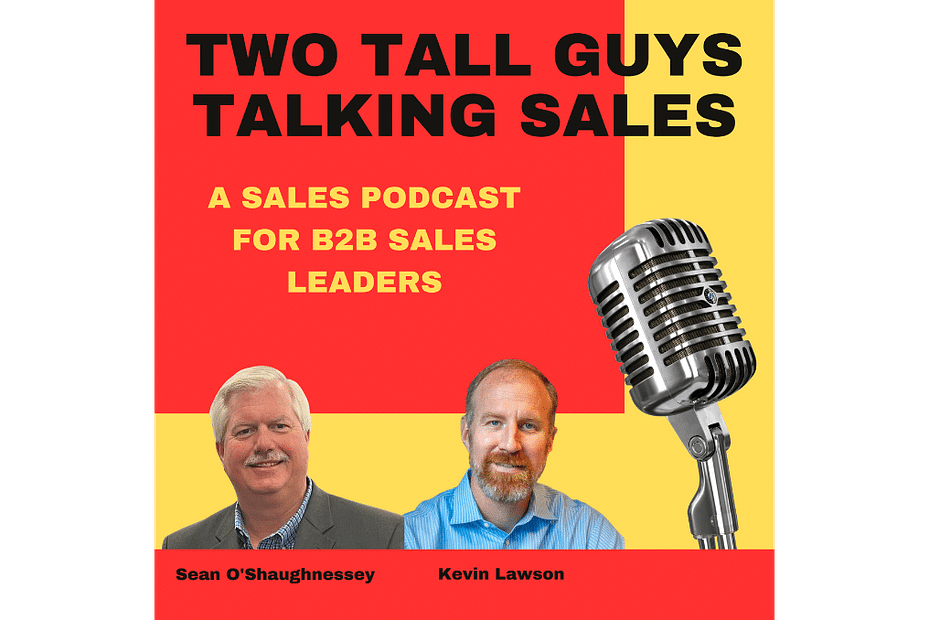
Two Tall Guys Talking Sales Podcast – Hit 120% of Quota: Manage Your Sales Territory Like a Business – Episode 205

What if the biggest obstacle to hitting your sales quota isn’t your territory, your product, or even your competition, but the way you manage yourself? In this episode of Two Tall Guys Talking Sales, Kevin Lawson and Sean O’Shaughnessey challenge sales professionals to stop thinking only like employees and start managing their territories like businesses. They break down the numbers every seller should know, explain why CRM discipline directly affects sales success, and show how average deal size, selling effort, close rates, and opportunity quality should drive daily decisions. For B2B sellers who want stronger business acumen, better sales processes, faster pipeline velocity, and more predictable revenue, this episode offers a practical framework for becoming the manager your territory needs.

Key Topics Discussed

Being Your Own Sales Manager — Not Just Your Own Boss (00:00)
Kevin and Sean draw an important distinction between thinking like a business owner and actually managing yourself like one. Sean introduces the idea of treating your sales territory as your own franchise: the company provides the products and infrastructure, but you are responsible for how effectively that territory produces revenue. That mindset changes sales management from something your VP of Sales does to you into something you actively do for yourself.

Define What a Successful Day Looks Like Before It Starts (02:48)
Before the first call, email, meeting, or prospecting activity, Sean argues that a salesperson should know exactly what must happen for the day to count as successful. Sometimes that means completing an important proposal or responding to customer questions. Other days require prospecting, building pipeline, or starting new conversations. Effective sales strategies start with consciously allocating limited time and attention to the activities that matter most.

Know Your Numbers—and Manage Beyond 100% of Quota (03:56)
Kevin connects strong sales management to systems and controls: the system determines how the work gets done, while the controls tell you whether it is working. Sellers should know their quota, compensation structure, average deal size, close rate, customer concentration, territory concentration, and other performance metrics. More importantly, Kevin makes the case for planning toward 120% of quota rather than 100%, because salespeople can’t fully control when complex deals close. That buffer is risk management, not optimism.

Understand the True Cost of Winning a Deal (07:01)
Sean goes beyond average deal size and introduces the idea of the “average transaction”—the total selling effort necessary to create that deal. How many meetings were required? How much time did those meetings consume? Did the opportunity begin through a referral, inbound inquiry, networking connection, or cold prospecting? When sellers understand the actual investment required to generate revenue, they can begin making better ROI decisions about where their selling time belongs. If the current activity model mathematically cannot produce quota attainment, working harder is not the answer. The assumptions or sales processes need to change.

CRM Data Hygiene as a Competitive Advantage (10:41)
CRM administration is often treated as an annoying non-selling activity. Kevin challenges that assumption directly. Good CRM data helps sellers understand where deals stall, where they lose, how often opportunities convert from particular stages, and whether the next step actually advances the buying process. Better information creates better coaching, stronger opportunity qualification, and potentially significant sales productivity gains. In that sense, reducing sales administrative burden should never mean eliminating the information needed to manage the business intelligently.

The Next Step Must Describe Progress—not Just Another Meeting (13:22)
“Schedule another meeting” is not a meaningful next-step opportunity. A legitimate next step describes what needs to be accomplished: confirm several requirements before preparing a proposal, identify the economic buyer, re-scope the solution, or determine whether a proof of concept makes sense. That level of specificity creates accountability and helps sellers manage complex deals based on evidence, not enthusiasm.

Key Quotes

Kevin Lawson (00:00):
“Being your own manager is not the same as being your own boss.”

Sean O’Shaughnessey (02:12):
“You are a franchisee of your territory, selling those products… You own it. You need to run it.”

Kevin Lawson (05:50):
“You should always be planning to exceed your quota, not just hit it, ’cause you’re managing risk.”

Sean O’Shaughnessey (09:23):
“If you cannot make your number by working hard and doing all the things correctly… then you gotta change some of those assumptions.”

Kevin Lawson (11:16):
“If you’re in the camp of saying, ‘I don’t wanna put information in my CRM,’ you’re gonna get outsold by your competition.”

Additional Resources

B2B Sales Lab — 14:00
Kevin invites listeners who want help calculating and applying the metrics discussed in the episode to join the B2B Sales Lab at b2b-sales-lab.com. Members can bring their own selling situations to office hours and work through tactical and strategic questions with Sean and Kevin.

The episode also highlights the value already sitting inside your CRM. With clean historical data, sellers can analyze conversion rates, opportunity stages, deal progression, losses, and required next steps rather than relying on intuition alone. Even relatively simple AI tools can make that analysis easier—but only when the underlying sales data is worth analyzing.

A Significant Actionable Item from this Podcast

Build the math behind your quota before doing more activity.

Take 30 minutes and write down your quota, average deal size, historical close rate, and the approximate number of selling interactions required to close an average deal. Then work backward.

How many wins must you produce to reach 120% of quota? How many legitimate opportunities must enter your pipeline to create those wins? How much sales capacity does each opportunity consume?

Now compare those requirements with your current pipeline and available time.

If the numbers do not work, do not simply conclude that you need to “work harder.” Determine what must change: larger deals, better qualification, improved conversion rates, fewer wasted meetings, greater prospecting volume, or faster movement through the sales process. That is the difference between hoping for sales success and actively managing toward it.

Read the rest of the article…

Your Sales Stack Is Keeping Reps Busy Instead of Helping Them Sell

Episode Summary

Sales engagement has moved beyond simple sequencing. In this episode of AI Tools for Sales Pros, Sean O’Shaughnessey explains why fragmented sales tools create administrative drag, weaken Messaging, and keep sellers from acting on buyer signals. The discussion frames revenue action orchestration as the next step in AI-enabled Revenue management, connecting CRM data, buyer intent, conversation intelligence, coaching, and forecast quality into one operating layer. For leaders serious about Sales success, the issue is no longer whether reps are busy, but whether their systems help them decide, act, and win.

Major Highlights

  • Why sellers spending 60% of their time on non-selling tasks is an architecture problem, not a motivation problem.
  • How artificial intelligence is changing sales engagement from high-volume outreach to signal-led seller action.
  • Why irrelevant outreach now creates commercial risk, deliverability risk, and brand risk.
  • How revenue action orchestration connects buyer signals, sales processes, account history, forecasting, and coaching.
  • The difference between enterprise orchestration platforms like Outreach and Salesloft, consolidated platforms like Apollo, and execution-focused tools like Regie, Reply, lemlist, and Salesforge.
  • Why CRM quality and data hygiene must come before orchestration if AI is going to improve Value selling and Revenue generation.
Read the rest of the article…

Why Your CRM Is Holding Back Your AI Sales Strategy … and Your Revenue

Episode Summary

Artificial intelligence will not fix a broken sales operating environment. This episode explains why the autonomous CRM must become the commercial control layer for modern revenue generation, not merely a passive system of record. Sean shows how unified customer context, trusted data, and active intelligence allow AI to improve sales management, Sales processes, Messaging, forecasting, and Value selling.

Major Highlights

  • Why fragmented data creates fragmented AI recommendations and weakens Sales success.
  • The real cost of “toggle tax” when sellers prepare for calls across disconnected tools.
  • How buyer expectations have changed, making relevance and Business acumen non-negotiable.
  • Why the CRM must evolve from a reporting database into a system of action.
  • The three shifts behind autonomous CRM: unified context, active intelligence, and organizational leverage.
  • How clean CRM data improves forecasting, deal strategy, next-best actions, and Revenue management.
  • Why dirty data makes artificial intelligence faster, but not smarter.
  • How platforms like Salesforce, HubSpot, and Pipedrive are moving toward AI-powered autonomous selling environments.
  • Why every sales leader should complete a Control Layer Audit before buying another AI tool.
Read the rest of the article…

AI Will Not Fix Sales Problems Built on Fragmented CRM Data

Most sales leaders are asking the wrong question about artificial intelligence.

They ask which AI tool to buy, which platform has the best features, which automation will save the most time, or which sales technology will help their reps move faster. Those questions matter, but they are downstream from the real issue.

The more important question is: Does your CRM provide AI with enough trusted context to make useful recommendations?

If the answer is no, the next tool will not solve the problem. It will accelerate the confusion.

AI cannot reason well from fractured data. If account history lives in email, proposal tools, LinkedIn messages, spreadsheets, call notes, support tickets, and half-completed CRM fields, the AI is not operating from a complete commercial picture. It is guessing from fragments. A faster guess is still a guess.

That is why the CRM must evolve from a passive system of record into an active system of action. The old CRM was built to store yesterday’s activity. The modern CRM has to help shape tomorrow’s decisions.

A strong CRM foundation gives sellers a complete account context before a call. It helps managers understand pipeline risk without relying only on rep opinion. It allows AI to recommend next steps because the recommendation is grounded in actual customer history, not generic sales theory. It gives the organization leverage because the patterns learned in one deal can improve the next similar deal.

Read the rest of the article…

Why B2B Sales Teams Miss Targets: An AI Operating Model to Eliminate Admin Drag

Episode Summary

In this episode of AI Tools for Sales Pros, we tackle the hidden operational drag limiting revenue generation across B2B teams: highly paid sellers spending most of their week on administrative work instead of customer conversations. The conversation reframes this as a sales management and revenue management problem, not a rep effort problem, and outlines how artificial intelligence and AI orchestration can reverse the trend.

You’ll hear a practical shift from “artisan sales” toward a Cognitive Revenue Engine where automation handles data-heavy tasks, and people focus on value selling, messaging, judgment, and trust. The result is a more scalable model for Sales success built on better Sales processes, stronger Business acumen, and faster execution.

Major Highlights

  • The core bottleneck in modern B2B selling is not activity volume; it is administrative drag that consumes prime selling time and weakens pipeline momentum.
  • Most teams are trapped in a Technology Trap: adding tools without orchestration, which increases complexity and reduces real customer-facing capacity.
  • The strategic shift is from “human-led, tech-assisted” to “tech-led, human-centric,” where AI handles repetitive data entry, and sellers own high-value decisions.
  • The Autonomous Revenue Engine is presented as an integrated operating model, not a single app—combining data hygiene, automation workflows, and AI content support.
  • No-code orchestration platforms (for example, Make.com, Zapier, n8n) are the connective layer that turns disconnected tools into coordinated execution.
  • Signal-Based Selling replaces manual account research with AI-powered monitoring for buying triggers, strategic shifts, and timely engagement opportunities.
  • The “Editor-in-Chief” model upgrades seller productivity: AI drafts and structures; humans validate, refine, and personalize quickly.
  • Always-On Hygiene is non-negotiable: deduplication, normalization, and CRM integrity are prerequisites for reliable AI outputs and budget efficiency.
  • The 80/20 “last mile” principle remains central: AI can handle the first 80%, but human context, empathy, and risk judgment determine deal quality.
  • A deterministic hybrid model protects trust by keeping facts and pricing rules-based while using AI for language and speed.
Read the rest of the article…

From Gut Feel to Evidence: AI Pipeline Management That Cleans Up Commit and Closes Faster

Episode Summary

Zombie deals are the quiet killer of forecast accuracy and sales capacity. When stalled opportunities sit in the pipeline, they distort revenue management, waste coaching time, and create false confidence with executives. This episode argues for a shift from intuition-driven pipeline reviews to evidence-based sales management using AI signals from real buyer activity. The outcome is cleaner forecasting, sharper coaching, and more revenue generation by reallocating time away from dead deals and toward real opportunities.

Major Highlights

  • Why “busy” is often a polite version of “dead,” and how zombie deals poison forecasting long before they get marked Closed-Lost.
  • The paradox of pipeline discipline: more fields, more interrogation, and more admin drag can reduce selling time and hurt Sales success.
  • Moving from the Intuition Era to the Evidence Era: treating revenue as a measurable business process, not a vibes-based debate.
  • How AI-powered revenue intelligence tools (examples include Clari and Gong) create an objective view of pipeline health by monitoring digital activity, engagement velocity, and deal risk patterns.
  • The sales leader’s role shift: stop being a pipeline inspector and become a performance coach using evidence, not rep narratives.
  • Risk dashboards and deal hygiene scoring: coaching off signals like economic buyer silence, stakeholder drop-off, and next-step absence.
  • The Tollbooth Effect: small administrative steps that compound into massive drag across sales processes, and how AI helps remove friction.
  • Why data quality is non-negotiable: high-performing AI depends on clean CRM data, supported by always-on hygiene approaches and tools like Cloudingo or Dedupely.
  • Emotional forecasting with conversation intelligence: using Natural Language Processing to detect sentiment trajectory, stakeholder flags, and “paper process” risk.
  • The strategic point: AI is not a replacement for leadership judgment; it is judgment amplification that improves business acumen by surfacing truth earlier.
Read the rest of the article…

Two Tall Guys Talking Sales Podcast – Start From Zero: January Sales Mindset, Pipeline Hygiene, and Q1 Revenue Generation – Episode 170

January resets every scoreboard to zero, making your mindset and operating discipline your first competitive advantage. In this episode of Two Tall Guys Talking Sales, hosts Kevin Lawson and Sean O’Shaughnessey break down how to start the year with intentional sales management, tighter Sales processes, and the kind of daily actions that drive Sales success and consistent Revenue generation, especially when Q4 either “drained the swamp” or left you with deals that slipped.

Key Topics Discussed

  • Why January mindset matters more than motivation (and how to avoid “being behind” by month-end) (00:00)

  • CRM data hygiene as a revenue lever: clean stages, real close dates, clear next steps (04:20)

  • Pipeline focus: prioritizing what you can actually work on, and aligning probability to reality (06:35)

  • Post-Q4 momentum: thank-you outreach that creates new expansion opportunities (08:05)

  • Prospecting with structure: start with five companies this week, then build the cadence (09:35)

  • Networking for leverage: partnering with adjacent vendors to unlock access and influence (10:40)

Key Quotes

  • Kevin Lawson (04:55): “Stop. Go to your CRM and practice good data hygiene.”

  • Kevin Lawson (05:55): “If someone has to ask you the status of your deal…your notes aren’t good enough, your data hygiene isn’t good enough.”

  • Sean O’Shaughnessey (02:35): “Q1 started. You have quotas, you have a quota right now, and you have revenue of zero.”

  • Sean O’Shaughnessey (08:10): “Go back and say thank you to every single one of your customers…and one of them is gonna say, ‘but we need a little bit more.’”

Additional Resources

  • B2B Sales Lab community (14:35): Join to get feedback, practical coaching, and peer support from sales pros, leaders, and marketers.

A Significant Actionable Item from this Podcast

Do a 30-minute pipeline reset today. Update your CRM with accurate stages, real close dates, and a clear next step for every active opportunity, then choose five target accounts to contact this week with a message tied to a specific business problem you solve. This single block sharpens your Messaging, improves Revenue management, and forces the Business acumen choices that separate busywork from real Value selling.

Read the rest of the article…

Admin Drag Is Killing Your Sales Capacity: Reclaim Selling Time Without Hiring

Episode Summary

Buying AI alone does not increase revenue. The real constraint in most B2B organizations is salesperson productivity, not tool availability, because reps spend too little time on revenue-producing work and too much time on administrative drag.

This episode introduces the “Tollbooth Effect,” the buildup of small approvals, handoffs, and system tasks that quietly tax every deal and slow revenue generation. You’ll learn how to treat artificial intelligence as an architectural teammate, automate the input work, humanize the output, and prove impact through cycle time, win rate, and pipeline quality improvements.

Major Highlights

• Why executives are done funding “transformation” and are now asking the only question that matters: where is the revenue impact from AI?

• The real productivity problem: most salespeople spend roughly a third of their week on revenue-producing work, while administrative drag consumes the rest.

• The Tollbooth Effect explained: small, reasonable steps in isolation that become a system-wide tax on execution, deal momentum, and messaging quality.

• Why adding headcount breaks in 2026: rising cost, fragile retention, and top performers resenting being turned into well-paid administrators.

• The core operating principle: automate the input and humanize the output. Use AI to remove research, data entry, record hygiene, routing, and documentation burdens so humans can focus on judgment.

• A strategy-first approach to artificial intelligence: treat AI as an operating layer that keeps your revenue engine consistent, not a content factory that produces more noise.

• The “sales nervous system” model: an autonomic layer handles repetitive functions reliably, while reps stay focused on decisions, stakeholder navigation, value selling, and next-step commitments.

• The deal-decay moment most teams ignore: the gap after a call. Speed and structure in follow-up protect urgency, improves conversion, and strengthens revenue management.

• The discipline prerequisite: AI amplifies your system. If your sales processes are fuzzy, your discovery is weak, and your stage criteria are unclear, AI will accelerate inconsistency.

• Data hygiene as a revenue lever: always-on hygiene builds trust in the CRM, reduces double-checking, improves forecasting integrity, and restores selling speed.

Read the rest of the article…

Admin Drag Is Killing Your Sales Capacity: How to Reclaim Selling Time With AI

Episode 23 of “AI Tools for Sales Pros” is built around a reality most leadership teams have started to feel in their gut. Buying AI does not increase revenue. It might increase activity, content volume, and dashboard noise, but revenue generation improves only when you reclaim selling time and redeploy it into the actions that move deals forward.

The executive version of the problem is simple. Your tech stack cost keeps rising. Your board wants proof that those investments translate into pipeline quality, cycle-time reduction, win-rate improvement, and improved margins. “Are we getting value?” is the polite question. “Where is the revenue?” is what they ask when patience runs out. This is a revenue management problem, not a software problem.

Most B2B companies are operating with a hidden productivity ceiling. Salespeople spend roughly a third of their time on revenue-producing work. The rest disappears into administrative drag: CRM updates, transcript cleanup, internal coordination, re-entering data across tools, searching for collateral, chasing security documentation, fixing records, and managing handoffs. None of that is value selling. Most of it is friction disguised as “process.”

A useful way to see it is the Tollbooth Effect. One approval feels reasonable. One form feels harmless. One handoff feels like good governance. Together, they turn selling into paperwork. The rep has a strong discovery call and a clear hypothesis. Momentum is real. Then they hit the toll plaza: systems require updates, internal teams need briefings, fields need to be filled, and the same information gets retyped because two systems disagree on the truth. By the time the rep finishes paying the tolls, urgency has cooled, follow-up becomes generic, and the deal loses its edge.

Read the rest of the article…

Automating Prospect List Cleaning & Deduplication with AI

Episode Summary

In this episode, we examine how dirty data quietly destroys sales productivity and what it takes to build an always-on, self-healing CRM using artificial intelligence. You will hear how data decay, duplicate records, and inconsistent company naming conventions lead to wasted time, inaccurate scoring models, and broken sales processes. We unpack the real financial impact of poor data hygiene and walk through the modern tools and AI-driven methods that keep your system clean 24/7. This episode offers a roadmap for transforming your CRM from a liability into a revenue-generating asset.

Major Highlights

  • Why duplicate records and inconsistent company names sabotage sales management, sales success, and revenue generation.
  • The true financial cost of data chaos, including how sales reps lose nearly a full day per week on administrative cleanup.
  • How data decay destabilizes sales strategies, value selling, messaging, and revenue management.
  • Why AI-driven fuzzy matching outperforms traditional CRM duplicate detection.
  • How tools like Cloudingo and Dedupely use AI to continuously scan, merge, and maintain clean prospect and account records.
  • How to build a hierarchy of data trustworthiness and design strategic Smart Merge Rules.
  • The connection between clean data and accurate lead scoring, contact enrichment, and automated personalization.
  • Why Always-On Hygiene is superior to the “Spring Cleaning Panic” approach.
  • A step-by-step playbook for conducting a manual data quality audit to quantify the problem inside your CRM.
Read the rest of the article…