Skip to content

decisions

What An MBA Didn’t Teach You About Sales

The sales profession is challenging. You need to work hard at it to succeed. You need to learn from the best. You need to improve your skills continuously. If you think you can sell since you are a hit at parties and have a lot of friends, you may soon find that you are a failure as a salesperson. Blunt truth:

because the sales profession is so hard, you have to focus on doing everything in sales very well, or you will be considered a failure.

I call this blog, Skinned Knees because I try to relate all of the learning that I have done over the past 4+ decades (while skinning my knees in the learning process).

I hope that you learn from my mistakes so that your business will grow!


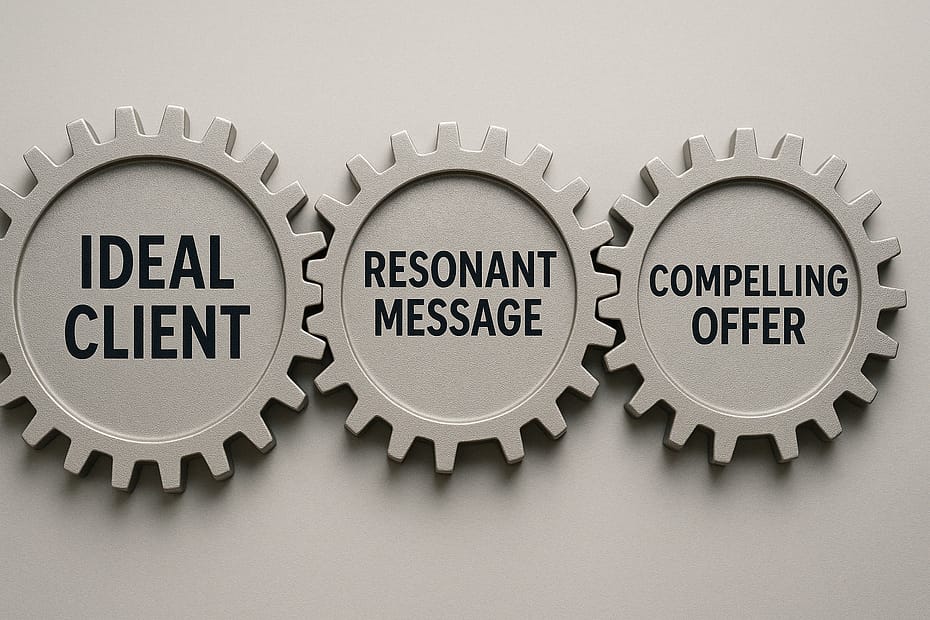
The Three Pillars of Sales Success: Ideal Client Profiles, Effective Messaging, and Aspirational Offers

Let’s start this article with a rhetorical question to the sales professionals, sales managers, or CEOs: Have you ever found yourself guilty of sending messages to prospects without fully considering their specific needs or how your offer aligns with them?

If so, you’re not alone—this is a common pitfall in sales. The good news is, it’s entirely fixable by developing a straightforward, strategic approach.

An effective sales strategy hinges on three core components: defining your ideal client profile (ICP), crafting a resonant message, and presenting a compelling offer. These elements are interconnected. Mastering their alignment will significantly enhance your sales effectiveness.

Ideal Client Profile

Let’s start with the ideal client profile. How well do you know the companies you’re targeting? Identifying your ideal customer is foundational to your entire sales approach. It’s not enough to say that your market is “small businesses” or “tech companies.” Instead, think about your best clients—the ones you genuinely enjoy working with, who value your product, and who generate profitable, sustainable business. Think about companies that rarely devalue your product or service by asking for a discount. What do these clients have in common?

Now that you have your favorite customers from above, reflect on your top five or ten accounts. Are they in the same industry? Do they share similar challenges or company structures? Perhaps they all have common goals that your product consistently solves. Pinpoint these commonalities. This process will help you create a precise and actionable ideal client profile.

But don’t stop at company-level characteristics. Remember, even in B2B sales, you’re ultimately selling to individuals. Identify the specific roles or buyers within these organizations that are responsible for making buying decisions. Who are these decision-makers? What motivates them personally and professionally? Do they all have the same kind of college education? Do they all have similar career paths? Understanding the people behind the logo makes your outreach more personal, targeted, and effective.

What is your message?

Once you’ve developed a clear picture of your ideal client and the people within those companies, the next step is crafting a message that reflects your value-selling message. This message is how you communicate your value proposition—it’s the bridge between your product and your prospect’s needs. Too often, sales messaging falls flat because it focuses heavily on the seller rather than the buyer. Statements that emphasize “we,” “I,” or “our product” rarely resonate deeply. Instead, effective messaging highlights the customer’s perspective, clearly communicating the benefits they will experience.

Read the rest of the article…
Two Tall Guys Talking Sales – Amy Connor discusses Salespeople vs. Lead Generation: Are You Using Your Team Wisely? – E125

How do you measure the success of your sales and marketing efforts? If you’ve ever wondered whether your marketing dollars are driving revenue or if your sales team is making the most of their leads, this episode is for you.  Kevin Lawson and Sean O’Shaughnessey sit down with Amy Connor, founder of CMO on Loan, to discuss how marketing and sales should work together for growth. Amy brings her extensive experience from Procter & Gamble,… 

Building Winning Sales Teams for the Future: Insights for CEOs and Sales Leaders

What are the key moves that CEOs and sales leaders must make to prepare their teams for success in 2025? That’s exactly what we explored in a recent episode of the Art and Science of Complex Sales podcast hosted by Paul Fuller of Membrain. I had the pleasure of joining Kevin Lawson, President of Lighthouse Sales Advisors, for a deep dive into the strategies defining high-performing sales organizations in the year ahead. You may recognize… 

Understanding Your Customers: The Role of Buyer Personas and Quarterly Business Reviews

Want to know the real secret behind successful sales? It’s not just about knowing what your customers need. The true power lies in understanding who they are at their core.

Have you ever wondered why some sales professionals consistently outperform their peers? The answer often comes down to their mastery of buyer personas and detailed profiles that capture the essence of your ideal customers.

Think of buyer personas as your secret weapon in the sales battlefield. These aren’t just random customer profiles thrown together in a rushed afternoon meeting. They represent carefully crafted composites of your most valuable clients, built from real-world data and insights. Your company might need several of these personas, each targeting different market segments with laser precision.

Creating effective buyer personas demands more than just surface-level observation. Start with a thorough analysis of your business landscape. Examine your strengths and weaknesses. Map out the opportunities that excite you and the threats that keep you up at night. This foundation helps you understand exactly where you fit in your customers’ world.

What makes your top customers tick? The answer lies in meaningful conversations with your best clients. These discussions should dig deep into both quantitative and qualitative factors. Demographics tell part of the story – age, position, education, family status. But the real gold comes from understanding their motivations. Why did they choose you? What problems do you solve that keep them coming back?

Read the rest of the article…

Driving Sales Performance with Strategic Competitive Analysis

Ever wonder why some sales teams consistently outperform their competitors while others struggle to close deals? The answer often lies in how well they understand and leverage competitive analysis in their sales process.

Let’s talk about competitive analysis in sales. It’s not just about knowing your competition – it’s about understanding how to use that knowledge to drive results. You need to grasp why prospects choose specific solutions over others and, more importantly, why they sometimes choose to do nothing at all.

Have you considered how many deals you’ve lost not to competitors but to indecision? These “no decision” outcomes often stem from a fundamental gap in prospect qualification. Intelligent sales professionals dig deeper, asking targeted questions about organizational priorities, resource allocation, and strategic initiatives. They understand that timing can be just as crucial as the solution itself.

The modern sales landscape demands a sophisticated approach to competitive analysis. Your success hinges on aligning your organization’s strengths with your prospect’s needs. But here’s the real question: Do you truly understand what your ideal client values most?

Many sales professionals miss the mark by focusing solely on feature comparisons. While product capabilities matter, they’re just one piece of the puzzle. The real power lies in understanding how your solution addresses your prospect’s challenges. This requires a comprehensive view of your competitive landscape, including direct and indirect competitors.

Think about your last few lost deals. What patterns emerge when you analyze the feedback? Every objection and hesitation after presenting pricing are valuable data points that should shape your competitive strategy. Your sales conversations must reflect a deep understanding of your prospect’s value metrics.

Read the rest of the article…

From Micro-Manager to Leader: Fostering Growth in Your Sales Team

Are you unknowingly sabotaging your sales team’s success? The answer might surprise you. The actual cost of micromanagement extends far beyond immediate productivity concerns.

Trust forms the bedrock of every high-performing sales organization. Yet many sales leaders unconsciously undermine this foundation through micromanagement. You’ve seen the signs – constant check-ins, questioning every decision, and hovering over your team’s shoulders. The culture you’ve worked so hard to build is slowly eroding.

Your best salespeople are leaving. Team morale is plummeting.

Let’s be clear about what constitutes micromanagement in sales. It’s not about being involved or interested in your team’s work. The real issue emerges when you start dictating every move and creating an atmosphere of constant surveillance.

Consider the cost of replacing top sales talent in today’s market. Beyond the substantial financial investment, you’re losing institutional knowledge and client relationships. Your organization can’t afford this drain on resources, and the impact reverberates throughout your entire sales ecosystem.

Read the rest of the article…

Why Americans Should Be Thankful This Thanksgiving

As Thanksgiving approaches, the season offers a powerful moment to recognize our extraordinary position in the global business landscape. As business leaders, entrepreneurs, and professionals, we operate within a framework of unprecedented opportunity and abundance, and this reality deserves our attention and appreciation. Our daily business operations rely on technological capabilities that much of the world’s population cannot access. Each time we open our laptops, join virtual meetings, or process digital transactions, we leverage tools… 

Selling Trust: The New Era of Salesmanship in the Digital Age

Have you ever wondered why some salespeople consistently outperform their peers? The answer might surprise you – it’s not about pushing products anymore. Let me share a story that perfectly illustrates this point.

Picture yourself at a car dealership with a problematic engine. The service manager listens briefly and suggests trying premium fuel first instead of pushing for expensive repairs. This unexpected advice reveals the essence of modern sales: building trust over making quick profits.

The digital revolution has transformed how we sell. Your prospects now have instant access to product information, specifications, and reviews. They’ve often completed 70% of their buying journey before contacting you. So, what’s your role in this new landscape?

You must evolve from an information provider to a value creator. Think about it – when did a customer last ask you for basic product details? They don’t need that anymore. They need someone who can help them navigate complex decisions and create innovative solutions.

Consider enterprise software sales. Your customers aren’t just buying features and functions. They’re investing in solutions to their business challenges. Can you help them visualize how your product transforms their operations? Do you understand their workflow well enough to spot opportunities they might have missed?

Trust becomes your most powerful differentiator in this environment. But how do you build it? Through actions, not words. When you genuinely prioritize customer success over immediate sales, people notice. They remember when you steered them away from unnecessary purchases or suggested more cost-effective solutions.

The modern sales process demands a deeper understanding of your customer’s business context. You’re not just matching products to needs – you’re helping define those needs. What problems keep your prospects awake at night? Which industry trends threaten their market position? How can your solution help them stay competitive?

Read the rest of the article…

Two Tall Guys Talking Sales Podcast – The Art of the Hire: Crafting a Winning Sales Team – E98

Join hosts Kevin Lawson and Sean O’Shaughnessey on this revealing episode of “Two Tall Guys Talking Sales” where they dive deep into the intricacies of hiring and motivating sales teams. Whether you’re a solopreneur or heading a growing business, this episode delivers crucial insights into creating a robust sales force to propel your business forward. Key Topics Discussed Key Quotes Additional Resources Summary In this episode, Kevin and Sean tackle the often-overlooked but vital elements… 

The Multifaceted Role of a CEO in a Sales-Driven Business Environment

In the business world, the role of a CEO extends beyond just leading the company. It involves taking responsibility for the sales environment, shaping the company culture, and setting the vision for the future. This is particularly important for small companies where the CEO may also be the primary salesperson or sales manager.

One of the critical responsibilities of a CEO in a sales environment is to address and resolve problems. When a client is dissatisfied, the CEO must apologize and take responsibility for the issue. This doesn’t mean placing blame but owning the problem and finding a solution. It is also essential to have a plan in place to prevent similar issues from recurring in the future.

In addition to problem-solving, a CEO plays a significant role in shaping the company’s culture. The company’s culture should reflect the core values that the CEO and the team believe in. These core values should guide the company’s actions and decisions. For example, suppose one of the company’s core values is extraordinary service. In that case, every team member, from the CEO to the junior account person, should strive to provide exceptional client service.

As a CEO, it is also important to be the company’s visionary. This includes setting goals and communicating these goals to the team. The vision should inspire and motivate the team to strive for excellence. It should also give a clear direction on where the company is headed and what it hopes to achieve.

Read the rest of the article…