Skip to content

decisions

What An MBA Didn’t Teach You About Sales

The sales profession is challenging. You need to work hard at it to succeed. You need to learn from the best. You need to improve your skills continuously. If you think you can sell since you are a hit at parties and have a lot of friends, you may soon find that you are a failure as a salesperson. Blunt truth:

because the sales profession is so hard, you have to focus on doing everything in sales very well, or you will be considered a failure.

I call this blog, Skinned Knees because I try to relate all of the learning that I have done over the past 4+ decades (while skinning my knees in the learning process).

I hope that you learn from my mistakes so that your business will grow!


From Manual to Automated: A Sales Pro’s Guide to Zapier, Make.com, n8n, and Pipedream

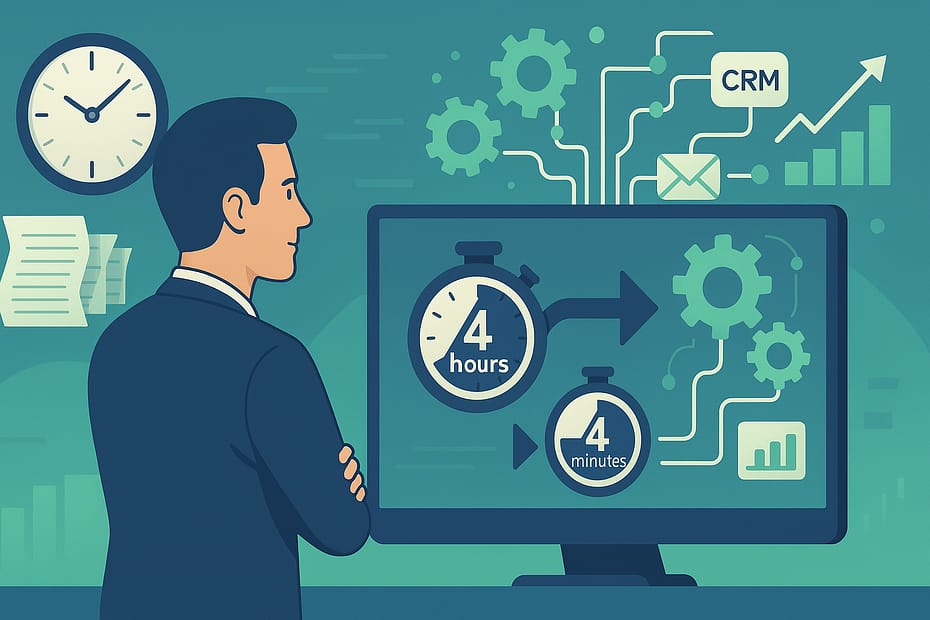
A sales manager recently told me something that stuck: “We went from twenty hours per week of manual work to two hours. Our lead response time dropped from four hours to four minutes.” That dramatic transformation wasn’t magic—it was automation. The reality is that sales teams today have more automation tools available than ever before. But with options like Zapier, Make.com, n8n, and Pipedream, the real challenge isn’t whether you should automate—it’s choosing the right… 

Cut Through the AI Hype: Practical Definitions for Sales Professionals

Artificial intelligence is transforming sales, but too many leaders are investing in tools they don’t fully understand. The result? Costly mistakes, poor adoption, and missed opportunities. This episode of AI Tools for Sales Pros breaks down the three core technologies behind AI: and explains them in plain language that every sales professional can use. The episode compares the current AI confusion to the database revolution of the 1990s. Just as sales leaders once needed to… 

The Key to Profitable Sales Organizations: Understanding and Adhering to the Sales Process

Many salespeople, sales managers, and CEOs face a unique problem. This issue concerns the sales process, particularly when specific steps are skipped. The challenge is common among sales teams across various industries, and there are different perspectives on its causes and solutions.

This issue is concerning since, according to Harvard Business Review, 28% of companies that master at least three stages of their sales process will see an increase in revenue growth. (https://hbr.org/2015/01/companies-with-a-formal-sales-process-generate-more-revenue). That same study states that companies that had trained their sales managers to manage their pipelines saw their revenue grow 9% faster than those that didn’t. But not just any training will do. Sales managers need targeted training to address specific pipeline management challenges.

Sometimes, the sales process might seem tedious, and salespeople may skip steps out of impatience or eagerness to close a deal. However, skipping these steps can lead to further complications down the line. When a sales team is not following the process that has been identified, it can disrupt the team’s rhythm and efficiency. Some might argue that this is a sign that the process needs to change or that more training is required.

This issue extends beyond the sales team. When a company hires a fractional VP of sales, it brings an outside perspective to evaluate its sales process. The fractional VP will often encounter resistance from the existing team, who may feel their industry is unique. While every business has its distinctive elements, the fundamentals of a sales process are universal.

Read the rest of the article…

Two Tall Guys Talking Sales – Mastering Sales Hiring with John Lee – Sales Management Insights for Growth-Focused Teams – Episode 138

In this week’s episode of Two Tall Guys Talking Sales, Kevin Lawson and Sean O’Shaughnessey are joined by the “Elder Statesman” of fractional sales management: John Lee. With nearly four decades of experience and a deep track record of helping companies hire top-performing sales professionals, John shares a masterclass in sales hiring strategy. Whether you’re scaling from a two-person team to ten or trying to avoid costly hiring mistakes, this episode delivers practical, field-tested advice… 

Two Tall Guys Talking Sales – Steve Caton Shares When to Sell, When to Coach, and When to Hire: Strategic Sales Management That Drives Growth – Episode 137

In this powerful episode of Two Tall Guys Talking Sales, Kevin Lawson and Sean O’Shaughnessey are joined once again by Steve Caton, CEO of Altezza Solutions, for a thought-provoking conversation that zeroes in on one of the toughest decisions in sales leadership: when to sell, when to coach, and when to hire. Whether you’re a business owner, VP of Sales, or a player-coach juggling a quota and a team, this episode brings clarity to the… 

Two Tall Guys Talking Sales – Scaling Smarter: Building Sales Teams with Steve Caton – Episode 136

What does it take to scale a sales organization in today’s unpredictable business environment? In this dynamic episode of Two Tall Guys Talking Sales, hosts Sean O’Shaughnessey and Kevin Lawson welcome back Steve Caton, CEO of Altezza Solutions, to unpack the nuances of scaling sales teams, especially through the power of fractional sales professionals. Together, they explore the critical role that sales processes, sales management, and business acumen play in enabling organizations to grow without… 

The Three Pillars of Sales Success: Ideal Client Profiles, Effective Messaging, and Aspirational Offers

Let’s start this article with a rhetorical question to the sales professionals, sales managers, or CEOs: Have you ever found yourself guilty of sending messages to prospects without fully considering their specific needs or how your offer aligns with them?

If so, you’re not alone—this is a common pitfall in sales. The good news is, it’s entirely fixable by developing a straightforward, strategic approach.

An effective sales strategy hinges on three core components: defining your ideal client profile (ICP), crafting a resonant message, and presenting a compelling offer. These elements are interconnected. Mastering their alignment will significantly enhance your sales effectiveness.

Ideal Client Profile

Let’s start with the ideal client profile. How well do you know the companies you’re targeting? Identifying your ideal customer is foundational to your entire sales approach. It’s not enough to say that your market is “small businesses” or “tech companies.” Instead, think about your best clients—the ones you genuinely enjoy working with, who value your product, and who generate profitable, sustainable business. Think about companies that rarely devalue your product or service by asking for a discount. What do these clients have in common?

Now that you have your favorite customers from above, reflect on your top five or ten accounts. Are they in the same industry? Do they share similar challenges or company structures? Perhaps they all have common goals that your product consistently solves. Pinpoint these commonalities. This process will help you create a precise and actionable ideal client profile.

But don’t stop at company-level characteristics. Remember, even in B2B sales, you’re ultimately selling to individuals. Identify the specific roles or buyers within these organizations that are responsible for making buying decisions. Who are these decision-makers? What motivates them personally and professionally? Do they all have the same kind of college education? Do they all have similar career paths? Understanding the people behind the logo makes your outreach more personal, targeted, and effective.

What is your message?

Once you’ve developed a clear picture of your ideal client and the people within those companies, the next step is crafting a message that reflects your value-selling message. This message is how you communicate your value proposition—it’s the bridge between your product and your prospect’s needs. Too often, sales messaging falls flat because it focuses heavily on the seller rather than the buyer. Statements that emphasize “we,” “I,” or “our product” rarely resonate deeply. Instead, effective messaging highlights the customer’s perspective, clearly communicating the benefits they will experience.

Read the rest of the article…

Two Tall Guys Talking Sales – Amy Connor discusses Salespeople vs. Lead Generation: Are You Using Your Team Wisely? – E125

How do you measure the success of your sales and marketing efforts? If you’ve ever wondered whether your marketing dollars are driving revenue or if your sales team is making the most of their leads, this episode is for you.  Kevin Lawson and Sean O’Shaughnessey sit down with Amy Connor, founder of CMO on Loan, to discuss how marketing and sales should work together for growth. Amy brings her extensive experience from Procter & Gamble,… 

Building Winning Sales Teams for the Future: Insights for CEOs and Sales Leaders

What are the key moves that CEOs and sales leaders must make to prepare their teams for success in 2025? That’s exactly what we explored in a recent episode of the Art and Science of Complex Sales podcast hosted by Paul Fuller of Membrain. I had the pleasure of joining Kevin Lawson, President of Lighthouse Sales Advisors, for a deep dive into the strategies defining high-performing sales organizations in the year ahead. You may recognize… 

Understanding Your Customers: The Role of Buyer Personas and Quarterly Business Reviews

Want to know the real secret behind successful sales? It’s not just about knowing what your customers need. The true power lies in understanding who they are at their core.

Have you ever wondered why some sales professionals consistently outperform their peers? The answer often comes down to their mastery of buyer personas and detailed profiles that capture the essence of your ideal customers.

Think of buyer personas as your secret weapon in the sales battlefield. These aren’t just random customer profiles thrown together in a rushed afternoon meeting. They represent carefully crafted composites of your most valuable clients, built from real-world data and insights. Your company might need several of these personas, each targeting different market segments with laser precision.

Creating effective buyer personas demands more than just surface-level observation. Start with a thorough analysis of your business landscape. Examine your strengths and weaknesses. Map out the opportunities that excite you and the threats that keep you up at night. This foundation helps you understand exactly where you fit in your customers’ world.

What makes your top customers tick? The answer lies in meaningful conversations with your best clients. These discussions should dig deep into both quantitative and qualitative factors. Demographics tell part of the story – age, position, education, family status. But the real gold comes from understanding their motivations. Why did they choose you? What problems do you solve that keep them coming back?

Read the rest of the article…