Skip to content

forecasting accuracy

What An MBA Didn’t Teach You About Sales

The sales profession is challenging. You need to work hard at it to succeed. You need to learn from the best. You need to improve your skills continuously. If you think you can sell since you are a hit at parties and have a lot of friends, you may soon find that you are a failure as a salesperson. Blunt truth:

because the sales profession is so hard, you have to focus on doing everything in sales very well, or you will be considered a failure.

I call this blog, Skinned Knees because I try to relate all of the learning that I have done over the past 4+ decades (while skinning my knees in the learning process).

I hope that you learn from my mistakes so that your business will grow!


Why AI in B2B Sales Fails at the Last Mile and How to Fix It

Most conversations about AI in B2B sales focus on speed. Fewer focus on control. That is the blind spot.

AI can produce drafts, summaries, research, and follow-up frameworks in seconds. That part is real. But the final 20%, the last mile, is where revenue quality is either protected or destroyed. That final layer requires human judgment: context, timing, risk assessment, and the decision of what should happen next.

The central operating issue in sales today is not effort. It is an allocation. Too many high-value salespeople are spending prime hours on low-value administrative work. CRM cleanup. Internal updates. Document hunting. Manual transcription. Reformatting information that should already be structured. That is a sales management design flaw, not a rep discipline issue.

When sales organizations fix this, performance changes fast. More customer-facing time creates more trust-building interactions. More trust creates better access, stronger positioning, and better conversion outcomes. This is not theoretical. It is how revenue generation compounds in real markets.

The right model is not “AI only.” It is a hybrid model: deterministic automation for correctness, AI for speed and language quality, human oversight for business judgment.

Deterministic systems should control anything that must be exact: pricing, contract elements, offer logic, approval rules, and data integrity. AI should then layer natural language, personalization, and messaging refinement on top of verified inputs. This is how you scale value selling without introducing preventable errors.

If your team is still using AI as a standalone drafting tool, you are under-leveraging it. If your team is sending AI output without last-mile review, you are overexposing the business. The goal is not automation theater. The goal is repeatable, high-confidence sales processes that increase throughput without compromising trust.

Read the rest of the article…

Stop Betting on Superstars: How Operating Standards Turn Sellers into Predictable Producers

Many teams grow, but few truly scale revenue beyond individual hero efforts. That difference changes everything for leaders today and in the future. Growth relies on hustle; scaling depends on repeatability across segments and individuals. Your strategy must reflect that hard truth in practice.

Are you relying on one standout to win deals month after month? That looks strong until risk turns visible and costly. One resignation can cripple momentum and expose brittle systems that you had previously ignored.

Scalable sales replaces heroics with defined, teachable operating rhythms that everyone follows. It turns chaos into predictable pipeline progress and results. It clarifies markets, messages, motions, and measurable expectations for every seller on a weekly basis. It builds leverage into onboarding and coaching for consistency. It protects margins while systematically accelerating win rates and velocity across territories.

The foundation begins with a clear picture of your ideal customer, including any disqualifying factors. Having an accurate Ideal Client Profile (ICP) helps minimize waste and reduce uncertainty in your efforts. Take time to define firmographics, pain points, triggers, and buying behaviors using consistent language based on shared evidence. Understand who cares about these issues and why it matters to them now. Also, identify negative personas to sharpen your focus and qualification processes in marketing and sales. A well-defined ICP can significantly boost your conversion rates and shorten the sales cycle.

Next, turn your ICP into straightforward messaging and discovery frameworks tailored for each stage. Consider what unique problems you solve for your customers. What outcomes are most important to them, and who are the key stakeholders by role and priority?

Build talk tracks that lead buyers, not chase buyers with purpose always. Anchor questions to the business metrics and risks they feel. Teach a qualification that tests mutual commitment and outlines next steps with attached dates. Avoid fluffy demos; design relevant proofs using their data. Process specificity turns B players into consistent producers without copying another personality.

I suggest you establish a practical, stage-based operating rhythm that everyone can easily understand and follow. By sharing clear definitions and expectations, managing the pipeline becomes a consistent and smooth process each week. Define each stage with specific exit criteria—avoiding vague intentions or subjective feelings. For example, discovery is considered complete when stakeholders confirm the consequences and impact, and solution fit is achieved when success criteria and ownership are clearly aligned. The commit stage should be backed by a shared plan with clear dates and assigned owners. During weekly reviews, focus on assessing quality rather than just quantity or activity counts. Ask yourself:

  • Does evidence from buyers’ backstage moves have a direct impact on their purchasing decisions?
  • Are the next steps specific, mutually agreed upon, and already scheduled on both calendars?
Read the rest of the article…

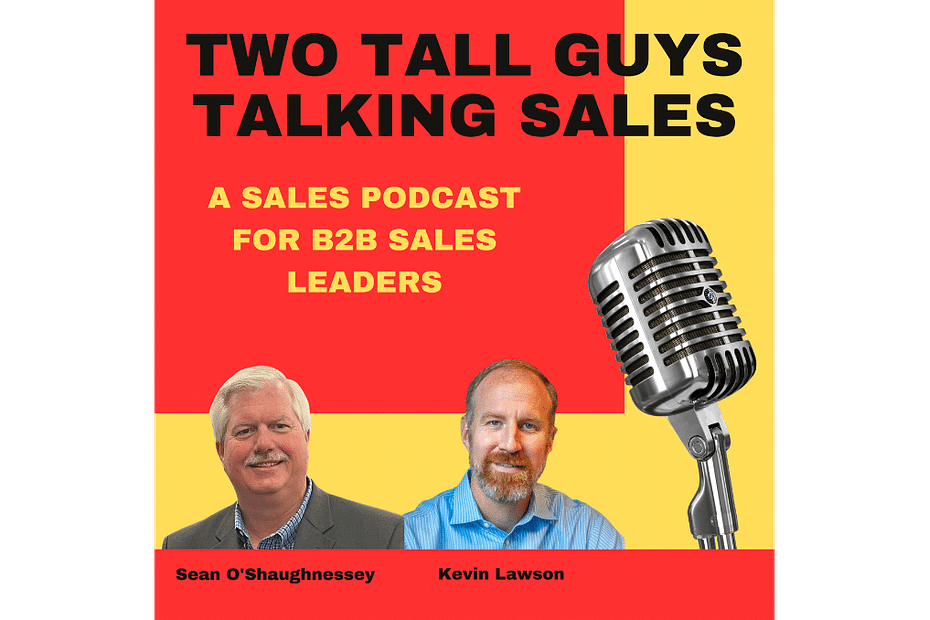
Two Tall Guys Talking Sales – The Hidden Driver of Every Sale: Mike Dowhan Explains How Compelling Events Shape Business Acumen and Sales Strategies – Episode 160

In this episode of Two Tall Guys Talking Sales, hosts Kevin Lawson and Sean O’Shaughnessey welcome Mike Dowhan, founder of Bedrock Sales. Together, they explore one of the most overlooked yet transformative aspects of sales management: the compelling event. Mike brings over two decades of experience helping organizations refine their sales processes, understand buyer motivation, and drive consistent revenue generation. Whether you’re a frontline seller or a sales leader guiding a team, this episode unpacks how identifying and leveraging compelling events can be the difference between chasing deals and closing them confidently.

Key Topics Discussed

  • The Power of the Compelling Event (01:12) – What defines a compelling event and why it’s the “why” behind every great sale.
  • Asking Better Discovery Questions (03:00) – How to uncover the root cause that motivates buyers to act now rather than later.
  • Getting Permission to Go Deep (07:17) – Why earning trust allows salespeople to ask the tough, business-critical questions.
  • Compelling Events vs. Compelling Needs (09:53) – The distinction between recognizing a real deadline versus a vague desire for change.
  • Surfacing the Cost of Inaction (10:38) – How to use timing, impact, and risk to create urgency without manufacturing pressure.

Key Quotes

  • Mike Dowhan (03:49): “What caused you to pick up the phone or take my call today? What’s different today than yesterday? That’s where you find the real reason a buyer is ready to move.”
  • Sean O’Shaughnessey (02:29): “If there’s no compelling event, it becomes very difficult. You’re pushing the boulder uphill, fighting the same battle over and over.”
  • Kevin Lawson (12:00): “Finding permission and tracking back to that event is where we create real value, and avoid the trap of commoditization.”

Additional Resources

A Significant Actionable Item from this Podcast

Start every discovery conversation with one simple question:

“What changed today that made you want to talk to me?”

This question reveals your buyer’s compelling event, the emotional and operational trigger that drives their need to act. Understanding that moment transforms your sales strategy from reactive to consultative. Use it to align your messaging, reinforce your value-selling approach, and accelerate revenue growth.

Read the rest of the article…