Skip to content

forecasting

What An MBA Didn’t Teach You About Sales

The sales profession is challenging. You need to work hard at it to succeed. You need to learn from the best. You need to improve your skills continuously. If you think you can sell since you are a hit at parties and have a lot of friends, you may soon find that you are a failure as a salesperson. Blunt truth:

because the sales profession is so hard, you have to focus on doing everything in sales very well, or you will be considered a failure.

I call this blog, Skinned Knees because I try to relate all of the learning that I have done over the past 4+ decades (while skinning my knees in the learning process).

I hope that you learn from my mistakes so that your business will grow!


Stop Betting on Superstars: How Operating Standards Turn Sellers into Predictable Producers

Many teams grow, but few truly scale revenue beyond individual hero efforts. That difference changes everything for leaders today and in the future. Growth relies on hustle; scaling depends on repeatability across segments and individuals. Your strategy must reflect that hard truth in practice.

Are you relying on one standout to win deals month after month? That looks strong until risk turns visible and costly. One resignation can cripple momentum and expose brittle systems that you had previously ignored.

Scalable sales replaces heroics with defined, teachable operating rhythms that everyone follows. It turns chaos into predictable pipeline progress and results. It clarifies markets, messages, motions, and measurable expectations for every seller on a weekly basis. It builds leverage into onboarding and coaching for consistency. It protects margins while systematically accelerating win rates and velocity across territories.

The foundation begins with a clear picture of your ideal customer, including any disqualifying factors. Having an accurate Ideal Client Profile (ICP) helps minimize waste and reduce uncertainty in your efforts. Take time to define firmographics, pain points, triggers, and buying behaviors using consistent language based on shared evidence. Understand who cares about these issues and why it matters to them now. Also, identify negative personas to sharpen your focus and qualification processes in marketing and sales. A well-defined ICP can significantly boost your conversion rates and shorten the sales cycle.

Next, turn your ICP into straightforward messaging and discovery frameworks tailored for each stage. Consider what unique problems you solve for your customers. What outcomes are most important to them, and who are the key stakeholders by role and priority?

Build talk tracks that lead buyers, not chase buyers with purpose always. Anchor questions to the business metrics and risks they feel. Teach a qualification that tests mutual commitment and outlines next steps with attached dates. Avoid fluffy demos; design relevant proofs using their data. Process specificity turns B players into consistent producers without copying another personality.

I suggest you establish a practical, stage-based operating rhythm that everyone can easily understand and follow. By sharing clear definitions and expectations, managing the pipeline becomes a consistent and smooth process each week. Define each stage with specific exit criteria—avoiding vague intentions or subjective feelings. For example, discovery is considered complete when stakeholders confirm the consequences and impact, and solution fit is achieved when success criteria and ownership are clearly aligned. The commit stage should be backed by a shared plan with clear dates and assigned owners. During weekly reviews, focus on assessing quality rather than just quantity or activity counts. Ask yourself:

  • Does evidence from buyers’ backstage moves have a direct impact on their purchasing decisions?
  • Are the next steps specific, mutually agreed upon, and already scheduled on both calendars?
Read the rest of the article…

Two Tall Guys Talking Sales – The Hidden Driver of Every Sale: Mike Dowhan Explains How Compelling Events Shape Business Acumen and Sales Strategies – Episode 160

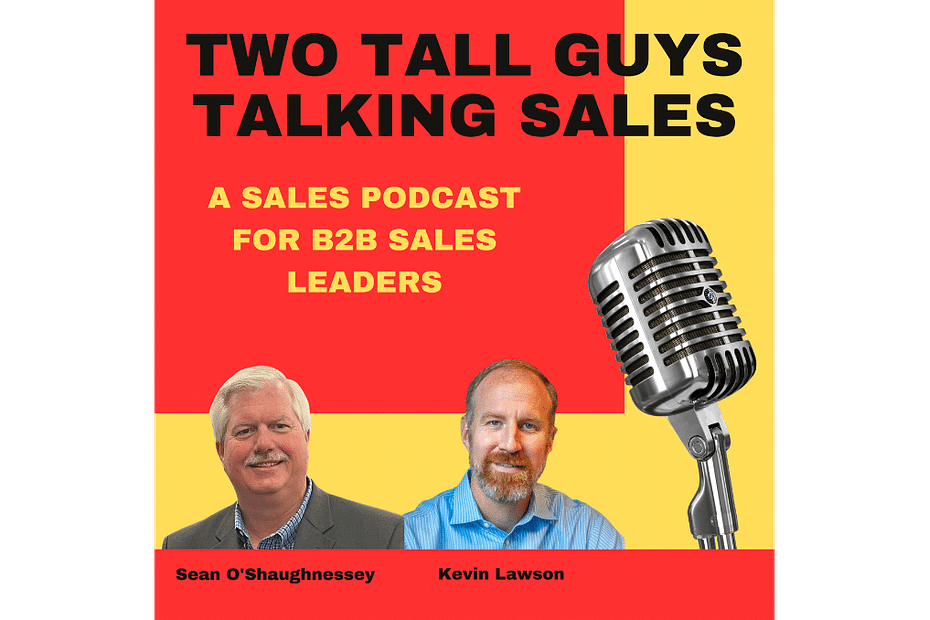
In this episode of Two Tall Guys Talking Sales, hosts Kevin Lawson and Sean O’Shaughnessey welcome Mike Dowhan, founder of Bedrock Sales. Together, they explore one of the most overlooked yet transformative aspects of sales management: the compelling event. Mike brings over two decades of experience helping organizations refine their sales processes, understand buyer motivation, and drive consistent revenue generation. Whether you’re a frontline seller or a sales leader guiding a team, this episode unpacks how identifying and leveraging compelling events can be the difference between chasing deals and closing them confidently.

Key Topics Discussed

  • The Power of the Compelling Event (01:12) – What defines a compelling event and why it’s the “why” behind every great sale.
  • Asking Better Discovery Questions (03:00) – How to uncover the root cause that motivates buyers to act now rather than later.
  • Getting Permission to Go Deep (07:17) – Why earning trust allows salespeople to ask the tough, business-critical questions.
  • Compelling Events vs. Compelling Needs (09:53) – The distinction between recognizing a real deadline versus a vague desire for change.
  • Surfacing the Cost of Inaction (10:38) – How to use timing, impact, and risk to create urgency without manufacturing pressure.

Key Quotes

  • Mike Dowhan (03:49): “What caused you to pick up the phone or take my call today? What’s different today than yesterday? That’s where you find the real reason a buyer is ready to move.”
  • Sean O’Shaughnessey (02:29): “If there’s no compelling event, it becomes very difficult. You’re pushing the boulder uphill, fighting the same battle over and over.”
  • Kevin Lawson (12:00): “Finding permission and tracking back to that event is where we create real value, and avoid the trap of commoditization.”

Additional Resources

A Significant Actionable Item from this Podcast

Start every discovery conversation with one simple question:

“What changed today that made you want to talk to me?”

This question reveals your buyer’s compelling event, the emotional and operational trigger that drives their need to act. Understanding that moment transforms your sales strategy from reactive to consultative. Use it to align your messaging, reinforce your value-selling approach, and accelerate revenue growth.

Read the rest of the article…

Two Tall Guys Talking Sales – Sales Management Masterclass: Paul Rafferty’s Proven Framework for Smarter Deal Reviews and Revenue Generation – Episode 159

Welcome back to Two Tall Guys Talking Sales with hosts Kevin Lawson and Sean O’Shaughnessey. In this dynamic episode, the Tall Guys welcome Paul Rafferty from Sales Xceleration to explore the art and science of sales coaching, deal qualification, and the importance of building sales acumen. Paul brings decades of experience in sales management, value selling, and revenue generation, offering a practical framework for sales leaders who want to coach their teams more effectively and for reps who want to stop chasing the wrong deals.

Discover how to transform your team’s approach to sales processes—from opportunity scoring to understanding a buyer’s “pain chain.” This conversation is packed with actionable insights that blend sales strategy, business acumen, and real-world stories you can immediately apply to your own selling environment.

Key Topics Discussed

  • 03:00 — Building a Deal Coaching Framework:
    Paul introduces his 100-point scorecard system that evaluates the Ideal Prospect Profile, the Pain Chain, and Commitment to Decision. This framework transforms deal reviews into powerful coaching sessions rather than mere forecast updates.
  • 05:10 — The “Pain Chain” and Sales Philosophy:
    Sean and Paul discuss how understanding buyer pain isn’t optional—it’s foundational to value selling. Without real pain, there’s no compelling reason for your buyer to act.
  • 06:45 — From Friendly to Effective Salesperson:
    Paul and Sean discuss how friendliness can open doors, but it’s teaching and insight that ultimately win deals. Sales success comes from challenging your prospects and helping them think differently.
  • 08:00 — Why Deals Get Stuck:
    Kevin and Paul explore how most stalled deals trace back to weak discovery. Coaching your team to go deeper early in the sales process prevents gridlock later.
  • 10:30 — The Currency of Knowledge:
    Paul explains that in modern selling, gifts and lunches no longer move the needle—information does. Great salespeople earn influence by being teachers, not vendors.

Key Quotes

  • Paul Rafferty (03:50):
    “It’s not what you do—it’s what they do. The scorecard helps you coach reps to spend time where there’s real buying intent, not just big logos.”
  • Sean O’Shaughnessey (05:43):
    “Salespeople need to understand the theory of sales. Without knowing the frameworks—like the pain chain or solution selling—you’re just saying, ‘I’m a nice guy, buy from me.’”
  • Kevin Lawson (08:38):
    “Most deals go to die in the discovery phase. Coaching means rewinding the tape and helping reps fix what wasn’t done early enough.”
  • Paul Rafferty (12:51):
    “Your currency is information—help your buyer look smart, get promoted, and win internally. That’s real value selling.”

Additional Resources

  • Paul Rafferty
    • prafferty@salesxceleration.com 
    • https://www.linkedin.com/in/pauljrafferty/
  • Books referenced:
    • Solution Selling by Michael Bosworth – https://a.co/d/hHtYSiX
    • The Challenger Sale by Matthew Dixon & Brent Adamson – https://a.co/d/2kJsbDU
    • Strategic Selling by Robert Miller & Stephen Heiman – https://a.co/d/icPcC6H

A Significant Actionable Item from this Podcast

Implement a Deal Coaching Scorecard.
Instead of subjective forecasting (“This deal is 70% likely to close”), create an objective scoring model based on:

  1. Ideal Prospect Fit (25 pts) – Does this prospect align with your best customer profile?
  2. Pain Chain (25 pts) – Have they admitted to a real, solvable pain?
  3. Commitment to Decision (50 pts) – Have they engaged decision-makers and committed to next steps?

Use this tool in your next pipeline review. It will sharpen your sales management coaching, improve revenue forecasting, and elevate your team’s overall sales success. If you want more information about this scorecard, reach out to Paul Rafferty at his address above.

Read the rest of the article…

Two Tall Guys Talking Sales – The First 90 Days as a Sales Leader: Proven Strategies for Sales Management Success – Episode 157

When a company hires or promotes its first sales manager, expectations run high, but clarity can be low. In this episode of Two Tall Guys Talking Sales, hosts Sean O’Shaughnessey and Kevin Lawson unpack what the first 90 days should look like for a new sales leader. Whether you’re a CEO onboarding a new manager or that manager stepping into the role themselves, this discussion provides practical guidance on setting realistic expectations, building trust, and establishing the foundation for long-term sales success and revenue growth.

Key Topics Discussed

  • Setting Realistic Expectations as an Owner (02:00)
    Kevin explores how CEOs should frame success during the first 90 days, emphasizing the importance of patience, trust-building, and understanding that sales management transformation takes time.
  • Avoiding the “Fix This First” Trap (06:30)
    Sean cautions business owners against dumping old personnel problems on new leaders, explaining why cleaning up someone else’s mess undermines early business acumen and trust.
  • Building Relationships and Learning the Business (08:30)
    Sean shares tactical advice for new sales managers: conduct one-on-ones, ride along with reps, and build rapport across departments, marketing, operations, and finance, to master internal sales processes and interdepartmental alignment.
  • Understanding Internal and External Tools (11:12)
    Kevin discusses discovering hidden tools and levers, people, systems, vendor programs, or product configurations that can immediately improve team performance and value-selling opportunities.
  • Repackaging and Aligning Offers to the Market (12:30)
    The hosts outline how sales leaders can rethink product structures and messaging to better serve customer needs, thereby improving revenue management and profitability.

Key Quotes

  • “Trust is a currency. It has to be earned by customers, by salespeople, by peers, and you can’t buy it in the first 30 days.”,  Kevin Lawson (03:00)
  • “Don’t make your new sales leader the bad guy. If there’s a tough personnel decision, handle it before they start.”,  Sean O’Shaughnessey (07:00)
  • “Learn your company inside and out. If you don’t know who runs manufacturing or how the supply chain works, you can’t lead your salespeople effectively.”,  Sean O’Shaughnessey (10:00)
  • “You might have 20 products, but 100 possible solutions. The smart leader finds ways to repackage and sell in ways the customer actually values.”,  Kevin Lawson (13:00)

Additional Resources

  • Episodes on sales onboarding, marketing alignment, and ideal customer profiling (ICP) were referenced throughout the conversation.
  • Explore more insights and tools for sales leaders at b2b-sales-lab.com.

A Significant Actionable Item from this Podcast

Create a 90-Day Integration Plan.
If you’re a new sales manager, spend your first month listening and learning. Conduct one-on-ones with every salesperson, schedule cross-department meetings, and document what each function needs from sales. In the second month, identify process gaps and start designing improvements. By the third month, implement one or two visible wins, such as improving forecasting accuracy or clarifying sales messaging, to demonstrate value and build momentum.

Read the rest of the article…

Transform Your Sales Team: Strategic Compensation Adjustments for Year-End Momentum

Autumn is the time of year for sales leaders, managers, and CEOs to begin laying the groundwork for next year’s success. Have you considered how your current sales compensation plans impact your team’s motivation and productivity? Now is the ideal moment to evaluate, adjust, and deliver these plans, preferably by December 1st. Doing so can significantly influence your team’s drive to close deals in December and build momentum heading into the next fiscal year.

Sales compensation should be motivating and rewarding for employees. It directly shapes your sales team’s behaviors and priorities. An effective plan incentivizes the right actions and deters the wrong ones.

Consider a common pitfall: salespeople holding back deals to inflate their numbers for the following year. Does your current compensation structure inadvertently reward this practice? If so, you’re unintentionally harming your year-end results.

To counter this, strategically incorporate compensation escalators and cliffs into your plan. Escalators progressively reward increased sales performance throughout the year. Higher performance equals higher commission rates, driving your sales team to push forward continually. 

Commission cliffs reset commission rates at the beginning of each year, creating a sense of urgency to close deals before the end of December. Communicating these compensation details clearly by early December ensures your team understands what’s at stake.

Don’t hold your team back!

Another critical compensation consideration is eliminating commission caps. While some organizations cap commissions to control expenses, this practice can backfire dramatically. Caps tell your top-performing salespeople that their exceptional efforts are neither valued nor rewarded appropriately. This demotivates your top talent and encourages them to seek opportunities elsewhere that offer uncapped rewards. 

Removing commission caps signals that the organization fully supports and rewards outstanding performance. Have you considered how much growth your company might achieve if artificial constraints didn’t limit your sales team?

When evaluating compensation, look beyond simple cost containment. Consider the true profitability of incentivizing increased sales volume. Once salespeople reach their targets and enter accelerators, each additional dollar earned typically comes at a lower incremental cost to your organization. 

Sales transactions earlier in the year have already covered the salesperson’s base salary once they have met their annual quota. In fact, at 100% of quota, the salesperson should have covered all their costs and their share of the overall company’s revenue needs. Thus, every extra sale at escalated commission rates still contributes positively to your overall profitability. 

Read the rest of the article…

Choosing the Right AI Stack for Your Sales Organization

A VP of Sales recently confided in me: “We have six different AI tools, but our reps are still doing manual work. What went wrong?”

This is the AI tool proliferation problem. Sales leaders often collect tools without a strategy, mistaking a pile of features for a cohesive system. It’s like buying a hammer, screwdriver, saw, and drill without realizing you’re actually trying to build a house. An effective AI stack means integration. When tools work together, they amplify each other’s value. When they don’t, they add complexity, confusion, and wasted money.

Why Strategy Beats Random Adoption

Random tool adoption is rampant across sales organizations. Teams chase shiny new software, often ending up with overlapping features, siloed data, and productivity lost to tool-switching. Instead of solving problems, the stack itself becomes the problem.

But when built strategically, the benefits are profound. Integrated systems reduce manual data entry, accelerate response times, and deliver actionable insights for reps. Three well-chosen, well-connected tools can outperform six isolated ones. Integrated stacks also improve adoption rates by providing consistent interfaces and reducing training overhead.

The Five-Layer AI Stack Framework

To avoid the chaos of random adoption, I use a five-layer framework for structuring sales AI tools:

  1. Data Foundation – Your CRM and data management system, enriched and maintained for accuracy.
  2. Intelligence & Analytics – AI-driven insights, lead scoring, forecasting, and market intelligence.
  3. Automation & Workflow – Sequences, task automation, and cross-platform orchestration.
  4. Content & Communication – AI writing, proposal generation, and customer-facing tools.
  5. Optimization & Learning – Conversation analysis, performance tracking, and continuous improvement.
Read the rest of the article…

AI Isn’t Replacing Salespeople, It’s Giving Them a Competitive Edge

AI isn’t replacing salespeople, it’s making them more effective. The real risk isn’t losing your job to AI; it’s losing to a competitor who uses AI better than you do. Sales professionals who integrate AI into their workflow will outperform those who don’t. 

It’s not about technology taking over but about using technology to gain an edge. The market is becoming increasingly competitive, and the most efficient salespeople will emerge victorious.

Time is a salesperson’s most valuable asset. 

Every minute spent on administrative tasks is a minute not spent selling. AI helps reclaim those lost hours. Tools that automate writing, scheduling, and research allow salespeople to focus on what matters: building relationships and closing deals. If you’re not leveraging AI to increase productivity, you’re leaving opportunities on the table.

Sales emails need to be clear and professional. AI-powered writing assistants ensure your messages are polished and effective. A poorly written email can cost you a deal. AI tools catch grammatical mistakes, improve clarity, and even suggest more effective phrasing. This isn’t just about looking professional; it’s about being understood. 

If your message isn’t clear, it won’t convert.

Presentations are another time-consuming task. AI can generate professional decks in minutes. Instead of spending hours designing slides, salespeople can focus on developing effective strategies. AI-powered tools create branded, structured presentations based on simple inputs. This ensures consistency while saving time. Sales professionals who utilize AI for presentations can focus on delivering insights rather than formatting slides.

CRM systems are the backbone of sales operations. AI enhances CRM by automating data entry, tracking customer interactions, and suggesting next steps. Salespeople often struggle with keeping CRM data updated. AI reduces this friction by automatically capturing and organizing information. A well-maintained CRM leads to better forecasting and stronger customer relationships. 

If your CRM doesn’t have AI capabilities, it’s time to upgrade.

AI-driven insights enable sales managers to make more informed decisions, rather than relying on instinct. Managers can use AI to analyze performance trends, identify coaching opportunities, and predict revenue outcomes. AI doesn’t replace leadership; it enhances it. 

Sales managers who adopt AI can build stronger teams and achieve better results. Ignoring AI in sales management is a strategic mistake.

Lead generation is another area where AI adds value. AI-powered tools can analyze vast amounts of data to identify high-potential prospects. Instead of spending hours researching leads, salespeople can receive AI-generated recommendations. This allows for more targeted outreach and higher conversion rates. AI doesn’t just find leads, it finds the right leads.

Sales follow-up is often inconsistent. AI ensures follow-ups happen at the right time with the right message. Automated reminders and AI-generated responses keep deals moving forward. 

A well-timed follow-up can be the difference between closing a deal and losing it. AI helps salespeople stay on top of their pipeline without relying on memory.

Read the rest of the article…

Transforming Quota-Setting: Strategies for Sales Leaders to Optimize Performance and Revenue

Quota-setting is one of the most misunderstood elements of sales leadership. Too often, it’s treated as a spreadsheet exercise or a top-down directive, rather than a strategic lever that drives behavior, performance, and growth.

Whether you’re leading a team of 20 or you’re the founder managing three reps, how you define quotas has a direct impact on your revenue trajectory and your team’s motivation.

So, where do you start?

With timing. If you’re not delivering quotas to your team until February or March, you’re already behind. Salespeople need clarity by December. That gives them runway to plan, prioritize, and hit the ground running in January. Delayed quotas create confusion and stall momentum. To achieve a strong Q1, you need to equip your team early.

Quota-setting varies depending on the size of your company. Larger teams offer more flexibility. With 10 or more reps, you can spread risk, balance performance, and model averages. You’ll have top performers who consistently overdeliver, alongside newer reps who are still ramping up. The law of averages works in your favor. You can afford some variance. Smaller teams don’t have that luxury.

When you’re running a small team, maybe two or three reps or founder-led sales, every individual matters. One person missing quota can tank your number.

You can’t rely on averages. You need precision.

That means tying quotas to actual relationships, known opportunities, and real probability. It’s not about slicing up a target evenly. It’s about assigning numbers based on what’s realistically achievable in each territory or account list.

Territory design plays a big role here. Whether it’s geographic, vertical, or named accounts, quota must reflect the market potential. You can’t expect equal performance from unequal opportunity. If Rep A has 500 viable accounts and Rep B has 50, their quotas shouldn’t look the same unless you have data that says Rep B’s accounts are closer to your Ideal Client Profile. Use available market data to inform the number. Don’t assign quotas in a vacuum. 

In larger organizations, quotas often originate from the top down, typically from finance. The CEO and CFO commit a growth number to the board, investors, or in public filings to the SEC. They have no choice but to pass it down. It’s not uncommon for the sales team to receive the number without context. That’s a problem. If you’re in a leadership role, you need to pressure test that number. Can your team realistically hit it? If not, what additional resources are required?

  • More headcount?
  • Better enablement?
  • Marketing support?

In large organizations where the quota is driven by investor expectations, the VP of Sales must establish an organization well before the new year that achieves this year’s goal, while also meeting the expectation of growth for the next year. Planning ahead, sometimes years in advance, is part of the job.

Read the rest of the article…

Two Tall Guys Talking Sales – Why Consistent Sales Strategies Win: Forecasting, Messaging, and Revenue Management – Episode 151

In this episode of Two Tall Guys Talking Sales, hosts Kevin Lawson and Sean O’Shaughnessey delve into the crucial role of deal qualification in driving sales success. From simple frameworks like BANT to advanced methodologies such as MEDDIC and MEDDPICCC, Kevin and Sean explain how consistent sales processes, value selling, and business acumen can sharpen forecasting, strengthen messaging, and ultimately accelerate revenue generation. Whether you’re managing a sales team or selling solo, this discussion will… Two Tall Guys Talking Sales – Why Consistent Sales Strategies Win: Forecasting, Messaging, and Revenue Management – Episode 151

From Reporting to Coaching: Elevate Your One-on-One Sales Meetings to Drive Performance and Trust

A one-on-one sales meeting is not a reporting meeting. It’s not about reviewing what already happened. And it’s definitely not about the manager doing most of the talking. The purpose of a one-on-one pipeline review is to develop the salesperson, surface challenges, and accelerate opportunities. If your one-on-ones are anything less, you’re leaving performance on the table.

Sales leaders often default to micromanagement. 

Especially when the rep is new or struggling. But that approach backfires. It creates dependency and stifles problem-solving. The goal is to coach your reps into leading the meeting. That shift changes everything. When reps own the agenda and bring forward deal-level insights, they’re forced to think critically. That’s where growth happens.

If you’re leading a sales team or are a CEO playing the role of sales manager, you need to establish a clear structure. But the rep does the prep. You define the meeting cadence and format. Weekly or bi-weekly, depending on your velocity. You outline the sections: committed deals, stalled deals, and at-risk deals. 

But the rep fills in the content. They come to the meeting ready to walk you through each opportunity, with specific updates and clear asks.

Preparation is non-negotiable. For both sides. 

The salesperson should have updated their CRM before the meeting. The manager should have reviewed that data in advance. If either party shows up unprepared, the meeting becomes reactive. 

A waste of time. And it erodes trust quickly. 

Reps notice when you haven’t read the notes. They know when you’re winging it. And if they feel their effort isn’t valued, they’ll stop putting in the effort.

You want to create a culture where preparation is expected and rewarded. 

The fastest way to management failure is to ask questions that could have been answered by reading the CRM. Instead, use that time: 

  • To probe deeper. 
  • Ask about the deal strategy. 
  • Challenge assumptions. 
  • Help salespeople spot gaps they missed. 

That’s where your experience has real value.

It’s tempting to jump in and solve the problem. Especially when you see the red flags before the rep does. But resist the urge. Let them talk it through. Coach them toward the insight. Your job isn’t to close the deal; it’s to build someone who can. That means teaching them how to identify weak spots, how to pressure test a deal, and how to re-engage a stalled buyer. The real value of one-on-ones is in that development.

Think about how you coach. 

Are you diagnosing for them? Or are you helping them diagnose for themselves? When a rep says “this deal is solid, no issues,” that’s a red flag. Every deal has risk. Your job is to help them uncover it. Ask: “What’s the biggest thing that could derail this?” Or “What’s the last thing the buyer said that gave you pause?” These questions surface the truth. And they teach reps to self-assess more effectively.

There’s a fine line between coaching and grading. You want reps to be honest about their pipeline without fear of judgment. 

If a deal is weak, that’s not a character flaw. It’s a coaching moment. 

Read the rest of the article…