
Skip to content

increase revenue

What An MBA Didn’t Teach You About Sales

The sales profession is challenging. You need to work hard at it to succeed. You need to learn from the best. You need to improve your skills continuously. If you think you can sell since you are a hit at parties and have a lot of friends, you may soon find that you are a failure as a salesperson. Blunt truth:

because the sales profession is so hard, you have to focus on doing everything in sales very well, or you will be considered a failure.

I call this blog, Skinned Knees because I try to relate all of the learning that I have done over the past 4+ decades (while skinning my knees in the learning process).

I hope that you learn from my mistakes so that your business will grow!


Admin Drag Is Killing Your Sales Capacity: How to Reclaim Selling Time With AI

Episode 23 of “AI Tools for Sales Pros” is built around a reality most leadership teams have started to feel in their gut. Buying AI does not increase revenue. It might increase activity, content volume, and dashboard noise, but revenue generation improves only when you reclaim selling time and redeploy it into the actions that move deals forward.

The executive version of the problem is simple. Your tech stack cost keeps rising. Your board wants proof that those investments translate into pipeline quality, cycle-time reduction, win-rate improvement, and improved margins. “Are we getting value?” is the polite question. “Where is the revenue?” is what they ask when patience runs out. This is a revenue management problem, not a software problem.

Most B2B companies are operating with a hidden productivity ceiling. Salespeople spend roughly a third of their time on revenue-producing work. The rest disappears into administrative drag: CRM updates, transcript cleanup, internal coordination, re-entering data across tools, searching for collateral, chasing security documentation, fixing records, and managing handoffs. None of that is value selling. Most of it is friction disguised as “process.”

A useful way to see it is the Tollbooth Effect. One approval feels reasonable. One form feels harmless. One handoff feels like good governance. Together, they turn selling into paperwork. The rep has a strong discovery call and a clear hypothesis. Momentum is real. Then they hit the toll plaza: systems require updates, internal teams need briefings, fields need to be filled, and the same information gets retyped because two systems disagree on the truth. By the time the rep finishes paying the tolls, urgency has cooled, follow-up becomes generic, and the deal loses its edge.

Read the rest of the article…
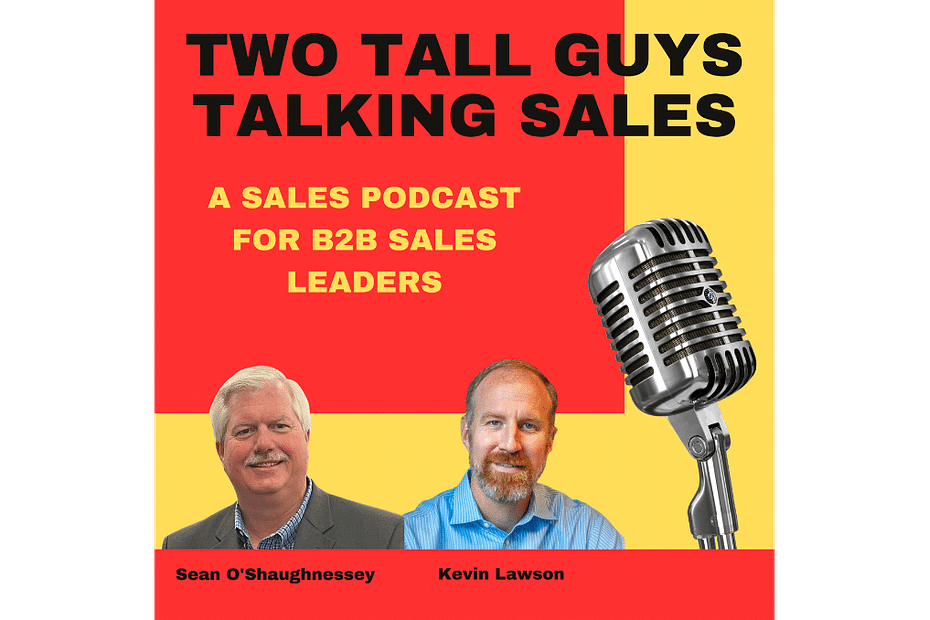

Two Tall Guys Talking Sales – How to Define Sales Territories for Maximum Revenue Generation – Episode 154

Sales leaders and sales professionals: are your territories setting you up for sales success or holding your team back? 

In this episode, hosts Kevin Lawson and Sean O’Shaughnessey tackle the critical role of defining territories, commission plans, and account strategies. From building fair but effective territories to creating actionable plans that drive revenue generation, this conversation blends sales management insight with practical sales strategies to help you win more consistently and grow with intention.

Key Topics Discussed

  • Defining Territories with Purpose (00:23) – Why intentional design matters more than “spray and pray” selling.
  • Fairness vs. Evenness in Territories (01:27) – Sean explains why territories don’t need to be identical, but they must be logical and fair to prevent turnover.
  • How Salespeople Should Approach New Territories (04:53) – Kevin outlines the mindset and business acumen required to succeed under a new commission plan.
  • Planning Ahead for Sales Success (08:21) – Sean breaks down how early planning impacts Q1 results, revenue management, and long-term sales processes.
  • The Power of Written Territory and Account Plans (12:23) – Kevin explains how documenting your strategies in a CRM enhances value selling and accountability.

Key Quotes

  • Sean O’Shaughnessey (01:10): “When you’re driving down the road, you’re not driving with the mirrors—you’re driving with the windshield. Defining your territory is incredibly important to know where you’re going.”
  • Kevin Lawson (06:00): “A new commission plan is not an indictment of past performance; it’s your executives telling you how and where they want the company to grow.”
  • Kevin Lawson (12:42): “When a plan is written, it’s real. You win more often when your goals and account strategies are captured, documented, and revisited.”

A Significant Actionable Item from this Podcast

Write down your territory and account growth plan before the new year begins. Identify 20 accounts to expand, document the cast of characters (champions, blockers, decision-makers), and map a path to increase revenue generation. Then, enter this plan into your CRM to hold yourself accountable and align with your company’s sales strategies.

Read the rest of the article…

From Chaos to Order: Improve Your Sales Productivity with Effective Pipeline Management

Sales is a complex and intricate world, a jigsaw puzzle where each piece must fit perfectly to create a successful picture. This is especially true when it comes to managing sales, whether you’re a salesperson, a sales manager hoping to enhance your leadership skills, or a CEO in the trenches of a small company. Understanding the challenges and nuances of the sales process is crucial to increasing revenue and productivity.

Imagine you’re in a room full of sports equipment scattered everywhere, from basketball shoes to cheerleading pom-poms. It’s a total mess, and you can barely see the floor. This is a perfect metaphor for what a disorganized sales pipeline can look like. It’s messy chaotic, and there’s always something that doesn’t quite smell right. 

The sales pipeline is vital for tracking and managing sales prospects from the initial contact to the deal’s closing. It visually represents where potential customers are in the sales process. However, if not properly managed, the pipeline can become a mess. 

A common issue is when a deal gets pushed from one month to the next. The sales rep simply changes the closing date, making it seem like procrastination has become a part of the process. This can be due to various reasons, such as a lack of commitment from the customer, the sales rep not understanding the customer’s needs, or simply a lack of follow-up. To avoid this, it’s essential to go back to basics. Understand where the customer is in their evaluation and buying process. Are they genuinely interested in buying or just exploring the idea? It’s perfectly fine for a customer to be in the exploratory stage, but that doesn’t mean they’re ready to buy. These customers should be considered early-stage prospects and not be rushed into buying. 

Read the rest of the article…