Skip to content

Leadership

What An MBA Didn’t Teach You About Sales

The sales profession is challenging. You need to work hard at it to succeed. You need to learn from the best. You need to improve your skills continuously. If you think you can sell since you are a hit at parties and have a lot of friends, you may soon find that you are a failure as a salesperson. Blunt truth:

because the sales profession is so hard, you have to focus on doing everything in sales very well, or you will be considered a failure.

I call this blog, Skinned Knees because I try to relate all of the learning that I have done over the past 4+ decades (while skinning my knees in the learning process).

I hope that you learn from my mistakes so that your business will grow!


Stop Guessing, Start Growing: How Strategic Sales Assessments Drive Real Revenue

You’ll eventually hit a wall if you’re running a sales organization—or wearing multiple hats as founder, CEO, and sales manager. That wall is often invisible until growth stalls, key deals slip through the cracks, or your top salesperson burns out. So, what’s the next move? It’s not more hustle. It’s assessment.

A sales assessment isn’t about checking boxes. It’s about understanding where you are, how you operate, and what’s holding you back. Too many small business leaders assume they’re doing fine because revenue is growing or the team is hitting their quotas. But are you growing at the rate your market allows? Are your sales activities aligned with your long-term goals? Are you building a repeatable system, or are you just getting lucky?

Let’s get tactical. A sales plan isn’t just a revenue target. It’s your go-to-market strategy. It defines your audience, your message, and your motion. It answers why you’re talking to those prospects and what value you’re bringing to them. Without a plan, you’re reacting instead of executing. You’re chasing leads instead of building a pipeline.

If you’re a small company—perhaps under $30 million in revenue—and selling into a national market, chances are your market potential is hundreds of millions, maybe billions. That means your market share is a rounding error, which means there’s room to grow. The question is: Are you operating in a way that allows you to capture that growth?

Even if you’re running lean, you should benchmark your performance against top-tier organizations. Not because you’re competing with them directly, but because they set the standard. What are they doing that you’re not? Where are they more efficient? How do they structure their teams? You’re leaving money on the table if you’re not asking those questions.

Read the rest of the article…

Two Tall Guys Talking Sales – Know Your Numbers: A Sales Leader’s Guide to Growth Metrics – E132

As Q2 kicks into full gear, it’s time to pause and reflect—are you ahead, on pace, or falling behind on your sales targets? In this insightful episode of Two Tall Guys Talking Sales, hosts Kevin Lawson and Sean O’Shaughnessey unpack one of a sales leader’s most crucial yet often overlooked responsibilities: knowing your numbers. With equal parts practical advice and strategic vision, this conversation walks you through the foundational metrics every sales leader should track—customer… Two Tall Guys Talking Sales – Know Your Numbers: A Sales Leader’s Guide to Growth Metrics – E132

Level Up Your Sales Prospecting with Advanced Research Techniques

A shoutout to Chris Spanier and Episode #85 of the Practical, Actionable Marketing Podcast

Sales prospecting has always been a grind. What if you could cut your research time in half and dramatically improve your outreach results?

In Episode #85 of the Practical, Actionable Marketing podcast, host Chris Spanier delivers a masterclass on how to do just that. Titled “Advanced Prospecting Research Tools,” the episode is packed with time-saving techniques and tools that help sales professionals build sharper prospect profiles faster.

As someone with over four decades in sales and sales management, I believe this kind of tactical insight makes a difference. If you haven’t already, listen to the episode. Then, come back here for a quick breakdown of what Chris covered—plus a few of my thoughts.


Why Prospect Research Matters More Than Ever

In a market saturated with sales messages, relevance is your only competitive advantage. The days of blasting generic emails to massive lists are over. Today, the winners are the ones who personalize their outreach with precision—and that begins with better research.

Read the rest of the article…

Becoming a Trusted Advisor: Solve Problems, Not Just Sell Products

In B2B sales and sales leadership, problem-solving is an art that goes beyond selling a product or service. The secret to becoming a trusted advisor is addressing business problems, not just selling a product. This concept resonates with salespeople, sales managers, and small business CEOs who sell themselves or manage a team of salespeople. 

Sales is not just about pushing a product or closing a deal; it’s about forging relationships, understanding businesses and their unique challenges, and offering solutions to these problems. The role of a trusted advisor is not to sell a product and become a trusted advisor, but rather to become a trusted advisor who can sell a product. 

The reward for earning trusted advisor status is immeasurable. It is fantastic to receive a call from a client asking for advice on solving problems they have never discussed with you. Imagine having relationships that stand the test of time and outlast competition and challenges. 

So, how does one become a trusted advisor and solve problems for clients rather than just selling them a great product? It starts with building a relationship from scratch. When starting with a prospect list or an ideal client profile, the goal is not to find anyone who will respond but to seek opportunities to build meaningful relationships. 

The cornerstone of these relationships is reliability. 

  • Are you always punctual? 
  • Do you cancel at the last minute? 
  • Do you forget to return phone calls? 

These behaviors erode trust. On the other hand, showing up when needed, providing solutions even when they are not directly related to your product or service, and connecting clients to others who can help them are behaviors that build trust. 

Becoming a trusted advisor also involves understanding and curiosity about the client’s business. Do you ask questions about how the prospective company makes and loses money, how it dealt with past challenges like the pandemic, and how it deals with current challenges like rising inflation or supply chain disruption? The aim is to understand the client’s business, challenges, and competitors and offer insights and parallels to other companies. 

Read the rest of the article…
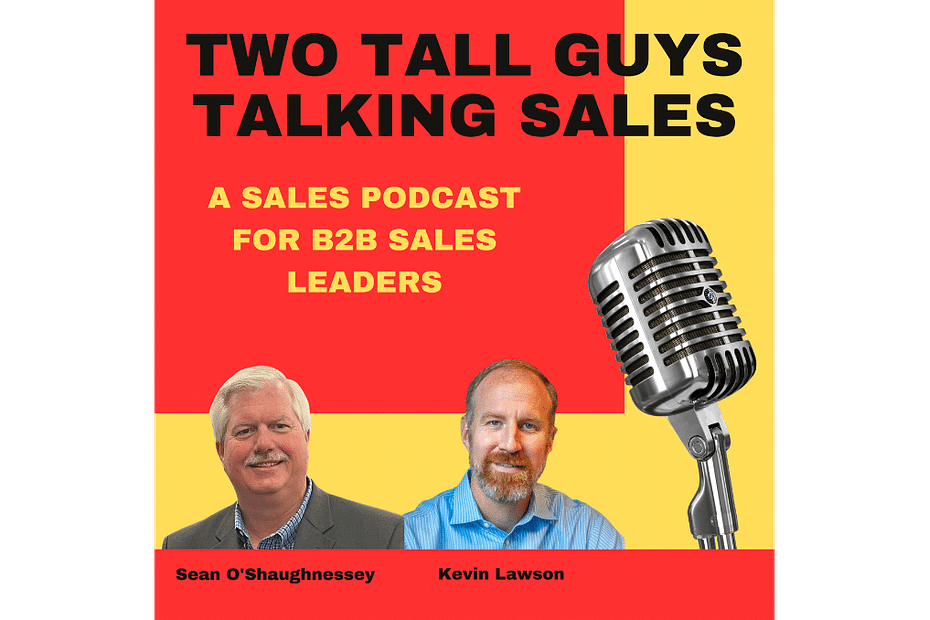
Two Tall Guys Talking Sales – Amy Connor discusses Salespeople vs. Lead Generation: Are You Using Your Team Wisely? – E125

How do you measure the success of your sales and marketing efforts? If you’ve ever wondered whether your marketing dollars are driving revenue or if your sales team is making the most of their leads, this episode is for you.  Kevin Lawson and Sean O’Shaughnessey sit down with Amy Connor, founder of CMO on Loan, to discuss how marketing and sales should work together for growth. Amy brings her extensive experience from Procter & Gamble,… Two Tall Guys Talking Sales – Amy Connor discusses Salespeople vs. Lead Generation: Are You Using Your Team Wisely? – E125

Two Tall Guys Talking Sales – Mastering Time Management: Essential Strategies for Sales Managers – E123

Time is the most valuable resource for any professional, but for sales managers, it is the linchpin of success. In this episode of Two Tall Guys Talking Sales, Kevin Lawson and Sean O’Shaughnessey dive into the critical strategies for effective time management as a sales leader. Whether you’re a new sales manager, an aspiring leader, or a business owner overseeing a sales team, this discussion is packed with insights to help you optimize your calendar,… Two Tall Guys Talking Sales – Mastering Time Management: Essential Strategies for Sales Managers – E123

Building Winning Sales Teams for the Future: Insights for CEOs and Sales Leaders

What are the key moves that CEOs and sales leaders must make to prepare their teams for success in 2025? That’s exactly what we explored in a recent episode of the Art and Science of Complex Sales podcast hosted by Paul Fuller of Membrain. I had the pleasure of joining Kevin Lawson, President of Lighthouse Sales Advisors, for a deep dive into the strategies defining high-performing sales organizations in the year ahead. You may recognize… Building Winning Sales Teams for the Future: Insights for CEOs and Sales Leaders

Unlock Revenue Growth with a Fractional VP of Sales

Are you feeling stuck trying to grow your company’s revenue? Do you find yourself juggling too many responsibilities, struggling with outdated sales methods, or unsure how to take your sales team to the next level? You’re not alone. Many business owners face these challenges, and at New Sales Expert, we’re here to help. I’m Sean O’Shaughnessey, founder of New Sales Expert, and we specialize in helping B2B companies accelerate revenue production by implementing proven sales… Unlock Revenue Growth with a Fractional VP of Sales

Driving Sales Performance with Strategic Competitive Analysis

Ever wonder why some sales teams consistently outperform their competitors while others struggle to close deals? The answer often lies in how well they understand and leverage competitive analysis in their sales process.

Let’s talk about competitive analysis in sales. It’s not just about knowing your competition – it’s about understanding how to use that knowledge to drive results. You need to grasp why prospects choose specific solutions over others and, more importantly, why they sometimes choose to do nothing at all.

Have you considered how many deals you’ve lost not to competitors but to indecision? These “no decision” outcomes often stem from a fundamental gap in prospect qualification. Intelligent sales professionals dig deeper, asking targeted questions about organizational priorities, resource allocation, and strategic initiatives. They understand that timing can be just as crucial as the solution itself.

The modern sales landscape demands a sophisticated approach to competitive analysis. Your success hinges on aligning your organization’s strengths with your prospect’s needs. But here’s the real question: Do you truly understand what your ideal client values most?

Many sales professionals miss the mark by focusing solely on feature comparisons. While product capabilities matter, they’re just one piece of the puzzle. The real power lies in understanding how your solution addresses your prospect’s challenges. This requires a comprehensive view of your competitive landscape, including direct and indirect competitors.

Think about your last few lost deals. What patterns emerge when you analyze the feedback? Every objection and hesitation after presenting pricing are valuable data points that should shape your competitive strategy. Your sales conversations must reflect a deep understanding of your prospect’s value metrics.

Read the rest of the article…

Turning Competition into Opportunity: A Guide for Success in Sales

Competition in B2B sales isn’t your enemy. It’s your greatest catalyst for growth and innovation in today’s dynamic market landscape. Have you considered how viewing competitors as opportunities rather than threats could transform your sales approach? Let me show you why this mindset shift matters for your bottom line.

Think beyond the obvious when identifying your competition. Your real rivals aren’t just companies selling similar products or services. They’re anyone competing for your prospect’s budget allocation. This includes businesses offering solutions with capabilities or price points different from yours and other priorities within the prospect. The competitive landscape extends far beyond your direct market segment.

The most formidable opponent often lurks in the shadows of customer inertia. This “no-decision” competitor manifests as your prospect’s resistance to change. It’s the comfort zone that whispers, “Maybe later,” or “What we have works fine.” Understanding this psychological barrier is crucial for your sales strategy.

You need a systematic approach to analyzing and outmaneuvering your competition. Start with an honest assessment of your position in the market. What unique value do you bring to your customers? Where do you consistently outperform others? This self-awareness forms the foundation of your competitive strategy.

Know your competition inside and out. Study their strengths, weaknesses, market positioning, and customer relationships. Your competitive analysis must go deeper than surface-level observations. Map out how their strengths align with your weaknesses. This intelligence helps you craft more compelling value propositions and sales approaches.

Read the rest of the article…