Skip to content

messaging

What An MBA Didn’t Teach You About Sales

The sales profession is challenging. You need to work hard at it to succeed. You need to learn from the best. You need to improve your skills continuously. If you think you can sell since you are a hit at parties and have a lot of friends, you may soon find that you are a failure as a salesperson. Blunt truth:

because the sales profession is so hard, you have to focus on doing everything in sales very well, or you will be considered a failure.

I call this blog, Skinned Knees because I try to relate all of the learning that I have done over the past 4+ decades (while skinning my knees in the learning process).

I hope that you learn from my mistakes so that your business will grow!


From Education to Improvement: The Essential Elements of Effective Sales Meetings

The importance of effective internal sales meetings with your sales team cannot be overstated. These meetings are not just about discussing individual deals or pipelines but serve a much larger purpose. They are opportunities for education, alignment, and improvement. They are a platform where the entire sales ecosystem comes together to discuss what’s happening in the industry, target market, or the company and how to move in the same direction.

A key reason for having larger quarterly meetings is education. As a sales leader or a CEO, the goal should be to make the sales team more effective and knowledgeable about ongoing developments. This can be achieved by inviting guest speakers, working on sales messaging, or understanding what’s happening in a particular vertical. However, these meetings should not be held just because the quarter came up. They should have a purpose and should add value to the team. If the same information can be shared through a well-written email or a quick update on Zoom, then there is no need for a meeting.

One effective practice for these meetings is role plays. This is a great way to practice and improve skills. However, it’s important to conduct these role plays correctly. There should be three roles: a customer, a seller, and an observer. The customer should be competent, the seller should sell something, and the observer should observe. After each role-play, feedback should be provided on what was done well and what could be improved.

However, while conducting these meetings, it is important to avoid a few pitfalls. One such pitfall is not having enough variation in the meeting for different learning types. If the meeting only consists of slides or videos, it might not cater to everyone’s learning style. Therefore, mixing up the media and providing breaks is important to keep the team engaged.

Read the rest of the article…

Boosting Business Performance: Integrating Sales and Marketing Efforts

The symbiotic relationship between sales and marketing is more crucial than ever. This dynamic duo drives the revenue generation engine, which is especially crucial when businesses are keen to set a positive trajectory. Marketing’s influence cannot be understated. It often shapes the business’s success months in advance. Strategies implemented by marketing today can significantly impact revenue streams later in the year. Therefore, it’s essential for sales and marketing to align and integrate their processes to… 

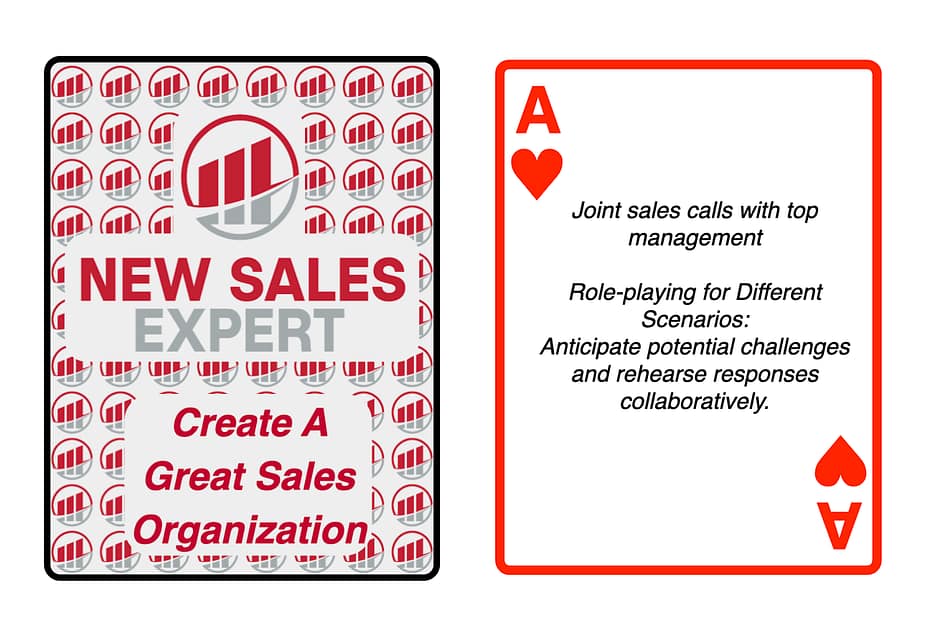
Ace of Hearts: Joint sales calls with top management: Role-playing for Different Scenarios

Role-playing is a critical strategy for preparing for a sales call involving top management. It replicates the actual sales scenario, including realistic data and potential objections, allowing for feedback and strategy refinement. It also enhances the sales team’s ability to handle objections confidently and promotes active listening for better client engagement. Implementing role-playing as a standard practice serves multiple purposes such as aligning strategies among team members and enforcing a robust, collaborative framework that elevates the overall sales approach.

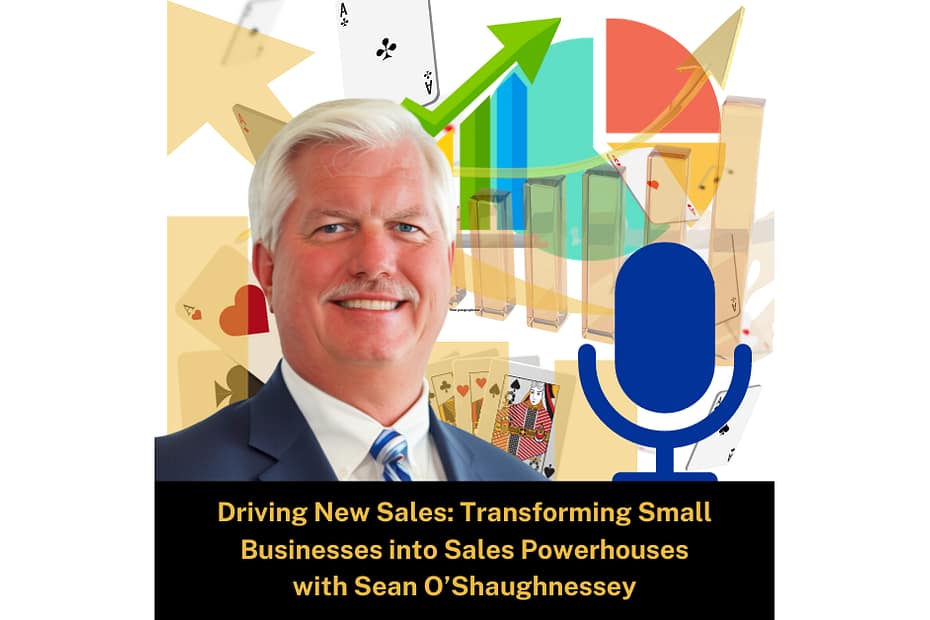
Monitoring Client News and Updates: Stay informed about client updates to address their changing needs  – Driving New Sales: Transforming Small Businesses into Sales Powerhouses – Episode 5

The latest episode of “Driving New Sales”, sponsored by “Two Tall Guys Talking Sales”, features sales consultant Sean O’Shaughnessey. He discusses the importance of staying updated with client news and updates for enhancing B2B sales strategies. He elucidates the use of tools like Google Alerts, social media, analyzing client data, and market trends to gain insights, improve sales outreach timing, and align efforts with sales objectives.

Understanding Competitive Landscape: Recognize your client’s relationships with your competitors to better position your offerings – Driving New Sales: Transforming Small Businesses into Sales Powerhouses – Episode 4

Welcome to a new episode of “Driving New Sales: Transforming Small Businesses into Sales Powerhouses.” In this podcast, hosted by sales expert Sean O’Shaughnessey, we delve into the intricacies of competitive analysis in sales, a critical skill for sales professionals, managers, and business owners in mid-sized companies. This episode is brought to you by the podcast “Two Tall Guys Talking Sales,” a podcast by Sean O’Shaughnessey and Kevin Lawson focusing on boosting sales management and… 

Elevating Your Sales Operations with New Sales Expert

My mission is to bridge the expertise gap that hinders many companies from scaling their operations to the desired heights. The core issue often resides within the sales sector of these organizations, and this is where my expertise becomes a game changer. Understanding the Challenge Many company owners, be they founders or inheritors of the business, come to a crucial realization at some juncture in their entrepreneurial journey. Despite their prowess in product development, manufacturing,… 

Researching Industry Trends: Stay updated on shifts in the market to provide relevant solutions – Driving New Sales: Transforming Small Businesses into Sales Powerhouses – Episode 1

Welcome to another episode of “Driving New Sales: Transforming Small Businesses into Sales Powerhouses.” This podcast is your compass in navigating the complex world of B2B sales, especially in the enterprise landscape. In this riveting episode, our host, Sean O’Shaughnessey, deep dives into a topic of crucial significance for sales professionals: Researching Industry Trends in the Enterprise Space. If you’re eager to transform from a transactional vendor into a strategic partner, this episode is your… 

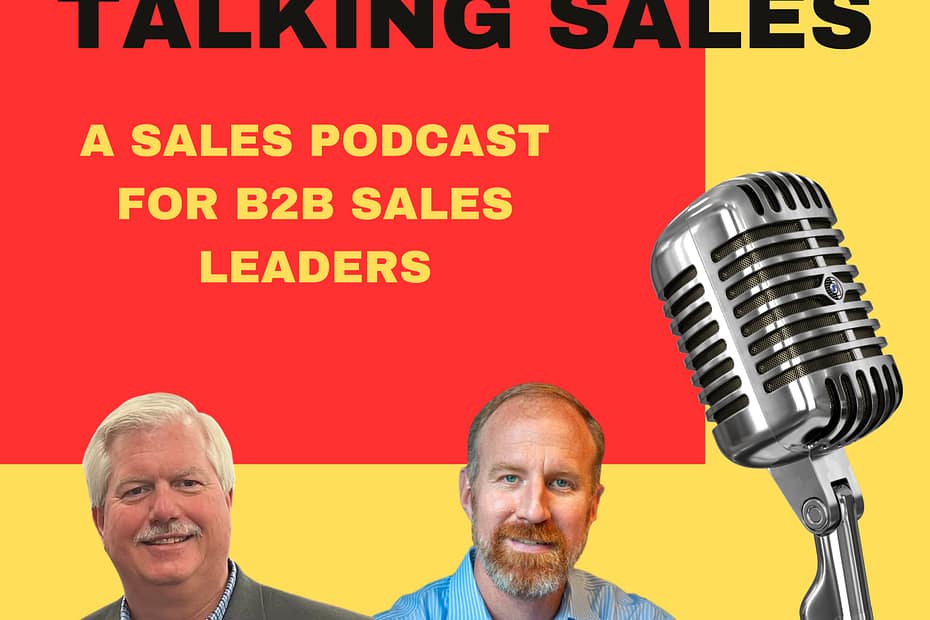
Two Tall Guys Talking Sales Podcast – Unlocking Profitable Growth: The Power of Sales Consistency – Episode 55

Welcome to another riveting episode of Two Tall Guys Talking Sales with your hosts, Kevin Lawson and Sean O’Shaughnessey. This episode is a treasure trove for CEOs, VPs of Sales, and salespeople who are looking to scale their businesses profitably. Dive in as Kevin and Sean dissect the importance of consistency in sales processes, the role of EOS (Entrepreneurial Operating System) in achieving this, and how to identify your most profitable customers. If you’re struggling… 

Two Tall Guys Talking Sales Podcast – Scaling from Your First 10 Customers to 50, 100 and Beyond – Episode 54

If you’ve got your first 10 customers and are wondering, “What next?” then this episode of Two Tall Guys Talking Sales is essential listening. Hosts Kevin Lawson and Sean O’Shaughnessey explore the transformational journey from acquiring your first customers to scaling up your business. Dive into critical topics like product-market fit, market messaging, the role of the CEO as a salesperson, and much more. Arm yourself with practical, real-world advice to take your business to… 

Seven of Spades: Defining your corporate sales strategy: Creating Unique Selling Propositions (USPs): Define what makes your offering distinct and appealing to prospects.

Crafting the Beacon in Sales: The Art of Unique Selling Propositions (USPs) The challenge in the modern B2B marketplace isn’t merely about getting noticed but about leaving an indelible mark. For businesses navigating this complex market, the guiding light—their Unique Selling Proposition (USP)—is the deciding factor. But why is a USP so quintessential, and how does one etch it masterfully? Picture, if you will, an animated marketplace: myriad sellers, each echoing their offerings. Amidst this…