Skip to content

pipeline

What An MBA Didn’t Teach You About Sales

The sales profession is challenging. You need to work hard at it to succeed. You need to learn from the best. You need to improve your skills continuously. If you think you can sell since you are a hit at parties and have a lot of friends, you may soon find that you are a failure as a salesperson. Blunt truth:

because the sales profession is so hard, you have to focus on doing everything in sales very well, or you will be considered a failure.

I call this blog, Skinned Knees because I try to relate all of the learning that I have done over the past 4+ decades (while skinning my knees in the learning process).

I hope that you learn from my mistakes so that your business will grow!


Admin Drag Is Killing Your Sales Capacity: How to Reclaim Selling Time With AI

Episode 23 of “AI Tools for Sales Pros” is built around a reality most leadership teams have started to feel in their gut. Buying AI does not increase revenue. It might increase activity, content volume, and dashboard noise, but revenue generation improves only when you reclaim selling time and redeploy it into the actions that move deals forward.

The executive version of the problem is simple. Your tech stack cost keeps rising. Your board wants proof that those investments translate into pipeline quality, cycle-time reduction, win-rate improvement, and improved margins. “Are we getting value?” is the polite question. “Where is the revenue?” is what they ask when patience runs out. This is a revenue management problem, not a software problem.

Most B2B companies are operating with a hidden productivity ceiling. Salespeople spend roughly a third of their time on revenue-producing work. The rest disappears into administrative drag: CRM updates, transcript cleanup, internal coordination, re-entering data across tools, searching for collateral, chasing security documentation, fixing records, and managing handoffs. None of that is value selling. Most of it is friction disguised as “process.”

A useful way to see it is the Tollbooth Effect. One approval feels reasonable. One form feels harmless. One handoff feels like good governance. Together, they turn selling into paperwork. The rep has a strong discovery call and a clear hypothesis. Momentum is real. Then they hit the toll plaza: systems require updates, internal teams need briefings, fields need to be filled, and the same information gets retyped because two systems disagree on the truth. By the time the rep finishes paying the tolls, urgency has cooled, follow-up becomes generic, and the deal loses its edge.

Read the rest of the article…

Hiring Your First Sales Leader? Build a Sales Machine, Not a Band-Aid

You are ready to hire your first sales leader when you are prepared to buy leverage, not relief. Titles do not grow revenue. A high-impact sales leader creates durable selling capability, reduces owner dependency, and raises standards through coaching, recruiting, and operating cadence. If what you really want is a second version of you to carry the number and keep deals moving, you are hiring a band-aid, and you will pay for it twice.

Most owners make this hire at precisely the wrong moment. The pressure is real, the pipeline feels fragile, and the business is starting to outgrow informal management. So the owner reaches for the obvious move: “We need a sales manager.” The problem is that the role is designed around short-term comfort rather than long-term capacity. The result is a well-paid administrative firefighter who inherits the chaos instead of fixing the system that creates it.

Before you post a job, clarify the objective. Do you want a revenue driver or a capability builder?

A revenue driver is a manager who helps you hit the number by conducting deal inspections, applying forecast pressure, and holding reps accountable. That can be valuable, but it is often a disguised need for personal production. A capability builder is a leader who creates repeatable performance by improving the quality of selling, tightening hiring standards, and building a coaching system that makes average reps better and good reps consistent. That is the role that changes enterprise value.

Here is the hard truth most owners avoid. If you design a role that combines selling and leading, selling will win. Always. When a leader has a quota, the business trains them to prioritize their own deals over the team’s development. They will “help” reps when a deal is in a late-stage, visible phase, then postpone coaching, recruiting, and onboarding because those activities do not pay this month. Over time, the team remains dependent, the pipeline remains uneven, and the owner remains in the middle.

Assessing readiness: leader or band aid

Readiness is not a revenue threshold. It is an operating decision. The question is whether you will let a sales leader lead.

The owner’s trap is hiring a leader while keeping day-to-day control: still running reviews, intervening in pricing, rewriting emails, jumping on calls, and closing important deals. In that environment, the new leader cannot build authority; they become an assistant with a title. You’ll be frustrated they’re “not taking enough off my plate,” while they’re frustrated at not being able to make decisions without you.

If you want a clean test, look for these warning signs:

  • You are still the primary deal closer and default problem solver.
  • You do not believe the company can make the number without your direct involvement.
  • You step into deals because you do not trust the process, the rep, or the forecast.
  • Your coaching is ad hoc, usually when something goes wrong.
  • Recruiting is episodic, triggered by pain, rather than continuous.
Read the rest of the article…

Sales Management in the Age of AI: Aligning Marketing, Messaging & Revenue Generation

When it comes to modern B2B revenue generation, the conversation is shifting: it’s no longer just about cycle time or activity metrics, it’s about intent, predictive insights, and sharpening your approach to lead engagement. In this post, we unpack how artificial intelligence (AI) can reinforce your sales management discipline, refine your sales processes, and elevate your team’s business acumen.

Many sales organizations still rely on traditional lead-scoring models: “five points for a white-paper download, ten points for visiting the pricing page.” These rules-based frameworks sit at the heart of countless debates over marketing-qualified lead (MQL) vs. sales-qualified lead (SQL). Yet research shows that such arbitrary scoring systems often perform little better than chance.

By contrast, predictive lead scoring powered by AI changes the game: algorithms ingest data from your CRM, marketing automation, website activity, firmographics and behavior patterns. They then compute each lead’s statistical probability of converting, turning your outreach efforts from scatter-shot to precision-targeted.

In value selling, the objective is to engage high-potential buyers with meaningful differentiation—messaging that resonates with their specific business challenges. When your team is handed leads that reflect a 90 %+ probability of conversion, the conversation changes: it becomes strategic, not just transactional. Your reps spend less time chasing noise and more time facilitating high-impact dialogues.

Read the rest of the article…

Stop Betting on Superstars: How Operating Standards Turn Sellers into Predictable Producers

Many teams grow, but few truly scale revenue beyond individual hero efforts. That difference changes everything for leaders today and in the future. Growth relies on hustle; scaling depends on repeatability across segments and individuals. Your strategy must reflect that hard truth in practice.

Are you relying on one standout to win deals month after month? That looks strong until risk turns visible and costly. One resignation can cripple momentum and expose brittle systems that you had previously ignored.

Scalable sales replaces heroics with defined, teachable operating rhythms that everyone follows. It turns chaos into predictable pipeline progress and results. It clarifies markets, messages, motions, and measurable expectations for every seller on a weekly basis. It builds leverage into onboarding and coaching for consistency. It protects margins while systematically accelerating win rates and velocity across territories.

The foundation begins with a clear picture of your ideal customer, including any disqualifying factors. Having an accurate Ideal Client Profile (ICP) helps minimize waste and reduce uncertainty in your efforts. Take time to define firmographics, pain points, triggers, and buying behaviors using consistent language based on shared evidence. Understand who cares about these issues and why it matters to them now. Also, identify negative personas to sharpen your focus and qualification processes in marketing and sales. A well-defined ICP can significantly boost your conversion rates and shorten the sales cycle.

Next, turn your ICP into straightforward messaging and discovery frameworks tailored for each stage. Consider what unique problems you solve for your customers. What outcomes are most important to them, and who are the key stakeholders by role and priority?

Build talk tracks that lead buyers, not chase buyers with purpose always. Anchor questions to the business metrics and risks they feel. Teach a qualification that tests mutual commitment and outlines next steps with attached dates. Avoid fluffy demos; design relevant proofs using their data. Process specificity turns B players into consistent producers without copying another personality.

I suggest you establish a practical, stage-based operating rhythm that everyone can easily understand and follow. By sharing clear definitions and expectations, managing the pipeline becomes a consistent and smooth process each week. Define each stage with specific exit criteria—avoiding vague intentions or subjective feelings. For example, discovery is considered complete when stakeholders confirm the consequences and impact, and solution fit is achieved when success criteria and ownership are clearly aligned. The commit stage should be backed by a shared plan with clear dates and assigned owners. During weekly reviews, focus on assessing quality rather than just quantity or activity counts. Ask yourself:

  • Does evidence from buyers’ backstage moves have a direct impact on their purchasing decisions?
  • Are the next steps specific, mutually agreed upon, and already scheduled on both calendars?
Read the rest of the article…

From Leads to Clients: How Aligning Sales and Marketing Fuels Sustainable Growth

There’s a common sentiment among sales teams this time of year: a sense of urgency. The calendar flips, Q4 starts, and suddenly it feels like you’re already behind. Sound familiar? That mid-Q4 pressure is real. But before you sprint into outreach and activity, step back and assess what’s actually fueling your pipeline? More importantly, is it aligned with long-term growth?

Sales leaders and CEOs often default to lead generation as the focal point. It’s understandable. More leads, more conversations, more deals, right? But that mindset skips a critical first step. You can’t scale what isn’t aligned. If your marketing message doesn’t match your sales conversations, you’re wasting time and budget. If your sales team is chasing poorly qualified leads, you’re burning cycles. And if your customers can’t articulate why they bought from you, you’ve got a positioning problem.

The foundation starts with clarity. What value do you truly deliver? Why do customers choose you over alternatives? If you can’t answer that in a clear, 50-word statement, your team is likely improvising in the field, and that’s costing you revenue. This is where sales and marketing alignment becomes more than just a buzzword. It’s operationally necessary.

Sales enablement isn’t only about tools and training. It’s about empowering sales with the right message at the right time. That starts with defining three core customer states:

  1. leads,
  2. prospects,
  3. clients.

Each phase requires different messaging, timing, and expectations. Most organizations blur those lines. That’s where inefficiency creeps in.

Leads sit at the top of the funnel. They are either unaware or only lightly aware of your offering. At this stage, marketing owns the responsibility. However, marketing without sales feedback is akin to shooting in the dark. Sales needs to inform marketing what makes a lead qualified.

  • What signals intent?
  • What common objections surface early?

Without that feedback loop, marketing tends to optimize for volume rather than quality.

Read the rest of the article…

Two Tall Guys Talking Sales – Sales Management Masterclass: Paul Rafferty’s Proven Framework for Smarter Deal Reviews and Revenue Generation – Episode 159

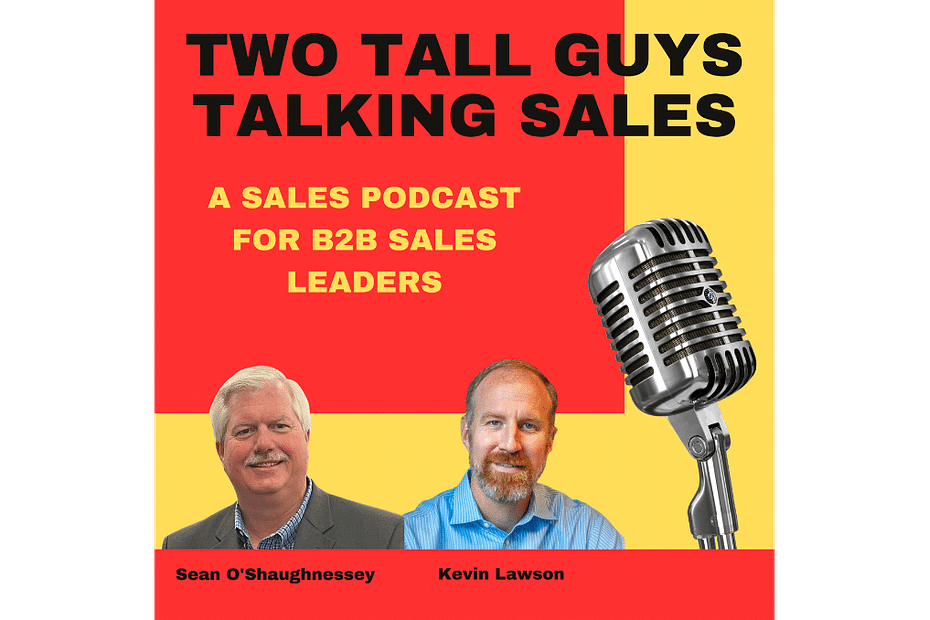
Welcome back to Two Tall Guys Talking Sales with hosts Kevin Lawson and Sean O’Shaughnessey. In this dynamic episode, the Tall Guys welcome Paul Rafferty from Sales Xceleration to explore the art and science of sales coaching, deal qualification, and the importance of building sales acumen. Paul brings decades of experience in sales management, value selling, and revenue generation, offering a practical framework for sales leaders who want to coach their teams more effectively and for reps who want to stop chasing the wrong deals.

Discover how to transform your team’s approach to sales processes—from opportunity scoring to understanding a buyer’s “pain chain.” This conversation is packed with actionable insights that blend sales strategy, business acumen, and real-world stories you can immediately apply to your own selling environment.

Key Topics Discussed

  • 03:00 — Building a Deal Coaching Framework:
    Paul introduces his 100-point scorecard system that evaluates the Ideal Prospect Profile, the Pain Chain, and Commitment to Decision. This framework transforms deal reviews into powerful coaching sessions rather than mere forecast updates.
  • 05:10 — The “Pain Chain” and Sales Philosophy:
    Sean and Paul discuss how understanding buyer pain isn’t optional—it’s foundational to value selling. Without real pain, there’s no compelling reason for your buyer to act.
  • 06:45 — From Friendly to Effective Salesperson:
    Paul and Sean discuss how friendliness can open doors, but it’s teaching and insight that ultimately win deals. Sales success comes from challenging your prospects and helping them think differently.
  • 08:00 — Why Deals Get Stuck:
    Kevin and Paul explore how most stalled deals trace back to weak discovery. Coaching your team to go deeper early in the sales process prevents gridlock later.
  • 10:30 — The Currency of Knowledge:
    Paul explains that in modern selling, gifts and lunches no longer move the needle—information does. Great salespeople earn influence by being teachers, not vendors.

Key Quotes

  • Paul Rafferty (03:50):
    “It’s not what you do—it’s what they do. The scorecard helps you coach reps to spend time where there’s real buying intent, not just big logos.”
  • Sean O’Shaughnessey (05:43):
    “Salespeople need to understand the theory of sales. Without knowing the frameworks—like the pain chain or solution selling—you’re just saying, ‘I’m a nice guy, buy from me.’”
  • Kevin Lawson (08:38):
    “Most deals go to die in the discovery phase. Coaching means rewinding the tape and helping reps fix what wasn’t done early enough.”
  • Paul Rafferty (12:51):
    “Your currency is information—help your buyer look smart, get promoted, and win internally. That’s real value selling.”

Additional Resources

  • Paul Rafferty
    • prafferty@salesxceleration.com 
    • https://www.linkedin.com/in/pauljrafferty/
  • Books referenced:
    • Solution Selling by Michael Bosworth – https://a.co/d/hHtYSiX
    • The Challenger Sale by Matthew Dixon & Brent Adamson – https://a.co/d/2kJsbDU
    • Strategic Selling by Robert Miller & Stephen Heiman – https://a.co/d/icPcC6H

A Significant Actionable Item from this Podcast

Implement a Deal Coaching Scorecard.
Instead of subjective forecasting (“This deal is 70% likely to close”), create an objective scoring model based on:

  1. Ideal Prospect Fit (25 pts) – Does this prospect align with your best customer profile?
  2. Pain Chain (25 pts) – Have they admitted to a real, solvable pain?
  3. Commitment to Decision (50 pts) – Have they engaged decision-makers and committed to next steps?

Use this tool in your next pipeline review. It will sharpen your sales management coaching, improve revenue forecasting, and elevate your team’s overall sales success. If you want more information about this scorecard, reach out to Paul Rafferty at his address above.

Read the rest of the article…

Automating Sales Workflows: When to Use Automation Over Chat

In sales management, there’s often some confusion about when to use artificial intelligence chat interfaces versus automation workflows. Chat interfaces are ideal for creative problem-solving, learning, and strategic research, while automation excels in repetitive, high-volume, data-driven sales tasks. The trick is to recognize when consistency and scalability are more important than customization.

Automation delivers consistent execution, eliminates human error, and operates 24/7. Sales leaders can rely on it for triggered communications, data synchronization across systems, CRM updates, and compliance tasks that require accuracy and complete audit trails. By moving these routine tasks into automated workflows, sales teams free up valuable time for relationship building, revenue generation, and refining sales strategies.

Real-world examples highlight the impact: a team once spent three hours daily crafting manual follow-up emails. Shifting to automated sequences not only saved time but also improved messaging consistency and pipeline response rates. Similarly, another team utilized automation to synchronize sales data across six systems, thereby eliminating bottlenecks and enabling sellers to focus fully on sales.

Hybrid approaches really take things to the next level! By merging human creativity in chat interactions with the quick and precise power of automation, businesses can craft workflows that beautifully balance personalized service with the ability to grow. This type of teamwork enhances value-driven selling, sharpens business skills, and accelerates revenue management throughout the sales journey.

Read the rest of the article…

Two Tall Guys Talking Sales – How Sales and Marketing Partnerships Drive Lead Generation and Sales Success – Episode 155

As the year draws to a close, sales leaders and professionals are already looking ahead to the next year. In this episode of Two Tall Guys Talking Sales, hosts Sean O’Shaughnessey and Kevin Lawson dig into the perennial challenge of lead generation, the importance of collaborating with marketing, and why proactive planning is essential for sales success. From refining your messaging to building thought leadership, this conversation is packed with strategies to help you drive revenue generation and sharpen your sales processes.

Key Topics Discussed

  • Why Salespeople Always Say “I Need More Leads” (01:00)
  • The Importance of Partnering with Marketing for Effective Sales Strategies (03:40)
  • Going Beyond Marketing—Referrals, Networking, and Thought Leadership (05:07)
  • Leveraging LinkedIn and Personal Branding to Generate Leads (06:25)
  • The Three Things Every Salesperson Really Sells (09:00)
  • Planning with Intention: Mapping the Next 12 Months for Sales Success (12:57)

Key Quotes

  • Sean O’Shaughnessey (01:48): “You as a salesperson… it’s your job to sit with the marketing people you have and map out the next 12 months of how to get better leads and cover your territory more effectively.”
  • Kevin Lawson (03:40): “Go down the hallway, knock on the door and say, here’s what I’m working on, what are you working on, and how can I help? Be a resource, be a partner to marketing.”
  • Sean O’Shaughnessey (09:24): “There are three things you sell: your product, your company, and—most importantly—you.”
  • Kevin Lawson (13:16): “If you’re only giving 50% effort to your professional practice, you can’t expect championship-level results.”

Additional Resources

  • B2B Sales Lab Community – A peer group for sales professionals to exchange best practices and strengthen their sales management and revenue generation capabilities. Go to https://b2b-sales-lab.com/

A Significant Actionable Item from this Podcast

Schedule a working session with your marketing team this week. Map out the next 12 months of sales and marketing activities, focusing on how you’ll generate leads, build messaging, and increase visibility in your target accounts. Even if it starts with a simple spreadsheet, writing down the plan creates accountability and aligns sales strategies with marketing efforts.

Read the rest of the article…

AI Isn’t Replacing Salespeople, It’s Giving Them a Competitive Edge

AI isn’t replacing salespeople, it’s making them more effective. The real risk isn’t losing your job to AI; it’s losing to a competitor who uses AI better than you do. Sales professionals who integrate AI into their workflow will outperform those who don’t. 

It’s not about technology taking over but about using technology to gain an edge. The market is becoming increasingly competitive, and the most efficient salespeople will emerge victorious.

Time is a salesperson’s most valuable asset. 

Every minute spent on administrative tasks is a minute not spent selling. AI helps reclaim those lost hours. Tools that automate writing, scheduling, and research allow salespeople to focus on what matters: building relationships and closing deals. If you’re not leveraging AI to increase productivity, you’re leaving opportunities on the table.

Sales emails need to be clear and professional. AI-powered writing assistants ensure your messages are polished and effective. A poorly written email can cost you a deal. AI tools catch grammatical mistakes, improve clarity, and even suggest more effective phrasing. This isn’t just about looking professional; it’s about being understood. 

If your message isn’t clear, it won’t convert.

Presentations are another time-consuming task. AI can generate professional decks in minutes. Instead of spending hours designing slides, salespeople can focus on developing effective strategies. AI-powered tools create branded, structured presentations based on simple inputs. This ensures consistency while saving time. Sales professionals who utilize AI for presentations can focus on delivering insights rather than formatting slides.

CRM systems are the backbone of sales operations. AI enhances CRM by automating data entry, tracking customer interactions, and suggesting next steps. Salespeople often struggle with keeping CRM data updated. AI reduces this friction by automatically capturing and organizing information. A well-maintained CRM leads to better forecasting and stronger customer relationships. 

If your CRM doesn’t have AI capabilities, it’s time to upgrade.

AI-driven insights enable sales managers to make more informed decisions, rather than relying on instinct. Managers can use AI to analyze performance trends, identify coaching opportunities, and predict revenue outcomes. AI doesn’t replace leadership; it enhances it. 

Sales managers who adopt AI can build stronger teams and achieve better results. Ignoring AI in sales management is a strategic mistake.

Lead generation is another area where AI adds value. AI-powered tools can analyze vast amounts of data to identify high-potential prospects. Instead of spending hours researching leads, salespeople can receive AI-generated recommendations. This allows for more targeted outreach and higher conversion rates. AI doesn’t just find leads, it finds the right leads.

Sales follow-up is often inconsistent. AI ensures follow-ups happen at the right time with the right message. Automated reminders and AI-generated responses keep deals moving forward. 

A well-timed follow-up can be the difference between closing a deal and losing it. AI helps salespeople stay on top of their pipeline without relying on memory.

Read the rest of the article…