Skip to content

podcast

What An MBA Didn’t Teach You About Sales

The sales profession is challenging. You need to work hard at it to succeed. You need to learn from the best. You need to improve your skills continuously. If you think you can sell since you are a hit at parties and have a lot of friends, you may soon find that you are a failure as a salesperson. Blunt truth:

because the sales profession is so hard, you have to focus on doing everything in sales very well, or you will be considered a failure.

I call this blog, Skinned Knees because I try to relate all of the learning that I have done over the past 4+ decades (while skinning my knees in the learning process).

I hope that you learn from my mistakes so that your business will grow!


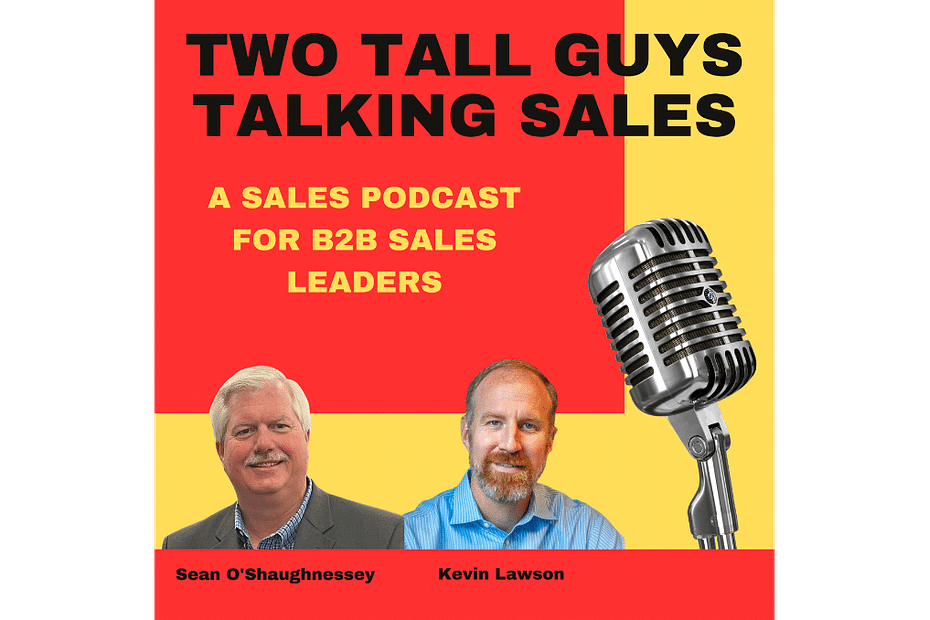
Two Tall Guys Talking Sales – The First 90 Days as a Sales Leader: Proven Strategies for Sales Management Success – Episode 157

When a company hires or promotes its first sales manager, expectations run high, but clarity can be low. In this episode of Two Tall Guys Talking Sales, hosts Sean O’Shaughnessey and Kevin Lawson unpack what the first 90 days should look like for a new sales leader. Whether you’re a CEO onboarding a new manager or that manager stepping into the role themselves, this discussion provides practical guidance on setting realistic expectations, building trust, and establishing the foundation for long-term sales success and revenue growth.

Key Topics Discussed

  • Setting Realistic Expectations as an Owner (02:00)
    Kevin explores how CEOs should frame success during the first 90 days, emphasizing the importance of patience, trust-building, and understanding that sales management transformation takes time.
  • Avoiding the “Fix This First” Trap (06:30)
    Sean cautions business owners against dumping old personnel problems on new leaders, explaining why cleaning up someone else’s mess undermines early business acumen and trust.
  • Building Relationships and Learning the Business (08:30)
    Sean shares tactical advice for new sales managers: conduct one-on-ones, ride along with reps, and build rapport across departments, marketing, operations, and finance, to master internal sales processes and interdepartmental alignment.
  • Understanding Internal and External Tools (11:12)
    Kevin discusses discovering hidden tools and levers, people, systems, vendor programs, or product configurations that can immediately improve team performance and value-selling opportunities.
  • Repackaging and Aligning Offers to the Market (12:30)
    The hosts outline how sales leaders can rethink product structures and messaging to better serve customer needs, thereby improving revenue management and profitability.

Key Quotes

  • “Trust is a currency. It has to be earned by customers, by salespeople, by peers, and you can’t buy it in the first 30 days.”,  Kevin Lawson (03:00)
  • “Don’t make your new sales leader the bad guy. If there’s a tough personnel decision, handle it before they start.”,  Sean O’Shaughnessey (07:00)
  • “Learn your company inside and out. If you don’t know who runs manufacturing or how the supply chain works, you can’t lead your salespeople effectively.”,  Sean O’Shaughnessey (10:00)
  • “You might have 20 products, but 100 possible solutions. The smart leader finds ways to repackage and sell in ways the customer actually values.”,  Kevin Lawson (13:00)

Additional Resources

  • Episodes on sales onboarding, marketing alignment, and ideal customer profiling (ICP) were referenced throughout the conversation.
  • Explore more insights and tools for sales leaders at b2b-sales-lab.com.

A Significant Actionable Item from this Podcast

Create a 90-Day Integration Plan.
If you’re a new sales manager, spend your first month listening and learning. Conduct one-on-ones with every salesperson, schedule cross-department meetings, and document what each function needs from sales. In the second month, identify process gaps and start designing improvements. By the third month, implement one or two visible wins, such as improving forecasting accuracy or clarifying sales messaging, to demonstrate value and build momentum.


Read the rest of the article…

Beyond Spell Check: How Grammarly’s AI Can Transform Sales Communication

Clear, professional communication is the foundation of sales success. Yet, in 2025, much of our selling occurs not face-to-face, but through written words, emails, proposals, CRM notes, and social media messages. This shift means your writing is no longer just a form of communication; it’s your personal brand, your first impression, and often the deciding factor in whether a conversation continues or comes to a halt.

Grammarly has evolved far beyond its original purpose as a grammar checker. Today, it’s an artificial intelligence–powered platform that helps sales teams increase efficiency, refine their messaging, and accelerate revenue growth. It works directly within the tools you already use, such as Gmail, LinkedIn, Salesforce, and HubSpot, helping sales professionals write with greater confidence and clarity.

Sales organizations using Grammarly have seen measurable improvements: Databricks saved $1.4 million annually; Smartsheet cut thousands of hours from proposal creation; and Zoom reported higher customer satisfaction thanks to improved written communication. These results aren’t luck; they’re the product of refined sales processes, consistent messaging, and clear communication supported by AI.

For individual salespeople, Grammarly helps improve value selling by ensuring that every message is professional, engaging, and on-brand. Its AI engine not only corrects errors but also suggests stronger phrasing, predicts reader reactions, and even aligns your tone with your business acumen and brand voice. For sales leaders, it standardizes team communication and reinforces a culture of professionalism across departments.

Read the rest of the article…

Automating Sales Workflows: When to Use Automation Over Chat

In sales management, there’s often some confusion about when to use artificial intelligence chat interfaces versus automation workflows. Chat interfaces are ideal for creative problem-solving, learning, and strategic research, while automation excels in repetitive, high-volume, data-driven sales tasks. The trick is to recognize when consistency and scalability are more important than customization.

Automation delivers consistent execution, eliminates human error, and operates 24/7. Sales leaders can rely on it for triggered communications, data synchronization across systems, CRM updates, and compliance tasks that require accuracy and complete audit trails. By moving these routine tasks into automated workflows, sales teams free up valuable time for relationship building, revenue generation, and refining sales strategies.

Real-world examples highlight the impact: a team once spent three hours daily crafting manual follow-up emails. Shifting to automated sequences not only saved time but also improved messaging consistency and pipeline response rates. Similarly, another team utilized automation to synchronize sales data across six systems, thereby eliminating bottlenecks and enabling sellers to focus fully on sales.

Hybrid approaches really take things to the next level! By merging human creativity in chat interactions with the quick and precise power of automation, businesses can craft workflows that beautifully balance personalized service with the ability to grow. This type of teamwork enhances value-driven selling, sharpens business skills, and accelerates revenue management throughout the sales journey.

Read the rest of the article…

Two Tall Guys Talking Sales – How Sales and Marketing Partnerships Drive Lead Generation and Sales Success – Episode 155

As the year draws to a close, sales leaders and professionals are already looking ahead to the next year. In this episode of Two Tall Guys Talking Sales, hosts Sean O’Shaughnessey and Kevin Lawson dig into the perennial challenge of lead generation, the importance of collaborating with marketing, and why proactive planning is essential for sales success. From refining your messaging to building thought leadership, this conversation is packed with strategies to help you drive revenue generation and sharpen your sales processes.

Key Topics Discussed

  • Why Salespeople Always Say “I Need More Leads” (01:00)
  • The Importance of Partnering with Marketing for Effective Sales Strategies (03:40)
  • Going Beyond Marketing—Referrals, Networking, and Thought Leadership (05:07)
  • Leveraging LinkedIn and Personal Branding to Generate Leads (06:25)
  • The Three Things Every Salesperson Really Sells (09:00)
  • Planning with Intention: Mapping the Next 12 Months for Sales Success (12:57)

Key Quotes

  • Sean O’Shaughnessey (01:48): “You as a salesperson… it’s your job to sit with the marketing people you have and map out the next 12 months of how to get better leads and cover your territory more effectively.”
  • Kevin Lawson (03:40): “Go down the hallway, knock on the door and say, here’s what I’m working on, what are you working on, and how can I help? Be a resource, be a partner to marketing.”
  • Sean O’Shaughnessey (09:24): “There are three things you sell: your product, your company, and—most importantly—you.”
  • Kevin Lawson (13:16): “If you’re only giving 50% effort to your professional practice, you can’t expect championship-level results.”

Additional Resources

  • B2B Sales Lab Community – A peer group for sales professionals to exchange best practices and strengthen their sales management and revenue generation capabilities. Go to https://b2b-sales-lab.com/

A Significant Actionable Item from this Podcast

Schedule a working session with your marketing team this week. Map out the next 12 months of sales and marketing activities, focusing on how you’ll generate leads, build messaging, and increase visibility in your target accounts. Even if it starts with a simple spreadsheet, writing down the plan creates accountability and aligns sales strategies with marketing efforts.

Read the rest of the article…

Sales Management with AI: Chat Interfaces vs. Automation Workflows

Sales organizations today face a critical decision: should they rely on interactive chat interfaces like ChatGPT, Claude, or Gemini, or should they focus on automation workflows? The answer isn’t either/or. Each approach has unique strengths, and choosing the right one directly impacts sales processes, productivity, and revenue generation.

The problem many sales teams encounter is “random implementation.” They hear about a new AI tool, adopt it quickly, and use it for the wrong purpose. The result? Chat interfaces get bogged down with repetitive work, and automation gets tasked with jobs that require creativity and nuance. Misuse not only reduces efficiency but also frustrates teams and erodes trust in artificial intelligence altogether.

So how do you know when chat is the right fit? The decision comes down to task complexity and uniqueness. Chat excels in situations that require creativity, flexibility, and human judgment. Four categories consistently stand out:

  • Creative and strategic tasks: proposals, executive messaging, strategic planning, and competitive positioning.
  • Complex problem-solving: sales opportunity strategy sessions, unique customer needs, and crisis management.
  • Learning and development: role-playing objection handling, skill coaching, and competitive intelligence training.
  • Research and analysis: prospect research, market analysis, and strategic planning.
Read the rest of the article…

Two Tall Guys Talking Sales – How to Define Sales Territories for Maximum Revenue Generation – Episode 154

Sales leaders and sales professionals: are your territories setting you up for sales success or holding your team back? 

In this episode, hosts Kevin Lawson and Sean O’Shaughnessey tackle the critical role of defining territories, commission plans, and account strategies. From building fair but effective territories to creating actionable plans that drive revenue generation, this conversation blends sales management insight with practical sales strategies to help you win more consistently and grow with intention.

Key Topics Discussed

  • Defining Territories with Purpose (00:23) – Why intentional design matters more than “spray and pray” selling.
  • Fairness vs. Evenness in Territories (01:27) – Sean explains why territories don’t need to be identical, but they must be logical and fair to prevent turnover.
  • How Salespeople Should Approach New Territories (04:53) – Kevin outlines the mindset and business acumen required to succeed under a new commission plan.
  • Planning Ahead for Sales Success (08:21) – Sean breaks down how early planning impacts Q1 results, revenue management, and long-term sales processes.
  • The Power of Written Territory and Account Plans (12:23) – Kevin explains how documenting your strategies in a CRM enhances value selling and accountability.

Key Quotes

  • Sean O’Shaughnessey (01:10): “When you’re driving down the road, you’re not driving with the mirrors—you’re driving with the windshield. Defining your territory is incredibly important to know where you’re going.”
  • Kevin Lawson (06:00): “A new commission plan is not an indictment of past performance; it’s your executives telling you how and where they want the company to grow.”
  • Kevin Lawson (12:42): “When a plan is written, it’s real. You win more often when your goals and account strategies are captured, documented, and revisited.”

A Significant Actionable Item from this Podcast

Write down your territory and account growth plan before the new year begins. Identify 20 accounts to expand, document the cast of characters (champions, blockers, decision-makers), and map a path to increase revenue generation. Then, enter this plan into your CRM to hold yourself accountable and align with your company’s sales strategies.

Read the rest of the article…

The AI Sales Process Map: The Ten-Stage Sales Process Framework

Sales leaders today often fall into the trap of using artificial intelligence tools randomly rather than systematically. This sporadic usage is like owning a Swiss Army knife but only using the bottle opener; you miss out on ninety percent of the available value. AI’s real power comes not from isolated tools but from integrating capabilities across every stage of your sales processes. When mapped correctly, AI accelerates every interaction, shortens sales cycles, and makes revenue generation more predictable.

Random AI adoption leads to inconsistent results. Some reps use it effectively, while others revert to manual methods under pressure, resulting in uneven performance. Systematic AI integration, however, compounds improvements across the entire sales cycle. Data captured at one stage strengthens the next, creating a virtuous cycle of sales success that is scalable, measurable, and sustainable. The outcome is not just faster deals, but stronger business acumen and more consistent revenue management.

The ten-stage AI sales process framework provides a structured way to apply AI:

  1. Prospecting,
  2. Outreach,
  3. Qualification,
  4. Scoping,
  5. Presentation,
  6. Economic Buyer meetings,
  7. Validation Events,
  8. Proposals,
  9. Closing,
  10. Onboarding/expansion.
Read the rest of the article…

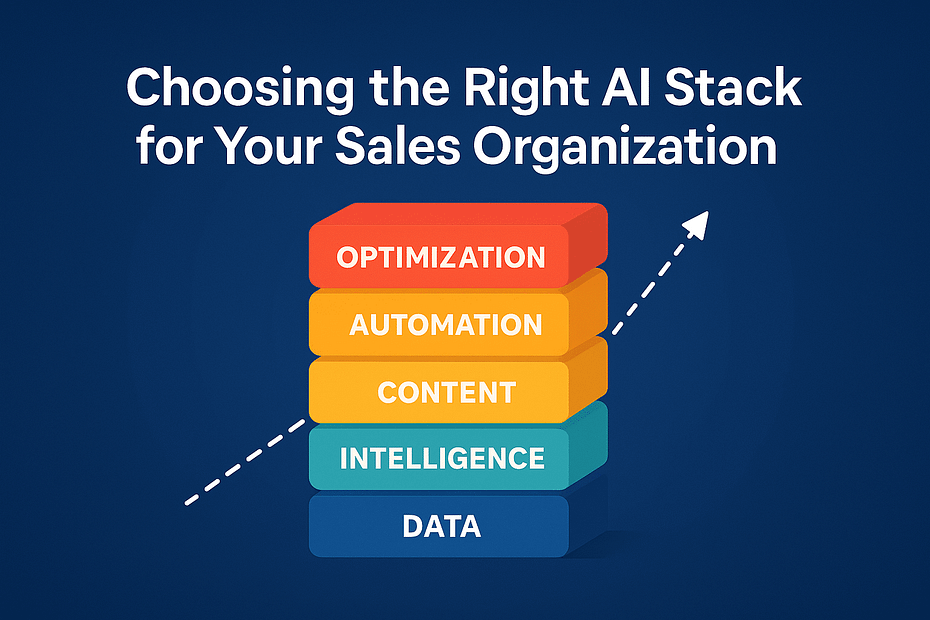
Choosing the Right AI Stack for Your Sales Organization

A VP of Sales recently confided in me: “We have six different AI tools, but our reps are still doing manual work. What went wrong?”

This is the AI tool proliferation problem. Sales leaders often collect tools without a strategy, mistaking a pile of features for a cohesive system. It’s like buying a hammer, screwdriver, saw, and drill without realizing you’re actually trying to build a house. An effective AI stack means integration. When tools work together, they amplify each other’s value. When they don’t, they add complexity, confusion, and wasted money.

Why Strategy Beats Random Adoption

Random tool adoption is rampant across sales organizations. Teams chase shiny new software, often ending up with overlapping features, siloed data, and productivity lost to tool-switching. Instead of solving problems, the stack itself becomes the problem.

But when built strategically, the benefits are profound. Integrated systems reduce manual data entry, accelerate response times, and deliver actionable insights for reps. Three well-chosen, well-connected tools can outperform six isolated ones. Integrated stacks also improve adoption rates by providing consistent interfaces and reducing training overhead.

The Five-Layer AI Stack Framework

To avoid the chaos of random adoption, I use a five-layer framework for structuring sales AI tools:

  1. Data Foundation – Your CRM and data management system, enriched and maintained for accuracy.
  2. Intelligence & Analytics – AI-driven insights, lead scoring, forecasting, and market intelligence.
  3. Automation & Workflow – Sequences, task automation, and cross-platform orchestration.
  4. Content & Communication – AI writing, proposal generation, and customer-facing tools.
  5. Optimization & Learning – Conversation analysis, performance tracking, and continuous improvement.
Read the rest of the article…

Two Tall Guys Talking Sales – From Comp Plans to Territory Alignment: Sales Strategies Every Leader Needs for Revenue Generation – Episode 153

As the year draws to a close, sales leaders and business owners face a critical challenge: preparing for growth in the year ahead. In this episode of Two Tall Guys Talking Sales, hosts Kevin Lawson and Sean O’Shaughnessey dive deep into sales management strategies that set the stage for long-term sales success. From refining compensation plans and aligning territories to planning product lifecycles and avoiding the dreaded “hockey stick” growth trap, this conversation is packed with insights on business acumen, value selling, and revenue generation strategies that every sales leader should master.

Key Topics Discussed

  • 01:00 – Planning Beyond This Year: Why sales leaders need to start preparing now for next year’s revenue generation and sales processes.
  • 02:11 – Building Smarter Compensation Plans: Evaluating and refining comp structures to drive sales success and attract top talent.
  • 03:13 – Product Lifecycle & AI Readiness: How shifts in markets and technology demand updates to your offerings and messaging.
  • 05:00 – Departmental Alignment for Growth: Understanding how revenue management and sales growth affect every department in your business.
  • 07:12 – Right People, Right Roles: Assessing whether your sales team is positioned for success in the next stage of your growth plan.
  • 11:20 – Avoiding the “Hockey Stick” Trap: Why spreading growth evenly across years is a better long-term sales strategy.

Key Quotes

  • Sean O’Shaughnessey (01:07): “If I asked you to write out your three-year plan, next year already knocks off the first year. Are you one-third of the way there, or do you need to rethink your path?”
  • Kevin Lawson (02:33): “Be planning ahead. Compensation plans aren’t a set-and-forget item—you need to revisit them every year to make sure they’re delivering the right results.”
  • Sean O’Shaughnessey (07:59): “Do I have the right people in the right place in my sales organization for next year? Not every salesperson has to leave, but maybe their role needs to evolve.”
  • Kevin Lawson (11:38): “You don’t want that third year of your plan to be a hockey stick. Don’t put yourself in a position where you suddenly need 40% growth in one year to hit your goals.”

Additional Resources

  • B2B Sales Lab: A peer community for sales leaders and professionals to sharpen strategies, exchange best practices, and get actionable feedback.
  • EOS Framework: For leaders who want to align messaging, sales strategies, and revenue management with long-term goals.

A Significant Actionable Item from this Podcast

Review and finalize your sales compensation plans by December 1st. This gives your team enough time to digest changes, ask questions, and align their sales strategies before the new year begins. Waiting until January leaves your salespeople unprepared, which can delay revenue generation and momentum.

Read the rest of the article…