Skip to content

price

What An MBA Didn’t Teach You About Sales

The sales profession is challenging. You need to work hard at it to succeed. You need to learn from the best. You need to improve your skills continuously. If you think you can sell since you are a hit at parties and have a lot of friends, you may soon find that you are a failure as a salesperson. Blunt truth:

because the sales profession is so hard, you have to focus on doing everything in sales very well, or you will be considered a failure.

I call this blog, Skinned Knees because I try to relate all of the learning that I have done over the past 4+ decades (while skinning my knees in the learning process).

I hope that you learn from my mistakes so that your business will grow!


Turning Competition into Opportunity: A Guide for Success in Sales

Competition in B2B sales isn’t your enemy. It’s your greatest catalyst for growth and innovation in today’s dynamic market landscape. Have you considered how viewing competitors as opportunities rather than threats could transform your sales approach? Let me show you why this mindset shift matters for your bottom line.

Think beyond the obvious when identifying your competition. Your real rivals aren’t just companies selling similar products or services. They’re anyone competing for your prospect’s budget allocation. This includes businesses offering solutions with capabilities or price points different from yours and other priorities within the prospect. The competitive landscape extends far beyond your direct market segment.

The most formidable opponent often lurks in the shadows of customer inertia. This “no-decision” competitor manifests as your prospect’s resistance to change. It’s the comfort zone that whispers, “Maybe later,” or “What we have works fine.” Understanding this psychological barrier is crucial for your sales strategy.

You need a systematic approach to analyzing and outmaneuvering your competition. Start with an honest assessment of your position in the market. What unique value do you bring to your customers? Where do you consistently outperform others? This self-awareness forms the foundation of your competitive strategy.

Know your competition inside and out. Study their strengths, weaknesses, market positioning, and customer relationships. Your competitive analysis must go deeper than surface-level observations. Map out how their strengths align with your weaknesses. This intelligence helps you craft more compelling value propositions and sales approaches.

Read the rest of the article…


Differentiating in the Sales Process: The Key to Boosting Bottom Line

The roles of salespeople, sales managers, and small business CEOs are ever-evolving. A common problem faced is increasing revenue and productivity in sales processes. This goal is common for all, from individual salespeople striving to provide for their families to CEOs seeking to boost their company’s bottom line. The key to achieving this lies in understanding the dynamic nature of the sales environment and leveraging it effectively.

A significant part of the sales process revolves around the buyer’s perception of a product or service as a commodity. This misclassification is usually caused by insufficient differentiation in the early stages of the sales process. Differentiation is crucial in any sales process, regardless of the industry or scenario. Creating enough differentiation can be the difference between closing a deal at a discounted rate or the desired price.

Salespeople are experts in their field, whether selling a unique product specific to their company or a common commodity. They typically have a deeper understanding of what they are selling than their prospects have about what they are buying. This expertise should be leveraged to guide prospects through the buying process, adding value to the relationship and making the salesperson indispensable. This approach can reduce the emphasis on price and increase the potential for higher earnings.

Every business has unique values that differentiate it from its competitors. These unique values could be anything from their mission, vision, and values to their market commitment and guarantee. This is commonly called a Unique Value Proposition (UVP) or a Unique Sales Proposition (USP). While a UVP and a USP are similar, there is a slight difference in that the former is typically created by the Marketing department (or sometimes with the help of a business adviser such as an EOS implementer. The latter is directly targeted at salespeople and what a salesperson should say to their prospects and customers. Salespeople should understand what makes them different and communicate this effectively to their prospects. The ability to create separation and differentiate oneself is why people pay for a product or service.

Read the rest of the article…

Unstick Your Sales: The Importance of Understanding the Buyer’s Journey

It’s no secret that the dynamics between the buyer and the salesperson play a pivotal role in sealing the deal. The conversation often revolves around real sales issues, selling situations, and sales leadership. 

Let’s delve into a scenario. You’re selling to a beer industry manufacturer, and their first question is about your price. This immediate focus on cost might make you think this may not be a good prospect. However, it’s crucial to remember that you can’t be disrespectful or dismissive. As salespeople, it’s our job to work with what we have. 

In this situation, the salesperson has to conduct a discovery call and engage a subject matter expert to understand the prospect’s business process, adaptation, and conversion. Unfortunately, the interaction turned into a commodity exchange, with the buyer solely interested in the number of users and the price per user. 

This scenario illustrates a common challenge in sales: the sales and buying processes often need to align. How your Customer Relationship Management (CRM) system is set up may not necessarily mirror how the buyer decides. Therefore, figuring out how to sell more effectively based on the buyer’s journey is crucial. Understanding the buyer is discussed in great detail in my book Eliminate Your Competition, which is available wherever you buy books.

Read the rest of the article…

Transform Your Sales Strategy with the Three-Legged Stool Approach: Resonate, Differentiate, Substantiate

Business-to-business (B2B) sales is more than selling a product or service. It involves a strategic approach that includes understanding the customer’s needs, differentiating your offering, and building trust. This strategic approach is often called the three-legged stool of sales: Resonate, Differentiate, and Substantiate. Resonating with customers is the first step (leg) in the sales process. It involves answering the questions “Why should the customer act?” and “Why should they act now?” To resonate with customers,… Transform Your Sales Strategy with the Three-Legged Stool Approach: Resonate, Differentiate, Substantiate

Using Value Propositions to Stand Out in a Competitive Market

Understanding and effectively communicating your value proposition is crucial for success in B2B sales. It can be the difference between winning and losing a deal. Whether you’re a salesperson, a sales manager, or the CEO of a small company, this topic is extremely relevant.

A value proposition is not merely a catchy slogan or a well-crafted elevator pitch. It is a broader collection of reasons why a potential buyer should choose your product or service. A value proposition identifies the customer’s needs and goals and demonstrates how your product or service can address these.

One key aspect of a value proposition is its ability to resonate with the customer. This involves deeply understanding the customer’s needs and tailoring your proposition to their specific situation. This allows the sales team to find the match between the customer’s needs and your offer. To resonate effectively, you need to answer two key questions for the customer: Why act? And why now?

The ‘why act’ question establishes the need for your product or service. If the customer doesn’t see a need, they won’t be interested, no matter how great your offering is. The ‘why now’ question creates a sense of urgency. Without this, a customer may acknowledge the need for your product or service but see no reason to act immediately.

Read the rest of the article…

Two Tall Guys Talking Sales Podcast – The Gap Analysis Advantage: Bridging Client Needs with Optimal Solutions with Chris Cocca – E86

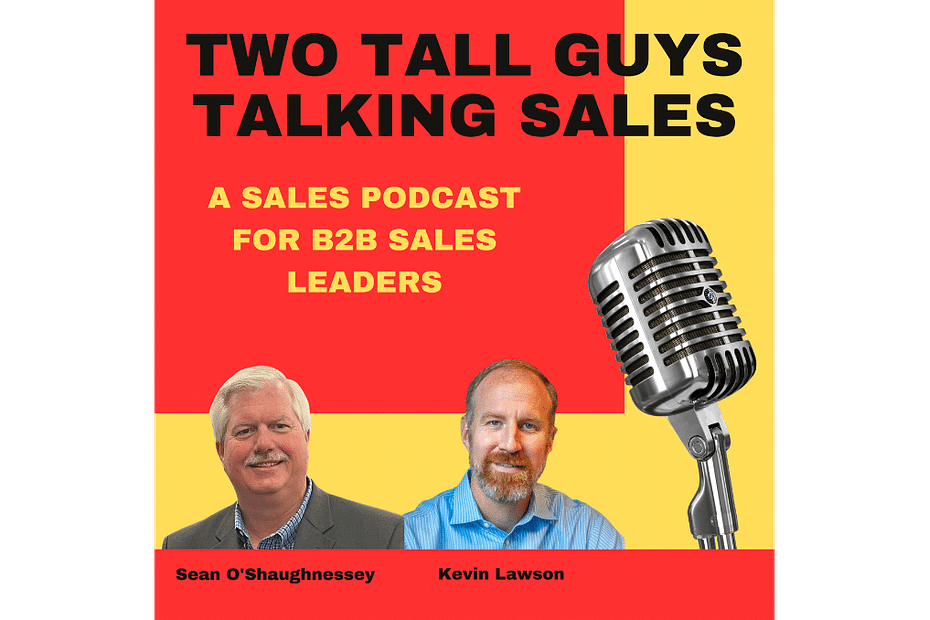
Welcome to this week’s episode of Two Tall Guys Talking Sales, where hosts Kevin Lawson and Sean O’Shaughnessey are joined by Chris Cocca, a sales expert, to discuss the vital aspects of discovery meetings and qualifying prospects for a robust sales pipeline. Tune in as they delve into the methodologies that distinguish successful sales strategies, particularly focusing on the RAIN training concept and the essential practice of understanding client aspirations and afflictions. Key Topics Discussed:… Two Tall Guys Talking Sales Podcast – The Gap Analysis Advantage: Bridging Client Needs with Optimal Solutions with Chris Cocca – E86

Competitive Edge in Crowded Waters: Mastering Red Ocean Strategies for B2B Growth

In the lexicon of strategic business planning, the concepts of “Red Ocean” and “Blue Ocean” serve as metaphors to distinguish between different market dynamics characterized by the degree of competition. A Red Ocean symbolizes sectors with fierce competition, saturated markets, and businesses clash over a finite demand pool. The landscape is marked by aggressive price wars and incremental innovations as companies struggle to carve out and defend their market share. These are arenas where the… Competitive Edge in Crowded Waters: Mastering Red Ocean Strategies for B2B Growth

Boosting Profitability in Sales: Mastering the Art of Negotiation – Video 11 of the New Year Motivation Series

Entering the New Year, it’s vital for sales teams to analyze and improve their negotiation strategies for enhanced deal profitability. Reflecting on past negotiations to identify weaknesses is key. Embracing continuous learning and preparation, like training and scenario planning, can significantly boost bottom lines. The goal is to negotiate mutually beneficial deals without unnecessary concessions, thereby maximizing value and profit with every transaction.

Two Tall Guys Talking Sales – Selling Repeat Products: A Guide to Thriving in Consumable Product Sales – E69

In this episode, Kevin and Sean provide valuable insights into the world of selling consumable products. They emphasize the importance of understanding the unique challenges of this market, including the need for a strong value proposition and the crucial role of the salesperson in understanding and meeting customer needs. The discussion also covers effective territory management and the benefits of leveraging team strengths for cross-selling. This episode is a must-listen for sales professionals looking to excel in the consumable products market and for those seeking to enhance their sales strategies in competitive environments.

Listen to this episode of Two Tall Guys Talking Sales to gain valuable insights and strategies for excelling in the consumable products market, and to learn how to effectively grow your sales territory and manage customer relationships