Skip to content

product

What An MBA Didn’t Teach You About Sales

The sales profession is challenging. You need to work hard at it to succeed. You need to learn from the best. You need to improve your skills continuously. If you think you can sell since you are a hit at parties and have a lot of friends, you may soon find that you are a failure as a salesperson. Blunt truth:

because the sales profession is so hard, you have to focus on doing everything in sales very well, or you will be considered a failure.

I call this blog, Skinned Knees because I try to relate all of the learning that I have done over the past 4+ decades (while skinning my knees in the learning process).

I hope that you learn from my mistakes so that your business will grow!


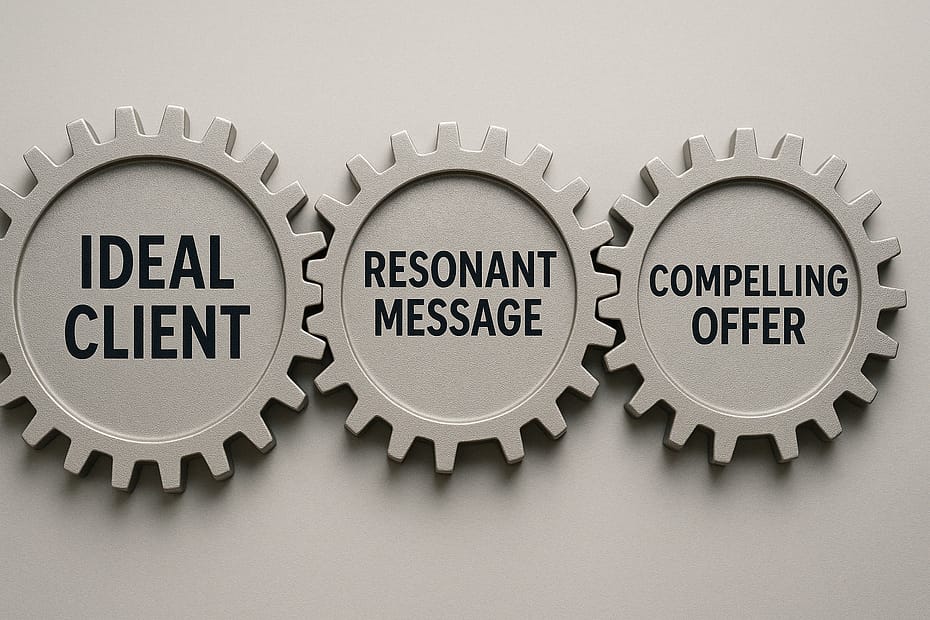
The Three Pillars of Sales Success: Ideal Client Profiles, Effective Messaging, and Aspirational Offers

Let’s start this article with a rhetorical question to the sales professionals, sales managers, or CEOs: Have you ever found yourself guilty of sending messages to prospects without fully considering their specific needs or how your offer aligns with them?

If so, you’re not alone—this is a common pitfall in sales. The good news is, it’s entirely fixable by developing a straightforward, strategic approach.

An effective sales strategy hinges on three core components: defining your ideal client profile (ICP), crafting a resonant message, and presenting a compelling offer. These elements are interconnected. Mastering their alignment will significantly enhance your sales effectiveness.

Ideal Client Profile

Let’s start with the ideal client profile. How well do you know the companies you’re targeting? Identifying your ideal customer is foundational to your entire sales approach. It’s not enough to say that your market is “small businesses” or “tech companies.” Instead, think about your best clients—the ones you genuinely enjoy working with, who value your product, and who generate profitable, sustainable business. Think about companies that rarely devalue your product or service by asking for a discount. What do these clients have in common?

Now that you have your favorite customers from above, reflect on your top five or ten accounts. Are they in the same industry? Do they share similar challenges or company structures? Perhaps they all have common goals that your product consistently solves. Pinpoint these commonalities. This process will help you create a precise and actionable ideal client profile.

But don’t stop at company-level characteristics. Remember, even in B2B sales, you’re ultimately selling to individuals. Identify the specific roles or buyers within these organizations that are responsible for making buying decisions. Who are these decision-makers? What motivates them personally and professionally? Do they all have the same kind of college education? Do they all have similar career paths? Understanding the people behind the logo makes your outreach more personal, targeted, and effective.

What is your message?

Once you’ve developed a clear picture of your ideal client and the people within those companies, the next step is crafting a message that reflects your value-selling message. This message is how you communicate your value proposition—it’s the bridge between your product and your prospect’s needs. Too often, sales messaging falls flat because it focuses heavily on the seller rather than the buyer. Statements that emphasize “we,” “I,” or “our product” rarely resonate deeply. Instead, effective messaging highlights the customer’s perspective, clearly communicating the benefits they will experience.

Read the rest of the article…
John Spencer Explains Scaling Sales Teams- Turning A-Player Performance into Company-Wide Success

In this episode of Two Tall Guys Talking Sales, hosts Kevin Lawson and Sean O’Shaughnessey sit down with John Spencer, a seasoned sales leader and founder of Clear Direction Sales Development. Together, they explore the crucial differences between growth and scale, particularly in organizations leaning too heavily on a superstar seller. If you’re leading a sales organization that relies on one standout performer—or trying to replicate success across your sales team—this is a must-listen conversation… 

Stop Guessing, Start Growing: How Strategic Sales Assessments Drive Real Revenue

You’ll eventually hit a wall if you’re running a sales organization—or wearing multiple hats as founder, CEO, and sales manager. That wall is often invisible until growth stalls, key deals slip through the cracks, or your top salesperson burns out. So, what’s the next move? It’s not more hustle. It’s assessment.

A sales assessment isn’t about checking boxes. It’s about understanding where you are, how you operate, and what’s holding you back. Too many small business leaders assume they’re doing fine because revenue is growing or the team is hitting their quotas. But are you growing at the rate your market allows? Are your sales activities aligned with your long-term goals? Are you building a repeatable system, or are you just getting lucky?

Let’s get tactical. A sales plan isn’t just a revenue target. It’s your go-to-market strategy. It defines your audience, your message, and your motion. It answers why you’re talking to those prospects and what value you’re bringing to them. Without a plan, you’re reacting instead of executing. You’re chasing leads instead of building a pipeline.

If you’re a small company—perhaps under $30 million in revenue—and selling into a national market, chances are your market potential is hundreds of millions, maybe billions. That means your market share is a rounding error, which means there’s room to grow. The question is: Are you operating in a way that allows you to capture that growth?

Even if you’re running lean, you should benchmark your performance against top-tier organizations. Not because you’re competing with them directly, but because they set the standard. What are they doing that you’re not? Where are they more efficient? How do they structure their teams? You’re leaving money on the table if you’re not asking those questions.

Read the rest of the article…

Level Up Your Sales Prospecting with Advanced Research Techniques

A shoutout to Chris Spanier and Episode #85 of the Practical, Actionable Marketing Podcast

Sales prospecting has always been a grind. What if you could cut your research time in half and dramatically improve your outreach results?

In Episode #85 of the Practical, Actionable Marketing podcast, host Chris Spanier delivers a masterclass on how to do just that. Titled “Advanced Prospecting Research Tools,” the episode is packed with time-saving techniques and tools that help sales professionals build sharper prospect profiles faster.

As someone with over four decades in sales and sales management, I believe this kind of tactical insight makes a difference. If you haven’t already, listen to the episode. Then, come back here for a quick breakdown of what Chris covered—plus a few of my thoughts.


Why Prospect Research Matters More Than Ever

In a market saturated with sales messages, relevance is your only competitive advantage. The days of blasting generic emails to massive lists are over. Today, the winners are the ones who personalize their outreach with precision—and that begins with better research.

Read the rest of the article…

Becoming a Trusted Advisor: Solve Problems, Not Just Sell Products

In B2B sales and sales leadership, problem-solving is an art that goes beyond selling a product or service. The secret to becoming a trusted advisor is addressing business problems, not just selling a product. This concept resonates with salespeople, sales managers, and small business CEOs who sell themselves or manage a team of salespeople. 

Sales is not just about pushing a product or closing a deal; it’s about forging relationships, understanding businesses and their unique challenges, and offering solutions to these problems. The role of a trusted advisor is not to sell a product and become a trusted advisor, but rather to become a trusted advisor who can sell a product. 

The reward for earning trusted advisor status is immeasurable. It is fantastic to receive a call from a client asking for advice on solving problems they have never discussed with you. Imagine having relationships that stand the test of time and outlast competition and challenges. 

So, how does one become a trusted advisor and solve problems for clients rather than just selling them a great product? It starts with building a relationship from scratch. When starting with a prospect list or an ideal client profile, the goal is not to find anyone who will respond but to seek opportunities to build meaningful relationships. 

The cornerstone of these relationships is reliability. 

  • Are you always punctual? 
  • Do you cancel at the last minute? 
  • Do you forget to return phone calls? 

These behaviors erode trust. On the other hand, showing up when needed, providing solutions even when they are not directly related to your product or service, and connecting clients to others who can help them are behaviors that build trust. 

Becoming a trusted advisor also involves understanding and curiosity about the client’s business. Do you ask questions about how the prospective company makes and loses money, how it dealt with past challenges like the pandemic, and how it deals with current challenges like rising inflation or supply chain disruption? The aim is to understand the client’s business, challenges, and competitors and offer insights and parallels to other companies. 

Read the rest of the article…

The Power of Personal Branding in Enhancing Sales Productivity

Navigating the world of sales can sometimes feel like traversing a labyrinth. Salespeople, sales managers, and CEOs alike grapple with the challenge of increasing revenue and enhancing productivity in their sales processes. To be successful, you need more than knowledge of products and services; you need to develop trust and a strong personal brand.

Business-to-business (B2B) sales involves transferring trust from ourselves to our prospects. We trust in our products and company, but convincing prospects to share that trust is the real challenge. This trust should encompass the product, the company, and perhaps most crucially, the salesperson. Remember, B2B sales could be defined as helping prospects decide in our favor within the desired timeframe.

The key to B2B sales is developing a personal brand that inspires trust in salespeople. The salesperson’s ability to convey reliability, expertise, and credibility can significantly influence how fast a prospect invests in a product or service.

Developing a strong personal brand begins with creating a presence that signals control and understanding of the business. This can be achieved by showcasing the benefits of your product or service to your customer’s business. A straightforward way to build your brand is by seeking references from your network, former employers, and customers, and showcasing these on professional platforms like LinkedIn.

Read the rest of the article…

Two Tall Guys Talking Sales – AI for Sales Success: Tools, Tactics, and Why You Can’t Ignore It – E124

Artificial intelligence (AI) is transforming the sales industry, but does that mean salespeople are becoming obsolete? Absolutely not! In this high-energy episode, Kevin and Sean debunk the myth that AI will replace sales professionals. Instead, they reveal how AI can be a game-changing tool for sales success. From using AI to refine communication to automating time-consuming tasks, this episode is packed with insights on how AI can help sales leaders and reps work smarter, sell… 

Building Winning Sales Teams for the Future: Insights for CEOs and Sales Leaders

What are the key moves that CEOs and sales leaders must make to prepare their teams for success in 2025? That’s exactly what we explored in a recent episode of the Art and Science of Complex Sales podcast hosted by Paul Fuller of Membrain. I had the pleasure of joining Kevin Lawson, President of Lighthouse Sales Advisors, for a deep dive into the strategies defining high-performing sales organizations in the year ahead. You may recognize… 

Two Tall Guys Talking Sales – The Art of the Discovery Call: Build Respect and Close More Deals – E120

In this episode of Two Tall Guys Talking Sales, Kevin Lawson and Sean O’Shaughnessey tackle one of the most critical yet underestimated aspects of sales: the discovery call. Are you guilty of “winging it” during these pivotal conversations? Tune in as Kevin and Sean break down the importance of crafting a tailored question bank, share actionable tips to elevate your discovery process, and reveal how asking the right questions can transform your sales game. If… 

Unlock Revenue Growth with a Fractional VP of Sales

Are you feeling stuck trying to grow your company’s revenue? Do you find yourself juggling too many responsibilities, struggling with outdated sales methods, or unsure how to take your sales team to the next level? You’re not alone. Many business owners face these challenges, and at New Sales Expert, we’re here to help. I’m Sean O’Shaughnessey, founder of New Sales Expert, and we specialize in helping B2B companies accelerate revenue production by implementing proven sales…