Skip to content

qualification framework

What An MBA Didn’t Teach You About Sales

The sales profession is challenging. You need to work hard at it to succeed. You need to learn from the best. You need to improve your skills continuously. If you think you can sell since you are a hit at parties and have a lot of friends, you may soon find that you are a failure as a salesperson. Blunt truth:

because the sales profession is so hard, you have to focus on doing everything in sales very well, or you will be considered a failure.

I call this blog, Skinned Knees because I try to relate all of the learning that I have done over the past 4+ decades (while skinning my knees in the learning process).

I hope that you learn from my mistakes so that your business will grow!


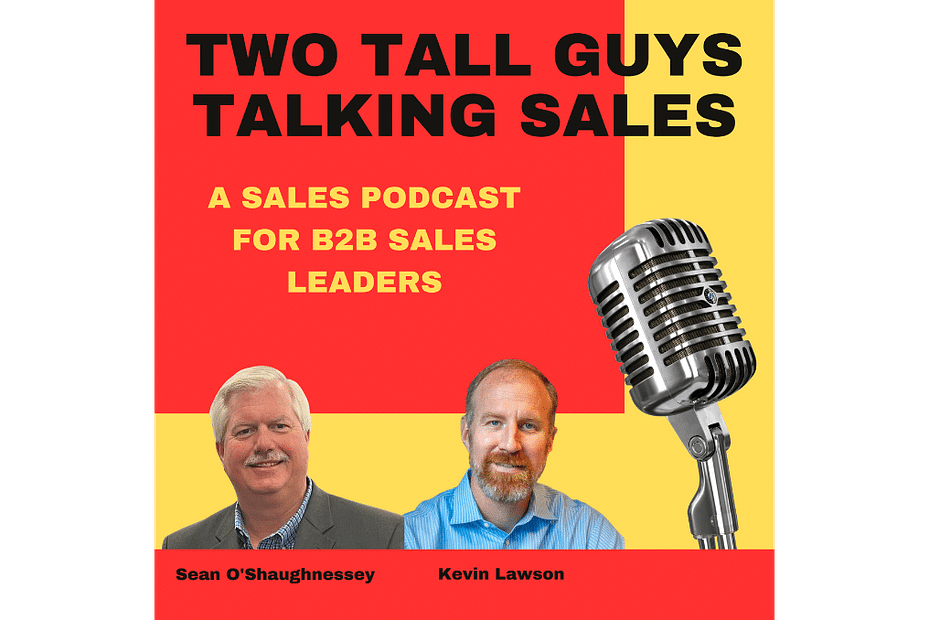
Two Tall Guys Talking Sales Podcast – Why Qualified B2B Deals Still Fall Apart: MEDDPICC, Economic Buyers, and Buying Committees – Episode 206

Filling every box in MEDDPICC does not mean you actually understand the deal. In this episode of Two Tall Guys Talking Sales, Kevin Lawson and Sean O’Shaughnessey dig into one of the most dangerous problems in B2B sales: confidently believing you have identified the economic buyer, decision process, decision criteria, and business impact—only to discover late in the cycle that your assumptions were wrong. From complex deals and buying committees to stalled proposals and hidden influencers, Sean and Kevin explain why qualification is not a CRM exercise. It is an ongoing discipline that demands business acumen, better questions, and the willingness to challenge what you think you know.

Key Topics Discussed

  • MEDDPICC Is Only as Good as the Answers You Put Into It — 00:23
    Sean explains why qualification frameworks such as MEDDPICCC, BANT, and SPICED can create false confidence. Completing the fields is not the same as validating them. In Enterprise Sales and other complex deals, getting one critical assumption wrong—especially the economic buyer or decision process—can derail the entire opportunity.

  • The Economic Buyer vs. the Person Managing the Budget — 04:59
    Kevin explores the distinction between someone who manages a budget and someone who can actually authorize a purchase. Using examples ranging from fleet fuel to professional services, he shows why strong sales strategies require follow-up questions about authority, contracting, procurement, and how decisions actually get made.

  • Discovery Does Not End When the CRM Stage Changes — 08:20
    Sean challenges the conventional sales process assumption that discovery is an early-stage activity. Effective salespeople keep testing their assumptions throughout the opportunity. The goal is to continually verify that the information remains accurate as the buying committee and deal evolve.

  • Follow the Business Impact to Find the Real Power — 08:58
    The economic buyer may control the money, but the executive or department receiving the business benefit can have enormous influence over the purchase. Sean explains how metrics such as reduced selling time, increased deal size, lower supply-chain costs, or stronger ROI can show which stakeholders need to join the conversation. This is where value selling and business acumen become essential.

  • When the Deal Stalls, Reopen Qualification — 12:05
    A proposal has been sent. A week passes. Then another. Silence. Kevin explains why being ghosted should trigger a review of the opportunity rather than another generic follow-up email. Reassess the person, the impact, and the decision process—and have the courage to admit that you may have missed something.

  • Getting Better Sales Coaching Outside the Forecast Call — 13:11
    Sean discusses the value of having experienced salespeople and sales leaders available to challenge assumptions before a deal falls apart. For AEs, sales managers, and VPs of Sales, stronger coaching can improve qualification discipline, pipeline velocity, and ultimately sales success.

Key Quotes

Sean O’Shaughnessey — 01:16

“If you know the correct answer, you almost always will know if you can win the deal, if you will win the deal, and also if you shouldn’t win the deal because you’re not a good fit.”

Kevin Lawson — 07:41

“Mastering it can take a lifetime.”

Kevin compares professional selling to golf: the basic mechanics are easy to understand, but consistently executing the right sales processes and asking the next question takes years of disciplined practice.

Sean O’Shaughnessey — 08:20

“Discovery happens throughout the sales process.”

That distinction matters. Discovery is not something you complete and leave behind. In complex B2B opportunities, every new stakeholder, metric, objection, and approval step can change your understanding of the deal.

Kevin Lawson — 13:05

“Take the 30 seconds of courage and ask the question.”

Sometimes deal acceleration does not require another sales tool or a more sophisticated message. It requires asking the uncomfortable question that exposes what you missed.

Additional Resources

  • MEDDPICCC — A qualification methodology frequently used in Enterprise Sales and complex deals to examine metrics, the economic buyer, decision criteria, decision process, pain, champions, competition, and other critical elements of an opportunity.

  • BANT — A simpler qualification framework focused on budget, authority, need, and timing.

  • SPICED — Another structured approach to understanding customer situations, pain, impact, critical events, and decision-making.

  • B2B Sales Lab — A community where sales professionals and sales leaders can discuss real opportunities, sales management challenges, sales strategies, and execution issues with other practitioners. Visit b2b-sales-lab.com.

  • September 22 B2B Sales Lab Office Hours — Sean and Kevin invite listeners to attend this session without becoming a member, giving salespeople and sales leaders an opportunity to bring real questions into the discussion. You can join at https://b2b-sales-lab.circle.so/c/live-events-w-two-tall-guys/sean-kevin-office-hours-bring-your-challenge-and-let-s-work-on-it-6-23-26-820b44-56a8a6-1bbbaa-e6a739-92888c-7cd4d454-33e8-44fd-a8a6-f43b8196c5f9

A Significant Actionable Item from this Podcast

Take one meaningful opportunity in your pipeline and conduct a qualification audit without looking at the answers already entered in your CRM.

For each major qualification point, ask yourself: What evidence do I actually have that this is true?

Pay particular attention to three questions: Do I know who can actually authorize the purchase? Do I understand every meaningful step between my proposal and a signed agreement? Do I know which executive or department owns the business result my solution is supposed to improve?

If any answer rests primarily on assumption, reopen discovery. Ask the additional question now—before the opportunity becomes another mysteriously stalled deal in the forecast.

Read the rest of the article…

Two Tall Guys Talking Sales Podcast – Sindre Haaland Coaches on Managing the Game, Not the Scoreboard: Building Predictable Sales Performance – Episode 199

Sales teams rarely fail because the quota was unclear. They fail because the daily behaviors required to reach it were never defined, measured, or reinforced. In this episode of Two Tall Guys Talking Sales, hosts Kevin Lawson and Sean O’Shaughnessey speak with Sindre Haaland, founder and CEO of SalesScreen, about why effective sales management requires leaders to manage the game, not merely watch the scoreboard. The conversation explores sales gamification, revenue architecture, CRM adoption, qualification discipline, and how AI can support more predictable B2B revenue generation without removing the human motivation that drives consistent execution.

Key Topics Discussed

Why sales leaders must manage the game, not the scoreboard — 01:19
Revenue targets tell salespeople where they are expected to finish, but they do not explain how to get there. Sindre argues that sales success begins by translating the quota into controllable, revenue-generating activities: calls, meetings, qualified opportunities, pipeline creation, and consistent execution throughout the quarter.

Using gamification to change behavior—not merely celebrate outcomes — 02:19
Most sales contests reward closed business, but a salesperson cannot always control when a complex deal closes. Effective gamification focuses instead on meaningful behaviors that sellers can execute every day. Applied correctly, it can improve motivation, consistency, pipeline velocity, and performance among the middle of the sales team, not just recognize the top performers.

Connecting activity metrics to conversion quality — 04:07
More activity is not automatically better activity. Measuring calls without examining results can produce meaningless behavior and distorted data. Sean, Kevin, and Sindre discuss the importance of combining activity targets with conversion rates, opportunity progression, and clear definitions of what good execution looks like.

Building energy, recognition, and teamwork across the sales organization — 05:25
Sindre describes the moment SalesScreen demonstrated how software could create excitement throughout a sales floor when a deal closed. The larger lesson goes beyond celebration: real-time recognition helps managers reinforce productive behavior, improve engagement, and ensure individual accomplishments are not overlooked inside large sales organizations.

Reverse-engineering the quota through revenue architecture — 08:15
Many sales teams know their targets but have never calculated how many calls, meetings, opportunities, and conversions are required to reach them. Without that basic revenue management discipline, prospecting becomes inconsistent, and the pipeline follows a predictable boom-and-bust cycle. Strong sales processes create continuity before pipeline weakness becomes a forecasting crisis.

Gamifying qualification and opportunity progression in complex B2B sales — 09:25
In enterprise sales, closed deals may occur too infrequently to serve as useful daily performance signals. Teams can instead quantify progress through qualification frameworks such as MEDDPICC and SPICED, including CRM completeness, opportunity advancement, metric validation, and buying committee coverage. This creates better sales coaching data while reinforcing the behaviors that move complex deals forward.

Key Quotes

Sindre Haaland — 01:25
“Managers get one thing wrong: they’re managing the scoreboard versus managing the game.”

Sindre Haaland — 04:07
“If you want to change behavior, you need to be in control of those behaviors.”

Sean O’Shaughnessey — 03:13
“The things you do at the beginning are going to affect the things that you do two, three, four, six, or ten months from now.”

Sindre Haaland — 08:27
“You need to understand how to get to goal and what real activity you need to put in, day in and day out, to get there.”

Kevin Lawson — 13:44
“Managing the game, not the scoreboard, is a key behavior.”

Additional Resources

Sindre Haaland
CEO and Founder at SalesScreen can be contacted on LinkedIn at linkedin.com/in/shaaland/

SalesScreen
A sales performance management and gamification platform designed to quantify sales processes, reinforce productive activity, increase CRM engagement, and create more predictable sales performance.

MEDDPICCC
A qualification framework commonly used in enterprise sales and complex deals to evaluate metrics, the economic buyer, decision criteria, decision process, paperwork process, goal identification, coaches, champions, and competition.

SPICED
A sales qualification and discovery framework that helps sellers understand a buyer’s situation, pain, impact, critical event, and decision process.

A Significant Actionable Item from this Podcast

Choose one sales role and reverse-engineer its quarterly quota into a weekly activity model.

Start with the revenue target, then calculate the required number of closed deals, qualified opportunities, first meetings, and prospecting activities based on actual conversion rates. Do not stop at activity volume. Add at least one quality measure at each stage, such as meeting-to-opportunity conversion, MEDDPICC completion, stakeholder engagement, or opportunity progression.

Once the model is built, ask a harder question: Are managers coaching these controllable behaviors every week, or are they simply reviewing the forecast after the damage has already been done?

That distinction determines whether the organization is practicing sales management or merely reporting revenue history.

Read the rest of the article…

Two Tall Guys Talking Sales Podcast – Sales Territory Plan 2026: The Sales Management Blueprint for Revenue Generation – Episode 172

If you’re serious about sales success in 2026, this episode is a gut-check and a blueprint. Sean and Kevin break down what a real territory plan looks like (not a fluffy “be more productive” wish list), how to map first-half revenue to specific accounts, and how to build a second-half pipeline before it’s an emergency. The throughline is sales management discipline: define the goal, allocate time intentionally, and build a plan that survives reality—because it will get punched in the face.

Key Topics Discussed

  • Why most reps are under-planned—and why that’s unacceptable if you want Sales success (00:00)
    Sean frames the problem: Day-to-day selling without a plan is a strategy for mediocre revenue generation.

  • Territory plan vs. account plan: what you should build first (01:00)
    Territory planning starts with “who will buy and how much,” not activity lists or generic prospecting promises.

  • First-half revenue mapping: list your closeable accounts and expected revenue (02:00)
    If your sales processes assume a sub-6-month cycle, you should already know which deals can land in the first half.

  • Second-half pipeline sourcing: identify 3–10 prospect channels, not names (02:31)
    Kevin ties it to repeatable sales strategies: pipeline creation is a system, not a mood.

  • Strategic vs. key accounts: time allocation, long-cycle wins, and reputation as an asset (04:00)
    Kevin introduces a time-based framework: strategic “marriage-level” accounts vs. key near-term wins, and the reputational groundwork that makes both easier.

  • Pricing, comp alignment, and the real math of revenue management (07:42)
    If you’re “opening a territory,” your pricing plan and comp plan have to match the reality of getting noticed versus optimizing margin.

Key Quotes

  • Sean: “If you fail to plan, then you plan to fail.” (00:00)
    A blunt reminder that planning is not optional if you want predictable revenue generation.

  • Kevin: “At the top of the sheet, write your goal.” (04:00)
    Start with the outcome, then design your territory plan around time and focus—not random activity.

  • Sean: “Your plan for 2026 has to equal or exceed your quota.” (10:39)
    Your plan should be a commitment to performance, not a narrative that explains shortfalls in advance.

  • Sean: “Everybody has a plan until you get punched in the face.” (14:00)
    Build for volatility—plan to 120% so you can still hit quota when reality disrupts your assumptions.

Additional Resources

  • MEDDPICCC / qualification frameworks referenced as examples of structured sales processes you should use (09:00)

  • B2B Sales Lab mentioned as a place to get your territory plan reviewed and “beaten up” by experienced sales leaders (14:38)

A Significant Actionable Item from this Podcast

Write a one-page territory plan today with four elements: (1) your 2026 goal (quota and your 120% number), (2) the list of accounts you expect to close in the first half with revenue per account, (3) 3–10 specific prospecting channels you’ll use to source second-half opportunities, and (4) the five companies you will learn so deeply—business model, competitors, how they make/lose money—that your messaging and value selling approach becomes inevitable, not improvised.

Read the rest of the article…

Qualifying Leads Using AI-Powered Chatbots or Forms

Episode Summary

In this episode, host Sean O’Shaughnessey explores how artificial intelligence (AI) can be embedded into your sales processes to eliminate the qualification bottleneck and dramatically improve revenue generation. He shares a real-world case where two-thirds of web leads were being lost due to slow response times and unstructured follow-up, and then walks through how using chatbots and intelligent forms tied to the MEDDPICCC qualification framework automates strategic discovery. Listeners will gain clarity on how to deploy an AI-powered “zero lead-decay funnel” that works 24/7, aligns with their sales management methodology, and frees human sellers to focus on closing high-value deals.

Major Highlights

  • The foundational problem: a company generating 400+ qualified web leads per month lost 67% of them because the average response time was 18 hours, while research shows lead qualification drops by 900% if not responded to within five minutes.
  • Explanation of the “qualification bottleneck”: when marketing generates more leads than sales can respond to quickly and strategically, resulting in wasted resources, frustrated prospects, and lost revenue.
  • Introduction of the “zero lead-decay funnel”: a system that uses AI-powered chatbots and intelligent forms to engage every prospect immediately, qualify them using a rigorous framework, and deliver strategic insights to the sales team.
  • Deep dive into the MEDDPICCC framework (Metrics, Economic Buyer, Decision Criteria, Decision Process, Paperwork Process, Identify Goal, Coach, Champion, Competition) and how AI can systematically ask each of these questions in a conversational way, capturing the strategic context necessary for value selling and complex B2B sales.
  • Examples of tools and platforms: native CRM chatbots (HubSpot, Salesforce Einstein Bots), and advanced platforms like Conversica, Drift, and Qualified — all of which can be leveraged to embed AI into your lead-qualification process.
  • Implementation roadmap:
    1. Map current qualification process and identify which MEDDPICCC elements matter most for your business.
    2. Design conversation flows for different visitor segments (first-time vs. returning; small business vs. enterprise).
    3. Create escalation triggers for high-intent prospects (to alert live sales reps immediately).
    4. Establish handoff procedures from AI to humans with full context.
    5. Configure data capture and CRM routing of the structured MEDDPICCC data.
  • Success metrics to track: qualification completion rate, time to qualify, qualified-to-opportunity conversion, conversation completion rates, escalation accuracy, along with ROI calculation (cost per qualified lead before vs. after, time savings for sales, improved close rate).
  • Common pitfalls to avoid: over-automation (replacing humans vs. augmenting), generic questioning for every visitor, weak handoff procedures, ignoring mobile experience, insufficient testing of edge cases and conversation paths.
  • The hybrid approach: AI handles initial screening and strategic qualification; live sales reps handle high-value interactions; the system preserves context throughout; leads are routed appropriately based on score/timeline; nurturing sequences vary based on qualification status.
  • The payoff: faster, smarter qualification; more time for your sales team to focus on value-selling; shorter sales cycles; higher conversion rates; marketing leads actually worked and revenue performance improved.
Read the rest of the article…

Stop Betting on Superstars: How Operating Standards Turn Sellers into Predictable Producers

Many teams grow, but few truly scale revenue beyond individual hero efforts. That difference changes everything for leaders today and in the future. Growth relies on hustle; scaling depends on repeatability across segments and individuals. Your strategy must reflect that hard truth in practice.

Are you relying on one standout to win deals month after month? That looks strong until risk turns visible and costly. One resignation can cripple momentum and expose brittle systems that you had previously ignored.

Scalable sales replaces heroics with defined, teachable operating rhythms that everyone follows. It turns chaos into predictable pipeline progress and results. It clarifies markets, messages, motions, and measurable expectations for every seller on a weekly basis. It builds leverage into onboarding and coaching for consistency. It protects margins while systematically accelerating win rates and velocity across territories.

The foundation begins with a clear picture of your ideal customer, including any disqualifying factors. Having an accurate Ideal Client Profile (ICP) helps minimize waste and reduce uncertainty in your efforts. Take time to define firmographics, pain points, triggers, and buying behaviors using consistent language based on shared evidence. Understand who cares about these issues and why it matters to them now. Also, identify negative personas to sharpen your focus and qualification processes in marketing and sales. A well-defined ICP can significantly boost your conversion rates and shorten the sales cycle.

Next, turn your ICP into straightforward messaging and discovery frameworks tailored for each stage. Consider what unique problems you solve for your customers. What outcomes are most important to them, and who are the key stakeholders by role and priority?

Build talk tracks that lead buyers, not chase buyers with purpose always. Anchor questions to the business metrics and risks they feel. Teach a qualification that tests mutual commitment and outlines next steps with attached dates. Avoid fluffy demos; design relevant proofs using their data. Process specificity turns B players into consistent producers without copying another personality.

I suggest you establish a practical, stage-based operating rhythm that everyone can easily understand and follow. By sharing clear definitions and expectations, managing the pipeline becomes a consistent and smooth process each week. Define each stage with specific exit criteria—avoiding vague intentions or subjective feelings. For example, discovery is considered complete when stakeholders confirm the consequences and impact, and solution fit is achieved when success criteria and ownership are clearly aligned. The commit stage should be backed by a shared plan with clear dates and assigned owners. During weekly reviews, focus on assessing quality rather than just quantity or activity counts. Ask yourself:

  • Does evidence from buyers’ backstage moves have a direct impact on their purchasing decisions?
  • Are the next steps specific, mutually agreed upon, and already scheduled on both calendars?
Read the rest of the article…