Skip to content

qualification

What An MBA Didn’t Teach You About Sales

The sales profession is challenging. You need to work hard at it to succeed. You need to learn from the best. You need to improve your skills continuously. If you think you can sell since you are a hit at parties and have a lot of friends, you may soon find that you are a failure as a salesperson. Blunt truth:

because the sales profession is so hard, you have to focus on doing everything in sales very well, or you will be considered a failure.

I call this blog, Skinned Knees because I try to relate all of the learning that I have done over the past 4+ decades (while skinning my knees in the learning process).

I hope that you learn from my mistakes so that your business will grow!


Two Tall Guys Talking Sales – Winning Sales Strategies for Productive, High-Impact Pipeline Reviews – Episode 149

Pipeline reviews don’t need to feel like an ambush. In this episode, Kevin Lawson and Sean O’Shaughnessey break down how to turn pipeline meetings into high-value working sessions that improve sales management, strengthen sales processes, and accelerate revenue generation. The conversation focuses on preparation discipline, trust, and transparency, as well as a practical playbook for advancing complex deals through relationship mapping and peer-to-peer executive engagement. You’ll hear straightforward sales strategies you can implement immediately, whether… Two Tall Guys Talking Sales – Winning Sales Strategies for Productive, High-Impact Pipeline Reviews – Episode 149

Two Tall Guys Talking Sales – John McLeod Explains How to Avoid the AI Trap: Using New Tools Without Losing Your Sales Message – Episode 140

In this episode of Two Tall Guys Talking Sales, hosts Kevin Lawson and Sean O’Shaughnessey are joined by veteran fractional VP of Sales, John McLeod. Together, they dive into a critical topic for today’s sales leaders: embracing artificial intelligence tools without compromising your value proposition, messaging, or sales processes. John brings deep expertise in sales management, business acumen, and revenue generation strategies, offering a measured approach to evaluating sales tech, especially AI solutions, through a… Two Tall Guys Talking Sales – John McLeod Explains How to Avoid the AI Trap: Using New Tools Without Losing Your Sales Message – Episode 140

Two Tall Guys Talking Sales – From Regular Season to Postseason: Coaching Your Sales Team to Win – E128

As a sales leader, are you coaching your team for the long haul, or are you scrambling in the final weeks of the quarter? In this episode of Two Tall Guys Talking Sales, Kevin Lawson and Sean O’Shaughnessey break down the difference between regular season and postseason play—whether in sports or sales. They explore why last-minute Hail Mary strategies can be damaging, how to manage time, and the importance of effective and consistent coaching. With… Two Tall Guys Talking Sales – From Regular Season to Postseason: Coaching Your Sales Team to Win – E128

Driving Sales Performance with Strategic Competitive Analysis

Ever wonder why some sales teams consistently outperform their competitors while others struggle to close deals? The answer often lies in how well they understand and leverage competitive analysis in their sales process.

Let’s talk about competitive analysis in sales. It’s not just about knowing your competition – it’s about understanding how to use that knowledge to drive results. You need to grasp why prospects choose specific solutions over others and, more importantly, why they sometimes choose to do nothing at all.

Have you considered how many deals you’ve lost not to competitors but to indecision? These “no decision” outcomes often stem from a fundamental gap in prospect qualification. Intelligent sales professionals dig deeper, asking targeted questions about organizational priorities, resource allocation, and strategic initiatives. They understand that timing can be just as crucial as the solution itself.

The modern sales landscape demands a sophisticated approach to competitive analysis. Your success hinges on aligning your organization’s strengths with your prospect’s needs. But here’s the real question: Do you truly understand what your ideal client values most?

Many sales professionals miss the mark by focusing solely on feature comparisons. While product capabilities matter, they’re just one piece of the puzzle. The real power lies in understanding how your solution addresses your prospect’s challenges. This requires a comprehensive view of your competitive landscape, including direct and indirect competitors.

Think about your last few lost deals. What patterns emerge when you analyze the feedback? Every objection and hesitation after presenting pricing are valuable data points that should shape your competitive strategy. Your sales conversations must reflect a deep understanding of your prospect’s value metrics.

Read the rest of the article…

The Secret to Sales Success: Effective Management and Qualification of MQLs and SQLs

The concept of leads is familiar to sales and marketing novices and experts. However, leads are not created equal. There are Marketing Qualified Leads (MQL) and Sales Qualified Leads (SQL). The differences between these two types of leads and the approach to handling them can significantly impact the efficiency and success of your sales pipeline.

The journey of a lead typically begins with the marketing team. They craft messages and campaigns to attract potential customers, drawing them towards the company. These potential customers or leads are known as Marketing Qualified Leads (MQLs). MQLs are individuals who have shown interest in the company’s product or service but have yet to be vetted for sales-readiness. They may have responded positively to the company’s marketing efforts by downloading a case study, signing up for a newsletter, following the company on social media, or a wide variety of other criteria that can be unique to each selling organization.

Unfortunately, just because a lead has shown interest does not mean they are ready to make a purchase. This is where the sales team comes in. Their role is to qualify these leads further, turning them into Sales Qualified Leads (SQLs). SQLs are leads the sales team has determined are ready for direct sales engagement. They have been vetted and have shown a clear interest and willingness to hear about the company’s offering from a sales perspective. 

While marketing messages are designed to attract and engage a broad audience, the sales approach is more personal and more targeted. Sales focuses on building a relationship with the individual, understanding their unique needs, and demonstrating how the product or service can meet those needs.

Miscommunication or differing expectations can result in leads being passed along that are not truly sales-ready. This can waste time and resources and even damage potential customer relationships. It’s important for sales and marketing to work together, communicate effectively, and have a clear understanding of what constitutes a qualified lead.

One way to navigate this challenge is to establish clear criteria for MQLs and SQLs. What actions or behaviors indicate that a lead is ready to move from marketing to sales? This might include downloading certain resources, attending webinars, or requesting a product demo. By defining these criteria, both teams can ensure they’re on the same page and that leads are passed along at the appropriate time.

Salespeople should also understand how a lead became an MQL. What attracted them to the company? What information have they consumed? This understanding can inform the sales approach and help the salesperson build a relationship with the lead.

Communication between sales and marketing doesn’t end when a lead becomes an SQL. Salespeople should provide feedback to their marketing colleagues about the leads they’re receiving. If certain leads aren’t panning out, it’s important to communicate this so that marketing can adjust their strategies accordingly. Similarly, marketing should be open to feedback and willing to collaborate with sales to refine their lead qualification process.

In the end, marketing and sales have the same goal: to generate revenue for the company. By working together to manage and qualify leads effectively, they can ensure they’re both working towards this common goal. 

With clear communication, collaboration, and a shared understanding of what makes a lead sales-ready, marketing and sales can streamline the sales pipeline and drive success. 

Read the rest of the article…
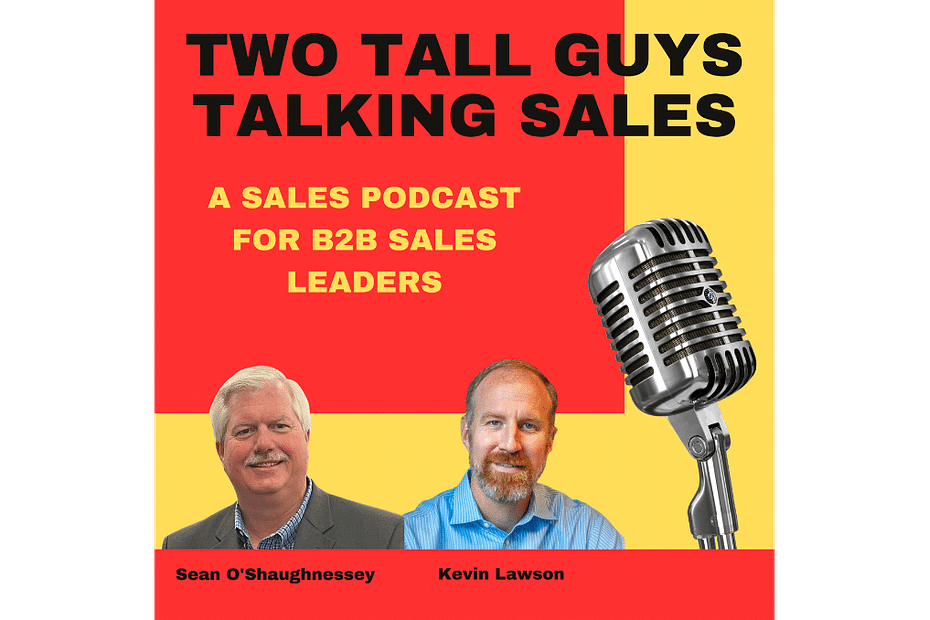
Two Tall Guys Talking Sales Podcast – Scoring Big in Sales: Lessons from March Madness – E79

In this sports-oriented episode of “Two Tall Guys Talking Sales,” hosts Kevin Lawson and Sean O’Shaughnessey dive into the fascinating parallels between March Madness NCAA basketball tournaments and sales strategies. Kevin and Sean take this opportunity to explore how the tournament’s structure and the season leading up to it offer valuable lessons for developing winning sales strategies. Key Topics Discussed: Key Quotes: Additional Resources: MEDDPICCC for sales strategy and the importance of opportunity qualification –… Two Tall Guys Talking Sales Podcast – Scoring Big in Sales: Lessons from March Madness – E79

Unlocking Sales Potential with MEDDPICCC: A Comprehensive Guide

Elite sellers are the linchpin of any successful sales organization. These high-performing individuals are often the highest-paid employees within a company—and for a good reason. Their skills in identifying, qualifying, and closing opportunities bring in significant revenue and provide a competitive edge in the marketplace. So, how can you groom an average salesperson into an elite seller? Enter MEDDPICCC, an advanced sales qualification methodology that serves as a roadmap for understanding every component of a… Unlocking Sales Potential with MEDDPICCC: A Comprehensive Guide

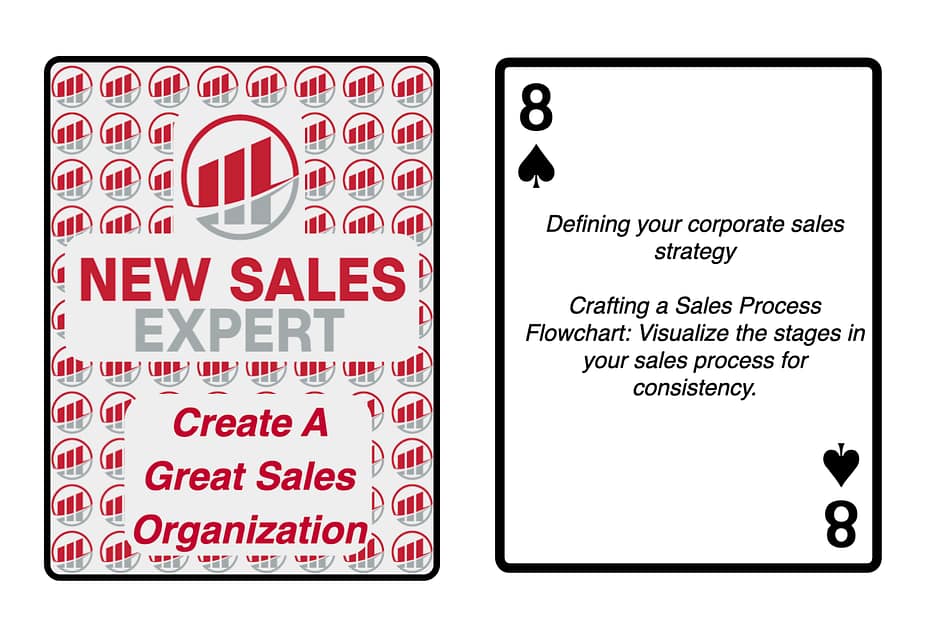
Eight of Spades: Defining your corporate sales strategy: Crafting a Sales Process Flowchart: Visualize the stages in your sales process for consistency

The Quintessential Blueprint for Sales Mastery In architecture, the blueprint guides turn an imagined design into a tangible, functional building. Similarly, a Sales Process Flowchart is the foundational structure upon which sales organizations can build scalable, consistent, and successful strategies. The importance of this tool lies in its ability to crystallize the sales process into a series of actionable steps, thereby providing a roadmap to success. The goal is to achieve consistency, predictability, and scalability,… Eight of Spades: Defining your corporate sales strategy: Crafting a Sales Process Flowchart: Visualize the stages in your sales process for consistency

battle board game castle challenge

Champions & Coaches: Understanding Key Players in Your B2B Sales Strategy

In the intricate and often unpredictable world of B2B sales, two terms frequently arise: “Champions” and “Coaches.” While somewhat similar, these labels correspond to entirely distinct roles in the sales process. Each plays a vital part, yet misinterpreting or misusing these roles can lead to the loss of your sales opportunity. Many experts believe that believing you have a Champion when you only have a Coach is the biggest problem in long-running sales campaigns.

This article aims to delve deeper into the specific role of the Champion, introduce an innovative strategy known as “Champion Chess,” and illustrate how these elements can transform your B2B sales approach for the better.

Coaches and Champions are both part of the Opportunity Qualification system known as MEDDPICCC. MEDDPICCC stands for

  • M – Metrics
  • E – Economic Buyer
  • D – Decision Criteria
  • D – Decision Process
  • P – Paperwork Process
  • I – Identification of Goal
  • C – Coach
  • C – Champion
  • C – Competition

Deep Dive into the Role of Champions

In the sales universe, a Champion isn’t merely a supporter of your business or service; they actively advocate for your product or service within their organization. Champions usually occupy a strategic position within their company, influencing decision-making processes that can make or break your sales success.

The power of a Champion in the sales process is remarkable. They can effectively expedite sales cycles by persuading their organization of your product’s value, thus overcoming internal objections and resistance. Their advocacy of your solution goes beyond the superficial – they believe in your product’s merit and fight for its adoption and success within their organization. These qualities make Champions an invaluable asset and integral to any successful B2B sales strategy.

Read the rest of the article…

Influence and Advocacy in Sales: The Impact of Coaches and Champions

Every successful sales process relies on a deep understanding of the many moving parts within the targeted organization. Key among these are the internal influencers who can significantly shape the trajectory of your sales campaign. In the realm of sales, two roles stand out: ‘Coaches’ and ‘Champions.’ Both can impact your process differently, so a firm grasp on who they are, what they do, and how to engage with them can be pivotal for your sales success.

MEDDPICCC is an evolution of the MEDDIC sales qualification methodology that’s proven to be particularly effective for B2B enterprise sales organizations. At its core, the MEDDPICCC methodology aids organizations in ensuring they are working on the right deals and concentrating their efforts effectively to secure wins​.

MEDDPICCC extends the MEDDIC acronym to include an additional ‘P’ for Paper Process, ‘C’ for Competition, and ‘C’ for Coach. The inclusion of the ‘Paper Process’ reflects the increased complexity in technology purchasing compared to the past. Factors such as the shift from perpetual licenses to subscription agreements and enhanced data security and privacy requirements have intensified the contractual obligations between vendor and customer. Consequently, the ‘Paper Process’ has emerged as a significant factor influencing sellers’ forecasts, warranting its inclusion in the methodology​.

The second addition, ‘Competition,’ acknowledges the intensified competitive landscape in the current era. Competition can come from various sources: new companies emerging rapidly with the help of modern technology, other vendors vying for the same budget and resources, potential in-house solutions, or the choice to maintain the status quo. Understanding and navigating these competitive elements are critical to a seller’s forecast accuracy and deal success, thus necessitating the inclusion of ‘Competition’ in MEDDPICC​C​.

The third addition to MEDDPICCC is ‘Coach,’ and it is added to understand that there are frequently those people in an organization that will give you knowledge and advice about the sales opportunity, but they do not rise to the level of a Champion. One of the biggest mistakes a salesperson can make is confusing a Coach with a Champion. They may be your advocate and are pushing your product or service to other influencers in the account, but don’t let that confuse you. Without true power and the ability to sway the final decision with the Economic Buyer, you merely have an influencer. Let’s make no mistake; a Coach is also very important in a deal. They are a “guide” that you typically have more access to and can generate imperative touchpoints that help keep the deal moving forward.

In essence, MEDDPICCC is a comprehensive, strategic framework that equips sales teams with the necessary tools and insights to identify and pursue the most promising opportunities effectively, navigate the intricate contractual landscape, and outperform the competition. By adopting and mastering the MEDDPICCC methodology, less experienced salespeople can enhance their sales performance and contribute significantly to their organization’s success.

Read the rest of the article…