
Skip to content

read

What An MBA Didn’t Teach You About Sales

The sales profession is challenging. You need to work hard at it to succeed. You need to learn from the best. You need to improve your skills continuously. If you think you can sell since you are a hit at parties and have a lot of friends, you may soon find that you are a failure as a salesperson. Blunt truth:

because the sales profession is so hard, you have to focus on doing everything in sales very well, or you will be considered a failure.

I call this blog, Skinned Knees because I try to relate all of the learning that I have done over the past 4+ decades (while skinning my knees in the learning process).

I hope that you learn from my mistakes so that your business will grow!


Selling Trust: The New Era of Salesmanship in the Digital Age

Have you ever wondered why some salespeople consistently outperform their peers? The answer might surprise you – it’s not about pushing products anymore. Let me share a story that perfectly illustrates this point.

Picture yourself at a car dealership with a problematic engine. The service manager listens briefly and suggests trying premium fuel first instead of pushing for expensive repairs. This unexpected advice reveals the essence of modern sales: building trust over making quick profits.

The digital revolution has transformed how we sell. Your prospects now have instant access to product information, specifications, and reviews. They’ve often completed 70% of their buying journey before contacting you. So, what’s your role in this new landscape?

You must evolve from an information provider to a value creator. Think about it – when did a customer last ask you for basic product details? They don’t need that anymore. They need someone who can help them navigate complex decisions and create innovative solutions.

Consider enterprise software sales. Your customers aren’t just buying features and functions. They’re investing in solutions to their business challenges. Can you help them visualize how your product transforms their operations? Do you understand their workflow well enough to spot opportunities they might have missed?

Trust becomes your most powerful differentiator in this environment. But how do you build it? Through actions, not words. When you genuinely prioritize customer success over immediate sales, people notice. They remember when you steered them away from unnecessary purchases or suggested more cost-effective solutions.

The modern sales process demands a deeper understanding of your customer’s business context. You’re not just matching products to needs – you’re helping define those needs. What problems keep your prospects awake at night? Which industry trends threaten their market position? How can your solution help them stay competitive?

Read the rest of the article…

The Secret to Sales Success: Effective Management and Qualification of MQLs and SQLs

The concept of leads is familiar to sales and marketing novices and experts. However, leads are not created equal. There are Marketing Qualified Leads (MQL) and Sales Qualified Leads (SQL). The differences between these two types of leads and the approach to handling them can significantly impact the efficiency and success of your sales pipeline.

The journey of a lead typically begins with the marketing team. They craft messages and campaigns to attract potential customers, drawing them towards the company. These potential customers or leads are known as Marketing Qualified Leads (MQLs). MQLs are individuals who have shown interest in the company’s product or service but have yet to be vetted for sales-readiness. They may have responded positively to the company’s marketing efforts by downloading a case study, signing up for a newsletter, following the company on social media, or a wide variety of other criteria that can be unique to each selling organization.

Unfortunately, just because a lead has shown interest does not mean they are ready to make a purchase. This is where the sales team comes in. Their role is to qualify these leads further, turning them into Sales Qualified Leads (SQLs). SQLs are leads the sales team has determined are ready for direct sales engagement. They have been vetted and have shown a clear interest and willingness to hear about the company’s offering from a sales perspective. 

While marketing messages are designed to attract and engage a broad audience, the sales approach is more personal and more targeted. Sales focuses on building a relationship with the individual, understanding their unique needs, and demonstrating how the product or service can meet those needs.

Miscommunication or differing expectations can result in leads being passed along that are not truly sales-ready. This can waste time and resources and even damage potential customer relationships. It’s important for sales and marketing to work together, communicate effectively, and have a clear understanding of what constitutes a qualified lead.

One way to navigate this challenge is to establish clear criteria for MQLs and SQLs. What actions or behaviors indicate that a lead is ready to move from marketing to sales? This might include downloading certain resources, attending webinars, or requesting a product demo. By defining these criteria, both teams can ensure they’re on the same page and that leads are passed along at the appropriate time.

Salespeople should also understand how a lead became an MQL. What attracted them to the company? What information have they consumed? This understanding can inform the sales approach and help the salesperson build a relationship with the lead.

Communication between sales and marketing doesn’t end when a lead becomes an SQL. Salespeople should provide feedback to their marketing colleagues about the leads they’re receiving. If certain leads aren’t panning out, it’s important to communicate this so that marketing can adjust their strategies accordingly. Similarly, marketing should be open to feedback and willing to collaborate with sales to refine their lead qualification process.

In the end, marketing and sales have the same goal: to generate revenue for the company. By working together to manage and qualify leads effectively, they can ensure they’re both working towards this common goal. 

With clear communication, collaboration, and a shared understanding of what makes a lead sales-ready, marketing and sales can streamline the sales pipeline and drive success. 

Read the rest of the article…

Two Tall Guys Talking Sales – From CRM to AI: Building Your Sales Toolbox – E113

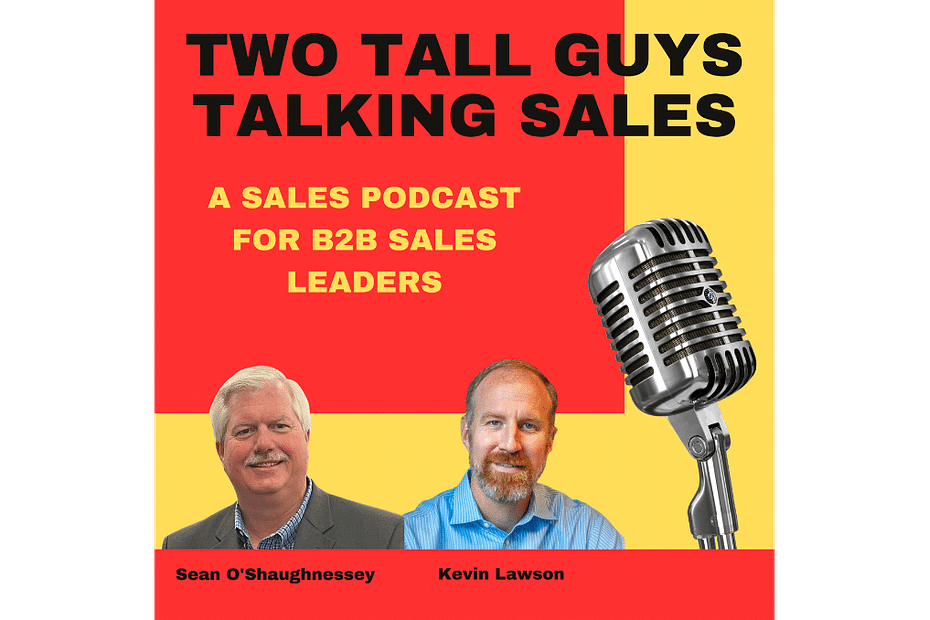
Whether you’re a tech-savvy salesperson or just starting to explore the power of modern tools, this episode offers a roadmap for building an affordable, effective sales tech stack. Kevin and Sean provide real-world examples and practical advice to help you stay organized, build stronger client relationships, and close deals faster. Don’t miss this episode—it could be the catalyst for taking your sales game to the next level. Listen now!

Roadblocks, Detours, and Destinations: The Intricate Art of Sales Strategy

There’s an ongoing conversation about the importance of strategy, process, and anticipating potential challenges in B2B sales. There’s an analogy that encapsulates this perfectly – imagine you’re on a road trip. You have a destination in mind but are unfamiliar with the route. This is where tools like Waze, Google Maps, or Apple Maps come into play. They direct you to your destination and alert you about potential roadblocks, construction, traffic, or other unexpected events that might delay your journey. 

This is precisely how a sales strategy should work. It’s not just about getting from point A to point B but also about understanding the complexities of the journey and preparing for potential roadblocks. For salespeople, managers, and CEOs, understanding the strategy is critical to increasing revenue and improving productivity.

Understanding that a strategy involves more than just the turns along the way is vital. It also involves how to navigate through different areas, understand the speed limit, and anticipate any warnings that might come up. Many salespeople don’t fully grasp these challenges and tend to take them as they come rather than anticipating them and planning accordingly. 

Like Waze uses real-time data to adapt to changes on the road, a sales strategy should adjust to new information and circumstances. For example, if there’s construction up ahead or a detour is required, Waze will adapt and provide a new route. Similarly, salespeople should be able to adjust their strategies based on new information or unexpected challenges. 

Read the rest of the article…

From Chaos to Order: Improve Your Sales Productivity with Effective Pipeline Management

Sales is a complex and intricate world, a jigsaw puzzle where each piece must fit perfectly to create a successful picture. This is especially true when it comes to managing sales, whether you’re a salesperson, a sales manager hoping to enhance your leadership skills, or a CEO in the trenches of a small company. Understanding the challenges and nuances of the sales process is crucial to increasing revenue and productivity.

Imagine you’re in a room full of sports equipment scattered everywhere, from basketball shoes to cheerleading pom-poms. It’s a total mess, and you can barely see the floor. This is a perfect metaphor for what a disorganized sales pipeline can look like. It’s messy chaotic, and there’s always something that doesn’t quite smell right. 

The sales pipeline is vital for tracking and managing sales prospects from the initial contact to the deal’s closing. It visually represents where potential customers are in the sales process. However, if not properly managed, the pipeline can become a mess. 

A common issue is when a deal gets pushed from one month to the next. The sales rep simply changes the closing date, making it seem like procrastination has become a part of the process. This can be due to various reasons, such as a lack of commitment from the customer, the sales rep not understanding the customer’s needs, or simply a lack of follow-up. To avoid this, it’s essential to go back to basics. Understand where the customer is in their evaluation and buying process. Are they genuinely interested in buying or just exploring the idea? It’s perfectly fine for a customer to be in the exploratory stage, but that doesn’t mean they’re ready to buy. These customers should be considered early-stage prospects and not be rushed into buying. 

Read the rest of the article…

The Right Person in the Right Seat: Unleashing Company Growth through Strategic Sales Leadership

A recurring issue for small companies has emerged; the company’s owner or CEO often leads the sales department. This might be because they believe no one else can sell their product or service better than they can. However, this mindset might be hampering the company’s growth potential.

If you’re a company owner or CEO who leads sales, it’s crucial to consider the risk of this approach. When the person leading the company also heads sales, the business is constrained by the amount of time that leader has. If your salespeople consistently wait for your input or response, you might face a growth opportunity and a challenge simultaneously.

The solution lies in de-risking your organization’s growth potential by getting a sales leader in the sales leadership seat separate from you. This concept resonates with the theory of constraints, a principle often applied in the manufacturing industry but equally applicable in sales. The theory of constraints focuses on identifying the factors that limit your success. 

Read the rest of the article…

Unstick Your Sales: The Importance of Understanding the Buyer’s Journey

It’s no secret that the dynamics between the buyer and the salesperson play a pivotal role in sealing the deal. The conversation often revolves around real sales issues, selling situations, and sales leadership. 

Let’s delve into a scenario. You’re selling to a beer industry manufacturer, and their first question is about your price. This immediate focus on cost might make you think this may not be a good prospect. However, it’s crucial to remember that you can’t be disrespectful or dismissive. As salespeople, it’s our job to work with what we have. 

In this situation, the salesperson has to conduct a discovery call and engage a subject matter expert to understand the prospect’s business process, adaptation, and conversion. Unfortunately, the interaction turned into a commodity exchange, with the buyer solely interested in the number of users and the price per user. 

This scenario illustrates a common challenge in sales: the sales and buying processes often need to align. How your Customer Relationship Management (CRM) system is set up may not necessarily mirror how the buyer decides. Therefore, figuring out how to sell more effectively based on the buyer’s journey is crucial. Understanding the buyer is discussed in great detail in my book Eliminate Your Competition, which is available wherever you buy books.

Read the rest of the article…

Two Tall Guys Talking Sales Podcast – From Process to Performance: Elevating Your Sales Game – E99

Join hosts Kevin Lawson and Sean O’Shaughnessey as they edge closer to their milestone 100th episode, diving deep into the critical components of a successful sales organization.  Episode 99 zooms in on the third pillar: “Process.” Kevin revisits his iconic saying, exploring the significance of a repeatable sales process and the consequences of lacking one, framed by rich personal anecdotes and professional insights.  Don’t miss this episode packed with practical advice on refining your sales… Two Tall Guys Talking Sales Podcast – From Process to Performance: Elevating Your Sales Game – E99

Designing Sales Compensation Plans That Drive Performance

The success of any sales-driven organization in the business-to-business (B2B) space hinges on the sales team’s compensation plan. Over my four decades in B2B sales, I’ve observed that nothing influences the performance of sales personnel more directly than the design and implementation of their compensation plans. Compensation is not merely about rewarding sales achievements but crafting a strategy aligning individual salespeople’s goals with the company’s broader objectives.

A well-structured compensation plan acts as both a motivator and a guide. It compels sales teams not only to meet but exceed their targets, fostering an environment where continuous improvement is not just encouraged but becomes a natural byproduct of the system. For small business CEOs, understanding this dynamic is critical for sustaining and driving growth. Sales compensation is more than just a cost; it’s an investment in the company’s future.

In any sales environment, whether the market is brimming with potential or tightly contested, the compensation plan must be a living document that evolves in response to market conditions, company goals, and team performance. With this adaptability, companies can avoid stagnation or regression in their market positions. As businesses strive to scale and adapt, constructing a compensation plan that genuinely drives the right behaviors becomes all the more pertinent.

To delve deeper into this vital subject, CEOs should consider the immediate impacts of their compensation strategies and their long-term implications on sales culture and employee retention. For those ready to explore the intricacies of effective sales compensation and ensure their strategies are well-suited to their specific business contexts, I am here to lend my expertise. With extensive experience tailoring compensation plans to enhance sales productivity and company profitability, I invite you to reach out for further guidance on crafting a plan that meets and exceeds your strategic goals. You can set a time to talk to me using my link above Book Appointment With Sean.

Read the rest of the article…

Driving Sales Success through Collaborative Learning and Knowledge Sharing

Aiming to increase revenue and boost productivity in sales processes, sales managers and company CEOs are constantly searching for effective strategies to streamline their operations and ensure optimal results. One such strategy involves conducting sales meetings for educational purposes. These meetings focus on enhancing knowledge and skills, and this is where the real game begins. 

Imagine a sales meeting where, instead of a mundane round-up of weekly activities, there’s an engaging discussion about a new book that can potentially revolutionize the sales process. Picture a team of four or five salespeople, including you, each reading two chapters of a book overnight. The next day, everyone shares the high-level takeaways from their assigned chapters. This practice allows the team to consume an entire book’s content in a day and empowers each member to become an authority on the subject matter because they’re teaching others. The exercise is educational, promotes team collaboration, and enhances communication skills. 

This approach can be extended beyond books to other areas, such as market research. For instance, if a company is looking to enter a new vertical, different aspects of the industry, like market influencers, challenges, and political, economic, and legal factors, can be assigned to team members for research. Each member returns their findings to the team, comprehensively understanding the new market. This practice is not merely busy work; it’s sales-driving work that benefits the entire team and accelerates learning about the new market.

Read the rest of the article…