
Skip to content

sales execution

What An MBA Didn’t Teach You About Sales

The sales profession is challenging. You need to work hard at it to succeed. You need to learn from the best. You need to improve your skills continuously. If you think you can sell since you are a hit at parties and have a lot of friends, you may soon find that you are a failure as a salesperson. Blunt truth:

because the sales profession is so hard, you have to focus on doing everything in sales very well, or you will be considered a failure.

I call this blog, Skinned Knees because I try to relate all of the learning that I have done over the past 4+ decades (while skinning my knees in the learning process).

I hope that you learn from my mistakes so that your business will grow!


The Dual Blueprint Requirement: Why Growth Demands Two Plans, Not One

Launching a company or steering one through a merger, turnaround, or major transition requires clarity about how value will be created and, just as importantly, how revenue will actually be generated.

Many leadership teams recognize the need for a Business Plan, but overlook that sustainable growth requires a second, complementary plan. The main breakdown is not the strategy itself, but the assumption that strategy automatically creates revenue. Bridging strategy and revenue requires a distinct plan for that conversion, targeting a different audience.

The Business Plan sets direction from the top down. The Sales Plan is validated by demonstrating how that direction can become actual revenue from the bottom up.

Both are essential. Neither works in isolation.

The Business Plan: Charting the Course (Top-Down)

The Business Plan exists to answer specific questions for a particular audience. Its primary readers are CEOs, CFOs, bankers, private equity partners, and venture investors. These stakeholders are evaluating risk, scale, and return. They want to know where the company is going and why the destination is worth the journey.

At its core, the Business Plan articulates strategic intent. It defines the mission, the long-term objectives, and the differentiated value proposition that the company believes the market will reward. It frames the opportunity in language that aligns leadership, capital, and governance.

Market analysis in this context is necessarily high-level. It focuses on the total addressable market, industry dynamics, competitive positioning, and macro trends. The goal is not to explain how every deal will be won, but to establish that a meaningful opportunity exists and that the company has a credible right to pursue it.

Financial projections follow the same logic. They are built on broad assumptions: projected market share, average selling price, renewal and retention rates, inflation, and multi-year revenue targets. These numbers are directional. They signal ambition and scale rather than operational certainty.

Read the rest of the article…

Validation Events: The Unsung Hero of Sales Process Discipline

In the complex world of B2B selling, trust is built in stages. The challenge in all sales campaigns is ensuring the prospect trusts they are making the best decision for their business.

  1. Do they trust that the salesperson is giving them all of the information?
  2. Do they trust that the company will support them after the sale?
  3. Do they trust that the product will perform as they expect it to perform?

As I have explained in my book, Eliminate Your Competition, as well as the blog for that book and in this blog, the prospect needs to trust all three elements the salesperson is selling:

  1. They need to trust the product.
  2. They need to trust the company behind the product.
  3. They need to trust the salesperson.

Prospects listen to your sales message, review your materials, and hear your claims, but none of that guarantees belief or trust. Trust is validated when your claims are validated. That’s why validation events are crucial to any rigorous sales process.

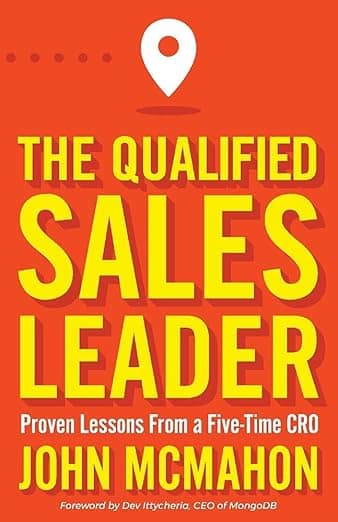
In The Qualified Sales Leader, John McMahon stresses the importance of customer-driven validation. He cautions sales leaders against relying on internal optimism or anecdotal “good signals” from prospects. Instead, McMahon emphasizes observable proof—real buyer behavior that confirms alignment, commitment, and value. Validation events are when the customer takes action to validate that what you’ve promised is accurate and valuable.

An excellent sample sale process flow looks like this:

  1. Discover
  2. Scoping
  3. Economic Buyer Meeting
  4. Validation Event
  5. Business Case and Final Proposal
  6. Negotiate and Close

As you can see, the Validation Event is the last step before creating the final business case, which will be bundled with your final proposal.

Read the rest of the article…