Skip to content

sales leader

What An MBA Didn’t Teach You About Sales

The sales profession is challenging. You need to work hard at it to succeed. You need to learn from the best. You need to improve your skills continuously. If you think you can sell since you are a hit at parties and have a lot of friends, you may soon find that you are a failure as a salesperson. Blunt truth:

because the sales profession is so hard, you have to focus on doing everything in sales very well, or you will be considered a failure.

I call this blog, Skinned Knees because I try to relate all of the learning that I have done over the past 4+ decades (while skinning my knees in the learning process).

I hope that you learn from my mistakes so that your business will grow!


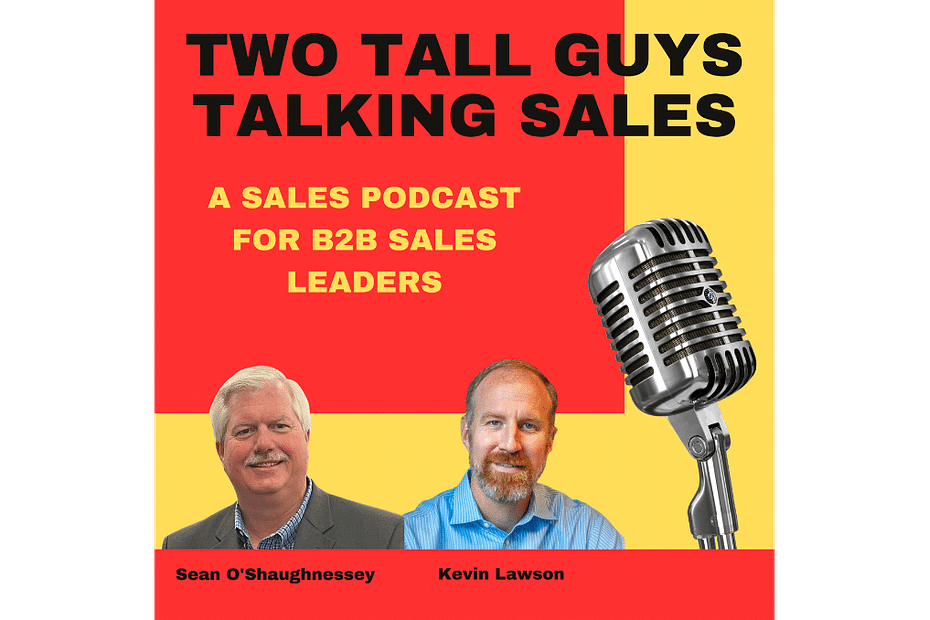
Two Tall Guys Talking Sales – The Motivation Formula: Achieving Big Wins in Sales – E116

This episode of Two Tall Guys Talking Sales delivers powerful insights into staying motivated and setting actionable sales goals. Sean and Kevin expertly weave relatable analogies with proven strategies to help you master the art of self-motivation and goal achievement. Whether you’re working towards a personal milestone or aiming to inspire your team, this episode provides the tools to elevate your performance. Tune in and take control of your sales journey today!

Unlocking Sales Success: The Power of KPIs in Sales Processes

Are your sales KPIs helping your team succeed? Many sales leaders focus solely on closed deals. This narrow view misses crucial elements of sustainable sales growth.

The journey matters more than the destination. Sales excellence follows a similar path. Your team’s daily actions and behaviors create the foundation for lasting success.

Effective sales measurement requires a comprehensive view of your team’s activities. Top performers consistently execute vital behaviors that drive results. They prospect strategically, nurture relationships, and expand their presence within existing accounts. These leading indicators paint a clearer picture of future performance than lagging metrics alone.

Your KPI framework must evolve beyond historical analysis. Forward-looking metrics help you spot opportunities and challenges before they impact revenue. What’s happening in your pipeline right now? How are your teams finding new prospects? Which accounts show growth potential?

Experience levels significantly impact appropriate performance measures. New salespeople face different challenges than seasoned veterans. A rookie might need help with fundamental sales behaviors while learning your company’s approach. They need clear operational guidance and structured metrics that reinforce proper execution.

Veteran salespeople bring established skills and proven track records. Their KPIs should emphasize continuous improvement and cultural alignment. How are they advancing their capabilities? What value do they add to the broader sales organization?

Read the rest of the article…

From Micro-Manager to Leader: Fostering Growth in Your Sales Team

Are you unknowingly sabotaging your sales team’s success? The answer might surprise you. The actual cost of micromanagement extends far beyond immediate productivity concerns.

Trust forms the bedrock of every high-performing sales organization. Yet many sales leaders unconsciously undermine this foundation through micromanagement. You’ve seen the signs – constant check-ins, questioning every decision, and hovering over your team’s shoulders. The culture you’ve worked so hard to build is slowly eroding.

Your best salespeople are leaving. Team morale is plummeting.

Let’s be clear about what constitutes micromanagement in sales. It’s not about being involved or interested in your team’s work. The real issue emerges when you start dictating every move and creating an atmosphere of constant surveillance.

Consider the cost of replacing top sales talent in today’s market. Beyond the substantial financial investment, you’re losing institutional knowledge and client relationships. Your organization can’t afford this drain on resources, and the impact reverberates throughout your entire sales ecosystem.

Read the rest of the article…

Balancing Act: Networking, Direct Prospecting, and Customer Referrals for Revenue Growth

Is your sales pipeline running dry? We’ve all been there.

Let me share a personal story that might resonate with you. After spending months securing a major deal, I found myself staring at an empty pipeline. The celebration of landing that giant whale quickly became a stark reality check. This experience taught me an invaluable lesson about sustainable sales growth.

Revenue generation isn’t just about closing deals—it’s about maintaining a consistent flow of opportunities. Your success depends on mastering the art of prospecting, yet many salespeople struggle with this fundamental skill. Are you dedicating enough time to building your pipeline, or are you caught in the feast-and-famine cycle?

The most effective sales professionals understand that prospecting isn’t a one-dimensional activity. Think of your prospecting strategy as a carefully orchestrated symphony, where different elements work together to create a harmonious result. Direct outreach and network-based approaches each play their unique roles in this composition.

Visualize a three-legged stool symbolizing the three-pronged approach to sales: networking and referrals, direct prospecting, and existing customers. Each of these legs supports growing your business and consistently achieving your revenue goals.

Consider how a software company might approach this dual strategy. While tracking metrics for direct outreach is straightforward, measuring networking success requires a different lens. How many new relationships have you cultivated? Which dormant connections have you rekindled? These indicators matter just as much as your cold call statistics.

I recently spoke with a consulting professional who shared an interesting perspective on networking metrics. Rather than counting sales pitches, he measures success by the number of times he naturally introduces his services in conversations. This subtle shift transforms aggressive selling into educational opportunities. Have you considered how this approach might work in your context?

Your prospecting strategy must align with your target audience’s expectations and behaviors. Waiting for inbound leads isn’t a strategy—it’s a recipe for inconsistent results. When you prospect through your network, the goal isn’t to ask for immediate business. Instead, you’re planting seeds for future opportunities through strategic introductions.

Read the rest of the article…

Roadblocks, Detours, and Destinations: The Intricate Art of Sales Strategy

There’s an ongoing conversation about the importance of strategy, process, and anticipating potential challenges in B2B sales. There’s an analogy that encapsulates this perfectly – imagine you’re on a road trip. You have a destination in mind but are unfamiliar with the route. This is where tools like Waze, Google Maps, or Apple Maps come into play. They direct you to your destination and alert you about potential roadblocks, construction, traffic, or other unexpected events that might delay your journey. 

This is precisely how a sales strategy should work. It’s not just about getting from point A to point B but also about understanding the complexities of the journey and preparing for potential roadblocks. For salespeople, managers, and CEOs, understanding the strategy is critical to increasing revenue and improving productivity.

Understanding that a strategy involves more than just the turns along the way is vital. It also involves how to navigate through different areas, understand the speed limit, and anticipate any warnings that might come up. Many salespeople don’t fully grasp these challenges and tend to take them as they come rather than anticipating them and planning accordingly. 

Like Waze uses real-time data to adapt to changes on the road, a sales strategy should adjust to new information and circumstances. For example, if there’s construction up ahead or a detour is required, Waze will adapt and provide a new route. Similarly, salespeople should be able to adjust their strategies based on new information or unexpected challenges. 

Read the rest of the article…

Two Tall Guys Talking Sales – Sales Intelligence 101: Using AI and Networking to Target Ideal Customers – E112

Welcome to another compelling episode of Two Tall Guys Talking Sales with hosts Kevin Lawson and Sean O’Shaughnessey! Kevin and Sean dive deep into a central challenge for sales teams: identifying ideal customers and building a robust prospect list. In this episode, they uncover practical strategies, share indispensable tools, and illustrate how a strong grasp of your customer can turn prospects into loyal clients. Whether you’re part of a lean sales team or managing large territories, this… 

The Right Person in the Right Seat: Unleashing Company Growth through Strategic Sales Leadership

A recurring issue for small companies has emerged; the company’s owner or CEO often leads the sales department. This might be because they believe no one else can sell their product or service better than they can. However, this mindset might be hampering the company’s growth potential.

If you’re a company owner or CEO who leads sales, it’s crucial to consider the risk of this approach. When the person leading the company also heads sales, the business is constrained by the amount of time that leader has. If your salespeople consistently wait for your input or response, you might face a growth opportunity and a challenge simultaneously.

The solution lies in de-risking your organization’s growth potential by getting a sales leader in the sales leadership seat separate from you. This concept resonates with the theory of constraints, a principle often applied in the manufacturing industry but equally applicable in sales. The theory of constraints focuses on identifying the factors that limit your success. 

Read the rest of the article…

Two Tall Guys Talking Sales Podcast – The Art of Targeting: How Small Sales Teams Can Win Big in Expansive Territories – E111

In this episode of Two Tall Guys Talking Sales, hosts Kevin Lawson and Sean O’Shaughnessey dive deep into the challenges and strategies of managing large sales territories, especially for teams with fewer than five sellers. Reflecting on their extensive sales careers, they explore the intricacies of balancing time, travel, and targeting the right clients when facing expansive regions. Kevin and Sean share actionable insights on refining the ideal client profile (ICP) and discuss how small business… 

Two Tall Guys Talking Sales Podcast – From First Sales Hire to Revenue Powerhouse: Essential Strategies for Business Owners – E110

In this episode of “Two Tall Guys Talking Sales,” hosts Kevin Lawson and Sean O’Shaughnessey dive into the unique challenges and opportunities of hiring your second salesperson. Many small business owners face a pivotal moment when they bring on a sales team member who may know the company but not the ins and outs of professional selling. Join Kevin and Sean as they explore how to make the first and second salespeople truly effective, how… 

Two Tall Guys Talking Sales – Empowering Non-Sales Employees to Boost Customer Value – E109

In this episode, hosts Kevin Lawson and Sean O’Shaughnessey, take listeners on a journey to understand the power of non-sales roles in supporting a sales-centric culture. Expanding on prior discussions about sales planning and execution, they explore how professionals outside the sales department—think programmers, customer service reps, delivery drivers, and even truckers—can play a pivotal role in enhancing client satisfaction and identifying new opportunities. Kevin and Sean dive into practical steps sales leaders can take…