Skip to content

sales leaders

What An MBA Didn’t Teach You About Sales

The sales profession is challenging. You need to work hard at it to succeed. You need to learn from the best. You need to improve your skills continuously. If you think you can sell since you are a hit at parties and have a lot of friends, you may soon find that you are a failure as a salesperson. Blunt truth:

because the sales profession is so hard, you have to focus on doing everything in sales very well, or you will be considered a failure.

I call this blog, Skinned Knees because I try to relate all of the learning that I have done over the past 4+ decades (while skinning my knees in the learning process).

I hope that you learn from my mistakes so that your business will grow!


The Power of Personal Branding in Enhancing Sales Productivity

Navigating the world of sales can sometimes feel like traversing a labyrinth. Salespeople, sales managers, and CEOs alike grapple with the challenge of increasing revenue and enhancing productivity in their sales processes. To be successful, you need more than knowledge of products and services; you need to develop trust and a strong personal brand.

Business-to-business (B2B) sales involves transferring trust from ourselves to our prospects. We trust in our products and company, but convincing prospects to share that trust is the real challenge. This trust should encompass the product, the company, and perhaps most crucially, the salesperson. Remember, B2B sales could be defined as helping prospects decide in our favor within the desired timeframe.

The key to B2B sales is developing a personal brand that inspires trust in salespeople. The salesperson’s ability to convey reliability, expertise, and credibility can significantly influence how fast a prospect invests in a product or service.

Developing a strong personal brand begins with creating a presence that signals control and understanding of the business. This can be achieved by showcasing the benefits of your product or service to your customer’s business. A straightforward way to build your brand is by seeking references from your network, former employers, and customers, and showcasing these on professional platforms like LinkedIn.

Read the rest of the article…

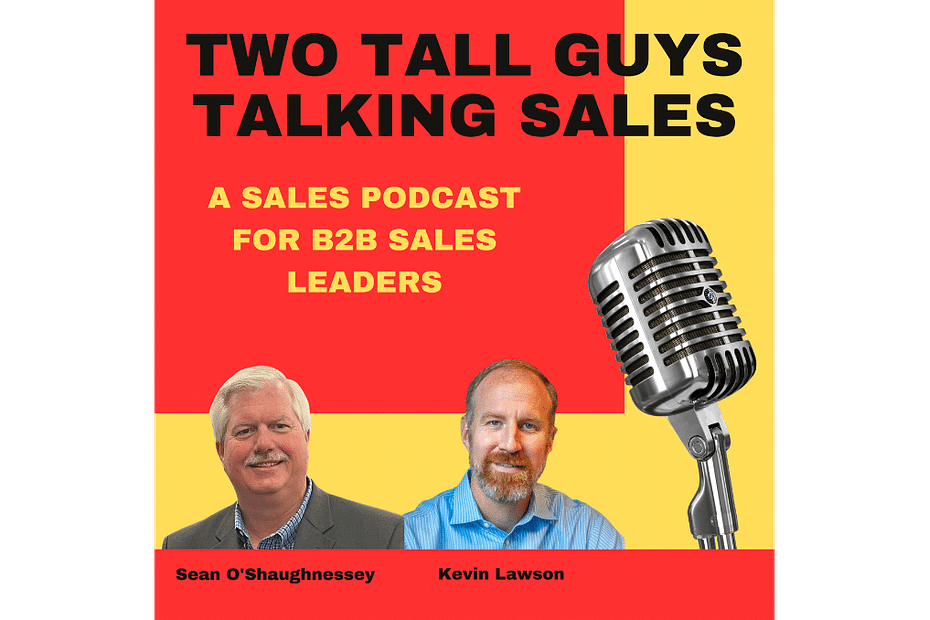
Two Tall Guys Talking Sales – Amy Connor discusses Salespeople vs. Lead Generation: Are You Using Your Team Wisely? – E125

How do you measure the success of your sales and marketing efforts? If you’ve ever wondered whether your marketing dollars are driving revenue or if your sales team is making the most of their leads, this episode is for you.  Kevin Lawson and Sean O’Shaughnessey sit down with Amy Connor, founder of CMO on Loan, to discuss how marketing and sales should work together for growth. Amy brings her extensive experience from Procter & Gamble,… 

Two Tall Guys Talking Sales – AI for Sales Success: Tools, Tactics, and Why You Can’t Ignore It – E124

Artificial intelligence (AI) is transforming the sales industry, but does that mean salespeople are becoming obsolete? Absolutely not! In this high-energy episode, Kevin and Sean debunk the myth that AI will replace sales professionals. Instead, they reveal how AI can be a game-changing tool for sales success. From using AI to refine communication to automating time-consuming tasks, this episode is packed with insights on how AI can help sales leaders and reps work smarter, sell… 

Two Tall Guys Talking Sales – Mastering Time Management: Essential Strategies for Sales Managers – E123

Time is the most valuable resource for any professional, but for sales managers, it is the linchpin of success. In this episode of Two Tall Guys Talking Sales, Kevin Lawson and Sean O’Shaughnessey dive into the critical strategies for effective time management as a sales leader. Whether you’re a new sales manager, an aspiring leader, or a business owner overseeing a sales team, this discussion is packed with insights to help you optimize your calendar,… 

Building Winning Sales Teams for the Future: Insights for CEOs and Sales Leaders

What are the key moves that CEOs and sales leaders must make to prepare their teams for success in 2025? That’s exactly what we explored in a recent episode of the Art and Science of Complex Sales podcast hosted by Paul Fuller of Membrain. I had the pleasure of joining Kevin Lawson, President of Lighthouse Sales Advisors, for a deep dive into the strategies defining high-performing sales organizations in the year ahead. You may recognize… 

Two Tall Guys Talking Sales – The Motivation Formula: Achieving Big Wins in Sales – E116

This episode of Two Tall Guys Talking Sales delivers powerful insights into staying motivated and setting actionable sales goals. Sean and Kevin expertly weave relatable analogies with proven strategies to help you master the art of self-motivation and goal achievement. Whether you’re working towards a personal milestone or aiming to inspire your team, this episode provides the tools to elevate your performance. Tune in and take control of your sales journey today!

Unlocking Sales Success: The Power of KPIs in Sales Processes

Are your sales KPIs helping your team succeed? Many sales leaders focus solely on closed deals. This narrow view misses crucial elements of sustainable sales growth.

The journey matters more than the destination. Sales excellence follows a similar path. Your team’s daily actions and behaviors create the foundation for lasting success.

Effective sales measurement requires a comprehensive view of your team’s activities. Top performers consistently execute vital behaviors that drive results. They prospect strategically, nurture relationships, and expand their presence within existing accounts. These leading indicators paint a clearer picture of future performance than lagging metrics alone.

Your KPI framework must evolve beyond historical analysis. Forward-looking metrics help you spot opportunities and challenges before they impact revenue. What’s happening in your pipeline right now? How are your teams finding new prospects? Which accounts show growth potential?

Experience levels significantly impact appropriate performance measures. New salespeople face different challenges than seasoned veterans. A rookie might need help with fundamental sales behaviors while learning your company’s approach. They need clear operational guidance and structured metrics that reinforce proper execution.

Veteran salespeople bring established skills and proven track records. Their KPIs should emphasize continuous improvement and cultural alignment. How are they advancing their capabilities? What value do they add to the broader sales organization?

Read the rest of the article…

From Micro-Manager to Leader: Fostering Growth in Your Sales Team

Are you unknowingly sabotaging your sales team’s success? The answer might surprise you. The actual cost of micromanagement extends far beyond immediate productivity concerns.

Trust forms the bedrock of every high-performing sales organization. Yet many sales leaders unconsciously undermine this foundation through micromanagement. You’ve seen the signs – constant check-ins, questioning every decision, and hovering over your team’s shoulders. The culture you’ve worked so hard to build is slowly eroding.

Your best salespeople are leaving. Team morale is plummeting.

Let’s be clear about what constitutes micromanagement in sales. It’s not about being involved or interested in your team’s work. The real issue emerges when you start dictating every move and creating an atmosphere of constant surveillance.

Consider the cost of replacing top sales talent in today’s market. Beyond the substantial financial investment, you’re losing institutional knowledge and client relationships. Your organization can’t afford this drain on resources, and the impact reverberates throughout your entire sales ecosystem.

Read the rest of the article…

Roadblocks, Detours, and Destinations: The Intricate Art of Sales Strategy

There’s an ongoing conversation about the importance of strategy, process, and anticipating potential challenges in B2B sales. There’s an analogy that encapsulates this perfectly – imagine you’re on a road trip. You have a destination in mind but are unfamiliar with the route. This is where tools like Waze, Google Maps, or Apple Maps come into play. They direct you to your destination and alert you about potential roadblocks, construction, traffic, or other unexpected events that might delay your journey. 

This is precisely how a sales strategy should work. It’s not just about getting from point A to point B but also about understanding the complexities of the journey and preparing for potential roadblocks. For salespeople, managers, and CEOs, understanding the strategy is critical to increasing revenue and improving productivity.

Understanding that a strategy involves more than just the turns along the way is vital. It also involves how to navigate through different areas, understand the speed limit, and anticipate any warnings that might come up. Many salespeople don’t fully grasp these challenges and tend to take them as they come rather than anticipating them and planning accordingly. 

Like Waze uses real-time data to adapt to changes on the road, a sales strategy should adjust to new information and circumstances. For example, if there’s construction up ahead or a detour is required, Waze will adapt and provide a new route. Similarly, salespeople should be able to adjust their strategies based on new information or unexpected challenges. 

Read the rest of the article…

The Right Person in the Right Seat: Unleashing Company Growth through Strategic Sales Leadership

A recurring issue for small companies has emerged; the company’s owner or CEO often leads the sales department. This might be because they believe no one else can sell their product or service better than they can. However, this mindset might be hampering the company’s growth potential.

If you’re a company owner or CEO who leads sales, it’s crucial to consider the risk of this approach. When the person leading the company also heads sales, the business is constrained by the amount of time that leader has. If your salespeople consistently wait for your input or response, you might face a growth opportunity and a challenge simultaneously.

The solution lies in de-risking your organization’s growth potential by getting a sales leader in the sales leadership seat separate from you. This concept resonates with the theory of constraints, a principle often applied in the manufacturing industry but equally applicable in sales. The theory of constraints focuses on identifying the factors that limit your success. 

Read the rest of the article…