Skip to content

sales manager

What An MBA Didn’t Teach You About Sales

The sales profession is challenging. You need to work hard at it to succeed. You need to learn from the best. You need to improve your skills continuously. If you think you can sell since you are a hit at parties and have a lot of friends, you may soon find that you are a failure as a salesperson. Blunt truth:

because the sales profession is so hard, you have to focus on doing everything in sales very well, or you will be considered a failure.

I call this blog, Skinned Knees because I try to relate all of the learning that I have done over the past 4+ decades (while skinning my knees in the learning process).

I hope that you learn from my mistakes so that your business will grow!


Navigating the Sales Maze: Overcoming Missed Steps in Your Sales Process

The challenges for a salesperson or a sales manager are numerous. One such challenge that often arises during the sales process is the realization that a crucial step has been skipped. This situation is not uncommon and is faced by many salespeople. However, it’s not a moment for reprimanding or pulling out an accountability chart. Instead, it’s a moment of realization and an opportunity to rectify the error to avoid ending up in the ‘no decision lane.’

I have written about the importance of skipping stages of the sales process elsewhere on this site, most recently in “The Key to Profitable Sales Organizations: Understanding and Adhering to the Sales Process,” where I remind you that, according to the Harvard Business Review, 28% of companies that master at least three stages of their sales process will see an increase in revenue growth.

When you recognize you’ve missed a step in your sales process, it resembles backing up a train. You’ve got a lot of cars put together, but one is out on its own. Addressing this situation requires a specific style and approach. As a sales leader, your focus should be on the next step in the process. Have you covered this step from a question in the sales meeting? It’s important to ask questions like, “What is next? What is missing? What is now?” 

As a salesperson, if you realize you’ve missed a step, address it head-on. This approach allows you to rectify your error and builds trust with your prospect by demonstrating transparency and accountability. 

Read the rest of the article…

Two Tall Guys Talking Sales – Patrick O’Donnell Explains How to Hire and Onboard Sales Talent That Actually Performs – Episode 139

In this high-impact episode of Two Tall Guys Talking Sales, hosts Kevin Lawson and Sean O’Shaughnessey welcome sales acceleration expert Patrick O’Donnell to tackle one of the toughest challenges facing small business CEOs: hiring and onboarding top-performing sales talent. Together, they dive deep into proven sales strategies that help CEOs find strong candidates and keep them engaged, successful, and driving revenue. If you’ve ever hired a salesperson who didn’t work out, or you’re planning to… Two Tall Guys Talking Sales – Patrick O’Donnell Explains How to Hire and Onboard Sales Talent That Actually Performs – Episode 139

The Key to Profitable Sales Organizations: Understanding and Adhering to the Sales Process

Many salespeople, sales managers, and CEOs face a unique problem. This issue concerns the sales process, particularly when specific steps are skipped. The challenge is common among sales teams across various industries, and there are different perspectives on its causes and solutions.

This issue is concerning since, according to Harvard Business Review, 28% of companies that master at least three stages of their sales process will see an increase in revenue growth. (https://hbr.org/2015/01/companies-with-a-formal-sales-process-generate-more-revenue). That same study states that companies that had trained their sales managers to manage their pipelines saw their revenue grow 9% faster than those that didn’t. But not just any training will do. Sales managers need targeted training to address specific pipeline management challenges.

Sometimes, the sales process might seem tedious, and salespeople may skip steps out of impatience or eagerness to close a deal. However, skipping these steps can lead to further complications down the line. When a sales team is not following the process that has been identified, it can disrupt the team’s rhythm and efficiency. Some might argue that this is a sign that the process needs to change or that more training is required.

This issue extends beyond the sales team. When a company hires a fractional VP of sales, it brings an outside perspective to evaluate its sales process. The fractional VP will often encounter resistance from the existing team, who may feel their industry is unique. While every business has its distinctive elements, the fundamentals of a sales process are universal.

Read the rest of the article…

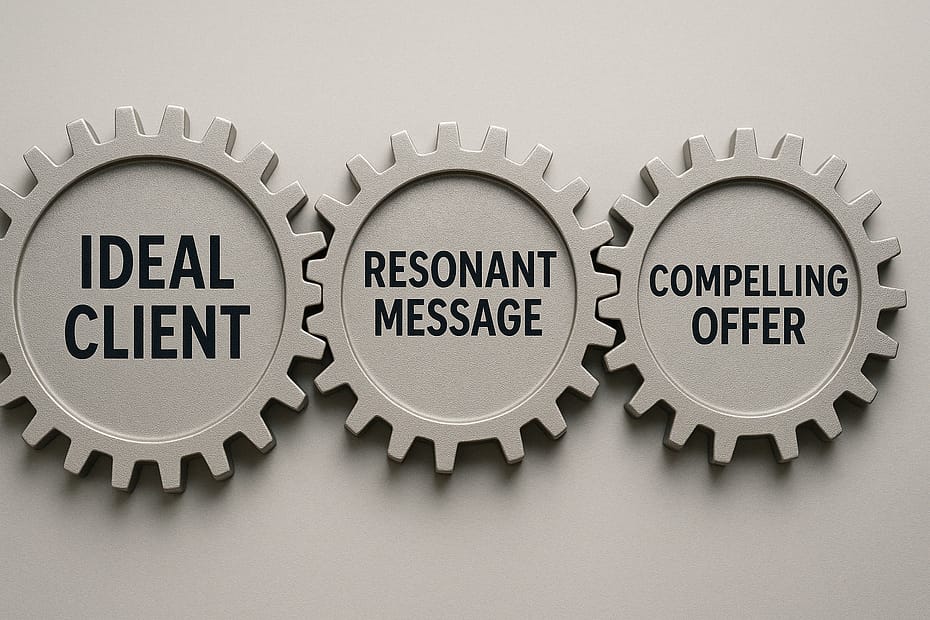
The Three Pillars of Sales Success: Ideal Client Profiles, Effective Messaging, and Aspirational Offers

Let’s start this article with a rhetorical question to the sales professionals, sales managers, or CEOs: Have you ever found yourself guilty of sending messages to prospects without fully considering their specific needs or how your offer aligns with them?

If so, you’re not alone—this is a common pitfall in sales. The good news is, it’s entirely fixable by developing a straightforward, strategic approach.

An effective sales strategy hinges on three core components: defining your ideal client profile (ICP), crafting a resonant message, and presenting a compelling offer. These elements are interconnected. Mastering their alignment will significantly enhance your sales effectiveness.

Ideal Client Profile

Let’s start with the ideal client profile. How well do you know the companies you’re targeting? Identifying your ideal customer is foundational to your entire sales approach. It’s not enough to say that your market is “small businesses” or “tech companies.” Instead, think about your best clients—the ones you genuinely enjoy working with, who value your product, and who generate profitable, sustainable business. Think about companies that rarely devalue your product or service by asking for a discount. What do these clients have in common?

Now that you have your favorite customers from above, reflect on your top five or ten accounts. Are they in the same industry? Do they share similar challenges or company structures? Perhaps they all have common goals that your product consistently solves. Pinpoint these commonalities. This process will help you create a precise and actionable ideal client profile.

But don’t stop at company-level characteristics. Remember, even in B2B sales, you’re ultimately selling to individuals. Identify the specific roles or buyers within these organizations that are responsible for making buying decisions. Who are these decision-makers? What motivates them personally and professionally? Do they all have the same kind of college education? Do they all have similar career paths? Understanding the people behind the logo makes your outreach more personal, targeted, and effective.

What is your message?

Once you’ve developed a clear picture of your ideal client and the people within those companies, the next step is crafting a message that reflects your value-selling message. This message is how you communicate your value proposition—it’s the bridge between your product and your prospect’s needs. Too often, sales messaging falls flat because it focuses heavily on the seller rather than the buyer. Statements that emphasize “we,” “I,” or “our product” rarely resonate deeply. Instead, effective messaging highlights the customer’s perspective, clearly communicating the benefits they will experience.

Read the rest of the article…
Stop Guessing, Start Growing: How Strategic Sales Assessments Drive Real Revenue

You’ll eventually hit a wall if you’re running a sales organization—or wearing multiple hats as founder, CEO, and sales manager. That wall is often invisible until growth stalls, key deals slip through the cracks, or your top salesperson burns out. So, what’s the next move? It’s not more hustle. It’s assessment.

A sales assessment isn’t about checking boxes. It’s about understanding where you are, how you operate, and what’s holding you back. Too many small business leaders assume they’re doing fine because revenue is growing or the team is hitting their quotas. But are you growing at the rate your market allows? Are your sales activities aligned with your long-term goals? Are you building a repeatable system, or are you just getting lucky?

Let’s get tactical. A sales plan isn’t just a revenue target. It’s your go-to-market strategy. It defines your audience, your message, and your motion. It answers why you’re talking to those prospects and what value you’re bringing to them. Without a plan, you’re reacting instead of executing. You’re chasing leads instead of building a pipeline.

If you’re a small company—perhaps under $30 million in revenue—and selling into a national market, chances are your market potential is hundreds of millions, maybe billions. That means your market share is a rounding error, which means there’s room to grow. The question is: Are you operating in a way that allows you to capture that growth?

Even if you’re running lean, you should benchmark your performance against top-tier organizations. Not because you’re competing with them directly, but because they set the standard. What are they doing that you’re not? Where are they more efficient? How do they structure their teams? You’re leaving money on the table if you’re not asking those questions.

Read the rest of the article…

Why Cold Calling is Dead: The Shift to Relationship-Based Selling

Building an effective sales pipeline requires a shift in strategy. Traditional cold calling has become increasingly ineffective, with decision-makers ignoring unsolicited calls and emails.

In the spring of 2021, Bank of America Corp.’s Merrill Lynch Wealth Management unit banned trainee brokers from making cold calls. According to the Wall Street Journal, it is hard to succeed with cold phone calls in an era when no one picks up. Merrill executives said personal referrals lead to a response around 40% of the time, but less than 2% of people who are cold-called even answer the phone.

Sales teams must adopt a more strategic approach, focusing on relationships rather than volume-based outreach. The key is leveraging existing networks to create warm introductions, significantly improving engagement rates and overall success.

Cold outreach has become expensive and inefficient, and the time spent dialing numbers, leaving voicemails, and sending emails that never get opened results in diminishing returns. Many executives no longer answer unknown calls, and email filters automatically sort cold outreach into spam. Even when messages get through, recipients are skeptical, assuming they are generated by automation rather than a genuine human connection. In reality, sales professionals must find a better way to reach their target audience.

Relationship-based selling offers a more effective alternative. Salespeople should focus on leveraging their connections instead of reaching out to strangers. This approach involves identifying key contacts who can provide warm introductions to potential prospects. These “super connectors” are individuals with strong networks and the ability to facilitate meaningful introductions. By tapping into these relationships, sales teams can bypass the skepticism associated with cold outreach and start conversations with credibility.

Read the rest of the article…

Becoming a Trusted Advisor: Solve Problems, Not Just Sell Products

In B2B sales and sales leadership, problem-solving is an art that goes beyond selling a product or service. The secret to becoming a trusted advisor is addressing business problems, not just selling a product. This concept resonates with salespeople, sales managers, and small business CEOs who sell themselves or manage a team of salespeople. 

Sales is not just about pushing a product or closing a deal; it’s about forging relationships, understanding businesses and their unique challenges, and offering solutions to these problems. The role of a trusted advisor is not to sell a product and become a trusted advisor, but rather to become a trusted advisor who can sell a product. 

The reward for earning trusted advisor status is immeasurable. It is fantastic to receive a call from a client asking for advice on solving problems they have never discussed with you. Imagine having relationships that stand the test of time and outlast competition and challenges. 

So, how does one become a trusted advisor and solve problems for clients rather than just selling them a great product? It starts with building a relationship from scratch. When starting with a prospect list or an ideal client profile, the goal is not to find anyone who will respond but to seek opportunities to build meaningful relationships. 

The cornerstone of these relationships is reliability. 

  • Are you always punctual? 
  • Do you cancel at the last minute? 
  • Do you forget to return phone calls? 

These behaviors erode trust. On the other hand, showing up when needed, providing solutions even when they are not directly related to your product or service, and connecting clients to others who can help them are behaviors that build trust. 

Becoming a trusted advisor also involves understanding and curiosity about the client’s business. Do you ask questions about how the prospective company makes and loses money, how it dealt with past challenges like the pandemic, and how it deals with current challenges like rising inflation or supply chain disruption? The aim is to understand the client’s business, challenges, and competitors and offer insights and parallels to other companies. 

Read the rest of the article…

Two Tall Guys Talking Sales – Sales Prospecting: Are You Chasing Leads or Cultivating Success? – E127

In this episode of Two Tall Guys Talking Sales, Kevin Lawson and Sean O’Shaughnessey dive into the art of sales prospecting using an unusual but powerful analogy—chasing butterflies versus building a garden. Are you tirelessly running after leads or cultivating an environment where ideal prospects naturally come to you? Learn how to create a long-term strategy for consistent revenue growth by positioning your business as the go-to solution for your ideal customers. Key Topics Discussed:… Two Tall Guys Talking Sales – Sales Prospecting: Are You Chasing Leads or Cultivating Success? – E127

The Power of Personal Branding in Enhancing Sales Productivity

Navigating the world of sales can sometimes feel like traversing a labyrinth. Salespeople, sales managers, and CEOs alike grapple with the challenge of increasing revenue and enhancing productivity in their sales processes. To be successful, you need more than knowledge of products and services; you need to develop trust and a strong personal brand.

Business-to-business (B2B) sales involves transferring trust from ourselves to our prospects. We trust in our products and company, but convincing prospects to share that trust is the real challenge. This trust should encompass the product, the company, and perhaps most crucially, the salesperson. Remember, B2B sales could be defined as helping prospects decide in our favor within the desired timeframe.

The key to B2B sales is developing a personal brand that inspires trust in salespeople. The salesperson’s ability to convey reliability, expertise, and credibility can significantly influence how fast a prospect invests in a product or service.

Developing a strong personal brand begins with creating a presence that signals control and understanding of the business. This can be achieved by showcasing the benefits of your product or service to your customer’s business. A straightforward way to build your brand is by seeking references from your network, former employers, and customers, and showcasing these on professional platforms like LinkedIn.

Read the rest of the article…

Two Tall Guys Talking Sales – Mastering Time Management: Essential Strategies for Sales Managers – E123

Time is the most valuable resource for any professional, but for sales managers, it is the linchpin of success. In this episode of Two Tall Guys Talking Sales, Kevin Lawson and Sean O’Shaughnessey dive into the critical strategies for effective time management as a sales leader. Whether you’re a new sales manager, an aspiring leader, or a business owner overseeing a sales team, this discussion is packed with insights to help you optimize your calendar,… Two Tall Guys Talking Sales – Mastering Time Management: Essential Strategies for Sales Managers – E123