Skip to content

sales metrics

What An MBA Didn’t Teach You About Sales

The sales profession is challenging. You need to work hard at it to succeed. You need to learn from the best. You need to improve your skills continuously. If you think you can sell since you are a hit at parties and have a lot of friends, you may soon find that you are a failure as a salesperson. Blunt truth:

because the sales profession is so hard, you have to focus on doing everything in sales very well, or you will be considered a failure.

I call this blog, Skinned Knees because I try to relate all of the learning that I have done over the past 4+ decades (while skinning my knees in the learning process).

I hope that you learn from my mistakes so that your business will grow!


Hiring Your First Sales Leader? Build a Sales Machine, Not a Band-Aid

You are ready to hire your first sales leader when you are prepared to buy leverage, not relief. Titles do not grow revenue. A high-impact sales leader creates durable selling capability, reduces owner dependency, and raises standards through coaching, recruiting, and operating cadence. If what you really want is a second version of you to carry the number and keep deals moving, you are hiring a band-aid, and you will pay for it twice.

Most owners make this hire at precisely the wrong moment. The pressure is real, the pipeline feels fragile, and the business is starting to outgrow informal management. So the owner reaches for the obvious move: “We need a sales manager.” The problem is that the role is designed around short-term comfort rather than long-term capacity. The result is a well-paid administrative firefighter who inherits the chaos instead of fixing the system that creates it.

Before you post a job, clarify the objective. Do you want a revenue driver or a capability builder?

A revenue driver is a manager who helps you hit the number by conducting deal inspections, applying forecast pressure, and holding reps accountable. That can be valuable, but it is often a disguised need for personal production. A capability builder is a leader who creates repeatable performance by improving the quality of selling, tightening hiring standards, and building a coaching system that makes average reps better and good reps consistent. That is the role that changes enterprise value.

Here is the hard truth most owners avoid. If you design a role that combines selling and leading, selling will win. Always. When a leader has a quota, the business trains them to prioritize their own deals over the team’s development. They will “help” reps when a deal is in a late-stage, visible phase, then postpone coaching, recruiting, and onboarding because those activities do not pay this month. Over time, the team remains dependent, the pipeline remains uneven, and the owner remains in the middle.

Assessing readiness: leader or band aid

Readiness is not a revenue threshold. It is an operating decision. The question is whether you will let a sales leader lead.

The owner’s trap is hiring a leader while keeping day-to-day control: still running reviews, intervening in pricing, rewriting emails, jumping on calls, and closing important deals. In that environment, the new leader cannot build authority; they become an assistant with a title. You’ll be frustrated they’re “not taking enough off my plate,” while they’re frustrated at not being able to make decisions without you.

If you want a clean test, look for these warning signs:

  • You are still the primary deal closer and default problem solver.
  • You do not believe the company can make the number without your direct involvement.
  • You step into deals because you do not trust the process, the rep, or the forecast.
  • Your coaching is ad hoc, usually when something goes wrong.
  • Recruiting is episodic, triggered by pain, rather than continuous.

Read the rest of the article…

Stop Guessing, Start Growing: How Strategic Sales Assessments Drive Real Revenue

You’ll eventually hit a wall if you’re running a sales organization—or wearing multiple hats as founder, CEO, and sales manager. That wall is often invisible until growth stalls, key deals slip through the cracks, or your top salesperson burns out. So, what’s the next move? It’s not more hustle. It’s assessment.

A sales assessment isn’t about checking boxes. It’s about understanding where you are, how you operate, and what’s holding you back. Too many small business leaders assume they’re doing fine because revenue is growing or the team is hitting their quotas. But are you growing at the rate your market allows? Are your sales activities aligned with your long-term goals? Are you building a repeatable system, or are you just getting lucky?

Let’s get tactical. A sales plan isn’t just a revenue target. It’s your go-to-market strategy. It defines your audience, your message, and your motion. It answers why you’re talking to those prospects and what value you’re bringing to them. Without a plan, you’re reacting instead of executing. You’re chasing leads instead of building a pipeline.

If you’re a small company—perhaps under $30 million in revenue—and selling into a national market, chances are your market potential is hundreds of millions, maybe billions. That means your market share is a rounding error, which means there’s room to grow. The question is: Are you operating in a way that allows you to capture that growth?

Even if you’re running lean, you should benchmark your performance against top-tier organizations. Not because you’re competing with them directly, but because they set the standard. What are they doing that you’re not? Where are they more efficient? How do they structure their teams? You’re leaving money on the table if you’re not asking those questions.

Read the rest of the article…

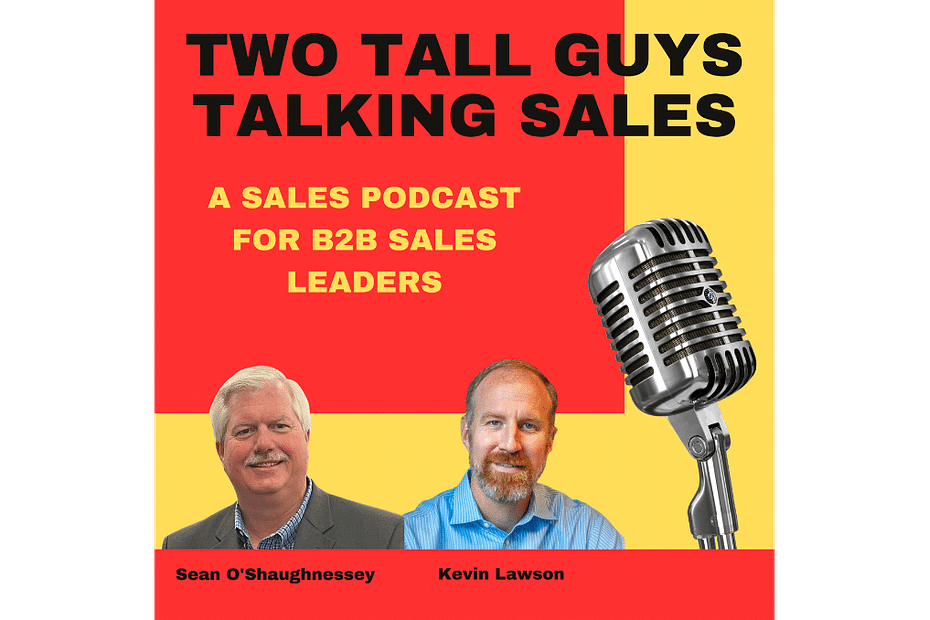
Two Tall Guys Talking Sales – Know Your Numbers: A Sales Leader’s Guide to Growth Metrics – E132

As Q2 kicks into full gear, it’s time to pause and reflect—are you ahead, on pace, or falling behind on your sales targets? In this insightful episode of Two Tall Guys Talking Sales, hosts Kevin Lawson and Sean O’Shaughnessey unpack one of a sales leader’s most crucial yet often overlooked responsibilities: knowing your numbers. With equal parts practical advice and strategic vision, this conversation walks you through the foundational metrics every sales leader should track—customer… Two Tall Guys Talking Sales – Know Your Numbers: A Sales Leader’s Guide to Growth Metrics – E132

Two Tall Guys Talking Sales – Tom Gottlieb of Berkshire Hathaway Explains How Buyers Want Growth- How Sales Leaders Can Increase Company Worth – E131

In this insightful episode of Two Tall Guys Talking Sales, hosts Kevin Lawson and Sean O’Shaughnessey welcome business intermediary Tom Gottlieb of Berkshire Hathaway. Tom brings decades of experience in buying, selling, and valuing businesses across the Midwest. The conversation dives deep into what truly drives the value of a company—and how sales leaders and business owners alike can prepare their organizations for a future transition. Whether you’re a business owner considering a sale or… Two Tall Guys Talking Sales – Tom Gottlieb of Berkshire Hathaway Explains How Buyers Want Growth- How Sales Leaders Can Increase Company Worth – E131

Proactive Coaching: The Key to Unlocking Exceptional Sales Performance

A shift is occurring away from simply correcting problems after they’ve happened toward a more proactive and developmental approach to coaching sales teams. This evolution in strategy empowers sales leaders, CEOs, and managers to not only meet but also exceed their targets through effective team management and personal development. The concept of continuous improvement in sales begins with a focus on coaching. Unlike traditional reactive methods, modern sales leadership emphasizes coaching as a tool for… Proactive Coaching: The Key to Unlocking Exceptional Sales Performance