Skip to content

sales process

What An MBA Didn’t Teach You About Sales

The sales profession is challenging. You need to work hard at it to succeed. You need to learn from the best. You need to improve your skills continuously. If you think you can sell since you are a hit at parties and have a lot of friends, you may soon find that you are a failure as a salesperson. Blunt truth:

because the sales profession is so hard, you have to focus on doing everything in sales very well, or you will be considered a failure.

I call this blog, Skinned Knees because I try to relate all of the learning that I have done over the past 4+ decades (while skinning my knees in the learning process).

I hope that you learn from my mistakes so that your business will grow!


Navigating Through Sales Slumps: A Strategic Approach for Sales Leaders

Like any other profession, sales is not immune to periods of underperformance or slumps. These periods can be particularly challenging when a top performer in your sales team is slumping. Addressing this issue effectively can significantly improve the productivity of your sales processes, ultimately leading to increased revenue for your company.

Various factors can trigger a sales slump, but it often implies a deviation from the sales process or strategy. Sales is a time-based process, not a transactional one. It involves selling to other businesses, which takes time. Therefore, as a sales leader or CEO, it’s crucial to identify when the sales trend starts to slide. This identification is not just about revenue; it requires a retrospective look at the early stages of a sale. If there aren’t enough leads or active relationships in your pipeline, you can foresee a slump and take proactive measures to change outcomes.

A common mistake is focusing on the revenue loss resulting from the effort expended. A more constructive approach is to evaluate the salesperson’s activities in the sales process. If they do the right things daily, they will quickly work out of the slump. The focus should be on maintaining an effective pipeline and executing all the necessary tasks, such as good scoping and discovery calls.

Read the rest of the article…

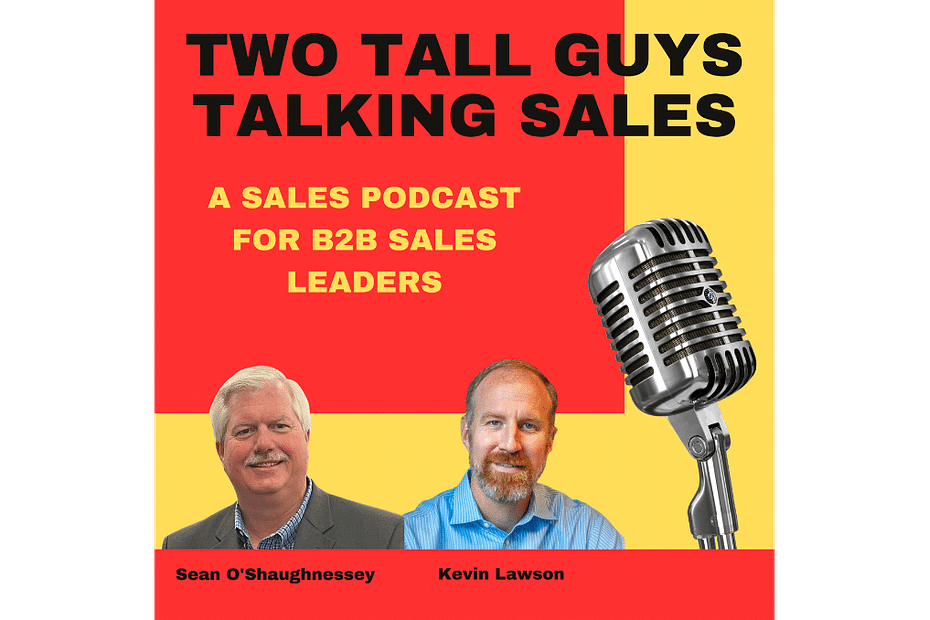
Two Tall Guys Talking Sales Podcast – The Art of the Hire: Crafting a Winning Sales Team – E98

Join hosts Kevin Lawson and Sean O’Shaughnessey on this revealing episode of “Two Tall Guys Talking Sales” where they dive deep into the intricacies of hiring and motivating sales teams. Whether you’re a solopreneur or heading a growing business, this episode delivers crucial insights into creating a robust sales force to propel your business forward. Key Topics Discussed Key Quotes Additional Resources Summary In this episode, Kevin and Sean tackle the often-overlooked but vital elements… Two Tall Guys Talking Sales Podcast – The Art of the Hire: Crafting a Winning Sales Team – E98

Two Tall Guys Talking Sales Podcast – Destination Success: Mapping Your Sales Strategy with Precision – E97

Join hosts Kevin Lawson and Sean O’Shaughnessey as they dive into the intricacies of sales strategy, drawing parallels to planning a family vacation. As we edge closer to our 100th episode, this session unpacks why having a well-documented and aligned business plan is crucial—akin to knowing your vacation destination to ensure everything goes smoothly. Whether you’re a business owner or a sales professional, this episode provides vital insights into simplifying and aligning your sales strategy… Two Tall Guys Talking Sales Podcast – Destination Success: Mapping Your Sales Strategy with Precision – E97

Building a Successful Sales Team: A Guide for CEOs and Managers

You can overcome obstacles and significantly improve your sales performance with the right mindset, strategies, and tools. For salespeople, sales managers, and CEOs of small companies, the journey to sales excellence is paved with lessons and insights that can be invaluable in improving management capabilities and driving revenue growth.

The sales process is a critical aspect of any business. It’s the engine that drives revenue and growth and the platform on which customer relationships are built. However, businesses often encounter a unique problem in their sales process. The problem isn’t necessarily about the product or service being sold, the market, or the competition. Rather, it’s about the people involved in the process—the salespeople.

Being a salesperson is a challenging profession. It requires a unique set of skills, a deep understanding of the product or service being sold, and a certain level of resilience to face the inevitable rejections that come with the job. But more than that, it requires a mindset that embraces growth, learning, and continuous improvement.

Read the rest of the article…

Transform Your Sales Strategy with the Three-Legged Stool Approach: Resonate, Differentiate, Substantiate

Business-to-business (B2B) sales is more than selling a product or service. It involves a strategic approach that includes understanding the customer’s needs, differentiating your offering, and building trust. This strategic approach is often called the three-legged stool of sales: Resonate, Differentiate, and Substantiate. Resonating with customers is the first step (leg) in the sales process. It involves answering the questions “Why should the customer act?” and “Why should they act now?” To resonate with customers,… Transform Your Sales Strategy with the Three-Legged Stool Approach: Resonate, Differentiate, Substantiate

Designing Sales Compensation Plans That Drive Performance

The success of any sales-driven organization in the business-to-business (B2B) space hinges on the sales team’s compensation plan. Over my four decades in B2B sales, I’ve observed that nothing influences the performance of sales personnel more directly than the design and implementation of their compensation plans. Compensation is not merely about rewarding sales achievements but crafting a strategy aligning individual salespeople’s goals with the company’s broader objectives.

A well-structured compensation plan acts as both a motivator and a guide. It compels sales teams not only to meet but exceed their targets, fostering an environment where continuous improvement is not just encouraged but becomes a natural byproduct of the system. For small business CEOs, understanding this dynamic is critical for sustaining and driving growth. Sales compensation is more than just a cost; it’s an investment in the company’s future.

In any sales environment, whether the market is brimming with potential or tightly contested, the compensation plan must be a living document that evolves in response to market conditions, company goals, and team performance. With this adaptability, companies can avoid stagnation or regression in their market positions. As businesses strive to scale and adapt, constructing a compensation plan that genuinely drives the right behaviors becomes all the more pertinent.

To delve deeper into this vital subject, CEOs should consider the immediate impacts of their compensation strategies and their long-term implications on sales culture and employee retention. For those ready to explore the intricacies of effective sales compensation and ensure their strategies are well-suited to their specific business contexts, I am here to lend my expertise. With extensive experience tailoring compensation plans to enhance sales productivity and company profitability, I invite you to reach out for further guidance on crafting a plan that meets and exceeds your strategic goals. You can set a time to talk to me using my link above Book Appointment With Sean.

Read the rest of the article…

Two Tall Guys Talking Sales Podcast – Selling the Hole, Not the Drill: Understanding the Real Value Behind Your Sales – E91

Welcome to another insightful episode of “Two Tall Guys Talking Sales,” where our hosts Kevin Lawson and Sean O’Shaughnessey dive deep into the complexities and strategies of sales. In this episode, they explore the nuanced dynamics of selling through distribution and understanding the real needs of your customers. Whether you’re a seasoned sales veteran or just starting in your career, this episode offers a wealth of knowledge on refining your sales approach to maximize effectiveness and customer satisfaction.

Key Topics Discussed:

  1. Selling Through Distribution: Sean shares his early career mistakes and the pivotal lessons of focusing beyond just the product features.
  2. Understanding Your Customer’s Needs: Strategies to grasp what the end-user truly requires from a product, rather than just its specifications.
  3. The Importance of Simplicity in Sales: Kevin emphasizes how simplifying your sales message can vastly improve understanding and efficiency in sales processes.
  4. Sales Training and Knowledge Transfer: Both hosts discuss how proper training and knowledge sharing with channel partners and sales teams can lead to better sales outcomes.
  5. The Role of Value in Sales: How to communicate the unique value of a product or service to stand out in a competitive market.
  6. Referral Partnerships and Networks: Sean elaborates on the significance of nurturing relationships with referral partners to enhance lead generation for smaller businesses.
Read the rest of the article…

Driving Sales Success through Collaborative Learning and Knowledge Sharing

Aiming to increase revenue and boost productivity in sales processes, sales managers and company CEOs are constantly searching for effective strategies to streamline their operations and ensure optimal results. One such strategy involves conducting sales meetings for educational purposes. These meetings focus on enhancing knowledge and skills, and this is where the real game begins. 

Imagine a sales meeting where, instead of a mundane round-up of weekly activities, there’s an engaging discussion about a new book that can potentially revolutionize the sales process. Picture a team of four or five salespeople, including you, each reading two chapters of a book overnight. The next day, everyone shares the high-level takeaways from their assigned chapters. This practice allows the team to consume an entire book’s content in a day and empowers each member to become an authority on the subject matter because they’re teaching others. The exercise is educational, promotes team collaboration, and enhances communication skills. 

This approach can be extended beyond books to other areas, such as market research. For instance, if a company is looking to enter a new vertical, different aspects of the industry, like market influencers, challenges, and political, economic, and legal factors, can be assigned to team members for research. Each member returns their findings to the team, comprehensively understanding the new market. This practice is not merely busy work; it’s sales-driving work that benefits the entire team and accelerates learning about the new market.

Read the rest of the article…

Using Value Propositions to Stand Out in a Competitive Market

Understanding and effectively communicating your value proposition is crucial for success in B2B sales. It can be the difference between winning and losing a deal. Whether you’re a salesperson, a sales manager, or the CEO of a small company, this topic is extremely relevant.

A value proposition is not merely a catchy slogan or a well-crafted elevator pitch. It is a broader collection of reasons why a potential buyer should choose your product or service. A value proposition identifies the customer’s needs and goals and demonstrates how your product or service can address these.

One key aspect of a value proposition is its ability to resonate with the customer. This involves deeply understanding the customer’s needs and tailoring your proposition to their specific situation. This allows the sales team to find the match between the customer’s needs and your offer. To resonate effectively, you need to answer two key questions for the customer: Why act? And why now?

The ‘why act’ question establishes the need for your product or service. If the customer doesn’t see a need, they won’t be interested, no matter how great your offering is. The ‘why now’ question creates a sense of urgency. Without this, a customer may acknowledge the need for your product or service but see no reason to act immediately.

Read the rest of the article…

Maximizing Sales Team Productivity: The Importance of Effective Sales Meetings

Numerous factors can contribute to a sales team’s success or failure. Two key aspects that are often overlooked yet hold immense importance are the structure and content of sales meetings. These gatherings are not just about reporting numbers or discussing targets. They are platforms for learning, sharing, and strategizing that can significantly boost a sales team’s performance.

One of the fundamental principles of a productive sales meeting is having a clear plan. This doesn’t mean having a rigid agenda without room for spontaneity. On the contrary, it’s about having a framework that guides the discussion and ensures that the meeting stays focused on the key topics at hand. 

A common mistake many sales leaders make is covering too many topics in a single meeting. In an attempt to address every issue, they often skim the surface of each topic without delving deep into any. The result is a meeting lacking depth and tangible insights or solutions. Limiting the number of key topics to one or two per meeting is advisable to avoid this. This allows for a more in-depth discussion and a better understanding of the issues at hand.

Read the rest of the article…