Skip to content

Sales Processes

What An MBA Didn’t Teach You About Sales

The sales profession is challenging. You need to work hard at it to succeed. You need to learn from the best. You need to improve your skills continuously. If you think you can sell since you are a hit at parties and have a lot of friends, you may soon find that you are a failure as a salesperson. Blunt truth:

because the sales profession is so hard, you have to focus on doing everything in sales very well, or you will be considered a failure.

I call this blog, Skinned Knees because I try to relate all of the learning that I have done over the past 4+ decades (while skinning my knees in the learning process).

I hope that you learn from my mistakes so that your business will grow!


John Spencer Explains Scaling Sales Teams- Turning A-Player Performance into Company-Wide Success

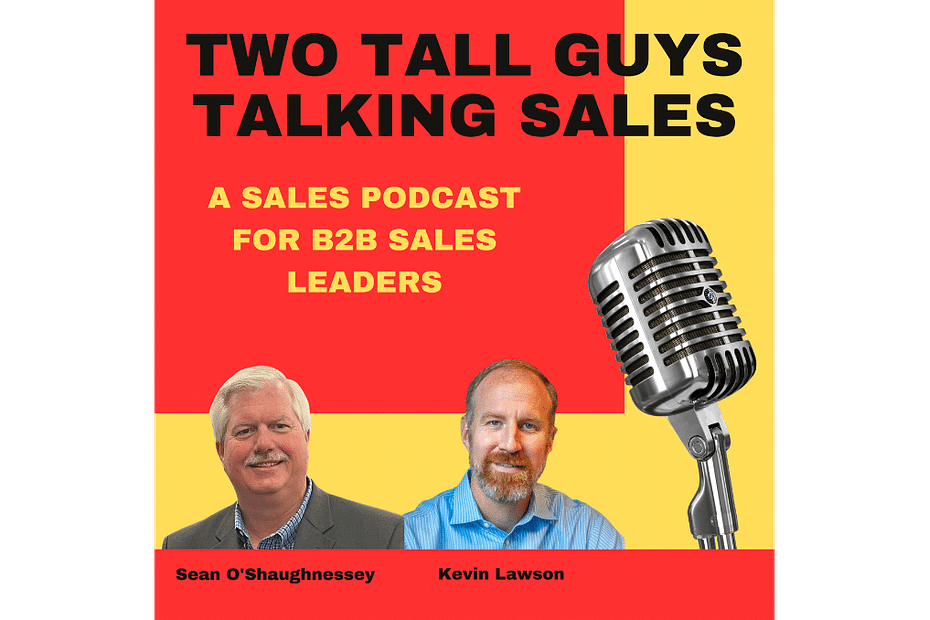
In this episode of Two Tall Guys Talking Sales, hosts Kevin Lawson and Sean O’Shaughnessey sit down with John Spencer, a seasoned sales leader and founder of Clear Direction Sales Development. Together, they explore the crucial differences between growth and scale, particularly in organizations leaning too heavily on a superstar seller. If you’re leading a sales organization that relies on one standout performer—or trying to replicate success across your sales team—this is a must-listen conversation… John Spencer Explains Scaling Sales Teams- Turning A-Player Performance into Company-Wide Success

Stop Guessing, Start Growing: How Strategic Sales Assessments Drive Real Revenue

You’ll eventually hit a wall if you’re running a sales organization—or wearing multiple hats as founder, CEO, and sales manager. That wall is often invisible until growth stalls, key deals slip through the cracks, or your top salesperson burns out. So, what’s the next move? It’s not more hustle. It’s assessment.

A sales assessment isn’t about checking boxes. It’s about understanding where you are, how you operate, and what’s holding you back. Too many small business leaders assume they’re doing fine because revenue is growing or the team is hitting their quotas. But are you growing at the rate your market allows? Are your sales activities aligned with your long-term goals? Are you building a repeatable system, or are you just getting lucky?

Let’s get tactical. A sales plan isn’t just a revenue target. It’s your go-to-market strategy. It defines your audience, your message, and your motion. It answers why you’re talking to those prospects and what value you’re bringing to them. Without a plan, you’re reacting instead of executing. You’re chasing leads instead of building a pipeline.

If you’re a small company—perhaps under $30 million in revenue—and selling into a national market, chances are your market potential is hundreds of millions, maybe billions. That means your market share is a rounding error, which means there’s room to grow. The question is: Are you operating in a way that allows you to capture that growth?

Even if you’re running lean, you should benchmark your performance against top-tier organizations. Not because you’re competing with them directly, but because they set the standard. What are they doing that you’re not? Where are they more efficient? How do they structure their teams? You’re leaving money on the table if you’re not asking those questions.

Read the rest of the article…
The Power of Personal Branding in Enhancing Sales Productivity

Navigating the world of sales can sometimes feel like traversing a labyrinth. Salespeople, sales managers, and CEOs alike grapple with the challenge of increasing revenue and enhancing productivity in their sales processes. To be successful, you need more than knowledge of products and services; you need to develop trust and a strong personal brand.

Business-to-business (B2B) sales involves transferring trust from ourselves to our prospects. We trust in our products and company, but convincing prospects to share that trust is the real challenge. This trust should encompass the product, the company, and perhaps most crucially, the salesperson. Remember, B2B sales could be defined as helping prospects decide in our favor within the desired timeframe.

The key to B2B sales is developing a personal brand that inspires trust in salespeople. The salesperson’s ability to convey reliability, expertise, and credibility can significantly influence how fast a prospect invests in a product or service.

Developing a strong personal brand begins with creating a presence that signals control and understanding of the business. This can be achieved by showcasing the benefits of your product or service to your customer’s business. A straightforward way to build your brand is by seeking references from your network, former employers, and customers, and showcasing these on professional platforms like LinkedIn.

Read the rest of the article…

Unlocking Sales Success: The Power of KPIs in Sales Processes

Are your sales KPIs helping your team succeed? Many sales leaders focus solely on closed deals. This narrow view misses crucial elements of sustainable sales growth.

The journey matters more than the destination. Sales excellence follows a similar path. Your team’s daily actions and behaviors create the foundation for lasting success.

Effective sales measurement requires a comprehensive view of your team’s activities. Top performers consistently execute vital behaviors that drive results. They prospect strategically, nurture relationships, and expand their presence within existing accounts. These leading indicators paint a clearer picture of future performance than lagging metrics alone.

Your KPI framework must evolve beyond historical analysis. Forward-looking metrics help you spot opportunities and challenges before they impact revenue. What’s happening in your pipeline right now? How are your teams finding new prospects? Which accounts show growth potential?

Experience levels significantly impact appropriate performance measures. New salespeople face different challenges than seasoned veterans. A rookie might need help with fundamental sales behaviors while learning your company’s approach. They need clear operational guidance and structured metrics that reinforce proper execution.

Veteran salespeople bring established skills and proven track records. Their KPIs should emphasize continuous improvement and cultural alignment. How are they advancing their capabilities? What value do they add to the broader sales organization?

Read the rest of the article…

Differentiating in the Sales Process: The Key to Boosting Bottom Line

The roles of salespeople, sales managers, and small business CEOs are ever-evolving. A common problem faced is increasing revenue and productivity in sales processes. This goal is common for all, from individual salespeople striving to provide for their families to CEOs seeking to boost their company’s bottom line. The key to achieving this lies in understanding the dynamic nature of the sales environment and leveraging it effectively.

A significant part of the sales process revolves around the buyer’s perception of a product or service as a commodity. This misclassification is usually caused by insufficient differentiation in the early stages of the sales process. Differentiation is crucial in any sales process, regardless of the industry or scenario. Creating enough differentiation can be the difference between closing a deal at a discounted rate or the desired price.

Salespeople are experts in their field, whether selling a unique product specific to their company or a common commodity. They typically have a deeper understanding of what they are selling than their prospects have about what they are buying. This expertise should be leveraged to guide prospects through the buying process, adding value to the relationship and making the salesperson indispensable. This approach can reduce the emphasis on price and increase the potential for higher earnings.

Every business has unique values that differentiate it from its competitors. These unique values could be anything from their mission, vision, and values to their market commitment and guarantee. This is commonly called a Unique Value Proposition (UVP) or a Unique Sales Proposition (USP). While a UVP and a USP are similar, there is a slight difference in that the former is typically created by the Marketing department (or sometimes with the help of a business adviser such as an EOS implementer. The latter is directly targeted at salespeople and what a salesperson should say to their prospects and customers. Salespeople should understand what makes them different and communicate this effectively to their prospects. The ability to create separation and differentiate oneself is why people pay for a product or service.

Read the rest of the article…

Unstick Your Sales: The Importance of Understanding the Buyer’s Journey

It’s no secret that the dynamics between the buyer and the salesperson play a pivotal role in sealing the deal. The conversation often revolves around real sales issues, selling situations, and sales leadership. 

Let’s delve into a scenario. You’re selling to a beer industry manufacturer, and their first question is about your price. This immediate focus on cost might make you think this may not be a good prospect. However, it’s crucial to remember that you can’t be disrespectful or dismissive. As salespeople, it’s our job to work with what we have. 

In this situation, the salesperson has to conduct a discovery call and engage a subject matter expert to understand the prospect’s business process, adaptation, and conversion. Unfortunately, the interaction turned into a commodity exchange, with the buyer solely interested in the number of users and the price per user. 

This scenario illustrates a common challenge in sales: the sales and buying processes often need to align. How your Customer Relationship Management (CRM) system is set up may not necessarily mirror how the buyer decides. Therefore, figuring out how to sell more effectively based on the buyer’s journey is crucial. Understanding the buyer is discussed in great detail in my book Eliminate Your Competition, which is available wherever you buy books.

Read the rest of the article…

Navigating Through Sales Slumps: A Strategic Approach for Sales Leaders

Like any other profession, sales is not immune to periods of underperformance or slumps. These periods can be particularly challenging when a top performer in your sales team is slumping. Addressing this issue effectively can significantly improve the productivity of your sales processes, ultimately leading to increased revenue for your company.

Various factors can trigger a sales slump, but it often implies a deviation from the sales process or strategy. Sales is a time-based process, not a transactional one. It involves selling to other businesses, which takes time. Therefore, as a sales leader or CEO, it’s crucial to identify when the sales trend starts to slide. This identification is not just about revenue; it requires a retrospective look at the early stages of a sale. If there aren’t enough leads or active relationships in your pipeline, you can foresee a slump and take proactive measures to change outcomes.

A common mistake is focusing on the revenue loss resulting from the effort expended. A more constructive approach is to evaluate the salesperson’s activities in the sales process. If they do the right things daily, they will quickly work out of the slump. The focus should be on maintaining an effective pipeline and executing all the necessary tasks, such as good scoping and discovery calls.

Read the rest of the article…