Skip to content

Sales productivity

What An MBA Didn’t Teach You About Sales

The sales profession is challenging. You need to work hard at it to succeed. You need to learn from the best. You need to improve your skills continuously. If you think you can sell since you are a hit at parties and have a lot of friends, you may soon find that you are a failure as a salesperson. Blunt truth:

because the sales profession is so hard, you have to focus on doing everything in sales very well, or you will be considered a failure.

I call this blog, Skinned Knees because I try to relate all of the learning that I have done over the past 4+ decades (while skinning my knees in the learning process).

I hope that you learn from my mistakes so that your business will grow!


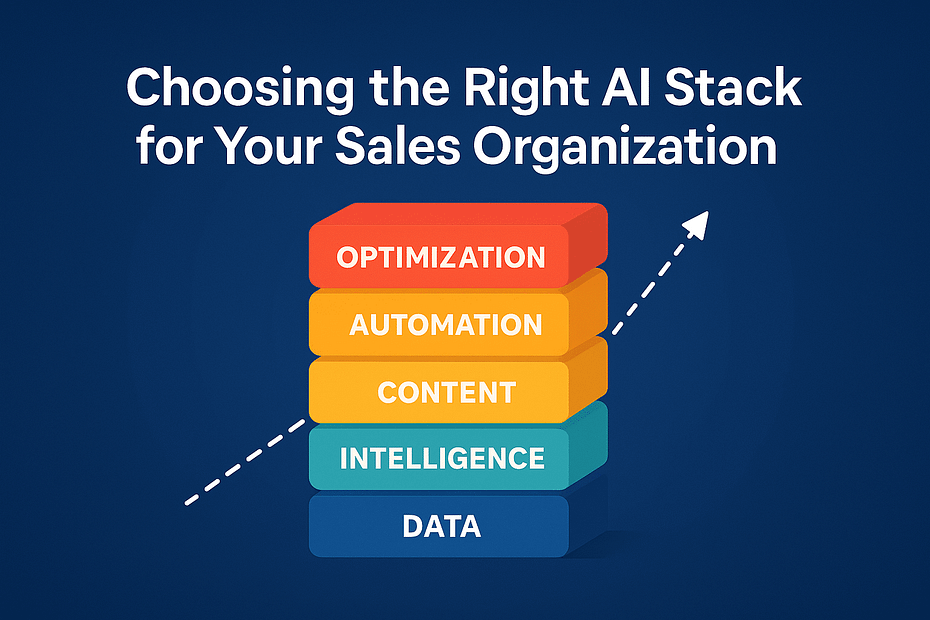
Choosing the Right AI Stack for Your Sales Organization

A VP of Sales recently confided in me: “We have six different AI tools, but our reps are still doing manual work. What went wrong?”

This is the AI tool proliferation problem. Sales leaders often collect tools without a strategy, mistaking a pile of features for a cohesive system. It’s like buying a hammer, screwdriver, saw, and drill without realizing you’re actually trying to build a house. An effective AI stack means integration. When tools work together, they amplify each other’s value. When they don’t, they add complexity, confusion, and wasted money.

Why Strategy Beats Random Adoption

Random tool adoption is rampant across sales organizations. Teams chase shiny new software, often ending up with overlapping features, siloed data, and productivity lost to tool-switching. Instead of solving problems, the stack itself becomes the problem.

But when built strategically, the benefits are profound. Integrated systems reduce manual data entry, accelerate response times, and deliver actionable insights for reps. Three well-chosen, well-connected tools can outperform six isolated ones. Integrated stacks also improve adoption rates by providing consistent interfaces and reducing training overhead.

The Five-Layer AI Stack Framework

To avoid the chaos of random adoption, I use a five-layer framework for structuring sales AI tools:

  1. Data Foundation – Your CRM and data management system, enriched and maintained for accuracy.
  2. Intelligence & Analytics – AI-driven insights, lead scoring, forecasting, and market intelligence.
  3. Automation & Workflow – Sequences, task automation, and cross-platform orchestration.
  4. Content & Communication – AI writing, proposal generation, and customer-facing tools.
  5. Optimization & Learning – Conversation analysis, performance tracking, and continuous improvement.
Read the rest of the article…
AI Isn’t Replacing Salespeople, It’s Giving Them a Competitive Edge

AI isn’t replacing salespeople, it’s making them more effective. The real risk isn’t losing your job to AI; it’s losing to a competitor who uses AI better than you do. Sales professionals who integrate AI into their workflow will outperform those who don’t. 

It’s not about technology taking over but about using technology to gain an edge. The market is becoming increasingly competitive, and the most efficient salespeople will emerge victorious.

Time is a salesperson’s most valuable asset. 

Every minute spent on administrative tasks is a minute not spent selling. AI helps reclaim those lost hours. Tools that automate writing, scheduling, and research allow salespeople to focus on what matters: building relationships and closing deals. If you’re not leveraging AI to increase productivity, you’re leaving opportunities on the table.

Sales emails need to be clear and professional. AI-powered writing assistants ensure your messages are polished and effective. A poorly written email can cost you a deal. AI tools catch grammatical mistakes, improve clarity, and even suggest more effective phrasing. This isn’t just about looking professional; it’s about being understood. 

If your message isn’t clear, it won’t convert.

Presentations are another time-consuming task. AI can generate professional decks in minutes. Instead of spending hours designing slides, salespeople can focus on developing effective strategies. AI-powered tools create branded, structured presentations based on simple inputs. This ensures consistency while saving time. Sales professionals who utilize AI for presentations can focus on delivering insights rather than formatting slides.

CRM systems are the backbone of sales operations. AI enhances CRM by automating data entry, tracking customer interactions, and suggesting next steps. Salespeople often struggle with keeping CRM data updated. AI reduces this friction by automatically capturing and organizing information. A well-maintained CRM leads to better forecasting and stronger customer relationships. 

If your CRM doesn’t have AI capabilities, it’s time to upgrade.

AI-driven insights enable sales managers to make more informed decisions, rather than relying on instinct. Managers can use AI to analyze performance trends, identify coaching opportunities, and predict revenue outcomes. AI doesn’t replace leadership; it enhances it. 

Sales managers who adopt AI can build stronger teams and achieve better results. Ignoring AI in sales management is a strategic mistake.

Lead generation is another area where AI adds value. AI-powered tools can analyze vast amounts of data to identify high-potential prospects. Instead of spending hours researching leads, salespeople can receive AI-generated recommendations. This allows for more targeted outreach and higher conversion rates. AI doesn’t just find leads, it finds the right leads.

Sales follow-up is often inconsistent. AI ensures follow-ups happen at the right time with the right message. Automated reminders and AI-generated responses keep deals moving forward. 

A well-timed follow-up can be the difference between closing a deal and losing it. AI helps salespeople stay on top of their pipeline without relying on memory.

Read the rest of the article…

From Manual to Automated: A Sales Pro’s Guide to Zapier, Make.com, n8n, and Pipedream

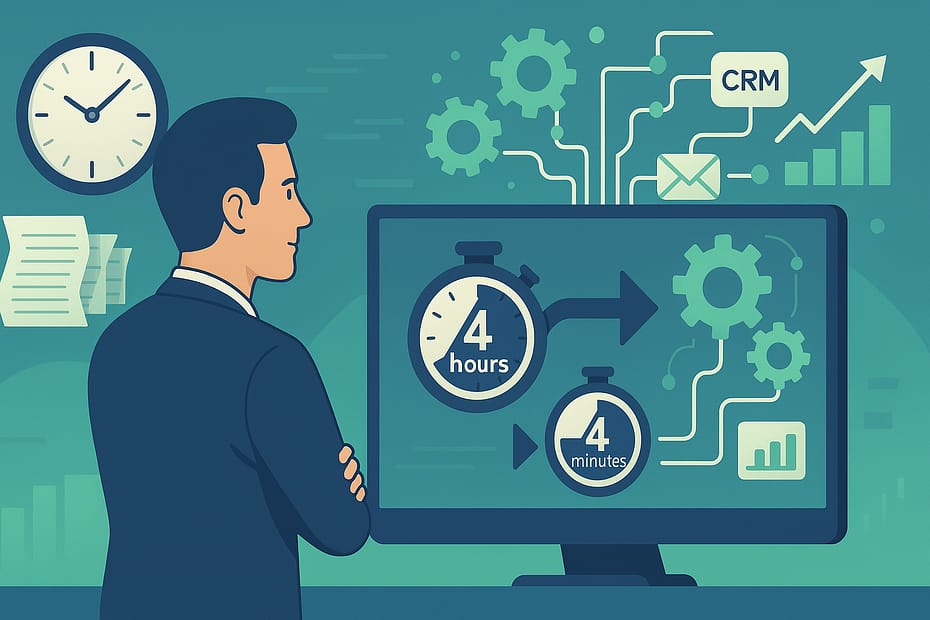
A sales manager recently told me something that stuck: “We went from twenty hours per week of manual work to two hours. Our lead response time dropped from four hours to four minutes.” That dramatic transformation wasn’t magic—it was automation. The reality is that sales teams today have more automation tools available than ever before. But with options like Zapier, Make.com, n8n, and Pipedream, the real challenge isn’t whether you should automate—it’s choosing the right… 

APIs Explained for Sales Leaders: Drive Growth Without Extra Headcount

A sales manager recently told me, “I have to copy the same prospect data into five different tools. There has to be a better way.” That frustration is more common than most sales leaders realize, and fortunately, there is a better way. The reality is that sales teams are hemorrhaging productivity due to disconnected systems. Top performers spend hours manually entering data, bouncing between platforms, and correcting inevitable errors. This administrative overhead steals time from… 

ChatGPT vs. Claude vs. Gemini vs. Copilot: Which AI Wins in Sales?

A few days ago, a sales manager asked me which AI platform to use for writing cold emails. I told him it depends on what kind of emails he’s writing, and he looked confused. That confusion is common and costly. ChatGPT, Claude, Gemini, and Copilot all look similar at first glance, but in reality, they serve very different purposes depending on your sales workflow. Choosing the right platform matters because the wrong choice drains time,… 

Cut Through the AI Hype: Practical Definitions for Sales Professionals

Artificial intelligence is transforming sales, but too many leaders are investing in tools they don’t fully understand. The result? Costly mistakes, poor adoption, and missed opportunities. This episode of AI Tools for Sales Pros breaks down the three core technologies behind AI: and explains them in plain language that every sales professional can use. The episode compares the current AI confusion to the database revolution of the 1990s. Just as sales leaders once needed to… 

Two Tall Guys Talking Sales – John McLeod Explains How to Avoid the AI Trap: Using New Tools Without Losing Your Sales Message – Episode 140

In this episode of Two Tall Guys Talking Sales, hosts Kevin Lawson and Sean O’Shaughnessey are joined by veteran fractional VP of Sales, John McLeod. Together, they dive into a critical topic for today’s sales leaders: embracing artificial intelligence tools without compromising your value proposition, messaging, or sales processes. John brings deep expertise in sales management, business acumen, and revenue generation strategies, offering a measured approach to evaluating sales tech, especially AI solutions, through a… 

The Power of Personal Branding in Enhancing Sales Productivity

Navigating the world of sales can sometimes feel like traversing a labyrinth. Salespeople, sales managers, and CEOs alike grapple with the challenge of increasing revenue and enhancing productivity in their sales processes. To be successful, you need more than knowledge of products and services; you need to develop trust and a strong personal brand.

Business-to-business (B2B) sales involves transferring trust from ourselves to our prospects. We trust in our products and company, but convincing prospects to share that trust is the real challenge. This trust should encompass the product, the company, and perhaps most crucially, the salesperson. Remember, B2B sales could be defined as helping prospects decide in our favor within the desired timeframe.

The key to B2B sales is developing a personal brand that inspires trust in salespeople. The salesperson’s ability to convey reliability, expertise, and credibility can significantly influence how fast a prospect invests in a product or service.

Developing a strong personal brand begins with creating a presence that signals control and understanding of the business. This can be achieved by showcasing the benefits of your product or service to your customer’s business. A straightforward way to build your brand is by seeking references from your network, former employers, and customers, and showcasing these on professional platforms like LinkedIn.

Read the rest of the article…

Unlocking Sales Success: The Power of KPIs in Sales Processes

Are your sales KPIs helping your team succeed? Many sales leaders focus solely on closed deals. This narrow view misses crucial elements of sustainable sales growth.

The journey matters more than the destination. Sales excellence follows a similar path. Your team’s daily actions and behaviors create the foundation for lasting success.

Effective sales measurement requires a comprehensive view of your team’s activities. Top performers consistently execute vital behaviors that drive results. They prospect strategically, nurture relationships, and expand their presence within existing accounts. These leading indicators paint a clearer picture of future performance than lagging metrics alone.

Your KPI framework must evolve beyond historical analysis. Forward-looking metrics help you spot opportunities and challenges before they impact revenue. What’s happening in your pipeline right now? How are your teams finding new prospects? Which accounts show growth potential?

Experience levels significantly impact appropriate performance measures. New salespeople face different challenges than seasoned veterans. A rookie might need help with fundamental sales behaviors while learning your company’s approach. They need clear operational guidance and structured metrics that reinforce proper execution.

Veteran salespeople bring established skills and proven track records. Their KPIs should emphasize continuous improvement and cultural alignment. How are they advancing their capabilities? What value do they add to the broader sales organization?

Read the rest of the article…

From Chaos to Order: Improve Your Sales Productivity with Effective Pipeline Management

Sales is a complex and intricate world, a jigsaw puzzle where each piece must fit perfectly to create a successful picture. This is especially true when it comes to managing sales, whether you’re a salesperson, a sales manager hoping to enhance your leadership skills, or a CEO in the trenches of a small company. Understanding the challenges and nuances of the sales process is crucial to increasing revenue and productivity.

Imagine you’re in a room full of sports equipment scattered everywhere, from basketball shoes to cheerleading pom-poms. It’s a total mess, and you can barely see the floor. This is a perfect metaphor for what a disorganized sales pipeline can look like. It’s messy chaotic, and there’s always something that doesn’t quite smell right. 

The sales pipeline is vital for tracking and managing sales prospects from the initial contact to the deal’s closing. It visually represents where potential customers are in the sales process. However, if not properly managed, the pipeline can become a mess. 

A common issue is when a deal gets pushed from one month to the next. The sales rep simply changes the closing date, making it seem like procrastination has become a part of the process. This can be due to various reasons, such as a lack of commitment from the customer, the sales rep not understanding the customer’s needs, or simply a lack of follow-up. To avoid this, it’s essential to go back to basics. Understand where the customer is in their evaluation and buying process. Are they genuinely interested in buying or just exploring the idea? It’s perfectly fine for a customer to be in the exploratory stage, but that doesn’t mean they’re ready to buy. These customers should be considered early-stage prospects and not be rushed into buying. 

Read the rest of the article…