Skip to content

Sales success

What An MBA Didn’t Teach You About Sales

The sales profession is challenging. You need to work hard at it to succeed. You need to learn from the best. You need to improve your skills continuously. If you think you can sell since you are a hit at parties and have a lot of friends, you may soon find that you are a failure as a salesperson. Blunt truth:

because the sales profession is so hard, you have to focus on doing everything in sales very well, or you will be considered a failure.

I call this blog, Skinned Knees because I try to relate all of the learning that I have done over the past 4+ decades (while skinning my knees in the learning process).

I hope that you learn from my mistakes so that your business will grow!


Building a Zero-Cost AI Sales Stack: How to Validate Value Before You Spend a Dollar

Most sales leaders today feel the tension between innovation and fiscal responsibility. You know artificial intelligence can accelerate productivity, clarify messaging, and drive revenue generation. You also know your competitors are implementing AI-driven sales processes and reaping the benefits. Yet you are expected to somehow produce results without the budget to experiment, test, or validate new technology.

This pressure creates the classic chicken-and-egg dilemma. You cannot get budget approval without demonstrating value, but you cannot demonstrate value without access to capable tools. That tension often leaves sales leaders paralyzed, observing advancements but unable to participate. It is an exhausting cycle that erodes confidence and slows down organizational progress.

The good news is that modern software economics have shifted. You no longer need an enterprise-level budget to run meaningful AI pilots. Instead, today’s freemium models allow teams to build real workflows, automate real processes, and create real sales success with no financial risk. These free tiers exist because vendors want you to become reliant on the workflow, meaning you can use that dynamic to your advantage as you design early-stage pilots.

A practical approach for sales management is to treat free AI tools as validation engines rather than long-term solutions. You begin with lightweight experimentation, focusing on a single friction point that slows your team. Whether the issue involves pre-call research, drafting follow-up emails, or scoring inbound leads, AI can automate repetitive tasks, freeing your sellers to focus on value selling. The goal is not perfection; it is measurement.

Read the rest of the article…

How AI-Powered Contact Enrichment Transforms B2B Sales Conversations

In today’s fast-paced B2B world, sales teams can no longer afford to waste hours gathering prospect data manually. Artificial intelligence has enabled the automation of contact enrichment, transforming basic contact records into comprehensive profiles rich in actionable business intelligence.

Contact enrichment powered by AI doesn’t just make your team faster; it makes them smarter. By combining multiple data sources into unified profiles, your sales organization gains the kind of business acumen that enables precision-targeted messaging and true value selling. The difference between a generic pitch and a relevant, consultative conversation often comes down to the quality and depth of the data your team has at its fingertips.

Platforms like Clay, Clearbit, Apollo, and ZoomInfo give sales leaders visibility into company size, funding rounds, leadership changes, technology stacks, and even recent business developments. This transforms your approach from transactional outreach to consultative engagement rooted in strategic intelligence. The outcome is faster response times, higher conversion rates, and more meaningful sales conversations.

The beauty of these systems lies in their integration with CRMs like HubSpot, Salesforce, or Pipedrive. Automated workflows ensure that every new lead entry is enriched in real-time with firmographic and behavioral insights. This is how sales teams reduce their research time from hours to minutes while maintaining the quality of personalized outreach that customers expect.

Read the rest of the article…

Sales Management in the Age of AI: Aligning Marketing, Messaging & Revenue Generation

When it comes to modern B2B revenue generation, the conversation is shifting: it’s no longer just about cycle time or activity metrics, it’s about intent, predictive insights, and sharpening your approach to lead engagement. In this post, we unpack how artificial intelligence (AI) can reinforce your sales management discipline, refine your sales processes, and elevate your team’s business acumen.

Many sales organizations still rely on traditional lead-scoring models: “five points for a white-paper download, ten points for visiting the pricing page.” These rules-based frameworks sit at the heart of countless debates over marketing-qualified lead (MQL) vs. sales-qualified lead (SQL). Yet research shows that such arbitrary scoring systems often perform little better than chance.

By contrast, predictive lead scoring powered by AI changes the game: algorithms ingest data from your CRM, marketing automation, website activity, firmographics and behavior patterns. They then compute each lead’s statistical probability of converting, turning your outreach efforts from scatter-shot to precision-targeted.

In value selling, the objective is to engage high-potential buyers with meaningful differentiation—messaging that resonates with their specific business challenges. When your team is handed leads that reflect a 90 %+ probability of conversion, the conversation changes: it becomes strategic, not just transactional. Your reps spend less time chasing noise and more time facilitating high-impact dialogues.

Read the rest of the article…

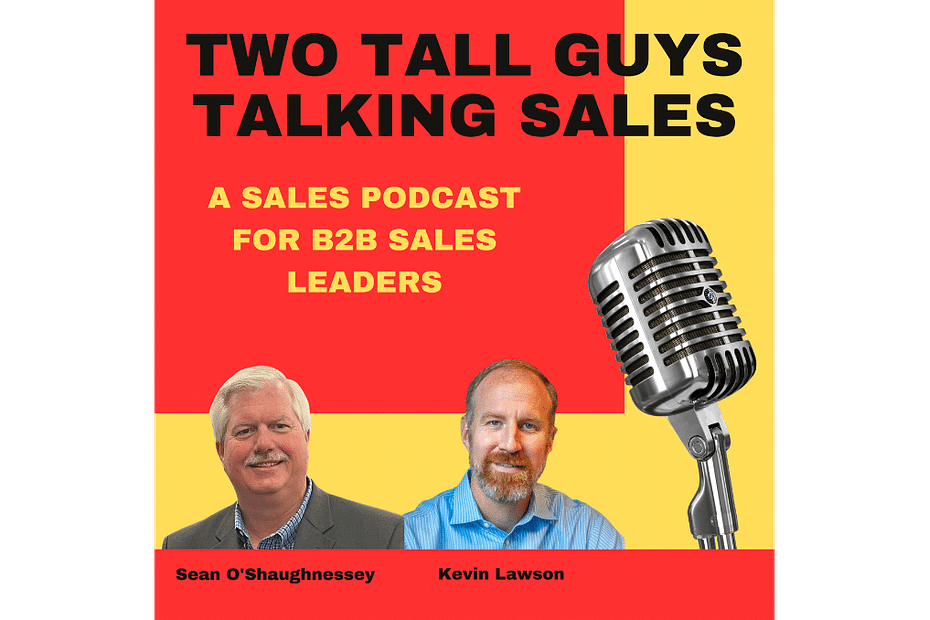
Two Tall Guys Talking Sales – The Hidden Driver of Every Sale: Mike Dowhan Explains How Compelling Events Shape Business Acumen and Sales Strategies – Episode 160

In this episode of Two Tall Guys Talking Sales, hosts Kevin Lawson and Sean O’Shaughnessey welcome Mike Dowhan, founder of Bedrock Sales. Together, they explore one of the most overlooked yet transformative aspects of sales management: the compelling event. Mike brings over two decades of experience helping organizations refine their sales processes, understand buyer motivation, and drive consistent revenue generation. Whether you’re a frontline seller or a sales leader guiding a team, this episode unpacks how identifying and leveraging compelling events can be the difference between chasing deals and closing them confidently.

Key Topics Discussed

  • The Power of the Compelling Event (01:12) – What defines a compelling event and why it’s the “why” behind every great sale.
  • Asking Better Discovery Questions (03:00) – How to uncover the root cause that motivates buyers to act now rather than later.
  • Getting Permission to Go Deep (07:17) – Why earning trust allows salespeople to ask the tough, business-critical questions.
  • Compelling Events vs. Compelling Needs (09:53) – The distinction between recognizing a real deadline versus a vague desire for change.
  • Surfacing the Cost of Inaction (10:38) – How to use timing, impact, and risk to create urgency without manufacturing pressure.

Key Quotes

  • Mike Dowhan (03:49): “What caused you to pick up the phone or take my call today? What’s different today than yesterday? That’s where you find the real reason a buyer is ready to move.”
  • Sean O’Shaughnessey (02:29): “If there’s no compelling event, it becomes very difficult. You’re pushing the boulder uphill, fighting the same battle over and over.”
  • Kevin Lawson (12:00): “Finding permission and tracking back to that event is where we create real value, and avoid the trap of commoditization.”

Additional Resources

A Significant Actionable Item from this Podcast

Start every discovery conversation with one simple question:

“What changed today that made you want to talk to me?”

This question reveals your buyer’s compelling event, the emotional and operational trigger that drives their need to act. Understanding that moment transforms your sales strategy from reactive to consultative. Use it to align your messaging, reinforce your value-selling approach, and accelerate revenue growth.

Read the rest of the article…

Value Selling at Scale: AI-Driven Qualification and Sales Management Strategies

In many B2B organizations, the marketing team generates a healthy stream of incoming leads, but the sales team struggles to keep pace. The result: qualified opportunities go cold, revenue generation stalls, and business acumen around lead management erodes. This is often caused by what I call the “qualification bottleneck”: when sales management and sales processes are built for humans only, operational rhythm fractures under modern buyer expectations.

When a buyer visits your pricing page at 11 p.m. on a Sunday and your sales team doesn’t respond until mid-week, the damage is done. You’ve lost not only speed but strategic context. Your sales rep begins the conversation asking basics again, instead of starting the strategic consultative discussion your solution demands.

The remedy is a hybrid sales model: humans amplified by artificial intelligence. AI handles initial qualification via intelligent chatbots and forms that follow a structured framework such as MEDDPICCC. These systems ask the key discovery questions automatically, capture metrics, identify decision-makers, uncover timelines, goals, champions, competition, paper process — and deliver a richer lead profile to your sales team. With that strategic foundation in place, your reps can start where value selling begins: at the business case. Shorter cycles. Higher conversion. Stronger revenue management.

Read the rest of the article…

The Future of Prospecting: Using Artificial Intelligence to Read Buyer Intent

The modern salesperson faces two extremes: total blindness or total overload. Some still cold call a list of fifty prospects hoping one will answer, while others drown in dashboards flashing with “intent data.” Both approaches fail because neither interprets what the data truly means.

The future of sales management lies in balance — using artificial intelligence to translate buyer behavior into clear, prioritized action. AI can read digital body language, scoring every click, visit, and download to reveal genuine purchase intent. This isn’t about replacing salespeople. It’s about enabling them with sharper business acumen and faster, more precise decision-making.

When sales leaders align technology with disciplined sales processes, they move from guesswork to guidance. Value selling becomes tangible because messaging is timed to the buyer’s journey, not to the rep’s quota. The best teams build standardized playbooks for each stage — from early curiosity to re-engagement — and rely on revenue management data to decide when to act.

Read the rest of the article…

Two Tall Guys Talking Sales – Sales Management Masterclass: Paul Rafferty’s Proven Framework for Smarter Deal Reviews and Revenue Generation – Episode 159

Welcome back to Two Tall Guys Talking Sales with hosts Kevin Lawson and Sean O’Shaughnessey. In this dynamic episode, the Tall Guys welcome Paul Rafferty from Sales Xceleration to explore the art and science of sales coaching, deal qualification, and the importance of building sales acumen. Paul brings decades of experience in sales management, value selling, and revenue generation, offering a practical framework for sales leaders who want to coach their teams more effectively and for reps who want to stop chasing the wrong deals.

Discover how to transform your team’s approach to sales processes—from opportunity scoring to understanding a buyer’s “pain chain.” This conversation is packed with actionable insights that blend sales strategy, business acumen, and real-world stories you can immediately apply to your own selling environment.

Key Topics Discussed

  • 03:00 — Building a Deal Coaching Framework:
    Paul introduces his 100-point scorecard system that evaluates the Ideal Prospect Profile, the Pain Chain, and Commitment to Decision. This framework transforms deal reviews into powerful coaching sessions rather than mere forecast updates.
  • 05:10 — The “Pain Chain” and Sales Philosophy:
    Sean and Paul discuss how understanding buyer pain isn’t optional—it’s foundational to value selling. Without real pain, there’s no compelling reason for your buyer to act.
  • 06:45 — From Friendly to Effective Salesperson:
    Paul and Sean discuss how friendliness can open doors, but it’s teaching and insight that ultimately win deals. Sales success comes from challenging your prospects and helping them think differently.
  • 08:00 — Why Deals Get Stuck:
    Kevin and Paul explore how most stalled deals trace back to weak discovery. Coaching your team to go deeper early in the sales process prevents gridlock later.
  • 10:30 — The Currency of Knowledge:
    Paul explains that in modern selling, gifts and lunches no longer move the needle—information does. Great salespeople earn influence by being teachers, not vendors.

Key Quotes

  • Paul Rafferty (03:50):
    “It’s not what you do—it’s what they do. The scorecard helps you coach reps to spend time where there’s real buying intent, not just big logos.”
  • Sean O’Shaughnessey (05:43):
    “Salespeople need to understand the theory of sales. Without knowing the frameworks—like the pain chain or solution selling—you’re just saying, ‘I’m a nice guy, buy from me.’”
  • Kevin Lawson (08:38):
    “Most deals go to die in the discovery phase. Coaching means rewinding the tape and helping reps fix what wasn’t done early enough.”
  • Paul Rafferty (12:51):
    “Your currency is information—help your buyer look smart, get promoted, and win internally. That’s real value selling.”

Additional Resources

  • Paul Rafferty
    • prafferty@salesxceleration.com 
    • https://www.linkedin.com/in/pauljrafferty/
  • Books referenced:
    • Solution Selling by Michael Bosworth – https://a.co/d/hHtYSiX
    • The Challenger Sale by Matthew Dixon & Brent Adamson – https://a.co/d/2kJsbDU
    • Strategic Selling by Robert Miller & Stephen Heiman – https://a.co/d/icPcC6H

A Significant Actionable Item from this Podcast

Implement a Deal Coaching Scorecard.
Instead of subjective forecasting (“This deal is 70% likely to close”), create an objective scoring model based on:

  1. Ideal Prospect Fit (25 pts) – Does this prospect align with your best customer profile?
  2. Pain Chain (25 pts) – Have they admitted to a real, solvable pain?
  3. Commitment to Decision (50 pts) – Have they engaged decision-makers and committed to next steps?

Use this tool in your next pipeline review. It will sharpen your sales management coaching, improve revenue forecasting, and elevate your team’s overall sales success. If you want more information about this scorecard, reach out to Paul Rafferty at his address above.

Read the rest of the article…

How to Use AI to Write Personalized Cold Emails at Scale

It’s Sunday night. You’re staring at your CRM and that dreaded task appears: “Prospecting Block: 100 Accounts.” The feeling in your stomach tells you what’s coming. You’ll either blast generic messages and feel like a spammer or spend hours crafting a handful of handcrafted emails that barely move the needle.

This is the central productivity crisis in modern B2B sales. We’re constantly forced to choose between efficiency and relevance. But what if that choice was a false one? What if artificial intelligence could help you achieve both, without sacrificing your authenticity or sanity?

The False Choice: Efficiency vs. Effectiveness

The traditional approaches to sales outreach, templates versus deep personalization, represent the old world of “one-to-many” or “one-to-one.” But the future of sales lies in one-to-one at scale. The key is understanding that AI isn’t replacing salespeople, it’s augmenting them.

Your job is no longer to write every email from scratch. Your job is to be the editor-in-chief of your outreach strategy. The human decides the target, tone, and message. The AI executes your direction at scale.

The Strategic Brief: Your Blueprint for AI-Powered Outreach

To adopt this workflow, replace your 50-email grind with one Strategic Brief containing three sections:

  1. Voice Profile – Teach AI to sound like you. Include examples of your best emails and guidelines for tone, structure, and style.
  2. Prospect Context – Gather simple, factual data on each contact: title, company, recent events, and pain points.
  3. Mission – Define your goal and message direction. What’s the objective of the email: reply, insight, or meeting?
Read the rest of the article…

Reclaiming Hours of Selling Time with AI – Lessons from MAICON 2025

You just checked your team’s dashboard. Activity looks fine. But deep down, you know that the numbers don’t tell the whole story.

Every salesperson loses time to the same unseen burden: administrative drag. After each successful discovery call, there’s a 20-minute grind with CRM updates, email summaries, and internal handoffs. This “sales tax” cuts into selling time, hurts momentum, and costs your company thousands weekly in lost productivity.

I just returned from MAICON 2025, and I was so inspired that I wanted to share some of the biggest lessons. At the MAICON 2025 conference in Cleveland, the message was clear: artificial intelligence is changing sales management, not by replacing people, but by empowering them. The winning teams are using AI to eliminate “digital grunt work” through orchestration, not standardization.

Orchestration, Not Standardization

MAICON’s main message was that sales leaders should stop searching for the “one magical platform.” Instead, the most successful organizations coordinate several top-tier tools. Their AI ecosystems are modular, flexible, and collaborative.

It starts with three pieces:

  1. a transcription tool like Fireflies,
  2. an automation hub like Make.com or Zapier,
  3. your existing CRM and communication systems.
Read the rest of the article…

Stop Researching, Start Connecting: An AI-Powered System for Warm Introductions

Most sales teams begin the week by opening a dozen browser tabs and grinding through scattered research, LinkedIn, Google News, company websites, and databases. Hours later, they emerge with a few generic talking points and a cold list that still feels cold. The deeper issue isn’t inefficiency; it’s invisibility. Warm introductions already exist across your company’s network, in email histories, calendars, and executives’ LinkedIn connections, but you can’t see them on Monday morning.

The Relationship-First approach changes that default. Before a single cold call or email, you perform a deliberate “Warm Path Check.” You ask, “Who do we know who knows them?” This question transforms prospecting from random outreach into a repeatable, data-driven process that prioritizes relationships. When you start as a referred conversation rather than an interruption, skepticism drops, credibility rises, and the sales cycle compresses dramatically.

The Hidden Network You’re Not Using

Every organization has an untapped network, a web of past colleagues, vendors, and clients who could open doors to your dream accounts. The problem is that this network is hidden in plain sight. It lives in the collective memory of your company’s communication patterns, but there’s no easy way to access it manually. That’s where KnowledgeNet comes in.

KnowledgeNet serves as your organization’s “relationship intelligence” layer. It analyzes communication data (emails, meetings, messages) to reveal who knows whom, and how strong those connections really are. Instead of guessing, you can instantly see that a colleague in engineering once worked closely with the CFO of a target account. That’s a warm path waiting to be used.

Read the rest of the article…