Skip to content

salesperson

What An MBA Didn’t Teach You About Sales

The sales profession is challenging. You need to work hard at it to succeed. You need to learn from the best. You need to improve your skills continuously. If you think you can sell since you are a hit at parties and have a lot of friends, you may soon find that you are a failure as a salesperson. Blunt truth:

because the sales profession is so hard, you have to focus on doing everything in sales very well, or you will be considered a failure.

I call this blog, Skinned Knees because I try to relate all of the learning that I have done over the past 4+ decades (while skinning my knees in the learning process).

I hope that you learn from my mistakes so that your business will grow!


From Chaos to Order: Improve Your Sales Productivity with Effective Pipeline Management

Sales is a complex and intricate world, a jigsaw puzzle where each piece must fit perfectly to create a successful picture. This is especially true when it comes to managing sales, whether you’re a salesperson, a sales manager hoping to enhance your leadership skills, or a CEO in the trenches of a small company. Understanding the challenges and nuances of the sales process is crucial to increasing revenue and productivity.

Imagine you’re in a room full of sports equipment scattered everywhere, from basketball shoes to cheerleading pom-poms. It’s a total mess, and you can barely see the floor. This is a perfect metaphor for what a disorganized sales pipeline can look like. It’s messy chaotic, and there’s always something that doesn’t quite smell right. 

The sales pipeline is vital for tracking and managing sales prospects from the initial contact to the deal’s closing. It visually represents where potential customers are in the sales process. However, if not properly managed, the pipeline can become a mess. 

A common issue is when a deal gets pushed from one month to the next. The sales rep simply changes the closing date, making it seem like procrastination has become a part of the process. This can be due to various reasons, such as a lack of commitment from the customer, the sales rep not understanding the customer’s needs, or simply a lack of follow-up. To avoid this, it’s essential to go back to basics. Understand where the customer is in their evaluation and buying process. Are they genuinely interested in buying or just exploring the idea? It’s perfectly fine for a customer to be in the exploratory stage, but that doesn’t mean they’re ready to buy. These customers should be considered early-stage prospects and not be rushed into buying. 

Read the rest of the article…

Differentiating in the Sales Process: The Key to Boosting Bottom Line

The roles of salespeople, sales managers, and small business CEOs are ever-evolving. A common problem faced is increasing revenue and productivity in sales processes. This goal is common for all, from individual salespeople striving to provide for their families to CEOs seeking to boost their company’s bottom line. The key to achieving this lies in understanding the dynamic nature of the sales environment and leveraging it effectively.

A significant part of the sales process revolves around the buyer’s perception of a product or service as a commodity. This misclassification is usually caused by insufficient differentiation in the early stages of the sales process. Differentiation is crucial in any sales process, regardless of the industry or scenario. Creating enough differentiation can be the difference between closing a deal at a discounted rate or the desired price.

Salespeople are experts in their field, whether selling a unique product specific to their company or a common commodity. They typically have a deeper understanding of what they are selling than their prospects have about what they are buying. This expertise should be leveraged to guide prospects through the buying process, adding value to the relationship and making the salesperson indispensable. This approach can reduce the emphasis on price and increase the potential for higher earnings.

Every business has unique values that differentiate it from its competitors. These unique values could be anything from their mission, vision, and values to their market commitment and guarantee. This is commonly called a Unique Value Proposition (UVP) or a Unique Sales Proposition (USP). While a UVP and a USP are similar, there is a slight difference in that the former is typically created by the Marketing department (or sometimes with the help of a business adviser such as an EOS implementer. The latter is directly targeted at salespeople and what a salesperson should say to their prospects and customers. Salespeople should understand what makes them different and communicate this effectively to their prospects. The ability to create separation and differentiate oneself is why people pay for a product or service.

Read the rest of the article…

Unstick Your Sales: The Importance of Understanding the Buyer’s Journey

It’s no secret that the dynamics between the buyer and the salesperson play a pivotal role in sealing the deal. The conversation often revolves around real sales issues, selling situations, and sales leadership. 

Let’s delve into a scenario. You’re selling to a beer industry manufacturer, and their first question is about your price. This immediate focus on cost might make you think this may not be a good prospect. However, it’s crucial to remember that you can’t be disrespectful or dismissive. As salespeople, it’s our job to work with what we have. 

In this situation, the salesperson has to conduct a discovery call and engage a subject matter expert to understand the prospect’s business process, adaptation, and conversion. Unfortunately, the interaction turned into a commodity exchange, with the buyer solely interested in the number of users and the price per user. 

This scenario illustrates a common challenge in sales: the sales and buying processes often need to align. How your Customer Relationship Management (CRM) system is set up may not necessarily mirror how the buyer decides. Therefore, figuring out how to sell more effectively based on the buyer’s journey is crucial. Understanding the buyer is discussed in great detail in my book Eliminate Your Competition, which is available wherever you buy books.

Read the rest of the article…

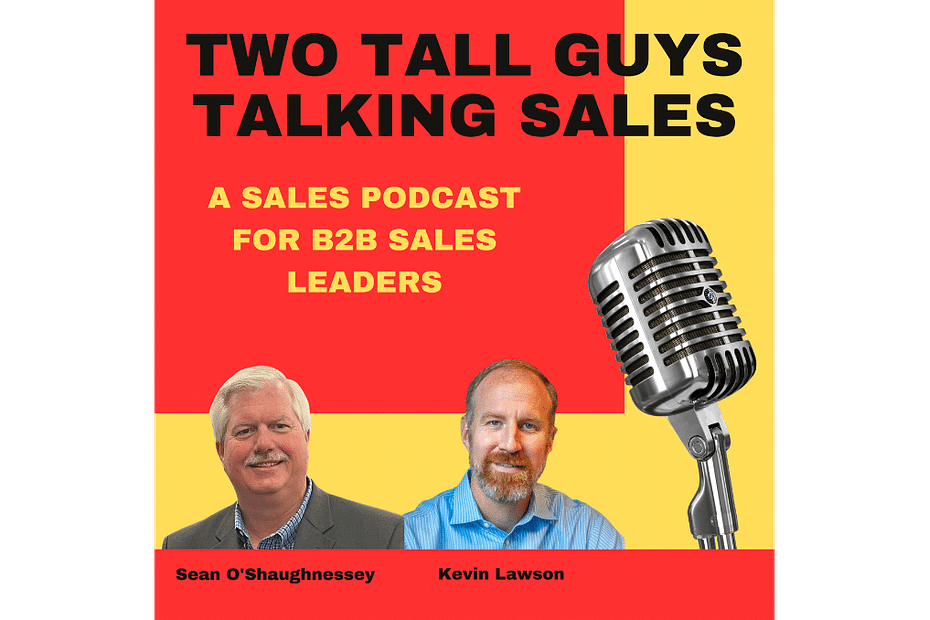
Two Tall Guys Talking Sales Podcast – Beyond the Basics: Elevating Sales Training with Effective Coaching – E101

Join Kevin and Sean as they dissect the common pitfalls of sales training and explore effective strategies to make learning stick. They share invaluable advice on how sales leaders can profoundly influence their teams’ performance through intentional coaching and robust training frameworks. This episode is a must-listen for sales professionals eager to elevate their game and harness the full potential of their training experiences.

Overcoming Ghosting and Other Modern Sales Challenges: A Proactive Approach

Many salespeople, sales managers, and company CEOs grapple with the unique problem of adapting their sales strategies to ever-changing market dynamics. This problem stems from an old-fashioned practice in which sales leaders tend to offer the same advice that made them successful when they were nascent salespeople. However, to remain competitive and productive, realizing that this traditional advice may no longer hold relevance in today’s sales world is crucial.

Let’s consider a sales leader who made his mark when the internet was still in its infancy, and email and mobile phones were not part of the sales process. If this sales leader continues to advise their team based on those past experiences, they will likely be setting them up for failure. Today, the sales world is no longer about physical gatekeepers but about navigating spam filters and phone blockers. The sales environment has evolved, and it’s time sales strategies do, too.

A typical issue salespeople face today is being ‘ghosted’ by potential clients. Ghosting, a relatively modern term, refers to the situation where the person you’re trying to reach is not returning your calls or emails. It’s a frustrating experience, but it also indicates a salesperson’s failure to be proactive and do the right things earlier in the sales cycle. Modern salespeople need to think ahead, plan better, and ensure they set up the next meeting before leaving the current one. This proactive approach can help prevent ghosting, keep the sales conversation going, and indicate progress.

Read the rest of the article…

Navigating Through Sales Slumps: A Strategic Approach for Sales Leaders

Like any other profession, sales is not immune to periods of underperformance or slumps. These periods can be particularly challenging when a top performer in your sales team is slumping. Addressing this issue effectively can significantly improve the productivity of your sales processes, ultimately leading to increased revenue for your company.

Various factors can trigger a sales slump, but it often implies a deviation from the sales process or strategy. Sales is a time-based process, not a transactional one. It involves selling to other businesses, which takes time. Therefore, as a sales leader or CEO, it’s crucial to identify when the sales trend starts to slide. This identification is not just about revenue; it requires a retrospective look at the early stages of a sale. If there aren’t enough leads or active relationships in your pipeline, you can foresee a slump and take proactive measures to change outcomes.

A common mistake is focusing on the revenue loss resulting from the effort expended. A more constructive approach is to evaluate the salesperson’s activities in the sales process. If they do the right things daily, they will quickly work out of the slump. The focus should be on maintaining an effective pipeline and executing all the necessary tasks, such as good scoping and discovery calls.

Read the rest of the article…

Two Tall Guys Talking Sales Podcast – The Art of the Hire: Crafting a Winning Sales Team – E98

Join hosts Kevin Lawson and Sean O’Shaughnessey on this revealing episode of “Two Tall Guys Talking Sales” where they dive deep into the intricacies of hiring and motivating sales teams. Whether you’re a solopreneur or heading a growing business, this episode delivers crucial insights into creating a robust sales force to propel your business forward. Key Topics Discussed Key Quotes Additional Resources Summary In this episode, Kevin and Sean tackle the often-overlooked but vital elements… 

Building a High-Performing Sales Team: The Benefits of Recognizing Effort and Results in Sales Meetings

Sales drives the engine of any B2B business. Enhancing sales strategies and management capabilities is crucial to success for salespeople, sales managers, and CEOs of small companies. One aspect of this involves rewarding effort and results during sales meetings. This practice motivates the sales team and encourages them to strive for better performance.

Salespeople are naturally competitive and driven, but they also appreciate recognition. While a paycheck is important, it’s also essential for salespeople to feel valued and appreciated for their efforts. This recognition can come in various forms, from verbal praise to tangible rewards. It’s important to remember that recognition should not be limited to monetary rewards. The simple act of acknowledging someone’s hard work and contributions can be incredibly motivating.

A sales meeting is an opportune moment to recognize and reward your sales team’s efforts. It’s not just about discussing targets and strategies; it’s also a chance to celebrate successes, however big or small. These meetings can be used as a platform to highlight the best practices and strategies employed by the team members, fostering a culture of learning and improvement.

Every salesperson has a unique approach and strategy. If nothing else, they experiment with different ways to share the benefits of their product or ask a particular discovery question. By sharing these individual successes or failures during meetings, sales teams can learn from each other, thus promoting a collaborative and supportive environment. The sales leader may prompt these discussions, but the actual learning comes from the experiences and strategies the salespeople share.

Read the rest of the article…

Two Tall Guys Talking Sales Podcast – Preparing Salespeople for Success: A Deep Dive with Steve Caton – E96

This episode of “Two Tall Guys Talking Sales” is a must-listen for anyone interested in the dynamics of part-time sales roles and how they can significantly impact business growth. Steve Caton shares his expertise on preparing salespeople, measuring their success, and transitioning them into full-time roles. With practical advice and real-world examples, this episode offers a comprehensive guide for sales leaders and business owners aiming to optimize their sales strategies. Tune in now to learn from the best and take your sales team to the next level!

Two Tall Guys Talking Sales Podcast – From Zero to Sales Hero: Steve Caton’s Strategies for Small Business Growth – E95

Don’t miss this enlightening episode with Steve Caton, where he shares invaluable advice on building a scalable sales infrastructure and the benefits of hiring part-time sales professionals. Whether you’re a business owner looking to strengthen your sales team or a sales professional seeking new strategies, this episode offers practical insights and actionable steps. Tune in next week for more in-depth discussions with Steve on creating successful sales organizations.