Skip to content

Selling

What An MBA Didn’t Teach You About Sales

The sales profession is challenging. You need to work hard at it to succeed. You need to learn from the best. You need to improve your skills continuously. If you think you can sell since you are a hit at parties and have a lot of friends, you may soon find that you are a failure as a salesperson. Blunt truth:

because the sales profession is so hard, you have to focus on doing everything in sales very well, or you will be considered a failure.

I call this blog, Skinned Knees because I try to relate all of the learning that I have done over the past 4+ decades (while skinning my knees in the learning process).

I hope that you learn from my mistakes so that your business will grow!


Two Tall Guys Talking Sales – AI for Sales Success: Tools, Tactics, and Why You Can’t Ignore It – E124

Artificial intelligence (AI) is transforming the sales industry, but does that mean salespeople are becoming obsolete? Absolutely not! In this high-energy episode, Kevin and Sean debunk the myth that AI will replace sales professionals. Instead, they reveal how AI can be a game-changing tool for sales success. From using AI to refine communication to automating time-consuming tasks, this episode is packed with insights on how AI can help sales leaders and reps work smarter, sell… Two Tall Guys Talking Sales – AI for Sales Success: Tools, Tactics, and Why You Can’t Ignore It – E124

Two Tall Guys Talking Sales – Engage, Listen, Succeed: Unlocking Client Conversations That Close Deals – E121

Active listening isn’t just a soft skill; it’s a sales superpower. In this episode of Two Tall Guys Talking Sales, Kevin and Sean unravel the nuances of listening to clients, capturing their pain points, and building trust through meaningful interactions. With tips ranging from non-verbal cues to the tactical use of note-taking, this conversation equips you with tools to elevate your sales game. Whether you’re preparing for a discovery call, a QBR, or a cold call, this episode is a must-listen for actionable insights. Tune in and transform the way you engage with your clients.

Two Tall Guys Talking Sales – The Death of Cold Calling and the Rise of Relationship Selling – E119

Cold calling is dead—or so claims our guest, Ben Victorica, in this thought-provoking Two Tall Guys Talking Sales episode. Hosts Kevin Lawson and Sean O’Shaughnessey dive deep with Ben into the challenges of modern sales pipelines and explore why traditional outreach methods are no longer effective. Together, they uncover how relationship selling, fueled by emotional intelligence and strategic connections, is reshaping the future of sales. Whether you’re a seasoned sales professional or just starting out,… Two Tall Guys Talking Sales – The Death of Cold Calling and the Rise of Relationship Selling – E119

Driving Sales Performance with Strategic Competitive Analysis

Ever wonder why some sales teams consistently outperform their competitors while others struggle to close deals? The answer often lies in how well they understand and leverage competitive analysis in their sales process.

Let’s talk about competitive analysis in sales. It’s not just about knowing your competition – it’s about understanding how to use that knowledge to drive results. You need to grasp why prospects choose specific solutions over others and, more importantly, why they sometimes choose to do nothing at all.

Have you considered how many deals you’ve lost not to competitors but to indecision? These “no decision” outcomes often stem from a fundamental gap in prospect qualification. Intelligent sales professionals dig deeper, asking targeted questions about organizational priorities, resource allocation, and strategic initiatives. They understand that timing can be just as crucial as the solution itself.

The modern sales landscape demands a sophisticated approach to competitive analysis. Your success hinges on aligning your organization’s strengths with your prospect’s needs. But here’s the real question: Do you truly understand what your ideal client values most?

Many sales professionals miss the mark by focusing solely on feature comparisons. While product capabilities matter, they’re just one piece of the puzzle. The real power lies in understanding how your solution addresses your prospect’s challenges. This requires a comprehensive view of your competitive landscape, including direct and indirect competitors.

Think about your last few lost deals. What patterns emerge when you analyze the feedback? Every objection and hesitation after presenting pricing are valuable data points that should shape your competitive strategy. Your sales conversations must reflect a deep understanding of your prospect’s value metrics.

Read the rest of the article…

Turning Competition into Opportunity: A Guide for Success in Sales

Competition in B2B sales isn’t your enemy. It’s your greatest catalyst for growth and innovation in today’s dynamic market landscape. Have you considered how viewing competitors as opportunities rather than threats could transform your sales approach? Let me show you why this mindset shift matters for your bottom line.

Think beyond the obvious when identifying your competition. Your real rivals aren’t just companies selling similar products or services. They’re anyone competing for your prospect’s budget allocation. This includes businesses offering solutions with capabilities or price points different from yours and other priorities within the prospect. The competitive landscape extends far beyond your direct market segment.

The most formidable opponent often lurks in the shadows of customer inertia. This “no-decision” competitor manifests as your prospect’s resistance to change. It’s the comfort zone that whispers, “Maybe later,” or “What we have works fine.” Understanding this psychological barrier is crucial for your sales strategy.

You need a systematic approach to analyzing and outmaneuvering your competition. Start with an honest assessment of your position in the market. What unique value do you bring to your customers? Where do you consistently outperform others? This self-awareness forms the foundation of your competitive strategy.

Know your competition inside and out. Study their strengths, weaknesses, market positioning, and customer relationships. Your competitive analysis must go deeper than surface-level observations. Map out how their strengths align with your weaknesses. This intelligence helps you craft more compelling value propositions and sales approaches.

Read the rest of the article…

Balancing Act: Networking, Direct Prospecting, and Customer Referrals for Revenue Growth

Is your sales pipeline running dry? We’ve all been there.

Let me share a personal story that might resonate with you. After spending months securing a major deal, I found myself staring at an empty pipeline. The celebration of landing that giant whale quickly became a stark reality check. This experience taught me an invaluable lesson about sustainable sales growth.

Revenue generation isn’t just about closing deals—it’s about maintaining a consistent flow of opportunities. Your success depends on mastering the art of prospecting, yet many salespeople struggle with this fundamental skill. Are you dedicating enough time to building your pipeline, or are you caught in the feast-and-famine cycle?

The most effective sales professionals understand that prospecting isn’t a one-dimensional activity. Think of your prospecting strategy as a carefully orchestrated symphony, where different elements work together to create a harmonious result. Direct outreach and network-based approaches each play their unique roles in this composition.

Visualize a three-legged stool symbolizing the three-pronged approach to sales: networking and referrals, direct prospecting, and existing customers. Each of these legs supports growing your business and consistently achieving your revenue goals.

Consider how a software company might approach this dual strategy. While tracking metrics for direct outreach is straightforward, measuring networking success requires a different lens. How many new relationships have you cultivated? Which dormant connections have you rekindled? These indicators matter just as much as your cold call statistics.

I recently spoke with a consulting professional who shared an interesting perspective on networking metrics. Rather than counting sales pitches, he measures success by the number of times he naturally introduces his services in conversations. This subtle shift transforms aggressive selling into educational opportunities. Have you considered how this approach might work in your context?

Your prospecting strategy must align with your target audience’s expectations and behaviors. Waiting for inbound leads isn’t a strategy—it’s a recipe for inconsistent results. When you prospect through your network, the goal isn’t to ask for immediate business. Instead, you’re planting seeds for future opportunities through strategic introductions.

Read the rest of the article…

Selling Trust: The New Era of Salesmanship in the Digital Age

Have you ever wondered why some salespeople consistently outperform their peers? The answer might surprise you – it’s not about pushing products anymore. Let me share a story that perfectly illustrates this point.

Picture yourself at a car dealership with a problematic engine. The service manager listens briefly and suggests trying premium fuel first instead of pushing for expensive repairs. This unexpected advice reveals the essence of modern sales: building trust over making quick profits.

The digital revolution has transformed how we sell. Your prospects now have instant access to product information, specifications, and reviews. They’ve often completed 70% of their buying journey before contacting you. So, what’s your role in this new landscape?

You must evolve from an information provider to a value creator. Think about it – when did a customer last ask you for basic product details? They don’t need that anymore. They need someone who can help them navigate complex decisions and create innovative solutions.

Consider enterprise software sales. Your customers aren’t just buying features and functions. They’re investing in solutions to their business challenges. Can you help them visualize how your product transforms their operations? Do you understand their workflow well enough to spot opportunities they might have missed?

Trust becomes your most powerful differentiator in this environment. But how do you build it? Through actions, not words. When you genuinely prioritize customer success over immediate sales, people notice. They remember when you steered them away from unnecessary purchases or suggested more cost-effective solutions.

The modern sales process demands a deeper understanding of your customer’s business context. You’re not just matching products to needs – you’re helping define those needs. What problems keep your prospects awake at night? Which industry trends threaten their market position? How can your solution help them stay competitive?

Read the rest of the article…

The Secret to Sales Success: Effective Management and Qualification of MQLs and SQLs

The concept of leads is familiar to sales and marketing novices and experts. However, leads are not created equal. There are Marketing Qualified Leads (MQL) and Sales Qualified Leads (SQL). The differences between these two types of leads and the approach to handling them can significantly impact the efficiency and success of your sales pipeline.

The journey of a lead typically begins with the marketing team. They craft messages and campaigns to attract potential customers, drawing them towards the company. These potential customers or leads are known as Marketing Qualified Leads (MQLs). MQLs are individuals who have shown interest in the company’s product or service but have yet to be vetted for sales-readiness. They may have responded positively to the company’s marketing efforts by downloading a case study, signing up for a newsletter, following the company on social media, or a wide variety of other criteria that can be unique to each selling organization.

Unfortunately, just because a lead has shown interest does not mean they are ready to make a purchase. This is where the sales team comes in. Their role is to qualify these leads further, turning them into Sales Qualified Leads (SQLs). SQLs are leads the sales team has determined are ready for direct sales engagement. They have been vetted and have shown a clear interest and willingness to hear about the company’s offering from a sales perspective. 

While marketing messages are designed to attract and engage a broad audience, the sales approach is more personal and more targeted. Sales focuses on building a relationship with the individual, understanding their unique needs, and demonstrating how the product or service can meet those needs.

Miscommunication or differing expectations can result in leads being passed along that are not truly sales-ready. This can waste time and resources and even damage potential customer relationships. It’s important for sales and marketing to work together, communicate effectively, and have a clear understanding of what constitutes a qualified lead.

One way to navigate this challenge is to establish clear criteria for MQLs and SQLs. What actions or behaviors indicate that a lead is ready to move from marketing to sales? This might include downloading certain resources, attending webinars, or requesting a product demo. By defining these criteria, both teams can ensure they’re on the same page and that leads are passed along at the appropriate time.

Salespeople should also understand how a lead became an MQL. What attracted them to the company? What information have they consumed? This understanding can inform the sales approach and help the salesperson build a relationship with the lead.

Communication between sales and marketing doesn’t end when a lead becomes an SQL. Salespeople should provide feedback to their marketing colleagues about the leads they’re receiving. If certain leads aren’t panning out, it’s important to communicate this so that marketing can adjust their strategies accordingly. Similarly, marketing should be open to feedback and willing to collaborate with sales to refine their lead qualification process.

In the end, marketing and sales have the same goal: to generate revenue for the company. By working together to manage and qualify leads effectively, they can ensure they’re both working towards this common goal. 

With clear communication, collaboration, and a shared understanding of what makes a lead sales-ready, marketing and sales can streamline the sales pipeline and drive success. 

Read the rest of the article…
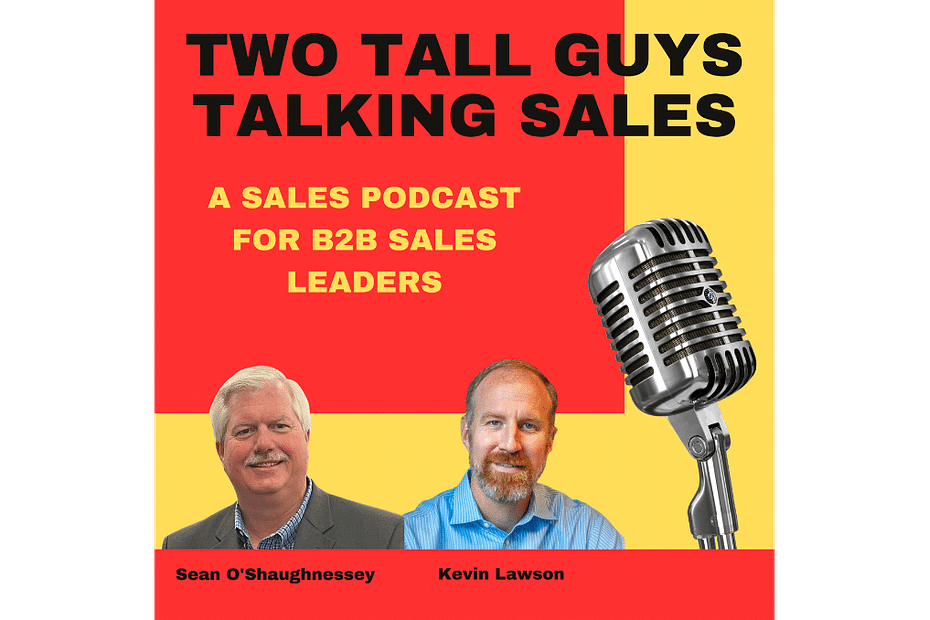
Two Tall Guys Talking Sales – From CRM to AI: Building Your Sales Toolbox – E113

Whether you’re a tech-savvy salesperson or just starting to explore the power of modern tools, this episode offers a roadmap for building an affordable, effective sales tech stack. Kevin and Sean provide real-world examples and practical advice to help you stay organized, build stronger client relationships, and close deals faster. Don’t miss this episode—it could be the catalyst for taking your sales game to the next level. Listen now!

Differentiating in the Sales Process: The Key to Boosting Bottom Line

The roles of salespeople, sales managers, and small business CEOs are ever-evolving. A common problem faced is increasing revenue and productivity in sales processes. This goal is common for all, from individual salespeople striving to provide for their families to CEOs seeking to boost their company’s bottom line. The key to achieving this lies in understanding the dynamic nature of the sales environment and leveraging it effectively.

A significant part of the sales process revolves around the buyer’s perception of a product or service as a commodity. This misclassification is usually caused by insufficient differentiation in the early stages of the sales process. Differentiation is crucial in any sales process, regardless of the industry or scenario. Creating enough differentiation can be the difference between closing a deal at a discounted rate or the desired price.

Salespeople are experts in their field, whether selling a unique product specific to their company or a common commodity. They typically have a deeper understanding of what they are selling than their prospects have about what they are buying. This expertise should be leveraged to guide prospects through the buying process, adding value to the relationship and making the salesperson indispensable. This approach can reduce the emphasis on price and increase the potential for higher earnings.

Every business has unique values that differentiate it from its competitors. These unique values could be anything from their mission, vision, and values to their market commitment and guarantee. This is commonly called a Unique Value Proposition (UVP) or a Unique Sales Proposition (USP). While a UVP and a USP are similar, there is a slight difference in that the former is typically created by the Marketing department (or sometimes with the help of a business adviser such as an EOS implementer. The latter is directly targeted at salespeople and what a salesperson should say to their prospects and customers. Salespeople should understand what makes them different and communicate this effectively to their prospects. The ability to create separation and differentiate oneself is why people pay for a product or service.

Read the rest of the article…