Skip to content

SMART

What An MBA Didn’t Teach You About Sales

The sales profession is challenging. You need to work hard at it to succeed. You need to learn from the best. You need to improve your skills continuously. If you think you can sell since you are a hit at parties and have a lot of friends, you may soon find that you are a failure as a salesperson. Blunt truth:

because the sales profession is so hard, you have to focus on doing everything in sales very well, or you will be considered a failure.

I call this blog, Skinned Knees because I try to relate all of the learning that I have done over the past 4+ decades (while skinning my knees in the learning process).

I hope that you learn from my mistakes so that your business will grow!


How AI-Powered Contact Enrichment Transforms B2B Sales Conversations

In today’s fast-paced B2B world, sales teams can no longer afford to waste hours gathering prospect data manually. Artificial intelligence has enabled the automation of contact enrichment, transforming basic contact records into comprehensive profiles rich in actionable business intelligence.

Contact enrichment powered by AI doesn’t just make your team faster; it makes them smarter. By combining multiple data sources into unified profiles, your sales organization gains the kind of business acumen that enables precision-targeted messaging and true value selling. The difference between a generic pitch and a relevant, consultative conversation often comes down to the quality and depth of the data your team has at its fingertips.

Platforms like Clay, Clearbit, Apollo, and ZoomInfo give sales leaders visibility into company size, funding rounds, leadership changes, technology stacks, and even recent business developments. This transforms your approach from transactional outreach to consultative engagement rooted in strategic intelligence. The outcome is faster response times, higher conversion rates, and more meaningful sales conversations.

The beauty of these systems lies in their integration with CRMs like HubSpot, Salesforce, or Pipedrive. Automated workflows ensure that every new lead entry is enriched in real-time with firmographic and behavioral insights. This is how sales teams reduce their research time from hours to minutes while maintaining the quality of personalized outreach that customers expect.

Read the rest of the article…

Stop Betting on Superstars: How Operating Standards Turn Sellers into Predictable Producers

Many teams grow, but few truly scale revenue beyond individual hero efforts. That difference changes everything for leaders today and in the future. Growth relies on hustle; scaling depends on repeatability across segments and individuals. Your strategy must reflect that hard truth in practice.

Are you relying on one standout to win deals month after month? That looks strong until risk turns visible and costly. One resignation can cripple momentum and expose brittle systems that you had previously ignored.

Scalable sales replaces heroics with defined, teachable operating rhythms that everyone follows. It turns chaos into predictable pipeline progress and results. It clarifies markets, messages, motions, and measurable expectations for every seller on a weekly basis. It builds leverage into onboarding and coaching for consistency. It protects margins while systematically accelerating win rates and velocity across territories.

The foundation begins with a clear picture of your ideal customer, including any disqualifying factors. Having an accurate Ideal Client Profile (ICP) helps minimize waste and reduce uncertainty in your efforts. Take time to define firmographics, pain points, triggers, and buying behaviors using consistent language based on shared evidence. Understand who cares about these issues and why it matters to them now. Also, identify negative personas to sharpen your focus and qualification processes in marketing and sales. A well-defined ICP can significantly boost your conversion rates and shorten the sales cycle.

Next, turn your ICP into straightforward messaging and discovery frameworks tailored for each stage. Consider what unique problems you solve for your customers. What outcomes are most important to them, and who are the key stakeholders by role and priority?

Build talk tracks that lead buyers, not chase buyers with purpose always. Anchor questions to the business metrics and risks they feel. Teach a qualification that tests mutual commitment and outlines next steps with attached dates. Avoid fluffy demos; design relevant proofs using their data. Process specificity turns B players into consistent producers without copying another personality.

I suggest you establish a practical, stage-based operating rhythm that everyone can easily understand and follow. By sharing clear definitions and expectations, managing the pipeline becomes a consistent and smooth process each week. Define each stage with specific exit criteria—avoiding vague intentions or subjective feelings. For example, discovery is considered complete when stakeholders confirm the consequences and impact, and solution fit is achieved when success criteria and ownership are clearly aligned. The commit stage should be backed by a shared plan with clear dates and assigned owners. During weekly reviews, focus on assessing quality rather than just quantity or activity counts. Ask yourself:

  • Does evidence from buyers’ backstage moves have a direct impact on their purchasing decisions?
  • Are the next steps specific, mutually agreed upon, and already scheduled on both calendars?
Read the rest of the article…

From Leads to Clients: How Aligning Sales and Marketing Fuels Sustainable Growth

There’s a common sentiment among sales teams this time of year: a sense of urgency. The calendar flips, Q4 starts, and suddenly it feels like you’re already behind. Sound familiar? That mid-Q4 pressure is real. But before you sprint into outreach and activity, step back and assess what’s actually fueling your pipeline? More importantly, is it aligned with long-term growth?

Sales leaders and CEOs often default to lead generation as the focal point. It’s understandable. More leads, more conversations, more deals, right? But that mindset skips a critical first step. You can’t scale what isn’t aligned. If your marketing message doesn’t match your sales conversations, you’re wasting time and budget. If your sales team is chasing poorly qualified leads, you’re burning cycles. And if your customers can’t articulate why they bought from you, you’ve got a positioning problem.

The foundation starts with clarity. What value do you truly deliver? Why do customers choose you over alternatives? If you can’t answer that in a clear, 50-word statement, your team is likely improvising in the field, and that’s costing you revenue. This is where sales and marketing alignment becomes more than just a buzzword. It’s operationally necessary.

Sales enablement isn’t only about tools and training. It’s about empowering sales with the right message at the right time. That starts with defining three core customer states:

  1. leads,
  2. prospects,
  3. clients.

Each phase requires different messaging, timing, and expectations. Most organizations blur those lines. That’s where inefficiency creeps in.

Leads sit at the top of the funnel. They are either unaware or only lightly aware of your offering. At this stage, marketing owns the responsibility. However, marketing without sales feedback is akin to shooting in the dark. Sales needs to inform marketing what makes a lead qualified.

  • What signals intent?
  • What common objections surface early?

Without that feedback loop, marketing tends to optimize for volume rather than quality.

Read the rest of the article…

Two Tall Guys Talking Sales – Sales Management Masterclass: Paul Rafferty’s Proven Framework for Smarter Deal Reviews and Revenue Generation – Episode 159

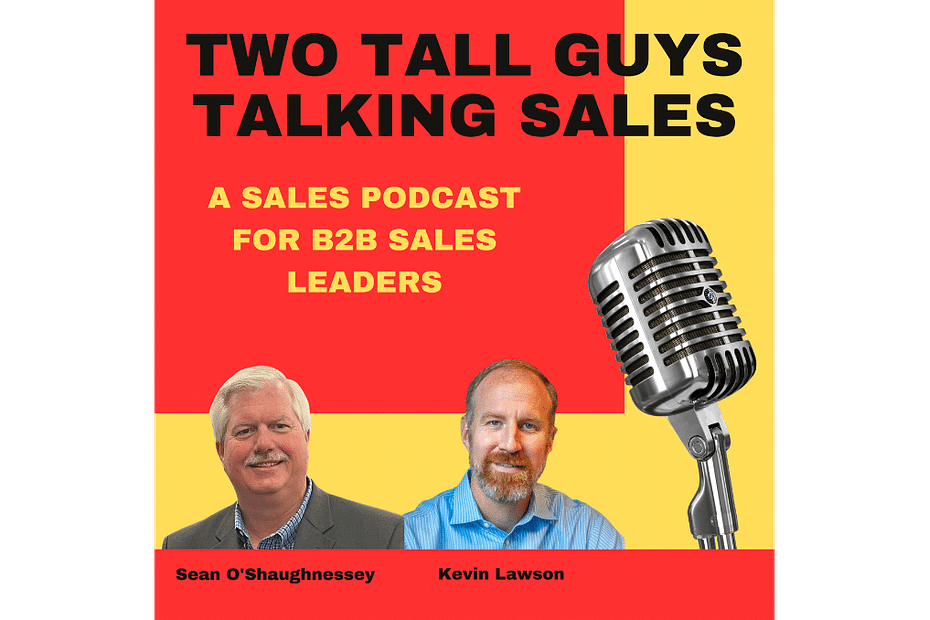
Welcome back to Two Tall Guys Talking Sales with hosts Kevin Lawson and Sean O’Shaughnessey. In this dynamic episode, the Tall Guys welcome Paul Rafferty from Sales Xceleration to explore the art and science of sales coaching, deal qualification, and the importance of building sales acumen. Paul brings decades of experience in sales management, value selling, and revenue generation, offering a practical framework for sales leaders who want to coach their teams more effectively and for reps who want to stop chasing the wrong deals.

Discover how to transform your team’s approach to sales processes—from opportunity scoring to understanding a buyer’s “pain chain.” This conversation is packed with actionable insights that blend sales strategy, business acumen, and real-world stories you can immediately apply to your own selling environment.

Key Topics Discussed

  • 03:00 — Building a Deal Coaching Framework:
    Paul introduces his 100-point scorecard system that evaluates the Ideal Prospect Profile, the Pain Chain, and Commitment to Decision. This framework transforms deal reviews into powerful coaching sessions rather than mere forecast updates.
  • 05:10 — The “Pain Chain” and Sales Philosophy:
    Sean and Paul discuss how understanding buyer pain isn’t optional—it’s foundational to value selling. Without real pain, there’s no compelling reason for your buyer to act.
  • 06:45 — From Friendly to Effective Salesperson:
    Paul and Sean discuss how friendliness can open doors, but it’s teaching and insight that ultimately win deals. Sales success comes from challenging your prospects and helping them think differently.
  • 08:00 — Why Deals Get Stuck:
    Kevin and Paul explore how most stalled deals trace back to weak discovery. Coaching your team to go deeper early in the sales process prevents gridlock later.
  • 10:30 — The Currency of Knowledge:
    Paul explains that in modern selling, gifts and lunches no longer move the needle—information does. Great salespeople earn influence by being teachers, not vendors.

Key Quotes

  • Paul Rafferty (03:50):
    “It’s not what you do—it’s what they do. The scorecard helps you coach reps to spend time where there’s real buying intent, not just big logos.”
  • Sean O’Shaughnessey (05:43):
    “Salespeople need to understand the theory of sales. Without knowing the frameworks—like the pain chain or solution selling—you’re just saying, ‘I’m a nice guy, buy from me.’”
  • Kevin Lawson (08:38):
    “Most deals go to die in the discovery phase. Coaching means rewinding the tape and helping reps fix what wasn’t done early enough.”
  • Paul Rafferty (12:51):
    “Your currency is information—help your buyer look smart, get promoted, and win internally. That’s real value selling.”

Additional Resources

  • Paul Rafferty
    • prafferty@salesxceleration.com 
    • https://www.linkedin.com/in/pauljrafferty/
  • Books referenced:
    • Solution Selling by Michael Bosworth – https://a.co/d/hHtYSiX
    • The Challenger Sale by Matthew Dixon & Brent Adamson – https://a.co/d/2kJsbDU
    • Strategic Selling by Robert Miller & Stephen Heiman – https://a.co/d/icPcC6H

A Significant Actionable Item from this Podcast

Implement a Deal Coaching Scorecard.
Instead of subjective forecasting (“This deal is 70% likely to close”), create an objective scoring model based on:

  1. Ideal Prospect Fit (25 pts) – Does this prospect align with your best customer profile?
  2. Pain Chain (25 pts) – Have they admitted to a real, solvable pain?
  3. Commitment to Decision (50 pts) – Have they engaged decision-makers and committed to next steps?

Use this tool in your next pipeline review. It will sharpen your sales management coaching, improve revenue forecasting, and elevate your team’s overall sales success. If you want more information about this scorecard, reach out to Paul Rafferty at his address above.

Read the rest of the article…

Reclaiming Hours of Selling Time with AI – Lessons from MAICON 2025

You just checked your team’s dashboard. Activity looks fine. But deep down, you know that the numbers don’t tell the whole story.

Every salesperson loses time to the same unseen burden: administrative drag. After each successful discovery call, there’s a 20-minute grind with CRM updates, email summaries, and internal handoffs. This “sales tax” cuts into selling time, hurts momentum, and costs your company thousands weekly in lost productivity.

I just returned from MAICON 2025, and I was so inspired that I wanted to share some of the biggest lessons. At the MAICON 2025 conference in Cleveland, the message was clear: artificial intelligence is changing sales management, not by replacing people, but by empowering them. The winning teams are using AI to eliminate “digital grunt work” through orchestration, not standardization.

Orchestration, Not Standardization

MAICON’s main message was that sales leaders should stop searching for the “one magical platform.” Instead, the most successful organizations coordinate several top-tier tools. Their AI ecosystems are modular, flexible, and collaborative.

It starts with three pieces:

  1. a transcription tool like Fireflies,
  2. an automation hub like Make.com or Zapier,
  3. your existing CRM and communication systems.
Read the rest of the article…

Two Tall Guys Talking Sales – What Got You Here Won’t Get You There: How Sales Leaders Master the Pivot for Revenue Growth – Episode 158

In this episode, hosts Kevin Lawson and Sean O’Shaughnessey tackle one of the most fundamental truths in business and sales leadership: change is inevitable. Whether you’re managing a sales team, scaling from $5M to $50M, or repositioning your company for new markets, your success depends on your ability to pivot,  intelligently, decisively, and confidently. Sean and Kevin unpack the concept of organizational pivots through real-world examples, from manufacturing supply challenges to Domino’s Pizza’s legendary turnaround, and offer practical advice for how sales leaders can prepare their teams to thrive through transformation.

Key Topics Discussed

  • The Only Constant Is Change (00:16) — Why modern business demands leaders who can adapt and guide teams through shifting markets.
  • The Power of the Pivot (02:52) — Kevin explains what a pivot really means and how small, consistent course corrections can transform outcomes.
  • Real-World Example: Domino’s Pizza Reinvention (06:10) — A masterclass in transparency and messaging that rebuilt a brand from the ground up.
  • Training as the Foundation of Change (09:21) — Sean breaks down how strategic training helps sales teams pivot effectively into new markets or industries.
  • Peer Learning and the Role of Community (12:33) — The importance of collaboration, conversation, and communities like the B2B Sales Lab for accelerating sales success.

Key Quotes

  • “As CEOs and sales leaders, we have to lead through change. What got us here is not going to get us there.”
    — Sean O’Shaughnessey (01:34)
  • “Sometimes people don’t need a 180-degree pivot. They just need to be repointed — one degree of change over time can take you somewhere entirely new.”
    — Kevin Lawson (04:42)
  • “The first part of making a pivot is planting your foot — and that’s training. You can’t change direction until your team knows how.”
    — Sean O’Shaughnessey (11:22)

Additional Resources

  • Book Mentioned: Who Moved My Cheese? by Spencer Johnson — A timeless read on navigating change in business and life. https://a.co/d/cCEXuwA
  • Community Resource: B2B Sales Lab — A peer-driven community for B2B sales professionals and leaders to exchange ideas, test messaging, and sharpen their skills. www.b2b-sales-lab.com

A Significant Actionable Item from this Podcast

Before the day ends, write down five things you could do to change the trajectory of your sales growth or turnaround.
Then, rank them:

  • Which are big strategic plays?
  • Which are medium-term moves?
  • Which are quick wins you could execute immediately? Assign probability, effort, and impact to each, then commit to one action this week. Leadership begins with deliberate motion, not massive overhauls.
Read the rest of the article…

Two Tall Guys Talking Sales – The First 90 Days as a Sales Leader: Proven Strategies for Sales Management Success – Episode 157

When a company hires or promotes its first sales manager, expectations run high, but clarity can be low. In this episode of Two Tall Guys Talking Sales, hosts Sean O’Shaughnessey and Kevin Lawson unpack what the first 90 days should look like for a new sales leader. Whether you’re a CEO onboarding a new manager or that manager stepping into the role themselves, this discussion provides practical guidance on setting realistic expectations, building trust, and establishing the foundation for long-term sales success and revenue growth.

Key Topics Discussed

  • Setting Realistic Expectations as an Owner (02:00)
    Kevin explores how CEOs should frame success during the first 90 days, emphasizing the importance of patience, trust-building, and understanding that sales management transformation takes time.
  • Avoiding the “Fix This First” Trap (06:30)
    Sean cautions business owners against dumping old personnel problems on new leaders, explaining why cleaning up someone else’s mess undermines early business acumen and trust.
  • Building Relationships and Learning the Business (08:30)
    Sean shares tactical advice for new sales managers: conduct one-on-ones, ride along with reps, and build rapport across departments, marketing, operations, and finance, to master internal sales processes and interdepartmental alignment.
  • Understanding Internal and External Tools (11:12)
    Kevin discusses discovering hidden tools and levers, people, systems, vendor programs, or product configurations that can immediately improve team performance and value-selling opportunities.
  • Repackaging and Aligning Offers to the Market (12:30)
    The hosts outline how sales leaders can rethink product structures and messaging to better serve customer needs, thereby improving revenue management and profitability.

Key Quotes

  • “Trust is a currency. It has to be earned by customers, by salespeople, by peers, and you can’t buy it in the first 30 days.”,  Kevin Lawson (03:00)
  • “Don’t make your new sales leader the bad guy. If there’s a tough personnel decision, handle it before they start.”,  Sean O’Shaughnessey (07:00)
  • “Learn your company inside and out. If you don’t know who runs manufacturing or how the supply chain works, you can’t lead your salespeople effectively.”,  Sean O’Shaughnessey (10:00)
  • “You might have 20 products, but 100 possible solutions. The smart leader finds ways to repackage and sell in ways the customer actually values.”,  Kevin Lawson (13:00)

Additional Resources

  • Episodes on sales onboarding, marketing alignment, and ideal customer profiling (ICP) were referenced throughout the conversation.
  • Explore more insights and tools for sales leaders at b2b-sales-lab.com.

A Significant Actionable Item from this Podcast

Create a 90-Day Integration Plan.
If you’re a new sales manager, spend your first month listening and learning. Conduct one-on-ones with every salesperson, schedule cross-department meetings, and document what each function needs from sales. In the second month, identify process gaps and start designing improvements. By the third month, implement one or two visible wins, such as improving forecasting accuracy or clarifying sales messaging, to demonstrate value and build momentum.

Read the rest of the article…

Beyond Spell Check: How Grammarly’s AI Can Transform Sales Communication

Clear, professional communication is the foundation of sales success. Yet, in 2025, much of our selling occurs not face-to-face, but through written words, emails, proposals, CRM notes, and social media messages. This shift means your writing is no longer just a form of communication; it’s your personal brand, your first impression, and often the deciding factor in whether a conversation continues or comes to a halt.

Grammarly has evolved far beyond its original purpose as a grammar checker. Today, it’s an artificial intelligence–powered platform that helps sales teams increase efficiency, refine their messaging, and accelerate revenue growth. It works directly within the tools you already use, such as Gmail, LinkedIn, Salesforce, and HubSpot, helping sales professionals write with greater confidence and clarity.

Sales organizations using Grammarly have seen measurable improvements: Databricks saved $1.4 million annually; Smartsheet cut thousands of hours from proposal creation; and Zoom reported higher customer satisfaction thanks to improved written communication. These results aren’t luck; they’re the product of refined sales processes, consistent messaging, and clear communication supported by AI.

For individual salespeople, Grammarly helps improve value selling by ensuring that every message is professional, engaging, and on-brand. Its AI engine not only corrects errors but also suggests stronger phrasing, predicts reader reactions, and even aligns your tone with your business acumen and brand voice. For sales leaders, it standardizes team communication and reinforces a culture of professionalism across departments.

Read the rest of the article…

Two Tall Guys Talking Sales – From Comp Plans to Territory Alignment: Sales Strategies Every Leader Needs for Revenue Generation – Episode 153

As the year draws to a close, sales leaders and business owners face a critical challenge: preparing for growth in the year ahead. In this episode of Two Tall Guys Talking Sales, hosts Kevin Lawson and Sean O’Shaughnessey dive deep into sales management strategies that set the stage for long-term sales success. From refining compensation plans and aligning territories to planning product lifecycles and avoiding the dreaded “hockey stick” growth trap, this conversation is packed with insights on business acumen, value selling, and revenue generation strategies that every sales leader should master.

Key Topics Discussed

  • 01:00 – Planning Beyond This Year: Why sales leaders need to start preparing now for next year’s revenue generation and sales processes.
  • 02:11 – Building Smarter Compensation Plans: Evaluating and refining comp structures to drive sales success and attract top talent.
  • 03:13 – Product Lifecycle & AI Readiness: How shifts in markets and technology demand updates to your offerings and messaging.
  • 05:00 – Departmental Alignment for Growth: Understanding how revenue management and sales growth affect every department in your business.
  • 07:12 – Right People, Right Roles: Assessing whether your sales team is positioned for success in the next stage of your growth plan.
  • 11:20 – Avoiding the “Hockey Stick” Trap: Why spreading growth evenly across years is a better long-term sales strategy.

Key Quotes

  • Sean O’Shaughnessey (01:07): “If I asked you to write out your three-year plan, next year already knocks off the first year. Are you one-third of the way there, or do you need to rethink your path?”
  • Kevin Lawson (02:33): “Be planning ahead. Compensation plans aren’t a set-and-forget item—you need to revisit them every year to make sure they’re delivering the right results.”
  • Sean O’Shaughnessey (07:59): “Do I have the right people in the right place in my sales organization for next year? Not every salesperson has to leave, but maybe their role needs to evolve.”
  • Kevin Lawson (11:38): “You don’t want that third year of your plan to be a hockey stick. Don’t put yourself in a position where you suddenly need 40% growth in one year to hit your goals.”

Additional Resources

  • B2B Sales Lab: A peer community for sales leaders and professionals to sharpen strategies, exchange best practices, and get actionable feedback.
  • EOS Framework: For leaders who want to align messaging, sales strategies, and revenue management with long-term goals.

A Significant Actionable Item from this Podcast

Review and finalize your sales compensation plans by December 1st. This gives your team enough time to digest changes, ask questions, and align their sales strategies before the new year begins. Waiting until January leaves your salespeople unprepared, which can delay revenue generation and momentum.

Read the rest of the article…

AI Isn’t Replacing Salespeople, It’s Giving Them a Competitive Edge

AI isn’t replacing salespeople, it’s making them more effective. The real risk isn’t losing your job to AI; it’s losing to a competitor who uses AI better than you do. Sales professionals who integrate AI into their workflow will outperform those who don’t. 

It’s not about technology taking over but about using technology to gain an edge. The market is becoming increasingly competitive, and the most efficient salespeople will emerge victorious.

Time is a salesperson’s most valuable asset. 

Every minute spent on administrative tasks is a minute not spent selling. AI helps reclaim those lost hours. Tools that automate writing, scheduling, and research allow salespeople to focus on what matters: building relationships and closing deals. If you’re not leveraging AI to increase productivity, you’re leaving opportunities on the table.

Sales emails need to be clear and professional. AI-powered writing assistants ensure your messages are polished and effective. A poorly written email can cost you a deal. AI tools catch grammatical mistakes, improve clarity, and even suggest more effective phrasing. This isn’t just about looking professional; it’s about being understood. 

If your message isn’t clear, it won’t convert.

Presentations are another time-consuming task. AI can generate professional decks in minutes. Instead of spending hours designing slides, salespeople can focus on developing effective strategies. AI-powered tools create branded, structured presentations based on simple inputs. This ensures consistency while saving time. Sales professionals who utilize AI for presentations can focus on delivering insights rather than formatting slides.

CRM systems are the backbone of sales operations. AI enhances CRM by automating data entry, tracking customer interactions, and suggesting next steps. Salespeople often struggle with keeping CRM data updated. AI reduces this friction by automatically capturing and organizing information. A well-maintained CRM leads to better forecasting and stronger customer relationships. 

If your CRM doesn’t have AI capabilities, it’s time to upgrade.

AI-driven insights enable sales managers to make more informed decisions, rather than relying on instinct. Managers can use AI to analyze performance trends, identify coaching opportunities, and predict revenue outcomes. AI doesn’t replace leadership; it enhances it. 

Sales managers who adopt AI can build stronger teams and achieve better results. Ignoring AI in sales management is a strategic mistake.

Lead generation is another area where AI adds value. AI-powered tools can analyze vast amounts of data to identify high-potential prospects. Instead of spending hours researching leads, salespeople can receive AI-generated recommendations. This allows for more targeted outreach and higher conversion rates. AI doesn’t just find leads, it finds the right leads.

Sales follow-up is often inconsistent. AI ensures follow-ups happen at the right time with the right message. Automated reminders and AI-generated responses keep deals moving forward. 

A well-timed follow-up can be the difference between closing a deal and losing it. AI helps salespeople stay on top of their pipeline without relying on memory.

Read the rest of the article…