
Skip to content

value proposition

What An MBA Didn’t Teach You About Sales

The sales profession is challenging. You need to work hard at it to succeed. You need to learn from the best. You need to improve your skills continuously. If you think you can sell since you are a hit at parties and have a lot of friends, you may soon find that you are a failure as a salesperson. Blunt truth:

because the sales profession is so hard, you have to focus on doing everything in sales very well, or you will be considered a failure.

I call this blog, Skinned Knees because I try to relate all of the learning that I have done over the past 4+ decades (while skinning my knees in the learning process).

I hope that you learn from my mistakes so that your business will grow!


B2B Sales in the Age of AI: Why Top Salespeople Will Thrive While the Repetitive Roles Disappear

The buzz surrounding artificial intelligence has left many professionals wondering about the future of their careers. For B2B sales professionals, the rise of AI presents a fundamental question: Will AI replace salespeople?

The short answer is no, but it will replace some of their work. More accurately, AI will redefine the B2B sales landscape by eliminating lower-value activities, consolidating support roles, and enhancing the capabilities of top performers. In doing so, it will widen the gap between average and great salespeople.

Several years ago, I wrote a similar explanation about the fear that “the internet” would replace salespeople. That didn’t happen. You can find that article on the blog that supports my first sales book. Are salespeople necessary in the Internet age?

This blog post explores how B2B sales is positioned relative to AI disruption, referencing key insights from Benjamin Todd’s article, “How Not to Lose Your Job to AI” (80,000 Hours, 2025). Todd’s framework on skill types that increase in value in the age of AI helps us understand how high-functioning sales teams should evolve and how sales professionals can future-proof their careers.

Understanding AI’s True Impact: Augmentation, Not Replacement

A common misconception about AI is that it simply replaces humans. This isn’t true. AI devalues tasks it can perform while increasing the importance of the skills it cannot. Todd explains this dynamic through examples like the ATM: while the ATM reduced the need for transactional teller tasks, it actually increased demand for bank branch workers by allowing banks to open more branches. AI follows a similar pattern.

In B2B sales, AI will handle the most automatable tasks, such as data entry, follow-ups, list-building, and basic prospecting emails. However, this doesn’t eliminate the sales role; it sharpens its focus.

Instead of dialing hundreds of prospects daily, sales professionals will focus more on strategic engagement, account planning, and using AI-generated insights to elevate conversations. The result? Sales has become a more thoughtful, human, and strategic discipline for those who can keep up.

Four Categories of Skills That AI Will Make More Valuable

In Todd’s excellent article, he identifies four skill types that increase in value in an AI-enhanced workplace:

  1. Hard-to-automate skills
  2. Deployment-related skills
  3. Scarce, high-utility skills
  4. Skills hard for others to learn or replicate

Each of these aligns tightly with the demands of modern B2B sales.

Read the rest of the article…
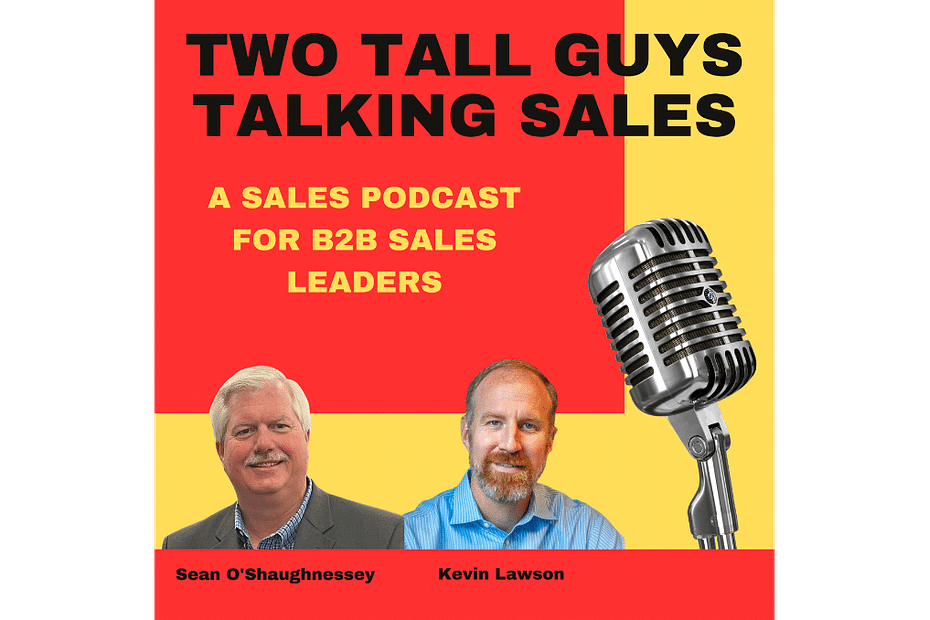

Two Tall Guys Talking Sales – John McLeod Explains How to Avoid the AI Trap: Using New Tools Without Losing Your Sales Message – Episode 140

In this episode of Two Tall Guys Talking Sales, hosts Kevin Lawson and Sean O’Shaughnessey are joined by veteran fractional VP of Sales, John McLeod. Together, they dive into a critical topic for today’s sales leaders: embracing artificial intelligence tools without compromising your value proposition, messaging, or sales processes. John brings deep expertise in sales management, business acumen, and revenue generation strategies, offering a measured approach to evaluating sales tech, especially AI solutions, through a… 

Two Tall Guys Talking Sales – Winning Without Discounting: Mastering Value Selling at Premium Prices – Episode 135

When it comes to holding firm on pricing, many salespeople stumble at the finish line, undermining their value and margin in pursuit of a quick win. In this episode of Two Tall Guys Talking Sales, Kevin Lawson and Sean O’Shaughnessey explore the essential topic of value selling, especially when offering a premium-priced solution. They break down how business acumen, sales strategy, and relationship-based selling contribute to sales success—and how to confidently command the price your… 

Two Tall Guys Talking Sales – The Four Buckets of Sales Growth with Steve Wittal

In this dynamic episode of Two Tall Guys Talking Sales, hosts Kevin Lawson and Sean O’Shaughnessey welcome Canadian SalesXceleration expert Steve Wittal for an in-depth look into the foundations of effective sales strategies. Steve brings decades of experience in startup advisory, sales management, and business growth, sharing a robust framework that simplifies complex growth challenges into four digestible buckets: desirability, clarity, predictability, and deliverability. If you’re a business leader looking to strengthen your sales processes,… 

The Three Pillars of Sales Success: Ideal Client Profiles, Effective Messaging, and Aspirational Offers

Let’s start this article with a rhetorical question to the sales professionals, sales managers, or CEOs: Have you ever found yourself guilty of sending messages to prospects without fully considering their specific needs or how your offer aligns with them?

If so, you’re not alone—this is a common pitfall in sales. The good news is, it’s entirely fixable by developing a straightforward, strategic approach.

An effective sales strategy hinges on three core components: defining your ideal client profile (ICP), crafting a resonant message, and presenting a compelling offer. These elements are interconnected. Mastering their alignment will significantly enhance your sales effectiveness.

Ideal Client Profile

Let’s start with the ideal client profile. How well do you know the companies you’re targeting? Identifying your ideal customer is foundational to your entire sales approach. It’s not enough to say that your market is “small businesses” or “tech companies.” Instead, think about your best clients—the ones you genuinely enjoy working with, who value your product, and who generate profitable, sustainable business. Think about companies that rarely devalue your product or service by asking for a discount. What do these clients have in common?

Now that you have your favorite customers from above, reflect on your top five or ten accounts. Are they in the same industry? Do they share similar challenges or company structures? Perhaps they all have common goals that your product consistently solves. Pinpoint these commonalities. This process will help you create a precise and actionable ideal client profile.

But don’t stop at company-level characteristics. Remember, even in B2B sales, you’re ultimately selling to individuals. Identify the specific roles or buyers within these organizations that are responsible for making buying decisions. Who are these decision-makers? What motivates them personally and professionally? Do they all have the same kind of college education? Do they all have similar career paths? Understanding the people behind the logo makes your outreach more personal, targeted, and effective.

What is your message?

Once you’ve developed a clear picture of your ideal client and the people within those companies, the next step is crafting a message that reflects your value-selling message. This message is how you communicate your value proposition—it’s the bridge between your product and your prospect’s needs. Too often, sales messaging falls flat because it focuses heavily on the seller rather than the buyer. Statements that emphasize “we,” “I,” or “our product” rarely resonate deeply. Instead, effective messaging highlights the customer’s perspective, clearly communicating the benefits they will experience.

Read the rest of the article…

John Spencer Explains Scaling Sales Teams- Turning A-Player Performance into Company-Wide Success

In this episode of Two Tall Guys Talking Sales, hosts Kevin Lawson and Sean O’Shaughnessey sit down with John Spencer, a seasoned sales leader and founder of Clear Direction Sales Development. Together, they explore the crucial differences between growth and scale, particularly in organizations leaning too heavily on a superstar seller. If you’re leading a sales organization that relies on one standout performer—or trying to replicate success across your sales team—this is a must-listen conversation… 

How to Create an Elevator Pitch That Opens Doors

In business, every introduction matters—especially when time is short. This post explores how to craft an effective elevator pitch or Unique Selling Proposition that captures attention, sparks curiosity, and opens the door to future conversations. Learn the key elements of a winning pitch and how to use real-world success stories to make a lasting impression.

Two Tall Guys Talking Sales – Sales Prospecting: Are You Chasing Leads or Cultivating Success? – E127

In this episode of Two Tall Guys Talking Sales, Kevin Lawson and Sean O’Shaughnessey dive into the art of sales prospecting using an unusual but powerful analogy—chasing butterflies versus building a garden. Are you tirelessly running after leads or cultivating an environment where ideal prospects naturally come to you? Learn how to create a long-term strategy for consistent revenue growth by positioning your business as the go-to solution for your ideal customers. Key Topics Discussed:… 

Driving Sales Performance with Strategic Competitive Analysis

Ever wonder why some sales teams consistently outperform their competitors while others struggle to close deals? The answer often lies in how well they understand and leverage competitive analysis in their sales process.

Let’s talk about competitive analysis in sales. It’s not just about knowing your competition – it’s about understanding how to use that knowledge to drive results. You need to grasp why prospects choose specific solutions over others and, more importantly, why they sometimes choose to do nothing at all.

Have you considered how many deals you’ve lost not to competitors but to indecision? These “no decision” outcomes often stem from a fundamental gap in prospect qualification. Intelligent sales professionals dig deeper, asking targeted questions about organizational priorities, resource allocation, and strategic initiatives. They understand that timing can be just as crucial as the solution itself.

The modern sales landscape demands a sophisticated approach to competitive analysis. Your success hinges on aligning your organization’s strengths with your prospect’s needs. But here’s the real question: Do you truly understand what your ideal client values most?

Many sales professionals miss the mark by focusing solely on feature comparisons. While product capabilities matter, they’re just one piece of the puzzle. The real power lies in understanding how your solution addresses your prospect’s challenges. This requires a comprehensive view of your competitive landscape, including direct and indirect competitors.

Think about your last few lost deals. What patterns emerge when you analyze the feedback? Every objection and hesitation after presenting pricing are valuable data points that should shape your competitive strategy. Your sales conversations must reflect a deep understanding of your prospect’s value metrics.

Read the rest of the article…

Turning Competition into Opportunity: A Guide for Success in Sales

Competition in B2B sales isn’t your enemy. It’s your greatest catalyst for growth and innovation in today’s dynamic market landscape. Have you considered how viewing competitors as opportunities rather than threats could transform your sales approach? Let me show you why this mindset shift matters for your bottom line.

Think beyond the obvious when identifying your competition. Your real rivals aren’t just companies selling similar products or services. They’re anyone competing for your prospect’s budget allocation. This includes businesses offering solutions with capabilities or price points different from yours and other priorities within the prospect. The competitive landscape extends far beyond your direct market segment.

The most formidable opponent often lurks in the shadows of customer inertia. This “no-decision” competitor manifests as your prospect’s resistance to change. It’s the comfort zone that whispers, “Maybe later,” or “What we have works fine.” Understanding this psychological barrier is crucial for your sales strategy.

You need a systematic approach to analyzing and outmaneuvering your competition. Start with an honest assessment of your position in the market. What unique value do you bring to your customers? Where do you consistently outperform others? This self-awareness forms the foundation of your competitive strategy.

Know your competition inside and out. Study their strengths, weaknesses, market positioning, and customer relationships. Your competitive analysis must go deeper than surface-level observations. Map out how their strengths align with your weaknesses. This intelligence helps you craft more compelling value propositions and sales approaches.

Read the rest of the article…