Skip to content

Business

What An MBA Didn’t Teach You About Sales

The sales profession is challenging. You need to work hard at it to succeed. You need to learn from the best. You need to improve your skills continuously. If you think you can sell since you are a hit at parties and have a lot of friends, you may soon find that you are a failure as a salesperson. Blunt truth:

because the sales profession is so hard, you have to focus on doing everything in sales very well, or you will be considered a failure.

I call this blog, Skinned Knees because I try to relate all of the learning that I have done over the past 4+ decades (while skinning my knees in the learning process).

I hope that you learn from my mistakes so that your business will grow!


Designing Sales Compensation Plans That Drive Performance

The success of any sales-driven organization in the business-to-business (B2B) space hinges on the sales team’s compensation plan. Over my four decades in B2B sales, I’ve observed that nothing influences the performance of sales personnel more directly than the design and implementation of their compensation plans. Compensation is not merely about rewarding sales achievements but crafting a strategy aligning individual salespeople’s goals with the company’s broader objectives.

A well-structured compensation plan acts as both a motivator and a guide. It compels sales teams not only to meet but exceed their targets, fostering an environment where continuous improvement is not just encouraged but becomes a natural byproduct of the system. For small business CEOs, understanding this dynamic is critical for sustaining and driving growth. Sales compensation is more than just a cost; it’s an investment in the company’s future.

In any sales environment, whether the market is brimming with potential or tightly contested, the compensation plan must be a living document that evolves in response to market conditions, company goals, and team performance. With this adaptability, companies can avoid stagnation or regression in their market positions. As businesses strive to scale and adapt, constructing a compensation plan that genuinely drives the right behaviors becomes all the more pertinent.

To delve deeper into this vital subject, CEOs should consider the immediate impacts of their compensation strategies and their long-term implications on sales culture and employee retention. For those ready to explore the intricacies of effective sales compensation and ensure their strategies are well-suited to their specific business contexts, I am here to lend my expertise. With extensive experience tailoring compensation plans to enhance sales productivity and company profitability, I invite you to reach out for further guidance on crafting a plan that meets and exceeds your strategic goals. You can set a time to talk to me using my link above Book Appointment With Sean.

Read the rest of the article…
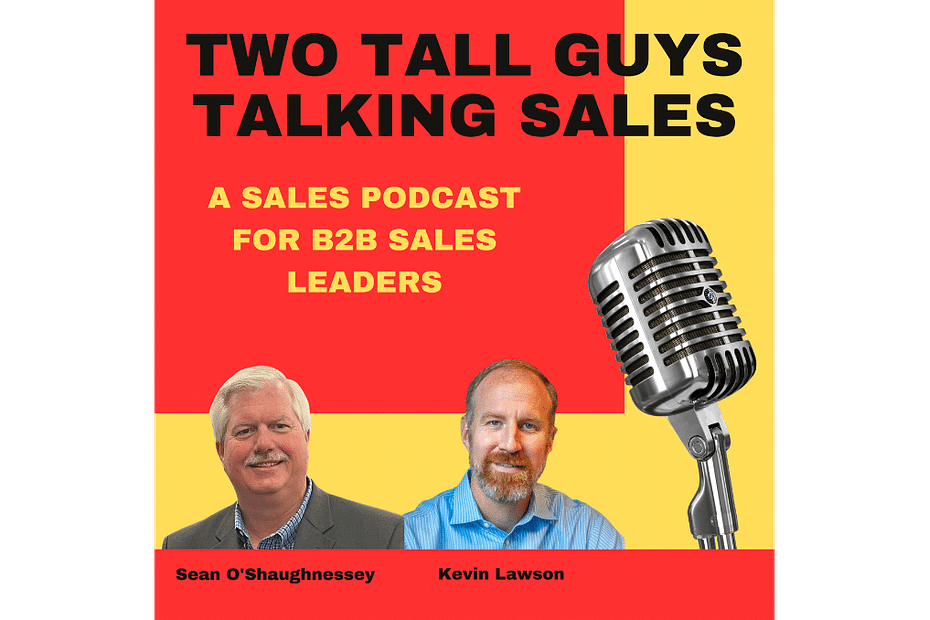

Two Tall Guys Talking Sales Podcast – Selling the Hole, Not the Drill: Understanding the Real Value Behind Your Sales – E91

Welcome to another insightful episode of “Two Tall Guys Talking Sales,” where our hosts Kevin Lawson and Sean O’Shaughnessey dive deep into the complexities and strategies of sales. In this episode, they explore the nuanced dynamics of selling through distribution and understanding the real needs of your customers. Whether you’re a seasoned sales veteran or just starting in your career, this episode offers a wealth of knowledge on refining your sales approach to maximize effectiveness and customer satisfaction.

Key Topics Discussed:

  1. Selling Through Distribution: Sean shares his early career mistakes and the pivotal lessons of focusing beyond just the product features.
  2. Understanding Your Customer’s Needs: Strategies to grasp what the end-user truly requires from a product, rather than just its specifications.
  3. The Importance of Simplicity in Sales: Kevin emphasizes how simplifying your sales message can vastly improve understanding and efficiency in sales processes.
  4. Sales Training and Knowledge Transfer: Both hosts discuss how proper training and knowledge sharing with channel partners and sales teams can lead to better sales outcomes.
  5. The Role of Value in Sales: How to communicate the unique value of a product or service to stand out in a competitive market.
  6. Referral Partnerships and Networks: Sean elaborates on the significance of nurturing relationships with referral partners to enhance lead generation for smaller businesses.
Read the rest of the article…

Maximizing Sales Team Productivity: The Importance of Effective Sales Meetings

Numerous factors can contribute to a sales team’s success or failure. Two key aspects that are often overlooked yet hold immense importance are the structure and content of sales meetings. These gatherings are not just about reporting numbers or discussing targets. They are platforms for learning, sharing, and strategizing that can significantly boost a sales team’s performance.

One of the fundamental principles of a productive sales meeting is having a clear plan. This doesn’t mean having a rigid agenda without room for spontaneity. On the contrary, it’s about having a framework that guides the discussion and ensures that the meeting stays focused on the key topics at hand. 

A common mistake many sales leaders make is covering too many topics in a single meeting. In an attempt to address every issue, they often skim the surface of each topic without delving deep into any. The result is a meeting lacking depth and tangible insights or solutions. Limiting the number of key topics to one or two per meeting is advisable to avoid this. This allows for a more in-depth discussion and a better understanding of the issues at hand.

Read the rest of the article…

Maximizing Productivity in Sales Meetings: Key Principles and Best Practices

Sales meetings are the lifeblood of any sales-driven organization, providing an essential forum for communication, collaboration, and strategy development. Yet, despite their significance, many salespeople, managers, and CEOs struggle to conduct productive and efficient meetings. This issue often stems from a lack of understanding of key meeting principles and best practices, particularly in the areas of time management, content planning, and participant engagement.

The adage “time is money” holds especially true in sales. Every minute counts, and wasted time equates to lost opportunities. This is why punctuality is of the utmost importance. A meeting that starts late or runs over time is disrespectful to participants and detrimental to the team’s overall productivity. 

To avoid this pitfall, sales leaders should ensure they always arrive early to meetings and start them on time, without exception. This requires careful planning and preparation, as well as a commitment to respecting the time and schedules of others. The same principle applies to the end of the meeting. Sales leaders should always strive to conclude meetings on time, which requires careful meeting agenda management and a willingness to keep discussions focused and on track.

Content planning is another crucial aspect of effective meeting management. Just as a ship needs a compass to navigate the seas, a meeting needs an agenda to guide its proceedings. A well-crafted agenda provides a clear structure for the meeting and helps to keep discussions focused and productive. It also sets clear expectations for participants and helps to ensure that all relevant topics are covered.

Read the rest of the article…

Two Tall Guys Talking Sales Podcast – The Four Pillars of Sales Success with Veteran Advisor Chris Goade – E89

Join Kevin Lawson and Sean O’Shaughnessey in this compelling episode of “Two Tall Guys Talking Sales,” featuring seasoned sales acceleration advisor Chris Goade. As a pioneer in the field from Dallas-Fort Worth, Chris brings a wealth of experience from top companies like Dr. Pepper, PepsiCo, and 3M. Delve into the intricacies of building effective sales processes and learn firsthand about the transformative power of structured sales strategies.

Key Topics Discussed

  • Building Effective Sales Teams: How creating structured processes can accelerate sales performance.
  • Sales Process Fundamentals: Chris outlines the critical pillars of a successful sales process, including lead generation and customer relationship management.
  • Transitioning from Corporate to Consulting: Chris shares his journey from corporate sales to starting his own consulting business and the lessons learned.
  • The Evolution of Sales Tools and Techniques: Discussion on how sales strategies have adapted over time, especially in response to technological advancements.
  • Maintaining Customer Relationships: The importance of nurturing existing relationships to foster long-term business growth.
Read the rest of the article…

Enhancing Sales Performance Through Effective One-on-One Coaching Meetings

The effectiveness of sales management is paramount, particularly in how sales managers support their team members to enhance performance. The nuanced relationship between a salesperson and their manager can significantly influence their success, a topic that is gaining traction among CEOs and sales leaders seeking to maximize their team’s capabilities. One-on-one meetings between sales managers and salespeople are not just routine check-ins but pivotal moments that can define a sales team’s success trajectory. These interactions… 

From Crisis to Control: Managing Expectations in Sales Leadership

The concept of “managing up” emphasizes the importance of aligning a sales team’s objectives with the expectations of upper management. This approach is particularly crucial during periods of sales turnaround, where the usual metrics might falter and innovative, agile responses are required. “Managing up” involves treating higher management as an internal customer whose needs must be understood and met with the same diligence as those of external clients. For sales leaders, this means crafting a… 

Proactive Coaching: The Key to Unlocking Exceptional Sales Performance

A shift is occurring away from simply correcting problems after they’ve happened toward a more proactive and developmental approach to coaching sales teams. This evolution in strategy empowers sales leaders, CEOs, and managers to not only meet but also exceed their targets through effective team management and personal development. The concept of continuous improvement in sales begins with a focus on coaching. Unlike traditional reactive methods, modern sales leadership emphasizes coaching as a tool for… 

Boosting Business Performance: Integrating Sales and Marketing Efforts

The symbiotic relationship between sales and marketing is more crucial than ever. This dynamic duo drives the revenue generation engine, which is especially crucial when businesses are keen to set a positive trajectory. Marketing’s influence cannot be understated. It often shapes the business’s success months in advance. Strategies implemented by marketing today can significantly impact revenue streams later in the year. Therefore, it’s essential for sales and marketing to align and integrate their processes to…