Skip to content

Sales Management

What An MBA Didn’t Teach You About Sales

The sales profession is challenging. You need to work hard at it to succeed. You need to learn from the best. You need to improve your skills continuously. If you think you can sell since you are a hit at parties and have a lot of friends, you may soon find that you are a failure as a salesperson. Blunt truth:

because the sales profession is so hard, you have to focus on doing everything in sales very well, or you will be considered a failure.

I call this blog, Skinned Knees because I try to relate all of the learning that I have done over the past 4+ decades (while skinning my knees in the learning process).

I hope that you learn from my mistakes so that your business will grow!


The Benefits of Sending a Newsletter to Your Customers and Qualified Prospects

A newsletter is one of the best tools you can use to maintain a relationship with your existing customers and qualified prospects that are uninterested in buying your product or service at this time. By sending out a newsletter quarterly, you can keep your brand top-of-mind so that when they are ready to make a purchase, they will think of your company first. You can reach an even wider audience by posting your newsletter on LinkedIn.

There are several benefits of sending a newsletter to your customers and qualified prospects, including:

  1. Keeping your brand top-of-mind: By sending out a quarterly newsletter, you can keep your brand top-of-mind so that when your customers or qualified prospects are ready to make a purchase, they will think of your company first.
  2. Developing a relationship with customers and qualified prospects: A newsletter is a great way to establish a relationship with your customers and qualified prospects. You can build trust and credibility with your readers by providing valuable information in each issue.
  3. Reaching a wider audience: Posting your newsletter to LinkedIn provides you with an opportunity to reach an even wider audience. When you post your newsletter on LinkedIn, include a call-to-action so that your readers know what you want them to do next.
  4. Generating leads: Including a call-to-action in each issue of your newsletter is a great way to generate leads.
  5. Increasing sales: By sending out a quarterly newsletter, you can increase sales by reminding your customers of the products or services they’ve purchased from you in the past and introducing them to new products or services that they may be interested in.
  6. Building customer loyalty: A newsletter is also a great way to build customer loyalty. By providing valuable information and helpful tips, you can show your customers that you value their business and are invested in helping them succeed.
  7. Enhancing customer service: In each issue of your newsletter, include contact information for customer service so that your readers know how to reach someone if they have questions or need assistance.
  8. Boosting morale: A well-written and informative quarterly newsletter can boost your employees’ morale by keeping them up-to-date on company news and developments.

Let’s explore these concepts even more.

Read the rest of the article…
man in beige blazer holding tablet computer

4 Ways to Make the Most of Your Training Budget

Every company wants its salespeople to be well-trained. After all, better-trained salespeople mean higher quality products and services, which leads to happier customers and increased sales. But with the training costs averaging $1,459 per salesperson, it’s important to ensure that your training budget is being spent in the most effective way possible. Here are four tips for getting the most out of your training budget.

  1. Prioritize Your Training Goals
    The first step in making the most of your training budget is prioritizing your training goals. What skills do you want your employees to learn? What knowledge do they need to be able to do their jobs effectively? Once you’ve identified your goals, you can create a training plan to help your employees achieve them.
  2. Invest in eLearning Programs
    eLearning programs are a great way to train your employees without breaking the bank. Many different eLearning platforms are available, so you can find one that fits your company’s needs and budget. Plus, with eLearning, your employees can complete their training at their own pace and on their own time, which means they’re less likely to get overwhelmed or frustrated.
  3. Use Technology to Your Advantage
    Many types of technology can be used for training, from virtual reality simulations to online learning portals. By taking advantage of the latest technology, you can create a more immersive and effective training experience for your employees. Plus, using technology for training can help you save money by eliminating the need for travel and lodging expenses.
  4. Consider External Training Programs
    If you’re looking for more comprehensive or specialized training than what you can provide internally, consider partnering with an external training provider. These companies have the resources and expertise to develop custom training programs that meet your specific needs. And while external training programs can be more expensive than other options, they can also be more effective in helping your employees achieve their goals.

    External training providers also offer the added benefit of scaling up or down as needed, which can help you save money in the long run.

To increase retention and effectiveness, companies should offer reps additional training at times of need, provide them with access to supplemental material that reinforces what they’ve already been taught, and allow them opportunities to practice their skills in time frames connected to actual buying processes. They can do so by using the same technologies that are “disrupting” their customer-contact activities: videos and mobile apps that reps can view on their devices before, during, and after training initiatives.

Role-Playing: The Secret to Sales Training Success

There’s one secret ingredient that can make all the difference: role-playing. Role-playing allows trainees to practice their new skills in a low-stakes environment by simulating real-world sales scenarios. Not only that, but role-playing also helps trainees to better understand their customers’ needs and how to best meet them. As a result, role-playing is essential to any successful sales training program.

Read the rest of the article…

Are You A Player, Or A Coach?

March brings March Madness. March Madness is the college basketball tournament where the 64 teams battle to find out who is the best college basketball team of the season.

While you are watching your team this year, I would like you to learn a lesson that every basketball coach has had to learn. The easiest way to learn this lesson is to do a little analysis. I would like you to count the number of times where the game is tight, one team is on the free-throw line, and the coach makes a substitution – himself.

Yes, count the number of times the coach doesn’t trust the player he has been coaching all season and puts himself on the line to make that winning shot.

I can already tell you the number: zero.

During a game, the coach can rant, rave, coach, and cajole but he cannot play the game. He has to trust that the athletes that he has coached all season will take his instruction, remember the skills that they have practiced, and execute those plays as they were taught.

This doesn’t happen in sales. It is almost commonplace for the coach (the sales manager) to step in and drive the conversation. He puts his athlete, whom he has been coaching perhaps for years, on the bench. 

So, let’s explore what would happen if suddenly you were required to stay on the sidelines while you watched your salespeople sell and it was impossible for you to take over the sale.

Read the rest of the article…

CEO Workshop: Drive Revenue During A Crisis

The global pandemic has caused crisis after crisis to hit US companies. These crises include:

  • global supply chain problems affecting worldwide shipping
  • increased prices due to the shortage of components or subassemblies
  • labor shortages

To assist our clients, Sean O’Shaughnessey and Kevin Lawson teamed up to create the following webinar. The webinar originally aired on January 13, 2022.

The following is a transcript of the webinar video above. It has been sparsely edited to increase its readability, but many of the idioms and poor spoken grammar have been left in place. The transcription was automatically generated by Sonix.ai and, as capable as that product is, there are times when words are missed or sentence structure was incorrectly interpreted. We have tried to catch all of these software misses, but we are confident that some still remain. The below text is provided for those that would rather read than watch a video.

Read the rest of the article…

A Conversation: Why Small Businesses Don’t Have Consistent Revenue

I was recently interviewed by Bob Clark on his podcast 808 Podcast. It is named 808 because 808 looks like Bob and the internet loves short video content so it is less than 8 minutes and 8 seconds. We had a great conversation in under 8 minutes and 8 seconds while Bob walked me through four high-level questions (and a few clarifying questions).

I went through the process of having the conversation transcribed so that you can read the content if you prefer to read more than listen. This transcription tries to put the text into a more readable format.

You can find the podcast here. At the bottom of this article, there is a YouTube version of the podcast.

https://808podcast.com/808-podcasts/124-sean-oshaughnessey-new-sales-expert-llc/
Read the rest of the article…

Do You Have A Great Sales Plan?

Are you experiencing any of the following common sales issues? Inability to take sales “to the next level” Difficulty finding the “right” salesperson for your company Not sure where to start – “I don’t know what I don’t know” Lack of a formal sales process Stalled out proposals Not being able to effectively articulate the value proposition, solution or service Great companies deserve a great plan You have developed incredible offerings. You have solid leadership… 

CEO Insight podcast: Sean O’Shaughnessey, CEO of New Sales Expert, LLC

The following is a transcript of the podcast video above. It has been sparsely edited to increase its readability, but many of the idioms and poor spoken grammar have been left in place. The transcription was automatically generated by Sonix.ai and, as capable as that product is, there are times when words are missed, or sentence structure was incorrectly interpreted. We have tried to catch all of these software misses, but we are confident that some still remain. The below text is provided for those that would rather read than watch a video.

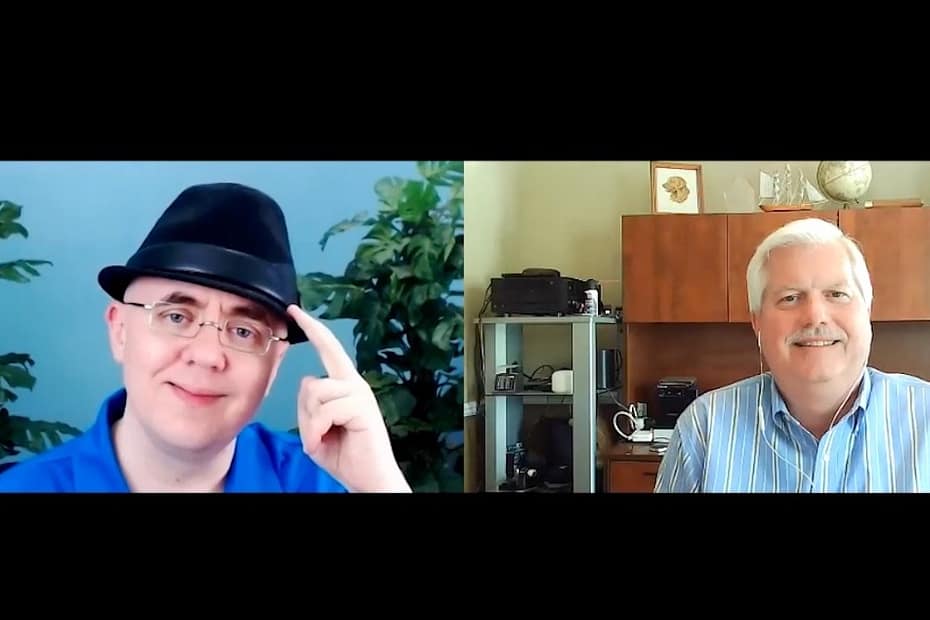
Earl Ameen: [00:00:00] This is Earl Ameen, with a 20/20 Foresight podcast, where CEOs of small-to-global companies share their insights. It is six questions in nine minutes because top CEOs know how to listen and be concise. So let’s get to it. First of all, welcome. Tell us who you are and what you do in just a few sentences.

Sean O’Shaughnessey: [00:00:22] My name is Sean O’Shaughnessey. Thank you very much for having me on your program. I am a Fractional Vice President of Sales. My company goes into other companies, and we run the sales department for those other companies. We help them grow, we help them accelerate their revenue, and we help them create a process that makes predictable revenue possible.

Earl Ameen: [00:00:45] Outstanding. Well, tell me, Sean, what’s the best thing about being the CEO of your company?

Sean O’Shaughnessey: [00:00:51] So for me, the best thing about being the CEO is actually not just being a CEO, but actually giving back and allowing myself to help other companies. So, I am in the service industry. As I said, I’m a Fractional VP of sales. I like having the ability to take a company that is struggling to make its revenue targets and help them achieve those revenue targets. I can help them become a prosperous, sales-oriented culture. So, I love doing that for other companies and doing it for multiple companies at the same time.

Read the rest of the article…
happy black woman laughing on street

The Pay Is High and Jobs Are Plentiful, but Few Want to Go Into Sales

According to ZipRecruiter and the Wall Street Journal, people are hesitant to go into sales for a career. ZipRecruiter shows the number of sales roles advertised has risen steadily this year, up 65% to more than 700,000 open positions around the U.S., after big layoffs decimated the field at the outset of the pandemic a year ago. Many young workers erroneously assume that sales work means convincing customers to buy with high-pressure tactics and are… 

people on a video call

In-person vs. virtual selling: How modern sales teams can operate after COVID

The average cost of a face-to-face sales call is reportedly $250 – $500. With virtual sales calls, you can talk to your prospects for a much lower price. Virtual sales calls are an easy and inexpensive way to start building relationships and generating leads.

Virtual sales calls have become more and more popular in the past few years, especially during and now after the global pandemic. The most apparent advantage of virtual sales calls is that they can be conducted from anywhere and anytime. This means that companies can save office space while still conducting meaningful business conversations with customers and prospects. Salespeople can save time by using virtual sales calls to get on the radar of potential buyers or secure new leads.

Another advantage is the cost savings of not having a physical presence at an event or trade show. Virtual sales calls also offer a level of confidentiality. 

Read the rest of the article…

Curiosity Kills the Quota

I recently spoke to Robert Gillette, the host of the podcast Reclaiming Sales. It was a great conversation! We discussed many things that will benefit beginning sales professionals. Specifically, we discussed:

  1. Get to know your prospects better, understand how they make and lose money.
  2. Get curious, and stay that way… even when you’ve heard your 100th prospect tell you the same thing.
  3. Build your belief, it will keep you company when times get tough.

You can listen to our conversation by subscribing to Robert’s podcast here. You can also subscribe by going to Apple Podcasts, Google Podcasts, Spotify, and many more that are listed here.

The following is a transcription of our conversation for those that prefer to read rather than listen. The transcription is as close as possible to the spoken word but effort was made to try to make it a little more readable with fairly grammar correct phrasing, sentence structure, and paragraph structure. Where the commentary overrode grammar or the use of synonyms, the spoken word was chosen.


Announcer 0:30  

You’re listening to Reclaiming Sales because you don’t need to sell your soul to be successful with your host and fellow salesman, Robert Gillette.

Robert Gillette 0:41  

Robert Gillette
Reclaiming Sales Podcast Host

Hey everybody, welcome back to the show. My name obviously is Robert Gillette, and I have a new friend of mine. I know everybody I meet on the show, I say my new friend, but it’s true so far—a gentleman named Sean O’Shaughnessey. Honestly, the reason why you’re on the show, to be totally honest, is he, you engage with me, you commented on the things that I post, and you send me messages. And you know, when you’re doing a podcast, it’s like screaming into the void. And so when the void reaches back out and gives you feedback, it’s incredibly helpful. I’m used to performing on stage, in general, so I just wanted to have you on the show, first of all, to get your perspective on what we’ve been talking about so far. But, still, you also have some pretty deep claws into this whole sales game as well, and you have some perspectives that I just want to explore and see what we can uncover over the next 20 minutes or so. But before we get onto that, Sean, why don’t you, I guess before you take off your sales guy hat, what do you sell and who do you sell it to.

Sean O’Shaughnessey 1:42  

I am the CEO of a company called New Sales Expert. I sell sales management to companies with bad sales management or don’t know how to have sales management.

Robert Gillette 1:56  

Okay, and we don’t have a lot of, you know, people on the show who aren’t salespeople. But I guess my first question to you before we move too far into this is. Do you think it’s harder to sell to salespeople or to sell to non-salespeople? Is it hard to sell to people who sell for a living?

Sean O’Shaughnessey 2:16  

Sean O’Shaughnessey
CEO and President
New Sales Expert, LLC

So it’s I think it’s easier to sell to salespeople because we like to hear a good pitch. I actually sell, though, to the CEO that is frustrated because he doesn’t know how to manage a sales force. So that’s actually whom I sell to. And that’s the problem I solve.

Robert Gillette 2:32  

Okay, so you’re actually selling to a CEO or someone at that C suite level.

Sean O’Shaughnessey 2:37  

Correct. I’m usually selling to the founder of the company. And he is in a situation where he can’t figure out how to manage salespeople, how to recruit salespeople, and how to make salespeople better. So that’s what I do for him or her.

Robert Gillette 2:51  

Unfortunately, mostly him, but we’re working on that diversity by brute force. We’re doing it as a country anyways. 

So let’s, let’s roll this back to the beginning of your career, how did you get into sales. And why did you stick with it all those years?

Read the rest of the article…