Skip to content

CEO

What An MBA Didn’t Teach You About Sales

The sales profession is challenging. You need to work hard at it to succeed. You need to learn from the best. You need to improve your skills continuously. If you think you can sell since you are a hit at parties and have a lot of friends, you may soon find that you are a failure as a salesperson. Blunt truth:

because the sales profession is so hard, you have to focus on doing everything in sales very well, or you will be considered a failure.

I call this blog, Skinned Knees because I try to relate all of the learning that I have done over the past 4+ decades (while skinning my knees in the learning process).

I hope that you learn from my mistakes so that your business will grow!


Becoming a Trusted Advisor: Solve Problems, Not Just Sell Products

In B2B sales and sales leadership, problem-solving is an art that goes beyond selling a product or service. The secret to becoming a trusted advisor is addressing business problems, not just selling a product. This concept resonates with salespeople, sales managers, and small business CEOs who sell themselves or manage a team of salespeople. 

Sales is not just about pushing a product or closing a deal; it’s about forging relationships, understanding businesses and their unique challenges, and offering solutions to these problems. The role of a trusted advisor is not to sell a product and become a trusted advisor, but rather to become a trusted advisor who can sell a product. 

The reward for earning trusted advisor status is immeasurable. It is fantastic to receive a call from a client asking for advice on solving problems they have never discussed with you. Imagine having relationships that stand the test of time and outlast competition and challenges. 

So, how does one become a trusted advisor and solve problems for clients rather than just selling them a great product? It starts with building a relationship from scratch. When starting with a prospect list or an ideal client profile, the goal is not to find anyone who will respond but to seek opportunities to build meaningful relationships. 

The cornerstone of these relationships is reliability. 

  • Are you always punctual? 
  • Do you cancel at the last minute? 
  • Do you forget to return phone calls? 

These behaviors erode trust. On the other hand, showing up when needed, providing solutions even when they are not directly related to your product or service, and connecting clients to others who can help them are behaviors that build trust. 

Becoming a trusted advisor also involves understanding and curiosity about the client’s business. Do you ask questions about how the prospective company makes and loses money, how it dealt with past challenges like the pandemic, and how it deals with current challenges like rising inflation or supply chain disruption? The aim is to understand the client’s business, challenges, and competitors and offer insights and parallels to other companies. 

Read the rest of the article…

The Power of Personal Branding in Enhancing Sales Productivity

Navigating the world of sales can sometimes feel like traversing a labyrinth. Salespeople, sales managers, and CEOs alike grapple with the challenge of increasing revenue and enhancing productivity in their sales processes. To be successful, you need more than knowledge of products and services; you need to develop trust and a strong personal brand.

Business-to-business (B2B) sales involves transferring trust from ourselves to our prospects. We trust in our products and company, but convincing prospects to share that trust is the real challenge. This trust should encompass the product, the company, and perhaps most crucially, the salesperson. Remember, B2B sales could be defined as helping prospects decide in our favor within the desired timeframe.

The key to B2B sales is developing a personal brand that inspires trust in salespeople. The salesperson’s ability to convey reliability, expertise, and credibility can significantly influence how fast a prospect invests in a product or service.

Developing a strong personal brand begins with creating a presence that signals control and understanding of the business. This can be achieved by showcasing the benefits of your product or service to your customer’s business. A straightforward way to build your brand is by seeking references from your network, former employers, and customers, and showcasing these on professional platforms like LinkedIn.

Read the rest of the article…

Building Winning Sales Teams for the Future: Insights for CEOs and Sales Leaders

What are the key moves that CEOs and sales leaders must make to prepare their teams for success in 2025? That’s exactly what we explored in a recent episode of the Art and Science of Complex Sales podcast hosted by Paul Fuller of Membrain. I had the pleasure of joining Kevin Lawson, President of Lighthouse Sales Advisors, for a deep dive into the strategies defining high-performing sales organizations in the year ahead. You may recognize… Building Winning Sales Teams for the Future: Insights for CEOs and Sales Leaders

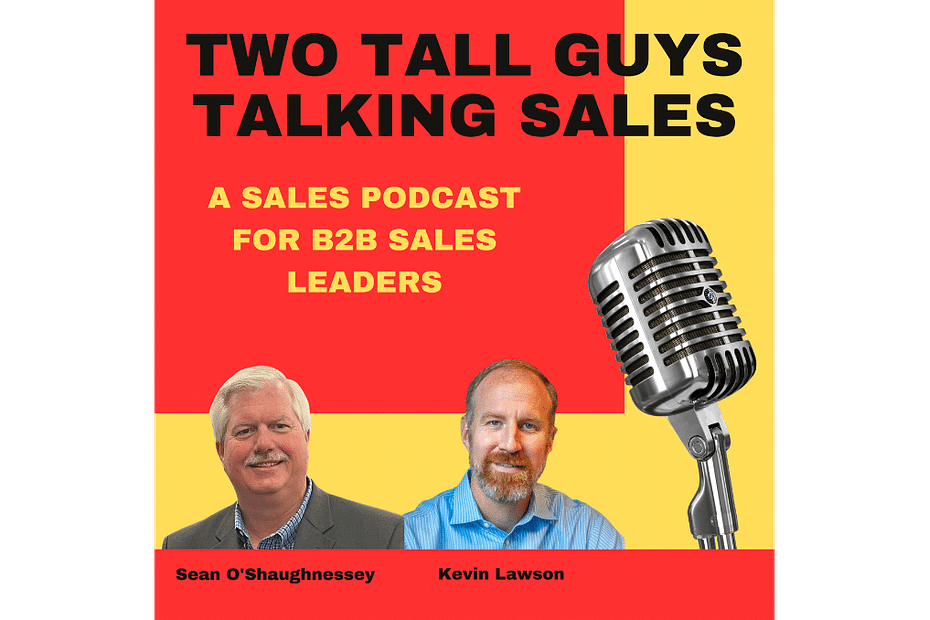
Two Tall Guys Talking Sales – Sales Slumps & Hot Streaks: How to Build a Predictable Pipeline – E122

Sales is a game of ups and downs, but what separates top performers from the rest is their ability to keep the funnel full—even when they’re closing deals. In this episode of Two Tall Guys Talking Sales, Kevin Lawson and Sean O’Shaughnessey dive into the art and science of building a consistent pipeline. They discuss strategic approaches to prospecting, leveraging data tools, and the importance of curiosity in sales conversations. Whether you’re starting fresh in… Two Tall Guys Talking Sales – Sales Slumps & Hot Streaks: How to Build a Predictable Pipeline – E122

Understanding Your Customers: The Role of Buyer Personas and Quarterly Business Reviews

Want to know the real secret behind successful sales? It’s not just about knowing what your customers need. The true power lies in understanding who they are at their core.

Have you ever wondered why some sales professionals consistently outperform their peers? The answer often comes down to their mastery of buyer personas and detailed profiles that capture the essence of your ideal customers.

Think of buyer personas as your secret weapon in the sales battlefield. These aren’t just random customer profiles thrown together in a rushed afternoon meeting. They represent carefully crafted composites of your most valuable clients, built from real-world data and insights. Your company might need several of these personas, each targeting different market segments with laser precision.

Creating effective buyer personas demands more than just surface-level observation. Start with a thorough analysis of your business landscape. Examine your strengths and weaknesses. Map out the opportunities that excite you and the threats that keep you up at night. This foundation helps you understand exactly where you fit in your customers’ world.

What makes your top customers tick? The answer lies in meaningful conversations with your best clients. These discussions should dig deep into both quantitative and qualitative factors. Demographics tell part of the story – age, position, education, family status. But the real gold comes from understanding their motivations. Why did they choose you? What problems do you solve that keep them coming back?

Read the rest of the article…

Adapting to the New Sales Landscape: The Importance of Omni-Channel Outreach

Are you still relying on trade shows as your primary sales driver? The sales landscape has undergone a seismic shift. Those packed convention halls and endless rows of booths no longer serve as the bedrock of business development they once were.

Let’s talk about what works in today’s sales environment. Building an effective outbound pipeline isn’t just an option anymore – it’s your survival toolkit. But here’s the challenge: how do you stand out in a market where everyone’s fighting for attention?

Your unique value proposition makes all the difference. Yet many sales professionals miss a crucial point: your value proposition isn’t static. What resonates with a manufacturing client might fall flat with a distribution company. Have you tailored your message to address each industry’s pain points?

Think about your last prospecting campaign. Did you give up after four or five attempts? Research shows it takes 12 to 16 touches before prospects typically respond. This gap between persistence and practice often determines success or failure in modern sales.

The game has changed. Your prospects live in an omnichannel world. They check email between Zoom calls, scroll LinkedIn during lunch, and scan their phones throughout the day. How are you showing up in their digital world?

Consider this: every unanswered email or phone call might be a messaging problem. Are you talking about your features when you should be solving your prospects’ problems? Your prospects don’t care about your product specifications. They care about their challenges, their goals, and their bottom line.

Read the rest of the article…

Roadblocks, Detours, and Destinations: The Intricate Art of Sales Strategy

There’s an ongoing conversation about the importance of strategy, process, and anticipating potential challenges in B2B sales. There’s an analogy that encapsulates this perfectly – imagine you’re on a road trip. You have a destination in mind but are unfamiliar with the route. This is where tools like Waze, Google Maps, or Apple Maps come into play. They direct you to your destination and alert you about potential roadblocks, construction, traffic, or other unexpected events that might delay your journey. 

This is precisely how a sales strategy should work. It’s not just about getting from point A to point B but also about understanding the complexities of the journey and preparing for potential roadblocks. For salespeople, managers, and CEOs, understanding the strategy is critical to increasing revenue and improving productivity.

Understanding that a strategy involves more than just the turns along the way is vital. It also involves how to navigate through different areas, understand the speed limit, and anticipate any warnings that might come up. Many salespeople don’t fully grasp these challenges and tend to take them as they come rather than anticipating them and planning accordingly. 

Like Waze uses real-time data to adapt to changes on the road, a sales strategy should adjust to new information and circumstances. For example, if there’s construction up ahead or a detour is required, Waze will adapt and provide a new route. Similarly, salespeople should be able to adjust their strategies based on new information or unexpected challenges. 

Read the rest of the article…

Two Tall Guys Talking Sales – Sales Intelligence 101: Using AI and Networking to Target Ideal Customers – E112

Welcome to another compelling episode of Two Tall Guys Talking Sales with hosts Kevin Lawson and Sean O’Shaughnessey! Kevin and Sean dive deep into a central challenge for sales teams: identifying ideal customers and building a robust prospect list. In this episode, they uncover practical strategies, share indispensable tools, and illustrate how a strong grasp of your customer can turn prospects into loyal clients. Whether you’re part of a lean sales team or managing large territories, this… Two Tall Guys Talking Sales – Sales Intelligence 101: Using AI and Networking to Target Ideal Customers – E112

From Chaos to Order: Improve Your Sales Productivity with Effective Pipeline Management

Sales is a complex and intricate world, a jigsaw puzzle where each piece must fit perfectly to create a successful picture. This is especially true when it comes to managing sales, whether you’re a salesperson, a sales manager hoping to enhance your leadership skills, or a CEO in the trenches of a small company. Understanding the challenges and nuances of the sales process is crucial to increasing revenue and productivity.

Imagine you’re in a room full of sports equipment scattered everywhere, from basketball shoes to cheerleading pom-poms. It’s a total mess, and you can barely see the floor. This is a perfect metaphor for what a disorganized sales pipeline can look like. It’s messy chaotic, and there’s always something that doesn’t quite smell right. 

The sales pipeline is vital for tracking and managing sales prospects from the initial contact to the deal’s closing. It visually represents where potential customers are in the sales process. However, if not properly managed, the pipeline can become a mess. 

A common issue is when a deal gets pushed from one month to the next. The sales rep simply changes the closing date, making it seem like procrastination has become a part of the process. This can be due to various reasons, such as a lack of commitment from the customer, the sales rep not understanding the customer’s needs, or simply a lack of follow-up. To avoid this, it’s essential to go back to basics. Understand where the customer is in their evaluation and buying process. Are they genuinely interested in buying or just exploring the idea? It’s perfectly fine for a customer to be in the exploratory stage, but that doesn’t mean they’re ready to buy. These customers should be considered early-stage prospects and not be rushed into buying. 

Read the rest of the article…

The Right Person in the Right Seat: Unleashing Company Growth through Strategic Sales Leadership

A recurring issue for small companies has emerged; the company’s owner or CEO often leads the sales department. This might be because they believe no one else can sell their product or service better than they can. However, this mindset might be hampering the company’s growth potential.

If you’re a company owner or CEO who leads sales, it’s crucial to consider the risk of this approach. When the person leading the company also heads sales, the business is constrained by the amount of time that leader has. If your salespeople consistently wait for your input or response, you might face a growth opportunity and a challenge simultaneously.

The solution lies in de-risking your organization’s growth potential by getting a sales leader in the sales leadership seat separate from you. This concept resonates with the theory of constraints, a principle often applied in the manufacturing industry but equally applicable in sales. The theory of constraints focuses on identifying the factors that limit your success. 

Read the rest of the article…