Skip to content

change

What An MBA Didn’t Teach You About Sales

The sales profession is challenging. You need to work hard at it to succeed. You need to learn from the best. You need to improve your skills continuously. If you think you can sell since you are a hit at parties and have a lot of friends, you may soon find that you are a failure as a salesperson. Blunt truth:

because the sales profession is so hard, you have to focus on doing everything in sales very well, or you will be considered a failure.

I call this blog, Skinned Knees because I try to relate all of the learning that I have done over the past 4+ decades (while skinning my knees in the learning process).

I hope that you learn from my mistakes so that your business will grow!


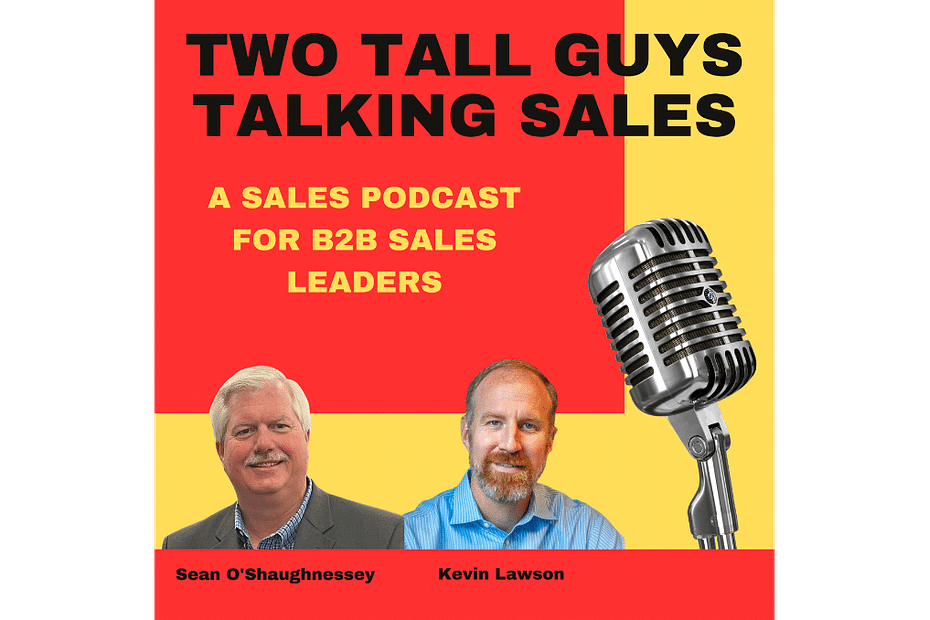
Two Tall Guys Talking Sales Podcast – Sales Strategy Deep Dive: How to Align Offers with Client Expectations – E102

Join hosts Kevin Lawson and Sean O’Shaughnessey in a dynamic episode of “Two Tall Guys Talking Sales,” where they dive deep into the essential elements of crafting an effective sales strategy. Whether you’re a sales newbie or a seasoned pro, this episode promises insights into refining your approach to acquiring new clients and boosting your sales performance. Key Topics Discussed: Key Quotes: Additional Resources: A Significant Actionable Item from this Podcast: Reflect on Your Client… 

Unstick Your Sales: The Importance of Understanding the Buyer’s Journey

It’s no secret that the dynamics between the buyer and the salesperson play a pivotal role in sealing the deal. The conversation often revolves around real sales issues, selling situations, and sales leadership. 

Let’s delve into a scenario. You’re selling to a beer industry manufacturer, and their first question is about your price. This immediate focus on cost might make you think this may not be a good prospect. However, it’s crucial to remember that you can’t be disrespectful or dismissive. As salespeople, it’s our job to work with what we have. 

In this situation, the salesperson has to conduct a discovery call and engage a subject matter expert to understand the prospect’s business process, adaptation, and conversion. Unfortunately, the interaction turned into a commodity exchange, with the buyer solely interested in the number of users and the price per user. 

This scenario illustrates a common challenge in sales: the sales and buying processes often need to align. How your Customer Relationship Management (CRM) system is set up may not necessarily mirror how the buyer decides. Therefore, figuring out how to sell more effectively based on the buyer’s journey is crucial. Understanding the buyer is discussed in great detail in my book Eliminate Your Competition, which is available wherever you buy books.

Read the rest of the article…

Navigating Through Sales Slumps: A Strategic Approach for Sales Leaders

Like any other profession, sales is not immune to periods of underperformance or slumps. These periods can be particularly challenging when a top performer in your sales team is slumping. Addressing this issue effectively can significantly improve the productivity of your sales processes, ultimately leading to increased revenue for your company.

Various factors can trigger a sales slump, but it often implies a deviation from the sales process or strategy. Sales is a time-based process, not a transactional one. It involves selling to other businesses, which takes time. Therefore, as a sales leader or CEO, it’s crucial to identify when the sales trend starts to slide. This identification is not just about revenue; it requires a retrospective look at the early stages of a sale. If there aren’t enough leads or active relationships in your pipeline, you can foresee a slump and take proactive measures to change outcomes.

A common mistake is focusing on the revenue loss resulting from the effort expended. A more constructive approach is to evaluate the salesperson’s activities in the sales process. If they do the right things daily, they will quickly work out of the slump. The focus should be on maintaining an effective pipeline and executing all the necessary tasks, such as good scoping and discovery calls.

Read the rest of the article…

Designing Sales Compensation Plans That Drive Performance

The success of any sales-driven organization in the business-to-business (B2B) space hinges on the sales team’s compensation plan. Over my four decades in B2B sales, I’ve observed that nothing influences the performance of sales personnel more directly than the design and implementation of their compensation plans. Compensation is not merely about rewarding sales achievements but crafting a strategy aligning individual salespeople’s goals with the company’s broader objectives.

A well-structured compensation plan acts as both a motivator and a guide. It compels sales teams not only to meet but exceed their targets, fostering an environment where continuous improvement is not just encouraged but becomes a natural byproduct of the system. For small business CEOs, understanding this dynamic is critical for sustaining and driving growth. Sales compensation is more than just a cost; it’s an investment in the company’s future.

In any sales environment, whether the market is brimming with potential or tightly contested, the compensation plan must be a living document that evolves in response to market conditions, company goals, and team performance. With this adaptability, companies can avoid stagnation or regression in their market positions. As businesses strive to scale and adapt, constructing a compensation plan that genuinely drives the right behaviors becomes all the more pertinent.

To delve deeper into this vital subject, CEOs should consider the immediate impacts of their compensation strategies and their long-term implications on sales culture and employee retention. For those ready to explore the intricacies of effective sales compensation and ensure their strategies are well-suited to their specific business contexts, I am here to lend my expertise. With extensive experience tailoring compensation plans to enhance sales productivity and company profitability, I invite you to reach out for further guidance on crafting a plan that meets and exceeds your strategic goals. You can set a time to talk to me using my link above Book Appointment With Sean.

Read the rest of the article…

From Education to Improvement: The Essential Elements of Effective Sales Meetings

The importance of effective internal sales meetings with your sales team cannot be overstated. These meetings are not just about discussing individual deals or pipelines but serve a much larger purpose. They are opportunities for education, alignment, and improvement. They are a platform where the entire sales ecosystem comes together to discuss what’s happening in the industry, target market, or the company and how to move in the same direction.

A key reason for having larger quarterly meetings is education. As a sales leader or a CEO, the goal should be to make the sales team more effective and knowledgeable about ongoing developments. This can be achieved by inviting guest speakers, working on sales messaging, or understanding what’s happening in a particular vertical. However, these meetings should not be held just because the quarter came up. They should have a purpose and should add value to the team. If the same information can be shared through a well-written email or a quick update on Zoom, then there is no need for a meeting.

One effective practice for these meetings is role plays. This is a great way to practice and improve skills. However, it’s important to conduct these role plays correctly. There should be three roles: a customer, a seller, and an observer. The customer should be competent, the seller should sell something, and the observer should observe. After each role-play, feedback should be provided on what was done well and what could be improved.

However, while conducting these meetings, it is important to avoid a few pitfalls. One such pitfall is not having enough variation in the meeting for different learning types. If the meeting only consists of slides or videos, it might not cater to everyone’s learning style. Therefore, mixing up the media and providing breaks is important to keep the team engaged.

Read the rest of the article…
Optimizing Sales Territories for Growth and Efficiency

Territory design is critical for ensuring efficient revenue generation and optimal team performance. Sales leaders, especially those at the helm of small—to mid-sized companies, must revisit and potentially recalibrate their territory strategies to accommodate growth and maintain competitiveness. Effective territory management starts with a clear understanding of the business landscape. Ensuring that each salesperson has a viable area with ample opportunity is crucial. This may sound straightforward but involves a delicate balance of geographic and… 

Two Tall Guys Talking Sales Podcast – Mastering the Art of Business Transition: Insights from Marc Metz – E82

In this riveting episode of Two Tall Guys Talking Sales, hosts Kevin Lawson and Sean O’Shaughnessey welcome a special guest, Marc Metz, President of Optimus Sales Group. Together, they delve into the critical yet often overlooked topic of business transitions, providing invaluable insights and strategies for companies navigating the journey from generation to generation. This episode is a treasure trove of knowledge for business owners, sales leaders, and anyone involved in the business’s lifecycle. Key… 

Boosting Profitability in Sales: Mastering the Art of Negotiation – Video 11 of the New Year Motivation Series

Entering the New Year, it’s vital for sales teams to analyze and improve their negotiation strategies for enhanced deal profitability. Reflecting on past negotiations to identify weaknesses is key. Embracing continuous learning and preparation, like training and scenario planning, can significantly boost bottom lines. The goal is to negotiate mutually beneficial deals without unnecessary concessions, thereby maximizing value and profit with every transaction.

Revolutionize Your Sales Strategy: The Power of Streamlining Your Sales Process – Video 10 of the New Year Motivation Series

Entering the New Year, it’s essential to refine sales strategies by utilizing CRM systems effectively to boost sales efficiency. Identifying and addressing bottlenecks within the sales process can enhance productivity and improve customer experience. Collaboration and continuous refinement will lead to seamless client interactions and differentiate your business in the market. Aim for proactive sales process optimization to ensure a successful year ahead.