Skip to content

compensation

What An MBA Didn’t Teach You About Sales

The sales profession is challenging. You need to work hard at it to succeed. You need to learn from the best. You need to improve your skills continuously. If you think you can sell since you are a hit at parties and have a lot of friends, you may soon find that you are a failure as a salesperson. Blunt truth:

because the sales profession is so hard, you have to focus on doing everything in sales very well, or you will be considered a failure.

I call this blog, Skinned Knees because I try to relate all of the learning that I have done over the past 4+ decades (while skinning my knees in the learning process).

I hope that you learn from my mistakes so that your business will grow!


Transforming Quota-Setting: Strategies for Sales Leaders to Optimize Performance and Revenue

Quota-setting is one of the most misunderstood elements of sales leadership. Too often, it’s treated as a spreadsheet exercise or a top-down directive, rather than a strategic lever that drives behavior, performance, and growth.

Whether you’re leading a team of 20 or you’re the founder managing three reps, how you define quotas has a direct impact on your revenue trajectory and your team’s motivation.

So, where do you start?

With timing. If you’re not delivering quotas to your team until February or March, you’re already behind. Salespeople need clarity by December. That gives them runway to plan, prioritize, and hit the ground running in January. Delayed quotas create confusion and stall momentum. To achieve a strong Q1, you need to equip your team early.

Quota-setting varies depending on the size of your company. Larger teams offer more flexibility. With 10 or more reps, you can spread risk, balance performance, and model averages. You’ll have top performers who consistently overdeliver, alongside newer reps who are still ramping up. The law of averages works in your favor. You can afford some variance. Smaller teams don’t have that luxury.

When you’re running a small team, maybe two or three reps or founder-led sales, every individual matters. One person missing quota can tank your number.

You can’t rely on averages. You need precision.

That means tying quotas to actual relationships, known opportunities, and real probability. It’s not about slicing up a target evenly. It’s about assigning numbers based on what’s realistically achievable in each territory or account list.

Territory design plays a big role here. Whether it’s geographic, vertical, or named accounts, quota must reflect the market potential. You can’t expect equal performance from unequal opportunity. If Rep A has 500 viable accounts and Rep B has 50, their quotas shouldn’t look the same unless you have data that says Rep B’s accounts are closer to your Ideal Client Profile. Use available market data to inform the number. Don’t assign quotas in a vacuum. 

In larger organizations, quotas often originate from the top down, typically from finance. The CEO and CFO commit a growth number to the board, investors, or in public filings to the SEC. They have no choice but to pass it down. It’s not uncommon for the sales team to receive the number without context. That’s a problem. If you’re in a leadership role, you need to pressure test that number. Can your team realistically hit it? If not, what additional resources are required?

  • More headcount?
  • Better enablement?
  • Marketing support?

In large organizations where the quota is driven by investor expectations, the VP of Sales must establish an organization well before the new year that achieves this year’s goal, while also meeting the expectation of growth for the next year. Planning ahead, sometimes years in advance, is part of the job.

Read the rest of the article…

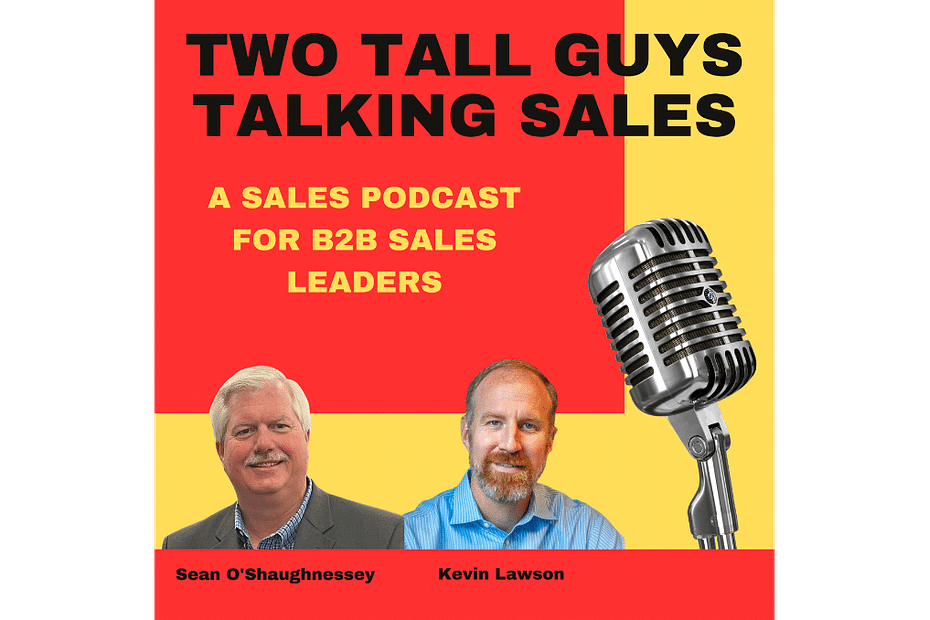
Two Tall Guys Talking Sales – Know Your Numbers: A Sales Leader’s Guide to Growth Metrics – E132

As Q2 kicks into full gear, it’s time to pause and reflect—are you ahead, on pace, or falling behind on your sales targets? In this insightful episode of Two Tall Guys Talking Sales, hosts Kevin Lawson and Sean O’Shaughnessey unpack one of a sales leader’s most crucial yet often overlooked responsibilities: knowing your numbers. With equal parts practical advice and strategic vision, this conversation walks you through the foundational metrics every sales leader should track—customer… 

Unlocking Sales Success: The Power of KPIs in Sales Processes

Are your sales KPIs helping your team succeed? Many sales leaders focus solely on closed deals. This narrow view misses crucial elements of sustainable sales growth.

The journey matters more than the destination. Sales excellence follows a similar path. Your team’s daily actions and behaviors create the foundation for lasting success.

Effective sales measurement requires a comprehensive view of your team’s activities. Top performers consistently execute vital behaviors that drive results. They prospect strategically, nurture relationships, and expand their presence within existing accounts. These leading indicators paint a clearer picture of future performance than lagging metrics alone.

Your KPI framework must evolve beyond historical analysis. Forward-looking metrics help you spot opportunities and challenges before they impact revenue. What’s happening in your pipeline right now? How are your teams finding new prospects? Which accounts show growth potential?

Experience levels significantly impact appropriate performance measures. New salespeople face different challenges than seasoned veterans. A rookie might need help with fundamental sales behaviors while learning your company’s approach. They need clear operational guidance and structured metrics that reinforce proper execution.

Veteran salespeople bring established skills and proven track records. Their KPIs should emphasize continuous improvement and cultural alignment. How are they advancing their capabilities? What value do they add to the broader sales organization?

Read the rest of the article…

Designing Sales Compensation Plans That Drive Performance

The success of any sales-driven organization in the business-to-business (B2B) space hinges on the sales team’s compensation plan. Over my four decades in B2B sales, I’ve observed that nothing influences the performance of sales personnel more directly than the design and implementation of their compensation plans. Compensation is not merely about rewarding sales achievements but crafting a strategy aligning individual salespeople’s goals with the company’s broader objectives.

A well-structured compensation plan acts as both a motivator and a guide. It compels sales teams not only to meet but exceed their targets, fostering an environment where continuous improvement is not just encouraged but becomes a natural byproduct of the system. For small business CEOs, understanding this dynamic is critical for sustaining and driving growth. Sales compensation is more than just a cost; it’s an investment in the company’s future.

In any sales environment, whether the market is brimming with potential or tightly contested, the compensation plan must be a living document that evolves in response to market conditions, company goals, and team performance. With this adaptability, companies can avoid stagnation or regression in their market positions. As businesses strive to scale and adapt, constructing a compensation plan that genuinely drives the right behaviors becomes all the more pertinent.

To delve deeper into this vital subject, CEOs should consider the immediate impacts of their compensation strategies and their long-term implications on sales culture and employee retention. For those ready to explore the intricacies of effective sales compensation and ensure their strategies are well-suited to their specific business contexts, I am here to lend my expertise. With extensive experience tailoring compensation plans to enhance sales productivity and company profitability, I invite you to reach out for further guidance on crafting a plan that meets and exceeds your strategic goals. You can set a time to talk to me using my link above Book Appointment With Sean.

Read the rest of the article…

Building High-Performing Sales Teams through Strategic Alignment

The challenge of aligning the right people with the right organizational roles is paramount. As sales leaders and CEOs of small companies, understanding the intricacies of building and maintaining a proficient sales team is crucial for driving growth and achieving success. The concept of having the “right people in the right seats” is not just a matter of recruitment but an ongoing process of evaluation, development, and strategic alignment. It’s essential to recognize that the… 

Maximizing Sales Performance: The Critical Importance of Compensation Planning

In B2B sales organizations, ensuring a robust sales force capable of adapting to market fluctuations and corporate objectives is paramount. Among the myriad factors contributing to sales teams’ success, two elements emerge as particularly crucial: the design and timely dissemination of compensation plans. At the heart of a well-oiled sales organization lies the principle of trust, a currency of immense value in building a healthy sales culture. Transparency and punctuality in rolling out compensation plans… 

The Art of Sales Compensation: Balancing Motivation and Goals

Few topics in sales stir as much discussion and attention as compensation plans. The proper compensation structure can ignite a team’s performance, attract top talent, and drive a company toward its strategic goals. Conversely, a poorly conceived plan can lead to demotivation, high turnover, and missed targets. This discussion delves into the intricacies of designing compensation plans that motivate and align with a company’s broader objectives, offering insights for salespeople, sales managers, and CEOs alike.… 

Two Tall Guys Talking Sales – Mastering Sales Compensation: Strategies for Business Growth – Episode 58

Don’t miss out on this episode if you’re looking to revamp or create a sales compensation plan that truly works. Kevin and Sean offer a comprehensive guide that covers everything from the timing of releasing plans to aligning them with your business goals. Tune in to Two Tall Guys Talking Sales and equip yourself with the knowledge to build a compensation plan that not only retains but also attracts top sales talent. Start setting your sales team—and your business—up for success today!

August Newsletter

I hope you enjoy my August Newsletter Posts Subscribe I hope you enjoy my August Newsletter Published: Tue, 08/15/23 I hope that you enjoy my latest newsletter View the online version of this email. Football is starting at your local school and in the NFL. That used to mean that we were in Autumn, but now it means that we are simply in the dog days of summer. I hope the summer has been great… 

The Kaivac Impact: Harnessing Faith, Innovation, and Sales Excellence in the Cleaning Industry

Revenue and profitability have grown since Sean helped Kaivac develop a higher level of sales professionalism. Recent results have shown a dramatic increase in revenue and profitability. The sales and revenue growth have allowed the entire family of Kaivac to prosper. The Robinsons have always considered their employees an extension of their family. The company’s prosperity is passed along to team members through a bonus structure for the whole company. It all fits into the spirit of Kaivac. Bob Jr. says, “Our organization was built to have heart.”