Skip to content

goals

What An MBA Didn’t Teach You About Sales

The sales profession is challenging. You need to work hard at it to succeed. You need to learn from the best. You need to improve your skills continuously. If you think you can sell since you are a hit at parties and have a lot of friends, you may soon find that you are a failure as a salesperson. Blunt truth:

because the sales profession is so hard, you have to focus on doing everything in sales very well, or you will be considered a failure.

I call this blog, Skinned Knees because I try to relate all of the learning that I have done over the past 4+ decades (while skinning my knees in the learning process).

I hope that you learn from my mistakes so that your business will grow!


Hiring for Growth: How to Build a Sales Team That Drives Long-Term Success

Building a successful sales team requires more than just filling open seats with available candidates. Company leadership must strategically align its hiring process with business objectives, market needs, and long-term goals. 

Whether you’re a solopreneur transitioning to a team-based approach or a CEO managing a growing sales force, the principles of intentional recruitment and onboarding remain the same. Hiring the right people is an investment in the future of your business.

One of the most common pitfalls in sales hiring is a lack of intentionality. Too often, small businesses hire out of convenience, choosing candidates from their immediate network or taking the first person who seems interested. While this approach may solve an immediate need, it rarely leads to long-term success. 

Hiring a salesperson means selecting someone who can actively drive growth and represent your brand with competence and integrity. The stakes are even higher when you’re working with a lean team; every hire matters, and mediocrity is not an option.

To avoid these missteps, it’s essential to approach hiring with the same rigor you apply to your sales process. Think of recruiting as a parallel to securing a high-value client. Just as you wouldn’t sell your product without qualifying leads or understanding their needs, you shouldn’t hire without a structured process to evaluate candidates. 

Begin by defining what success looks like for the role. What skills and attributes are non-negotiable? What specific outcomes do you expect this person to achieve within their first 90 days? A clear job description and measurable KPIs set the foundation for finding the right fit.

Cultural alignment is another critical factor. Your salespeople are the face of your business to prospects and customers. Their ability to embody your company’s values and mission can make or break the customer experience. A candidate might have a stellar track record, but if their approach clashes with your team’s culture, the partnership is unlikely to succeed. At the same time, skills and experience must align with the specific demands of the role. For instance, if your goal is aggressive market penetration, you need a hunter mentality, someone skilled in building relationships from scratch and closing deals in uncharted territory.

Read the rest of the article…

Mastering Sales Channels: How to Align Your Strategy for Maximum Impact

Understanding the dynamics of sales channels can transform how businesses approach their markets. Many sales professionals, whether they are salespeople, managers, or CEOs, often miss a critical distinction: the difference between the product they are selling and the value it provides. 

This gap in understanding can lead to suboptimal sales performance, particularly in environments where products are sold through intermediaries, such as distributors, referral partners, or dealer networks. The challenge is not just about knowing your product, but also about understanding how to position it in a way that resonates with every player in the sales chain.

Sales success starts with recognizing who your true customer is. In sales management or channel sales, the end customer is often not the person you interact with directly. Instead, your “customer” might be the intermediary, your distributor, reseller, or even your own sales team. These intermediaries are the ones who ultimately connect your product to its final user. If you don’t understand their challenges, motivations, and context, you risk failing to equip them with the necessary tools to succeed. Are you selling a product’s features, or are you helping them understand how to sell it effectively? This distinction is vital.

When selling through intermediaries, the emphasis should shift from “what the product does” to “how the product can be sold.” Your distributors or referral partners don’t need every technical detail of your product. They need clarity on how it solves problems for their customers, how it fits into their existing offerings, and how they can position it to drive sales. 

The goal is not to overwhelm your partners with information but to provide actionable insights that align with their specific needs. If you’re focusing solely on product features, you’re likely missing the mark.

Salespeople and sales managers must also recognize the game they are playing. Are you selling a commodity, a widely available product, or an exclusive offering? Each scenario demands a different strategy. 

Commodities often compete on price, necessitating bulk sales or value-added services to differentiate themselves. Widely available products often rely on relationships, service quality, or unique add-ons to differentiate themselves. Exclusive products, on the other hand, can often avoid price wars by emphasizing their uniqueness and superior quality. Knowing which game you’re in allows you to tailor your approach and avoid misaligned strategies.

For small businesses and solopreneurs, the challenge lies in effectively managing referral partners. Referral partnerships are a powerful way to generate leads, but they require careful management and oversight. 

Read the rest of the article…

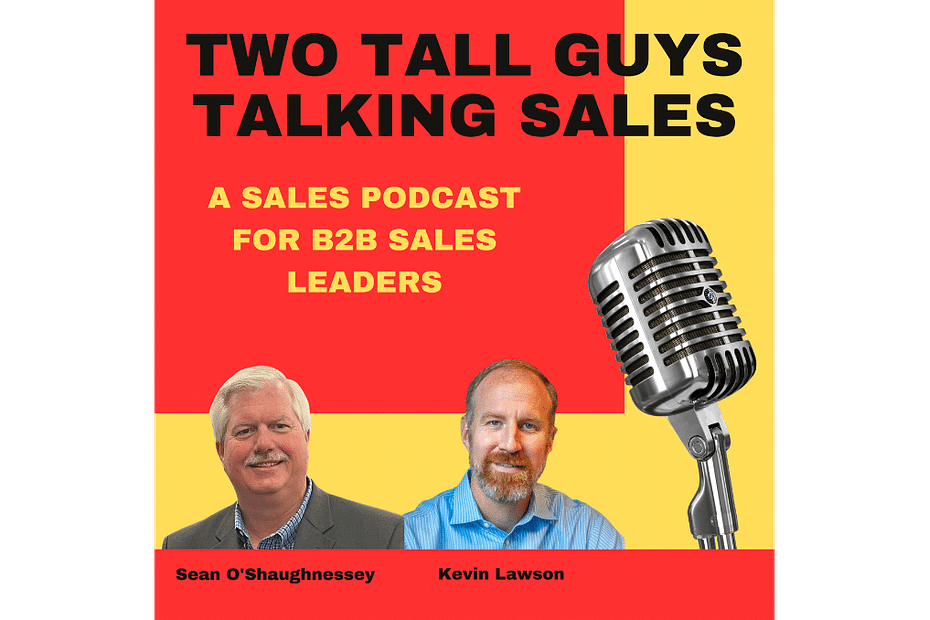
Two Tall Guys Talking Sales – From Comp Plans to Territory Alignment: Sales Strategies Every Leader Needs for Revenue Generation – Episode 153

As the year draws to a close, sales leaders and business owners face a critical challenge: preparing for growth in the year ahead. In this episode of Two Tall Guys Talking Sales, hosts Kevin Lawson and Sean O’Shaughnessey dive deep into sales management strategies that set the stage for long-term sales success. From refining compensation plans and aligning territories to planning product lifecycles and avoiding the dreaded “hockey stick” growth trap, this conversation is packed with insights on business acumen, value selling, and revenue generation strategies that every sales leader should master.

Key Topics Discussed

  • 01:00 – Planning Beyond This Year: Why sales leaders need to start preparing now for next year’s revenue generation and sales processes.
  • 02:11 – Building Smarter Compensation Plans: Evaluating and refining comp structures to drive sales success and attract top talent.
  • 03:13 – Product Lifecycle & AI Readiness: How shifts in markets and technology demand updates to your offerings and messaging.
  • 05:00 – Departmental Alignment for Growth: Understanding how revenue management and sales growth affect every department in your business.
  • 07:12 – Right People, Right Roles: Assessing whether your sales team is positioned for success in the next stage of your growth plan.
  • 11:20 – Avoiding the “Hockey Stick” Trap: Why spreading growth evenly across years is a better long-term sales strategy.

Key Quotes

  • Sean O’Shaughnessey (01:07): “If I asked you to write out your three-year plan, next year already knocks off the first year. Are you one-third of the way there, or do you need to rethink your path?”
  • Kevin Lawson (02:33): “Be planning ahead. Compensation plans aren’t a set-and-forget item—you need to revisit them every year to make sure they’re delivering the right results.”
  • Sean O’Shaughnessey (07:59): “Do I have the right people in the right place in my sales organization for next year? Not every salesperson has to leave, but maybe their role needs to evolve.”
  • Kevin Lawson (11:38): “You don’t want that third year of your plan to be a hockey stick. Don’t put yourself in a position where you suddenly need 40% growth in one year to hit your goals.”

Additional Resources

  • B2B Sales Lab: A peer community for sales leaders and professionals to sharpen strategies, exchange best practices, and get actionable feedback.
  • EOS Framework: For leaders who want to align messaging, sales strategies, and revenue management with long-term goals.

A Significant Actionable Item from this Podcast

Review and finalize your sales compensation plans by December 1st. This gives your team enough time to digest changes, ask questions, and align their sales strategies before the new year begins. Waiting until January leaves your salespeople unprepared, which can delay revenue generation and momentum.

Read the rest of the article…

Transforming Quota-Setting: Strategies for Sales Leaders to Optimize Performance and Revenue

Quota-setting is one of the most misunderstood elements of sales leadership. Too often, it’s treated as a spreadsheet exercise or a top-down directive, rather than a strategic lever that drives behavior, performance, and growth.

Whether you’re leading a team of 20 or you’re the founder managing three reps, how you define quotas has a direct impact on your revenue trajectory and your team’s motivation.

So, where do you start?

With timing. If you’re not delivering quotas to your team until February or March, you’re already behind. Salespeople need clarity by December. That gives them runway to plan, prioritize, and hit the ground running in January. Delayed quotas create confusion and stall momentum. To achieve a strong Q1, you need to equip your team early.

Quota-setting varies depending on the size of your company. Larger teams offer more flexibility. With 10 or more reps, you can spread risk, balance performance, and model averages. You’ll have top performers who consistently overdeliver, alongside newer reps who are still ramping up. The law of averages works in your favor. You can afford some variance. Smaller teams don’t have that luxury.

When you’re running a small team, maybe two or three reps or founder-led sales, every individual matters. One person missing quota can tank your number.

You can’t rely on averages. You need precision.

That means tying quotas to actual relationships, known opportunities, and real probability. It’s not about slicing up a target evenly. It’s about assigning numbers based on what’s realistically achievable in each territory or account list.

Territory design plays a big role here. Whether it’s geographic, vertical, or named accounts, quota must reflect the market potential. You can’t expect equal performance from unequal opportunity. If Rep A has 500 viable accounts and Rep B has 50, their quotas shouldn’t look the same unless you have data that says Rep B’s accounts are closer to your Ideal Client Profile. Use available market data to inform the number. Don’t assign quotas in a vacuum. 

In larger organizations, quotas often originate from the top down, typically from finance. The CEO and CFO commit a growth number to the board, investors, or in public filings to the SEC. They have no choice but to pass it down. It’s not uncommon for the sales team to receive the number without context. That’s a problem. If you’re in a leadership role, you need to pressure test that number. Can your team realistically hit it? If not, what additional resources are required?

  • More headcount?
  • Better enablement?
  • Marketing support?

In large organizations where the quota is driven by investor expectations, the VP of Sales must establish an organization well before the new year that achieves this year’s goal, while also meeting the expectation of growth for the next year. Planning ahead, sometimes years in advance, is part of the job.

Read the rest of the article…

Two Tall Guys Talking Sales – Breaking the Silos: Aligning Sales and Marketing for Real Revenue Growth – Episode 147

In this episode of Two Tall Guys Talking Sales, Kevin Lawson and Sean O’Shaughnessey dive deep into one of the most misunderstood dynamics in business: the relationship between sales and marketing. Pulled directly from a thought-provoking question inside the B2B Sales Lab community, this conversation explores how sales teams can contribute meaningfully to marketing efforts and why that collaboration drives better revenue generation. Whether you lead a sales team, run marketing campaigns, or wear both… 

Two Tall Guys Talking Sales – Building a Sales Powerhouse—The 3 Most Underrated Skills with Jeff Parris – Episode 143

Sales isn’t about persuasion but service, resilience, and growth. In this episode of Two Tall Guys Talking Sales, co-hosts Kevin Lawson and Sean O’Shaughnessey welcome sales leader and former professional athlete Jeff Parris to explore the fundamental skills that separate elite salespeople from the rest. Drawing on decades of experience, Jeff shares three often-overlooked yet foundational competencies that drive sales success, and they’re not what you’d expect. Whether you’re a VP of Sales building a… 

Navigating the Sales Maze: Overcoming Missed Steps in Your Sales Process

The challenges for a salesperson or a sales manager are numerous. One such challenge that often arises during the sales process is the realization that a crucial step has been skipped. This situation is not uncommon and is faced by many salespeople. However, it’s not a moment for reprimanding or pulling out an accountability chart. Instead, it’s a moment of realization and an opportunity to rectify the error to avoid ending up in the ‘no decision lane.’

I have written about the importance of skipping stages of the sales process elsewhere on this site, most recently in “The Key to Profitable Sales Organizations: Understanding and Adhering to the Sales Process,” where I remind you that, according to the Harvard Business Review, 28% of companies that master at least three stages of their sales process will see an increase in revenue growth.

When you recognize you’ve missed a step in your sales process, it resembles backing up a train. You’ve got a lot of cars put together, but one is out on its own. Addressing this situation requires a specific style and approach. As a sales leader, your focus should be on the next step in the process. Have you covered this step from a question in the sales meeting? It’s important to ask questions like, “What is next? What is missing? What is now?” 

As a salesperson, if you realize you’ve missed a step, address it head-on. This approach allows you to rectify your error and builds trust with your prospect by demonstrating transparency and accountability. 

Read the rest of the article…

Validation Events: The Unsung Hero of Sales Process Discipline

In the complex world of B2B selling, trust is built in stages. The challenge in all sales campaigns is ensuring the prospect trusts they are making the best decision for their business.

  1. Do they trust that the salesperson is giving them all of the information?
  2. Do they trust that the company will support them after the sale?
  3. Do they trust that the product will perform as they expect it to perform?

As I have explained in my book, Eliminate Your Competition, as well as the blog for that book and in this blog, the prospect needs to trust all three elements the salesperson is selling:

  1. They need to trust the product.
  2. They need to trust the company behind the product.
  3. They need to trust the salesperson.

Prospects listen to your sales message, review your materials, and hear your claims, but none of that guarantees belief or trust. Trust is validated when your claims are validated. That’s why validation events are crucial to any rigorous sales process.

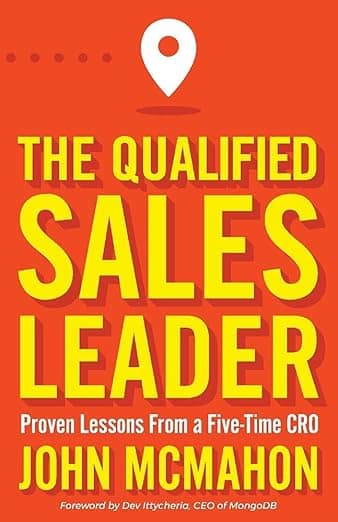
In The Qualified Sales Leader, John McMahon stresses the importance of customer-driven validation. He cautions sales leaders against relying on internal optimism or anecdotal “good signals” from prospects. Instead, McMahon emphasizes observable proof—real buyer behavior that confirms alignment, commitment, and value. Validation events are when the customer takes action to validate that what you’ve promised is accurate and valuable.

An excellent sample sale process flow looks like this:

  1. Discover
  2. Scoping
  3. Economic Buyer Meeting
  4. Validation Event
  5. Business Case and Final Proposal
  6. Negotiate and Close

As you can see, the Validation Event is the last step before creating the final business case, which will be bundled with your final proposal.

Read the rest of the article…