Skip to content

meetings

What An MBA Didn’t Teach You About Sales

The sales profession is challenging. You need to work hard at it to succeed. You need to learn from the best. You need to improve your skills continuously. If you think you can sell since you are a hit at parties and have a lot of friends, you may soon find that you are a failure as a salesperson. Blunt truth:

because the sales profession is so hard, you have to focus on doing everything in sales very well, or you will be considered a failure.

I call this blog, Skinned Knees because I try to relate all of the learning that I have done over the past 4+ decades (while skinning my knees in the learning process).

I hope that you learn from my mistakes so that your business will grow!


Turning Around Sales Performance: Strategies for CEOs and Sales Managers to Foster Internal Alignment

Navigating a sales turnaround isn’t just about fixing numbers; it’s about transforming the business. It’s about realigning expectations, rebuilding internal trust, and creating a structured, sustainable path forward. 

If you’re a CEO, sales manager, or a key salesperson in your organization, the pressure to reverse a sales slump can feel overwhelming. However, the truth is that turnarounds aren’t made in a sprint; they’re built through clarity, consistency, and effective communication.

Too often, sales leaders make the mistake of focusing only on the downward trend. They get caught up in the urgency of the numbers and forget that the real challenge lies in managing upward, setting expectations with executive leadership, and aligning them with reality. 

If your sales team is underperforming, your internal stakeholders are your new audience. Just as with external prospects, you need to manage their expectations with a clear, actionable plan.

The process starts with a shift in mindset. 

Instead of viewing upper management as critics, think of them as clients. What do they need to believe in this turnaround? What information do they need to trust your leadership? Start by building a high-level outline. Avoid over-engineering the details in the early stages. Focus on where you want to go, then reverse-engineer the steps to get there.

Every turnaround starts from a rear position. That means your first job is to stop the downward momentum. Before you can scale revenue, you need to stabilize it. That requires a clear definition of success, agreed upon by everyone involved. 

  • Are you trying to double revenue in 12 months? 
  • Or just return to last year’s baseline? 
  • Is that goal realistic given your market, team, and resources? 

If not, revise it. A stretch goal is fine. A fantasy is not.

Read the rest of the article…

From Reporting to Coaching: Elevate Your One-on-One Sales Meetings to Drive Performance and Trust

A one-on-one sales meeting is not a reporting meeting. It’s not about reviewing what already happened. And it’s definitely not about the manager doing most of the talking. The purpose of a one-on-one pipeline review is to develop the salesperson, surface challenges, and accelerate opportunities. If your one-on-ones are anything less, you’re leaving performance on the table.

Sales leaders often default to micromanagement. 

Especially when the rep is new or struggling. But that approach backfires. It creates dependency and stifles problem-solving. The goal is to coach your reps into leading the meeting. That shift changes everything. When reps own the agenda and bring forward deal-level insights, they’re forced to think critically. That’s where growth happens.

If you’re leading a sales team or are a CEO playing the role of sales manager, you need to establish a clear structure. But the rep does the prep. You define the meeting cadence and format. Weekly or bi-weekly, depending on your velocity. You outline the sections: committed deals, stalled deals, and at-risk deals. 

But the rep fills in the content. They come to the meeting ready to walk you through each opportunity, with specific updates and clear asks.

Preparation is non-negotiable. For both sides. 

The salesperson should have updated their CRM before the meeting. The manager should have reviewed that data in advance. If either party shows up unprepared, the meeting becomes reactive. 

A waste of time. And it erodes trust quickly. 

Reps notice when you haven’t read the notes. They know when you’re winging it. And if they feel their effort isn’t valued, they’ll stop putting in the effort.

You want to create a culture where preparation is expected and rewarded. 

The fastest way to management failure is to ask questions that could have been answered by reading the CRM. Instead, use that time: 

  • To probe deeper. 
  • Ask about the deal strategy. 
  • Challenge assumptions. 
  • Help salespeople spot gaps they missed. 

That’s where your experience has real value.

It’s tempting to jump in and solve the problem. Especially when you see the red flags before the rep does. But resist the urge. Let them talk it through. Coach them toward the insight. Your job isn’t to close the deal; it’s to build someone who can. That means teaching them how to identify weak spots, how to pressure test a deal, and how to re-engage a stalled buyer. The real value of one-on-ones is in that development.

Think about how you coach. 

Are you diagnosing for them? Or are you helping them diagnose for themselves? When a rep says “this deal is solid, no issues,” that’s a red flag. Every deal has risk. Your job is to help them uncover it. Ask: “What’s the biggest thing that could derail this?” Or “What’s the last thing the buyer said that gave you pause?” These questions surface the truth. And they teach reps to self-assess more effectively.

There’s a fine line between coaching and grading. You want reps to be honest about their pipeline without fear of judgment. 

If a deal is weak, that’s not a character flaw. It’s a coaching moment. 

Read the rest of the article…

Two Tall Guys Talking Sales – Winning Sales Strategies for Productive, High-Impact Pipeline Reviews – Episode 149

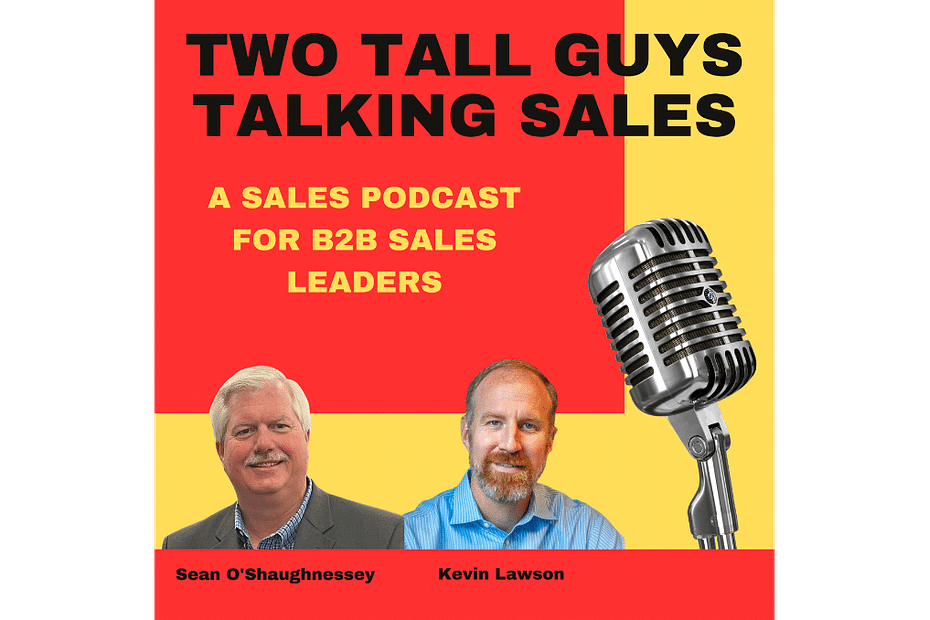
Pipeline reviews don’t need to feel like an ambush. In this episode, Kevin Lawson and Sean O’Shaughnessey break down how to turn pipeline meetings into high-value working sessions that improve sales management, strengthen sales processes, and accelerate revenue generation. The conversation focuses on preparation discipline, trust, and transparency, as well as a practical playbook for advancing complex deals through relationship mapping and peer-to-peer executive engagement. You’ll hear straightforward sales strategies you can implement immediately, whether… Two Tall Guys Talking Sales – Winning Sales Strategies for Productive, High-Impact Pipeline Reviews – Episode 149

Cut Through the AI Hype: Practical Definitions for Sales Professionals

Artificial intelligence is transforming sales, but too many leaders are investing in tools they don’t fully understand. The result? Costly mistakes, poor adoption, and missed opportunities. This episode of AI Tools for Sales Pros breaks down the three core technologies behind AI: and explains them in plain language that every sales professional can use. The episode compares the current AI confusion to the database revolution of the 1990s. Just as sales leaders once needed to… Cut Through the AI Hype: Practical Definitions for Sales Professionals

AI in B2B Sales Isn’t Optional Anymore

Several months ago, I was serving as a fractional VP of Sales for a $50 million manufacturing company. Their top salesperson was a 15-year veteran who knew the industry inside and out. Yet he was consistently being outsold by a competitor’s much newer hire. At first, it didn’t make sense until we discovered the reason. The competitor’s rep wasn’t just more energetic or aggressive. They were AI-enabled. While my client’s rep was manually scrolling LinkedIn… AI in B2B Sales Isn’t Optional Anymore

Two Tall Guys Talking Sales – Breaking the Silos: Aligning Sales and Marketing for Real Revenue Growth – Episode 147

In this episode of Two Tall Guys Talking Sales, Kevin Lawson and Sean O’Shaughnessey dive deep into one of the most misunderstood dynamics in business: the relationship between sales and marketing. Pulled directly from a thought-provoking question inside the B2B Sales Lab community, this conversation explores how sales teams can contribute meaningfully to marketing efforts and why that collaboration drives better revenue generation. Whether you lead a sales team, run marketing campaigns, or wear both… Two Tall Guys Talking Sales – Breaking the Silos: Aligning Sales and Marketing for Real Revenue Growth – Episode 147

Navigating the Sales Maze: Overcoming Missed Steps in Your Sales Process

The challenges for a salesperson or a sales manager are numerous. One such challenge that often arises during the sales process is the realization that a crucial step has been skipped. This situation is not uncommon and is faced by many salespeople. However, it’s not a moment for reprimanding or pulling out an accountability chart. Instead, it’s a moment of realization and an opportunity to rectify the error to avoid ending up in the ‘no decision lane.’

I have written about the importance of skipping stages of the sales process elsewhere on this site, most recently in “The Key to Profitable Sales Organizations: Understanding and Adhering to the Sales Process,” where I remind you that, according to the Harvard Business Review, 28% of companies that master at least three stages of their sales process will see an increase in revenue growth.

When you recognize you’ve missed a step in your sales process, it resembles backing up a train. You’ve got a lot of cars put together, but one is out on its own. Addressing this situation requires a specific style and approach. As a sales leader, your focus should be on the next step in the process. Have you covered this step from a question in the sales meeting? It’s important to ask questions like, “What is next? What is missing? What is now?” 

As a salesperson, if you realize you’ve missed a step, address it head-on. This approach allows you to rectify your error and builds trust with your prospect by demonstrating transparency and accountability. 

Read the rest of the article…

Two Tall Guys Talking Sales – Scaling Smarter: Building Sales Teams with Steve Caton – Episode 136

What does it take to scale a sales organization in today’s unpredictable business environment? In this dynamic episode of Two Tall Guys Talking Sales, hosts Sean O’Shaughnessey and Kevin Lawson welcome back Steve Caton, CEO of Altezza Solutions, to unpack the nuances of scaling sales teams, especially through the power of fractional sales professionals. Together, they explore the critical role that sales processes, sales management, and business acumen play in enabling organizations to grow without… Two Tall Guys Talking Sales – Scaling Smarter: Building Sales Teams with Steve Caton – Episode 136

The Three Pillars of Sales Success: Ideal Client Profiles, Effective Messaging, and Aspirational Offers

Let’s start this article with a rhetorical question to the sales professionals, sales managers, or CEOs: Have you ever found yourself guilty of sending messages to prospects without fully considering their specific needs or how your offer aligns with them?

If so, you’re not alone—this is a common pitfall in sales. The good news is, it’s entirely fixable by developing a straightforward, strategic approach.

An effective sales strategy hinges on three core components: defining your ideal client profile (ICP), crafting a resonant message, and presenting a compelling offer. These elements are interconnected. Mastering their alignment will significantly enhance your sales effectiveness.

Ideal Client Profile

Let’s start with the ideal client profile. How well do you know the companies you’re targeting? Identifying your ideal customer is foundational to your entire sales approach. It’s not enough to say that your market is “small businesses” or “tech companies.” Instead, think about your best clients—the ones you genuinely enjoy working with, who value your product, and who generate profitable, sustainable business. Think about companies that rarely devalue your product or service by asking for a discount. What do these clients have in common?

Now that you have your favorite customers from above, reflect on your top five or ten accounts. Are they in the same industry? Do they share similar challenges or company structures? Perhaps they all have common goals that your product consistently solves. Pinpoint these commonalities. This process will help you create a precise and actionable ideal client profile.

But don’t stop at company-level characteristics. Remember, even in B2B sales, you’re ultimately selling to individuals. Identify the specific roles or buyers within these organizations that are responsible for making buying decisions. Who are these decision-makers? What motivates them personally and professionally? Do they all have the same kind of college education? Do they all have similar career paths? Understanding the people behind the logo makes your outreach more personal, targeted, and effective.

What is your message?

Once you’ve developed a clear picture of your ideal client and the people within those companies, the next step is crafting a message that reflects your value-selling message. This message is how you communicate your value proposition—it’s the bridge between your product and your prospect’s needs. Too often, sales messaging falls flat because it focuses heavily on the seller rather than the buyer. Statements that emphasize “we,” “I,” or “our product” rarely resonate deeply. Instead, effective messaging highlights the customer’s perspective, clearly communicating the benefits they will experience.

Read the rest of the article…