Skip to content

pain

What An MBA Didn’t Teach You About Sales

The sales profession is challenging. You need to work hard at it to succeed. You need to learn from the best. You need to improve your skills continuously. If you think you can sell since you are a hit at parties and have a lot of friends, you may soon find that you are a failure as a salesperson. Blunt truth:

because the sales profession is so hard, you have to focus on doing everything in sales very well, or you will be considered a failure.

I call this blog, Skinned Knees because I try to relate all of the learning that I have done over the past 4+ decades (while skinning my knees in the learning process).

I hope that you learn from my mistakes so that your business will grow!


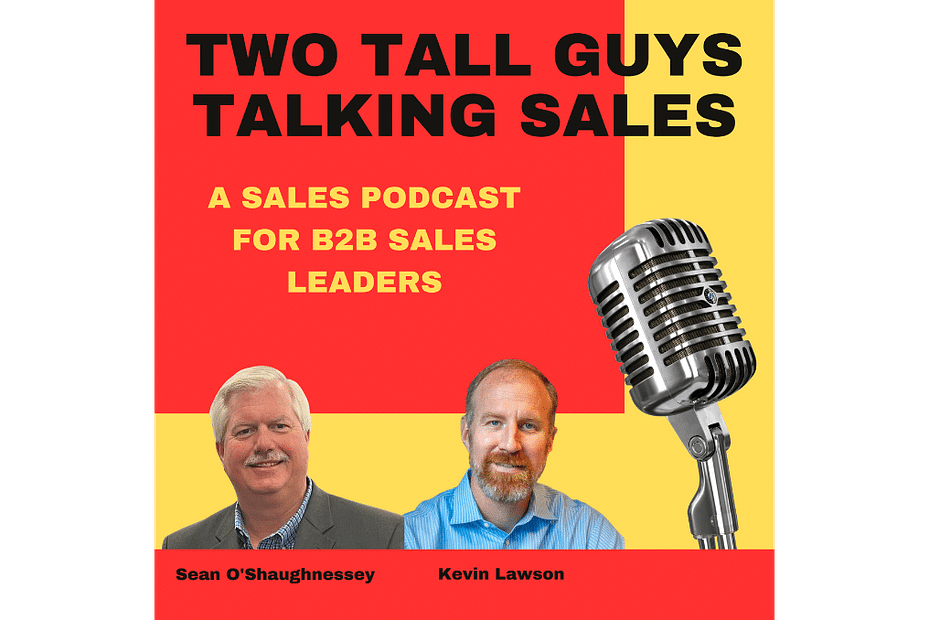
Two Tall Guys Talking Sales Podcast – From 0% to First Deal: January Sales Strategies to Start Strong – Episode 171

It’s January, the scoreboard is still 0 to 0 for most sellers, and the difference between a clean Q1 and a scramble often comes down to one thing: getting to “zero to one” without doing something stupid to win a deal you’ll regret. In this episode of Two Tall Guys Talking Sales, Kevin Lawson and Sean O’Shaughnessey use a basketball fast-start analogy to sharpen your Sales strategies for early momentum, tighter Sales processes, and better Revenue management—without defaulting to discounting, panic, or hope-as-a-plan.

Key Topics Discussed

  • Why the first “bucket” matters in Q1 (and how fast starts change the game) (00:00–02:15)

  • Zero to one: picking the highest-probability path to get on the board (02:15–05:30)

  • Buyer readiness: the “fast food vs. interstate exit” test for prioritizing your pipeline (03:00–05:10)

  • Reverify everything: deals inside 45 days, shifting priorities, and MEDDPIC discipline (06:45–10:20)

  • Don’t get squirrely: protecting Value selling and profitability when you’re tempted to “do something crazy” (10:35–13:10)

  • Sean’s practical tax tip: mileage documentation that saves pain later (13:25–14:20)

Key Quotes

  • Sean: “It’s time to score that first bucket. It’s time to go.” (02:01)

  • Kevin: “You have to discern as a seller… who is the most likely to buy now.” (03:35)

  • Sean: “Every deal that’s on your forecast for the next 45 days, you need to touch base.” (08:45)

  • Kevin: “Pause. Think about the deal you want… you’re conditioning somebody how to buy from you.” (10:54–11:20)

  • Sean: “Take a picture of your odometer… you’ll thank me a year from now.” (13:35)

Additional Resources

  • MEDDPICCC qualification concepts referenced in the conversation (Champion vs. Coach; reconnecting with the Economic Buyer as the calendar turns).

  • Mileage-tracking best practice: capture odometer readings now to support business mileage documentation at tax time.

A Significant Actionable Item from this Podcast

Pick up the phone today and re-verify every deal on your forecast that’s expected to close in the next 45 days (and don’t accept vague answers). Confirm priorities didn’t shift post-holidays, validate your Champion and Coach are still in seat and aligned, and re-confirm the Economic Buyer’s expectations and paperwork path. That single discipline move is sales management in action, and it’s how you protect Revenue generation without resorting to margin-killing “quick wins.”

Summary

If you’re sitting at 0% of quota in mid-January, this episode is your gut-check and your playbook. Sean and Kevin cut through the noise with practical Business acumen: prioritize buyers who are ready now, tighten your Messaging around value instead of price, and pressure-test your forecast so Sales success doesn’t depend on luck. Listen if you want a fast start that holds up all year—because January habits become full-year outcomes.


Read the rest of the article…

The Dual Blueprint Requirement: Why Growth Demands Two Plans, Not One

Launching a company or steering one through a merger, turnaround, or major transition requires clarity about how value will be created and, just as importantly, how revenue will actually be generated.

Many leadership teams recognize the need for a Business Plan, but overlook that sustainable growth requires a second, complementary plan. The main breakdown is not the strategy itself, but the assumption that strategy automatically creates revenue. Bridging strategy and revenue requires a distinct plan for that conversion, targeting a different audience.

The Business Plan sets direction from the top down. The Sales Plan is validated by demonstrating how that direction can become actual revenue from the bottom up.

Both are essential. Neither works in isolation.

The Business Plan: Charting the Course (Top-Down)

The Business Plan exists to answer specific questions for a particular audience. Its primary readers are CEOs, CFOs, bankers, private equity partners, and venture investors. These stakeholders are evaluating risk, scale, and return. They want to know where the company is going and why the destination is worth the journey.

At its core, the Business Plan articulates strategic intent. It defines the mission, the long-term objectives, and the differentiated value proposition that the company believes the market will reward. It frames the opportunity in language that aligns leadership, capital, and governance.

Market analysis in this context is necessarily high-level. It focuses on the total addressable market, industry dynamics, competitive positioning, and macro trends. The goal is not to explain how every deal will be won, but to establish that a meaningful opportunity exists and that the company has a credible right to pursue it.

Financial projections follow the same logic. They are built on broad assumptions: projected market share, average selling price, renewal and retention rates, inflation, and multi-year revenue targets. These numbers are directional. They signal ambition and scale rather than operational certainty.

Read the rest of the article…

Hiring Your First Sales Leader? Build a Sales Machine, Not a Band-Aid

You are ready to hire your first sales leader when you are prepared to buy leverage, not relief. Titles do not grow revenue. A high-impact sales leader creates durable selling capability, reduces owner dependency, and raises standards through coaching, recruiting, and operating cadence. If what you really want is a second version of you to carry the number and keep deals moving, you are hiring a band-aid, and you will pay for it twice.

Most owners make this hire at precisely the wrong moment. The pressure is real, the pipeline feels fragile, and the business is starting to outgrow informal management. So the owner reaches for the obvious move: “We need a sales manager.” The problem is that the role is designed around short-term comfort rather than long-term capacity. The result is a well-paid administrative firefighter who inherits the chaos instead of fixing the system that creates it.

Before you post a job, clarify the objective. Do you want a revenue driver or a capability builder?

A revenue driver is a manager who helps you hit the number by conducting deal inspections, applying forecast pressure, and holding reps accountable. That can be valuable, but it is often a disguised need for personal production. A capability builder is a leader who creates repeatable performance by improving the quality of selling, tightening hiring standards, and building a coaching system that makes average reps better and good reps consistent. That is the role that changes enterprise value.

Here is the hard truth most owners avoid. If you design a role that combines selling and leading, selling will win. Always. When a leader has a quota, the business trains them to prioritize their own deals over the team’s development. They will “help” reps when a deal is in a late-stage, visible phase, then postpone coaching, recruiting, and onboarding because those activities do not pay this month. Over time, the team remains dependent, the pipeline remains uneven, and the owner remains in the middle.

Assessing readiness: leader or band aid

Readiness is not a revenue threshold. It is an operating decision. The question is whether you will let a sales leader lead.

The owner’s trap is hiring a leader while keeping day-to-day control: still running reviews, intervening in pricing, rewriting emails, jumping on calls, and closing important deals. In that environment, the new leader cannot build authority; they become an assistant with a title. You’ll be frustrated they’re “not taking enough off my plate,” while they’re frustrated at not being able to make decisions without you.

If you want a clean test, look for these warning signs:

  • You are still the primary deal closer and default problem solver.
  • You do not believe the company can make the number without your direct involvement.
  • You step into deals because you do not trust the process, the rep, or the forecast.
  • Your coaching is ad hoc, usually when something goes wrong.
  • Recruiting is episodic, triggered by pain, rather than continuous.
Read the rest of the article…

Instant Follow-Up: AI Meeting Recaps That Speed Up Deals and Clean Up Your CRM

Episode Summary

Most sales teams underestimate the hidden “sales tax” that hits after every good meeting: recaps, CRM updates, follow-up emails, and task creation that quietly kill momentum. In this episode of AI Tools for Sales Pros, we break down how artificial intelligence and AI meeting assistants can eliminate that post-call drag while improving accuracy, consistency, and professionalism. You’ll learn how to move from manual note-taking to an orchestrated workflow that produces a structured recap, action plan, and CRM updates in minutes. The result is better sales processes, faster follow-up, and a practical path to sales success without adding headcount.

Major Highlights

  • The real cost of post-meeting admin work: why most teams lose deal velocity after a “great call” and how that impacts revenue generation.
  • The “sales tax” concept: how small frictions compound into hours of lost selling time and weaken revenue management.
  • The shift in operating philosophy: stop treating reps like court reporters and move them into a Producer / Editor role focused on value selling and human connection.
  • AI meeting assistants (examples: Fireflies.ai, Otter.ai, Fathom): transcription is the baseline, but structured extraction is where the leverage appears.
  • Orchestration beats transcription: connecting transcripts to an automation platform (Make.com or Zapier) to produce structured outputs aligned to your sales strategies and sales management system.
  • Prompting as a sales process tool: how to instruct an LLM to extract pain points, budget signals, stakeholders, competitive mentions, objections, and next steps with owners and dates.
  • Human-in-the-loop protocol: why the system should draft the follow-up email but never auto-send, protecting trust and improving messaging quality.
  • Self-healing CRM behavior: how structured AI outputs reduce missing data, improve forecast hygiene, and strengthen revenue management discipline.
  • Ethics and consent: a practical, value-forward disclosure script that protects the relationship while using artificial intelligence responsibly.
  • The “Post-Call Lag Check” audit: a simple way to measure your current performance baseline before investing in any tooling.
Read the rest of the article…

Two Tall Guys Talking Sales Podcast – From Top Sales Rep to Sales Leader: Proven Strategies to Win Your First 30 Days – Episode 163

Stepping into sales leadership is equal parts exhilarating and disorienting. In this episode, hosts Kevin Lawson and Sean O’Shaughnessey unpack the real emotions, real transitions, and real responsibilities that come with moving from individual sales producer to leading a revenue team. With candid stories, practical frameworks, and relatable missteps, they help new sales leaders navigate uncertainty with confidence. If you’ve just stepped into a new role or aspire to, this conversation offers clarity, direction, and the mindset you need for sales success.


Key Topics Discussed

1. The Shock and Reality of Promotion (≈00:50)

Why moving from top producer to sales leader feels like an entirely different profession, and why the first days matter.

2. Avoiding the “I Know How to Do Your Job Better” Trap (≈01:40)

Kevin shares a painful early mistake and the deeper lesson about sales management, humility, and trust-building.

3. Transition Planning: Urgency vs. Importance (≈02:57)

How to use the Eisenhower Matrix to balance existing customers, new responsibilities, and the shift into leadership.

4. Using Your Sales Skills to Lead Your Team (≈07:30)

Sean’s powerful reminder: Treat your salespeople like your customers, sell ideas, build trust, and guide behaviors.

5. Leading from the Front Without Micromanaging (≈09:51)

How to allow different working styles, leverage diverse strengths, and build a team culture focused on revenue generation rather than personal heroics.

6. Building a Winning Culture Where Everyone Rises Together (≈11:28)

Kevin outlines why leaders must protect culture, reduce tension, and rally the team around shared goals and value-selling behaviors.


Key Quotes

Kevin Lawson

“You should probably not tell everyone how you would do their job.” (≈01:40)
A candid reminder that leadership isn’t an invitation to dictate; it’s an opportunity to understand and elevate.

“Anybody with an abundance mindset wants you to win. Go find the resources.” (≈04:38)
A call for continuous learning and connection, hallmarks of modern sales strategies.

Sean O’Shaughnessey

“Think of the people who report to you as your customer. Don’t tell, show. Don’t pitch, engender trust.” (≈07:30)
A profound reframing of sales processes and leadership communication.

“From this point forward, it is not your number anymore. It is our number.” (≈10:47)
A defining mindset shift for every new sales leader stepping into revenue management.


Additional Resources

  • Book Referenced: 360° Leader by John Maxwell (≈11:28)
    Insightful guidance for leading from any position inside an organization.
    https://a.co/d/iDb6uvc

  • Community Mentioned: B2B Sales Lab (≈14:24)
    A private membership community for salespeople and leaders seeking peer-driven support, growth, and shared best practices.
    b2b-sales-lab.com


A Significant Actionable Item from This Podcast

Create a 30-day leadership transition plan using the Eisenhower Matrix.
Before making changes, schedule one-on-one conversations, prioritize responsibilities, and map urgent vs. important tasks. This prioritization will give you the clarity to shift from producer to leader without burning out or dragging customers along with the chaos. This single step dramatically strengthens your early decision-making and establishes credibility with your team and executive leaders.


Read the rest of the article…

Stop Betting on Superstars: How Operating Standards Turn Sellers into Predictable Producers

Many teams grow, but few truly scale revenue beyond individual hero efforts. That difference changes everything for leaders today and in the future. Growth relies on hustle; scaling depends on repeatability across segments and individuals. Your strategy must reflect that hard truth in practice.

Are you relying on one standout to win deals month after month? That looks strong until risk turns visible and costly. One resignation can cripple momentum and expose brittle systems that you had previously ignored.

Scalable sales replaces heroics with defined, teachable operating rhythms that everyone follows. It turns chaos into predictable pipeline progress and results. It clarifies markets, messages, motions, and measurable expectations for every seller on a weekly basis. It builds leverage into onboarding and coaching for consistency. It protects margins while systematically accelerating win rates and velocity across territories.

The foundation begins with a clear picture of your ideal customer, including any disqualifying factors. Having an accurate Ideal Client Profile (ICP) helps minimize waste and reduce uncertainty in your efforts. Take time to define firmographics, pain points, triggers, and buying behaviors using consistent language based on shared evidence. Understand who cares about these issues and why it matters to them now. Also, identify negative personas to sharpen your focus and qualification processes in marketing and sales. A well-defined ICP can significantly boost your conversion rates and shorten the sales cycle.

Next, turn your ICP into straightforward messaging and discovery frameworks tailored for each stage. Consider what unique problems you solve for your customers. What outcomes are most important to them, and who are the key stakeholders by role and priority?

Build talk tracks that lead buyers, not chase buyers with purpose always. Anchor questions to the business metrics and risks they feel. Teach a qualification that tests mutual commitment and outlines next steps with attached dates. Avoid fluffy demos; design relevant proofs using their data. Process specificity turns B players into consistent producers without copying another personality.

I suggest you establish a practical, stage-based operating rhythm that everyone can easily understand and follow. By sharing clear definitions and expectations, managing the pipeline becomes a consistent and smooth process each week. Define each stage with specific exit criteria—avoiding vague intentions or subjective feelings. For example, discovery is considered complete when stakeholders confirm the consequences and impact, and solution fit is achieved when success criteria and ownership are clearly aligned. The commit stage should be backed by a shared plan with clear dates and assigned owners. During weekly reviews, focus on assessing quality rather than just quantity or activity counts. Ask yourself:

  • Does evidence from buyers’ backstage moves have a direct impact on their purchasing decisions?
  • Are the next steps specific, mutually agreed upon, and already scheduled on both calendars?
Read the rest of the article…

Differentiating Through Value: Mastering the Art of Consumable Sales

Navigating the competitive landscape of consumable sales calls for a thoughtful and kind-hearted approach. Salespeople, sales managers, and CEOs of small companies should remember that their role is about more than just making transactions. In a market where products often seem very alike in quality and price, what truly sets you apart is your ability to consistently show value. So, how can you create lasting relationships with your customers, even when many options are available?

Consider the analogy of fast-food giants like Burger King and McDonald’s. Both offer similar products, yet they each have a dedicated customer base. The key lies in creating a unique selling proposition that resonates with your target audience. 

As a salesperson, your goal is to become indispensable to your customers. This means transforming from a mere vendor to a trusted advisor who is deeply integrated into the customer’s business operations.

Become Part of Their Team

A critical part of this integration is understanding what a “gatherer” is. A gatherer is more than just an account manager. They build a close, almost inseparable bond with the customer. They become a trusted part of the customer’s team, often turning to them for advice and solving problems together. Building this kind of trust requires a genuine understanding of the customer’s business, enabling you to offer insights and solutions that extend beyond the products you provide.

In the realm of consumable sales, where products are used and replaced regularly, the salesperson’s value lies in their ability to maintain and continually grow the relationship. This involves not just selling a product but also selling yourself and your company. Your expertise, reliability, and ability to anticipate and solve problems become the key differentiators. When customers face challenges, they should instinctively think of you as the go-to person for solutions, regardless of minor price differences or delivery times.

To attain this trusted advisor status, you must focus on three core elements: 

  1. the product, 
  2. the company, 
  3. yourself. 

While the product and the company are essential, the most significant value often comes from you as the salesperson. Your ability to understand the prospect’s needs, guide their purchasing decisions, and challenge them to think differently about their business can set you apart from the competition.

Read the rest of the article…

Two Tall Guys Talking Sales – Sales Management Masterclass: Paul Rafferty’s Proven Framework for Smarter Deal Reviews and Revenue Generation – Episode 159

Welcome back to Two Tall Guys Talking Sales with hosts Kevin Lawson and Sean O’Shaughnessey. In this dynamic episode, the Tall Guys welcome Paul Rafferty from Sales Xceleration to explore the art and science of sales coaching, deal qualification, and the importance of building sales acumen. Paul brings decades of experience in sales management, value selling, and revenue generation, offering a practical framework for sales leaders who want to coach their teams more effectively and for reps who want to stop chasing the wrong deals.

Discover how to transform your team’s approach to sales processes—from opportunity scoring to understanding a buyer’s “pain chain.” This conversation is packed with actionable insights that blend sales strategy, business acumen, and real-world stories you can immediately apply to your own selling environment.

Key Topics Discussed

  • 03:00 — Building a Deal Coaching Framework:
    Paul introduces his 100-point scorecard system that evaluates the Ideal Prospect Profile, the Pain Chain, and Commitment to Decision. This framework transforms deal reviews into powerful coaching sessions rather than mere forecast updates.
  • 05:10 — The “Pain Chain” and Sales Philosophy:
    Sean and Paul discuss how understanding buyer pain isn’t optional—it’s foundational to value selling. Without real pain, there’s no compelling reason for your buyer to act.
  • 06:45 — From Friendly to Effective Salesperson:
    Paul and Sean discuss how friendliness can open doors, but it’s teaching and insight that ultimately win deals. Sales success comes from challenging your prospects and helping them think differently.
  • 08:00 — Why Deals Get Stuck:
    Kevin and Paul explore how most stalled deals trace back to weak discovery. Coaching your team to go deeper early in the sales process prevents gridlock later.
  • 10:30 — The Currency of Knowledge:
    Paul explains that in modern selling, gifts and lunches no longer move the needle—information does. Great salespeople earn influence by being teachers, not vendors.

Key Quotes

  • Paul Rafferty (03:50):
    “It’s not what you do—it’s what they do. The scorecard helps you coach reps to spend time where there’s real buying intent, not just big logos.”
  • Sean O’Shaughnessey (05:43):
    “Salespeople need to understand the theory of sales. Without knowing the frameworks—like the pain chain or solution selling—you’re just saying, ‘I’m a nice guy, buy from me.’”
  • Kevin Lawson (08:38):
    “Most deals go to die in the discovery phase. Coaching means rewinding the tape and helping reps fix what wasn’t done early enough.”
  • Paul Rafferty (12:51):
    “Your currency is information—help your buyer look smart, get promoted, and win internally. That’s real value selling.”

Additional Resources

  • Paul Rafferty
    • prafferty@salesxceleration.com 
    • https://www.linkedin.com/in/pauljrafferty/
  • Books referenced:
    • Solution Selling by Michael Bosworth – https://a.co/d/hHtYSiX
    • The Challenger Sale by Matthew Dixon & Brent Adamson – https://a.co/d/2kJsbDU
    • Strategic Selling by Robert Miller & Stephen Heiman – https://a.co/d/icPcC6H

A Significant Actionable Item from this Podcast

Implement a Deal Coaching Scorecard.
Instead of subjective forecasting (“This deal is 70% likely to close”), create an objective scoring model based on:

  1. Ideal Prospect Fit (25 pts) – Does this prospect align with your best customer profile?
  2. Pain Chain (25 pts) – Have they admitted to a real, solvable pain?
  3. Commitment to Decision (50 pts) – Have they engaged decision-makers and committed to next steps?

Use this tool in your next pipeline review. It will sharpen your sales management coaching, improve revenue forecasting, and elevate your team’s overall sales success. If you want more information about this scorecard, reach out to Paul Rafferty at his address above.

Read the rest of the article…

How to Use AI to Write Personalized Cold Emails at Scale

It’s Sunday night. You’re staring at your CRM and that dreaded task appears: “Prospecting Block: 100 Accounts.” The feeling in your stomach tells you what’s coming. You’ll either blast generic messages and feel like a spammer or spend hours crafting a handful of handcrafted emails that barely move the needle.

This is the central productivity crisis in modern B2B sales. We’re constantly forced to choose between efficiency and relevance. But what if that choice was a false one? What if artificial intelligence could help you achieve both, without sacrificing your authenticity or sanity?

The False Choice: Efficiency vs. Effectiveness

The traditional approaches to sales outreach, templates versus deep personalization, represent the old world of “one-to-many” or “one-to-one.” But the future of sales lies in one-to-one at scale. The key is understanding that AI isn’t replacing salespeople, it’s augmenting them.

Your job is no longer to write every email from scratch. Your job is to be the editor-in-chief of your outreach strategy. The human decides the target, tone, and message. The AI executes your direction at scale.

The Strategic Brief: Your Blueprint for AI-Powered Outreach

To adopt this workflow, replace your 50-email grind with one Strategic Brief containing three sections:

  1. Voice Profile – Teach AI to sound like you. Include examples of your best emails and guidelines for tone, structure, and style.
  2. Prospect Context – Gather simple, factual data on each contact: title, company, recent events, and pain points.
  3. Mission – Define your goal and message direction. What’s the objective of the email: reply, insight, or meeting?
Read the rest of the article…

Intro to Automation: Make.com, Zapier, n8n, and String from Pipedream for Sales Pros

In this episode of AI Tools for Sales Pros, we dive into the critical decision of selecting the right automation platform for your sales organization. From Zapier’s simplicity to Make.com’s visual workflow design, from n8n’s open-source flexibility to Pipedream’s developer-friendly tools, each platform offers unique advantages—and pitfalls—for sales teams. We examine how team skills, budget, and complexity influence the right choice and share real-world results from companies that achieved dramatic efficiency gains. By the end, you’ll know how to align platform capabilities with your team’s technical comfort and long-term automation strategy.


Major Highlights

  • Why choosing the right automation platform is one of the most important technology decisions for sales teams.
  • The hidden costs of mismatched platforms include budget waste, abandoned projects, and migration headaches.
  • A breakdown of the four leading automation tools:
  • Zapier: User-friendly pioneer with the largest integration library.
  • Make.com: Visual workflow builder for advanced, high-volume automation.
  • n8n: An open-source powerhouse offering unlimited flexibility and cost efficiency.
  • Pipedream (including String): Developer-friendly with real-time processing power.
  • Key criteria to consider: team technical comfort, use case complexity, budget, scale, and integration requirements.
  • Practical implementation strategies for each platform, including quick wins and longer-term adoption.
  • How multi-platform strategies can be deployed and when they make sense.

  • Read the rest of the article…