Skip to content

Sales Pipeline

What An MBA Didn’t Teach You About Sales

The sales profession is challenging. You need to work hard at it to succeed. You need to learn from the best. You need to improve your skills continuously. If you think you can sell since you are a hit at parties and have a lot of friends, you may soon find that you are a failure as a salesperson. Blunt truth:

because the sales profession is so hard, you have to focus on doing everything in sales very well, or you will be considered a failure.

I call this blog, Skinned Knees because I try to relate all of the learning that I have done over the past 4+ decades (while skinning my knees in the learning process).

I hope that you learn from my mistakes so that your business will grow!


AI Helps Great B2B Sales Meetings Build Momentum Toward the Close

Episode Summary

A strong B2B sales meeting can lose momentum the moment the AE sends a follow-up email packed with attachments. This episode explains how digital sales rooms, Generative AI, and human-in-the-loop automation can preserve the message as it moves through a buying committee. Sean examines the shift from static content libraries to dynamic buyer workspaces that support value selling, complex deals, and better B2B sales pipeline predictability. The goal is not more Sales Tech Stack complexity, but stronger sales processes, higher pipeline velocity, and measurable sales productivity gains.

Major Highlights

  • Why traditional Sales Enablement often stops at content storage and leaves the internal champion responsible for explaining the business case.
  • How a single digital workspace can organize proposals, case studies, ROI tools, security documents, recordings, and mutual action plans for multi-stakeholder deals.
  • How augmented sales intelligence and AI relationship intelligence can reveal buyer engagement that ordinary email threads cannot show.
  • Why digital sales rooms can improve deal acceleration, revenue management, messaging consistency, and mapping the buying committee with AI.
  • How artificial intelligence can reduce RFP and security-questionnaire work while keeping experts responsible for uncertain or high-risk answers.
  • Why clean CRM data, governed content, and a disciplined RevOps AI deployment are prerequisites for useful automation.
Read the rest of the article…

Two Tall Guys Talking Sales Podcast – Stop Asking Bad Discovery Questions: How Top B2B Sellers Earn Buyer Trust – Episode 198

Most sales discovery questions fail before the buyer even answers them. Questions such as “What keeps you up at night?” and “What challenges are you facing?” have been used so often that buyers respond almost automatically, giving sellers little useful insight. In this episode of Two Tall Guys Talking Sales, Kevin Lawson and Sean O’Shaughnessey challenge sales professionals to replace generic scripts with informed, business-specific questions that improve discovery, uncover operational consequences, and help buyers think differently about their problems. They also explain how artificial intelligence and Generative AI can help sellers prepare deeper question paths, navigate Complex Deals, and establish themselves as trusted advisors rather than interchangeable vendors.

Key Topics Discussed

Why generic discovery questions produce generic answers — 00:00
Kevin and Sean open by dismantling familiar questions such as “What are your goals?” and “What keeps you up at night?” Buyers have heard these questions hundreds of times. Strong discovery must demonstrate Business acumen, industry knowledge, and a genuine understanding of the customer’s operating environment.

Researching the customer’s business before discovery — 01:51
Public information about industries, competitors, economic pressures, and business trends is readily available. Sellers should use frameworks such as PESTEL and the Business Model Canvas to understand what drives the prospect’s economics, how the company creates value, and where a proposed solution might improve Revenue generation, ROI, or operational performance.

Using operational questions to expose real business problems — 03:11
Kevin illustrates how questions about month-end close procedures, manual spreadsheets, reporting delays, and disconnected Sales processes can produce a meaningful conversation. The goal is not merely to identify which system a prospect uses. It is to uncover the consequences, workarounds, handoffs, and hidden costs that make change valuable.

Using AI to create better discovery question paths — 05:58
Sean presents a practical method for using ChatGPT, Claude, Gemini, Copilot, or another AI platform to develop branching discovery questions. Instead of asking an AI tool for one generic question list, sellers can ask it to anticipate several possible buyer answers and then generate the appropriate follow-up questions for each response. This turns AI prompts for B2B sales prospecting into preparation for a real business conversation rather than superficial personalization.

Teaching the customer how to buy — 07:00
In Enterprise Sales, buyers often understand their current situation better than they understand the process of selecting and implementing a new solution. Sellers must guide the Buying Committee through workflow changes, implementation tradeoffs, user concerns, and expected outcomes. This is where Value selling becomes practical: the seller connects the solution to the customer’s processes, risks, and desired business results.

Improving questions through sales management and peer coaching — 10:03
Kevin explains how a VP of Sales or sales manager can improve discovery without simply criticizing the team’s existing questions. Questions should be evaluated based on whether they advance the next step, increase deal value, improve Pipeline Velocity, or strengthen the seller’s competitive position. Sales Enablement can also become more effective when AEs, SDRs, and sales leaders exchange successful questions and discuss the order in which they should be asked.

Key Quotes

Kevin Lawson — 00:00
“Buyers have heard these questions hundreds of times, and they answer them on autopilot.”

Sean O’Shaughnessey — 00:45
“Questions that show that you understand the business… force your customer or your prospect to have a clearer thought process.”

Sean O’Shaughnessey — 09:00
“You know more about selling your product than they know about buying your product. You have to lead them through the way.”

Kevin Lawson — 12:03
“Stop asking questions the buyer has already heard. Start asking the questions that get the buyer to say, ‘I’ve never thought about that.’”

Additional Resources

  • PESTEL analysis: A framework for examining the political, economic, social, technological, environmental, and legal forces influencing an industry.

  • Business Model Canvas: A tool for understanding how a company creates, delivers, and captures value.

  • The Challenger Sale: A sales methodology centered on teaching customers something valuable, tailoring the conversation, and leading the buying process.

  • Generative AI platforms: ChatGPT, Claude, Gemini, and Microsoft Copilot can help sellers research industries, anticipate buyer responses, and develop stronger discovery questions.

  • B2B Sales Lab: A community where sales professionals and sales leaders can develop their sales acumen, discuss active opportunities, and improve their approach to B2B sales.

A Significant Actionable Item from this Podcast

Create a branching discovery question bank for one customer segment or active opportunity.

Begin with five questions you currently ask during discovery. Eliminate any question the buyer could answer without thinking. Then use an AI tool to generate five plausible responses to each remaining question and develop two or three follow-up questions for every response.

Do not treat the resulting output as a script. Review it for business relevance, arrange the questions in a logical sequence, and identify which questions reveal operational impact, financial consequences, organizational resistance, and decision criteria. Then compare the question bank with a successful AE, SDR, sales manager, or industry peer.

This is a practical form of AI-powered sales coaching and human-in-the-loop automation. AI expands the seller’s preparation, but the seller must still apply judgment, listen carefully, and decide which path to pursue. Done well, the exercise improves Sales success, supports B2B sales pipeline predictability, and helps accelerate Complex Deals without replacing the human conversation.

Read the rest of the article…

Two Tall Guys Talking Sales Podcast – Weak Sales Discovery Creates a Weak Pipeline – Episode 197

Discovery is not a preliminary conversation before the “real” selling begins. It is where complex B2B deals are either built on credible business value—or quietly undermined by weak assumptions, missing stakeholders, artificial urgency, and an unreliable forecast. In this episode of Two Tall Guys Talking Sales, Kevin Lawson and Sean O’Shaughnessey examine why strong discovery is essential to value selling, accurate revenue management, and sales success. They also explain how experienced sellers use business acumen to uncover operational constraints, quantify ROI, navigate the buying committee, and guide customers through decisions they may not yet understand how to make.

Key Topics Discussed

Why weak discovery creates a weak pipeline — 00:28
Poor discovery does not merely cause an awkward sales meeting. It produces shallow opportunities, fake urgency, premature proposals, discount pressure, inaccurate forecasts, and stalled decisions. Sean and Kevin establish discovery as the foundation of effective sales processes and B2B sales pipeline predictability.

Understanding the business reason behind the purchase — 01:27
Knowing what the buyer wants is not enough. Sellers must uncover why the organization needs it, what business problem is driving the investment, who holds influence and authority, and what happens if the problem remains unresolved. This is where business acumen and value selling begin—and where the seller gathers the evidence needed to defend price and demonstrate ROI later in the deal.

Why quoting without discovery makes the salesperson expendable — 02:43
Kevin challenges sellers who rush to educate the prospect, demonstrate features, and produce a quote. If the seller’s contribution is limited to product information and pricing, the buyer can often replace that salesperson with a website, product sheet, or artificial intelligence tool. Discovery is what separates professional selling from order processing.

Finding the hidden requirements that can derail complex deals — 04:28
A new CNC machine may require more than equipment and installation. Floor space, structural changes, utilities, drainage, environmental requirements, permits, contractors, and operational disruption may all affect the buying decision. In enterprise sales, the apparent purchase is often only one component of a much larger initiative. Effective discovery exposes those dependencies before they destroy pipeline velocity.

Using expertise to guide the customer’s buying process — 07:53
The seller has typically sold the solution more often than the customer has purchased it. That experience creates an obligation—and an advantage. By identifying questions the buyer has not considered, mapping the buying committee, and navigating multi-stakeholder deals, the salesperson becomes a trusted guide rather than another vendor competing on features and price.

How discovery improves forecasting, marketing, and revenue generation — 08:49
Robust discovery strengthens more than the individual opportunity. It improves forecast integrity, exposes the true urgency of the problem, creates better feedback loops with marketing and RevOps, and helps the organization attract more qualified prospects. Weaknesses introduced during discovery inevitably reappear during proposals, negotiations, implementation planning, and closing.

Key Quotes

“Discovery is not just the stage of the sales process. Discovery is the foundation of the very deal.” — Sean O’Shaughnessey, 00:44

“If you’re just doing a volume of quoting with no discovery, your job is in jeopardy. Discovery is what separates us from a product sheet.” — Kevin Lawson, 03:56

“You have sold your product more than your customer has bought your product. You know more about selling your product than they know about buying your product.” — Sean O’Shaughnessey, 08:08

“Anything you do poorly in discovery is going to show up in the proposal, timeline, close, and negotiation stages.” — Kevin Lawson, 10:09

Additional Resources

Sean also discusses the B2B Sales Lab, a community where salespeople, sales leaders, founders, AEs, SDRs, and VPs of Sales can discuss active selling challenges, improve their sales strategies, and participate in live office-hours conversations with Kevin and Sean.

Visit: b2b-sales-lab.com

A Significant Actionable Item from this Podcast

Before advancing to your next meaningful opportunity, conduct a discovery-gap review. Write down the business problem, the measurable financial or operational impact, the cost of inaction, the decision-making process, the economic buyer, the key influencers, the implementation requirements, and any external dependencies that could delay approval or execution.

Do not rely on impressions. Identify what you know, what you have merely assumed, and what remains unanswered. Then use the next customer conversation to close the highest-risk gaps before preparing a detailed proposal or committing the opportunity to the forecast. This single discipline can improve value messaging, reduce unnecessary discounting, expose weak opportunities, and prevent late-stage surprises.

Read the rest of the article…

Stop Making Salespeople Research Leads by Hand

Episode Summary

Manual lead research creates a hidden tax on sales productivity and often costs teams the advantage before the first conversation begins. This episode explains how workflow automation, enrichment waterfalls, and artificial intelligence can turn a nearly blank inbound record into an enriched, verified, scored, and routed opportunity in minutes. Sean examines how Clay, n8n, Make, Zapier, CRM data, and Generative AI can work together as a practical revenue operations system. The result is faster response, stronger B2B sales pipeline predictability, and more time for sellers to focus on judgment, trust, and complex deals.

Major Highlights

  • Why speed-to-lead matters and how manual research slows revenue generation.
  • How enrichment waterfalls improve data coverage by using multiple providers instead of relying on one source.
  • The four-layer model: CRM core, orchestration, enrichment, and AI reasoning.
  • How workflow automation can reduce sales administrative burden and eliminate non-selling activities.
  • Why better data supports intent data personalization, warm outreach at scale, and hyper-personalized outbound sales.
  • How mapping the buying committee with AI helps an AE, SDR, or VP of Sales navigate multi-stakeholder deals.
  • Why human-in-the-loop automation is essential for data quality, messaging, routing, and sales management standards.
  • How strong RevOps AI deployment can improve pipeline velocity, sales productivity gains, and enterprise value.
Read the rest of the article…

Why More Leads Don’t Fix a Weak B2B Sales Pipeline

Episode Summary

In this episode of AI Tools for Sales Pros, Sean O'Shaughnessey explains why B2B companies can have strong lead volume and still miss the accounts that are actually moving toward a buying decision. The conversation reframes artificial intelligence, predictive intent, ABM, RevOps, and sales management around one commercial question: which accounts are truly in-market, and is the team ready to influence them before the decision is made? Sean also shows how AI should support revenue generation through better account intelligence, human-in-the-loop automation, and disciplined sales processes rather than simply creating more activity.

Major Highlights

  • Why the traditional MQL model often confuses individual curiosity with real buying intent.
  • How complex deals require sellers to understand the full buying committee, not just one lead.
  • Why 6sense and Demandbase solve different problems in the sales tech stack: upstream intent detection versus downstream ABM orchestration.
  • How account tiers help an AE, SDR, VP of Sales, and RevOps team decide where to focus time, messaging, and value selling effort.
  • Why AI sales enablement strategy must come after clean data, clear definitions, and aligned sales processes.
  • How Generative AI can support hyper-personalized outbound sales, warm outreach at scale, mapping the buying committee with AI, and deal acceleration tools when human judgment stays in control.
  • Why the real ROI comes from sales productivity gains, pipeline velocity, B2B sales pipeline predictability, and reducing sales administrative burden.
  • Why account-based thinking helps leaders move from lead volume to wallet share, revenue management, and enterprise value.
Read the rest of the article…

Slow Lead Routing Is Killing Your B2B Sales Pipeline

Episode Summary

In this episode of AI Tools for Sales Pros, Sean O’Shaughnessey explains why speed-to-lead is no longer just a sales management discipline problem. In modern B2B sales, high-intent buyers often get delayed by broken lead-to-account matching, messy CRM data, and outdated routing rules before an SDR, AE, or VP of Sales even sees the opportunity. Sean shows how artificial intelligence, Workflow Automation, and human-in-the-loop automation can protect the moment of buyer intent, improve Pipeline Velocity, and reduce wasted selling time.

Major Highlights

  • Why responding to high-intent inbound leads in minutes can create a major advantage in Revenue generation.
  • How slow routing creates a hidden revenue leak, even when the salesperson is ready to act.
  • Why lead-to-account matching matters in Enterprise Sales, Complex Deals, and multi-stakeholder deals.
  • How AI, Generative AI, augmented sales intelligence, and Predictive Analytics can support better Sales processes without removing human judgment.
  • Why matching must account for parent companies, subsidiaries, existing customers, open opportunities, territories, and the Buying Committee.
  • How RevOps AI deployment, Sales Enablement, and the right Sales Tech Stack can reduce administrative drag and eliminate non-selling activities.
  • Why weighted routing may be smarter than round-robin when high-intent demand should go to the seller most likely to convert it.
  • How clean data, identity resolution, and clear tie-breaking rules improve B2B sales pipeline predictability and ROI.
Read the rest of the article…

Two Tall Guys Talking Sales Podcast – The Sales Management Metric That Reveals Whether Your Pipeline Is Real – Episode 190

In complex B2B sales, the best opportunities rarely move forward because of a single perfect conversation with a single perfect buyer. They move because the seller creates enough meaningful customer interaction to uncover problems, build internal consensus, reduce the risk of being ghosted, and increase the odds of winning larger deals. In this episode of Two Tall Guys Talking Sales, Kevin Lawson and Sean O’Shaughnessey dig into Customer Interaction Hours, or CIH. This practical sales management metric helps sellers evaluate the real quality of their meetings, expand influence inside target accounts, and improve Sales success in longer, more competitive sales cycles.

Key Topics Discussed

Customer Interaction Hours as a better measure of meeting quality — 00:53
Sean introduces CIH, a metric built around the value of longer meetings with more customer stakeholders. Rather than treating every sales call as equal, CIH forces sellers and sales managers to ask a harder question: Did this meeting create enough interaction to advance the deal?

Why bigger meetings create better sales intelligence — 02:09
Sean explains why larger, longer meetings often reveal more useful information than short, single-threaded conversations. More people in the room usually means more questions, more objections, more hidden politics, and more clues about the real buying process.

How CIH helps sellers stay alive in competitive deals — 05:49
Sean frames one of the episode’s central ideas: if the customer is still talking to you, you are still in the deal. CIH gives salespeople a way to measure whether they are creating enough meaningful interaction to remain relevant, especially in enterprise-level opportunities.

Using customer conversations to diagnose business pain — 08:22
Kevin connects CIH to Value selling, Business acumen, and better discovery. When sellers involve more people across the customer’s organization, they uncover operational issues, technical constraints, conflicting expectations, and financial priorities that would never surface in a narrow conversation.

Reducing the risk of ghosted deals through multi-threading — 10:19
Sean explains why deals often disappear when sellers know only two or three people within the account. Customer Interaction Hours push sellers to build more relationships, improving deal visibility and making it harder for an opportunity to die quietly.

Applying CIH in small and mid-sized business sales — 11:45
Kevin and Sean make clear that this is not only an enterprise sales strategy. Whether selling to a company of 10 or 10,000, sellers need to understand who influences the buying decision, who uses the product, who owns the risk, and who can block Revenue generation.

Key Quotes

Sean O’Shaughnessey — 01:45
“If you have a relatively long, complicated sales cycle, CIH or Customer Interaction Hours is a great way to think about it.”

Sean O’Shaughnessey — 05:49
“If we are still talking, then we are still in the deal.”

Kevin Lawson — 08:22
“We have to get in front of the right people at the right time with the right message, and getting them talking about their problems is key.”

Kevin Lawson — 09:14
“Don’t sell the product you have. Sell the problem you solve.”

Sean O’Shaughnessey — 11:31
“You do not get ghosted if you know a dozen people at the company. It takes a big conspiracy to have 12 people not return your phone call.”

Sean O’Shaughnessey — 14:22
“Do it yourself because it’s a way to keep the salesperson going the right direction and thinking about, ‘How do I make my deals bigger, my meetings bigger?’”

Additional Resources

Sean invites listeners to continue the conversation inside B2B Sales Lab, where salespeople and sales leaders can ask questions about Customer Interaction Hours, sales metrics, Sales strategies, Sales processes, Messaging, Revenue management, and practical ways to improve complex B2B selling.

A Significant Actionable Item from this Podcast

Review the last five meaningful sales meetings on your calendar and calculate your Customer Interaction Hours. Look at how long each meeting lasted and how many customer participants were involved, then ask whether your most important opportunities have enough interaction to justify confidence. If your largest deals are built around short meetings with one or two contacts, that is not a pipeline strategy. That is hope wearing a CRM costume.

The next step is direct: choose one active opportunity and identify three additional stakeholders who should care about the business problem you solve. Then create a reason to engage them. Not a generic “checking in” message. A real business reason tied to risk, implementation, financial impact, user adoption, or strategic value.

Read the rest of the article…

Two Tall Guys Talking Sales – Winning Sales Strategies for Productive, High-Impact Pipeline Reviews – Episode 149

Pipeline reviews don’t need to feel like an ambush. In this episode, Kevin Lawson and Sean O’Shaughnessey break down how to turn pipeline meetings into high-value working sessions that improve sales management, strengthen sales processes, and accelerate revenue generation. The conversation focuses on preparation discipline, trust, and transparency, as well as a practical playbook for advancing complex deals through relationship mapping and peer-to-peer executive engagement. You’ll hear straightforward sales strategies you can implement immediately, whether… 

Two Tall Guys Talking Sales – No Leads, No Problem: Sales Strategies to Reignite Momentum – Episode 148

When your sales pipeline hits a wall—or worse, goes completely flat—it can feel like you’re spinning your wheels. In this episode of Two Tall Guys Talking Sales, hosts Kevin Lawson and Sean O’Shaughnessey dive deep into what to do when your sales team is facing a revenue generation stall. This is a fast-paced, actionable conversation focused entirely on what sales leaders can do to recharge a stalled pipeline—without relying on marketing. Whether you’re in B2B… 

Validation Events: The Unsung Hero of Sales Process Discipline

In the complex world of B2B selling, trust is built in stages. The challenge in all sales campaigns is ensuring the prospect trusts they are making the best decision for their business.

  1. Do they trust that the salesperson is giving them all of the information?
  2. Do they trust that the company will support them after the sale?
  3. Do they trust that the product will perform as they expect it to perform?

As I have explained in my book, Eliminate Your Competition, as well as the blog for that book and in this blog, the prospect needs to trust all three elements the salesperson is selling:

  1. They need to trust the product.
  2. They need to trust the company behind the product.
  3. They need to trust the salesperson.

Prospects listen to your sales message, review your materials, and hear your claims, but none of that guarantees belief or trust. Trust is validated when your claims are validated. That’s why validation events are crucial to any rigorous sales process.

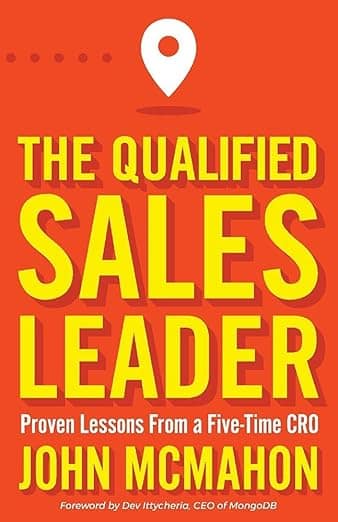
In The Qualified Sales Leader, John McMahon stresses the importance of customer-driven validation. He cautions sales leaders against relying on internal optimism or anecdotal “good signals” from prospects. Instead, McMahon emphasizes observable proof—real buyer behavior that confirms alignment, commitment, and value. Validation events are when the customer takes action to validate that what you’ve promised is accurate and valuable.

An excellent sample sale process flow looks like this:

  1. Discover
  2. Scoping
  3. Economic Buyer Meeting
  4. Validation Event
  5. Business Case and Final Proposal
  6. Negotiate and Close

As you can see, the Validation Event is the last step before creating the final business case, which will be bundled with your final proposal.

Read the rest of the article…