Skip to content

change

What An MBA Didn’t Teach You About Sales

The sales profession is challenging. You need to work hard at it to succeed. You need to learn from the best. You need to improve your skills continuously. If you think you can sell since you are a hit at parties and have a lot of friends, you may soon find that you are a failure as a salesperson. Blunt truth:

because the sales profession is so hard, you have to focus on doing everything in sales very well, or you will be considered a failure.

I call this blog, Skinned Knees because I try to relate all of the learning that I have done over the past 4+ decades (while skinning my knees in the learning process).

I hope that you learn from my mistakes so that your business will grow!


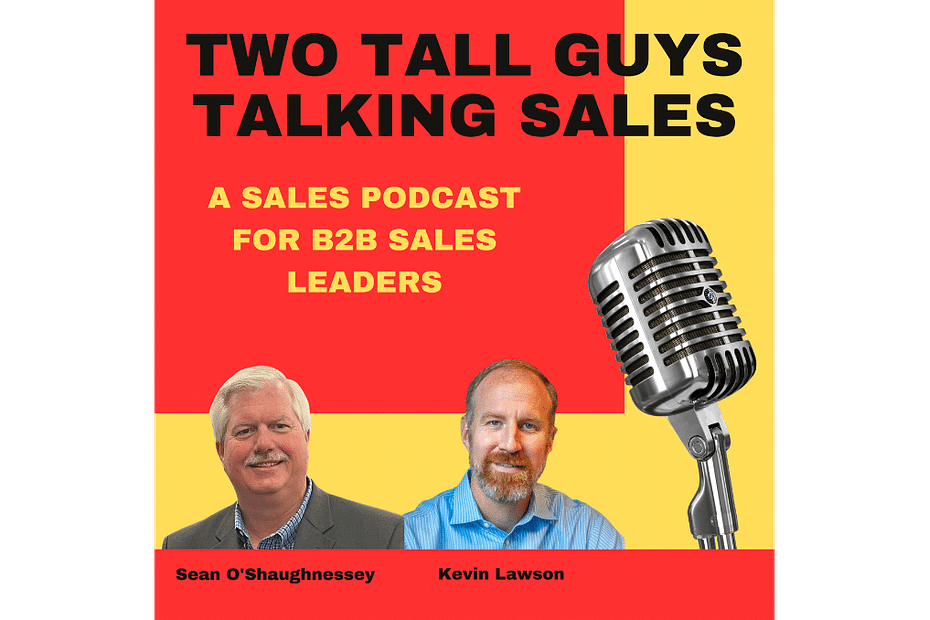
Two Tall Guys Talking Sales – The Hidden Driver of Every Sale: Mike Dowhan Explains How Compelling Events Shape Business Acumen and Sales Strategies – Episode 160

In this episode of Two Tall Guys Talking Sales, hosts Kevin Lawson and Sean O’Shaughnessey welcome Mike Dowhan, founder of Bedrock Sales. Together, they explore one of the most overlooked yet transformative aspects of sales management: the compelling event. Mike brings over two decades of experience helping organizations refine their sales processes, understand buyer motivation, and drive consistent revenue generation. Whether you’re a frontline seller or a sales leader guiding a team, this episode unpacks how identifying and leveraging compelling events can be the difference between chasing deals and closing them confidently.

Key Topics Discussed

  • The Power of the Compelling Event (01:12) – What defines a compelling event and why it’s the “why” behind every great sale.
  • Asking Better Discovery Questions (03:00) – How to uncover the root cause that motivates buyers to act now rather than later.
  • Getting Permission to Go Deep (07:17) – Why earning trust allows salespeople to ask the tough, business-critical questions.
  • Compelling Events vs. Compelling Needs (09:53) – The distinction between recognizing a real deadline versus a vague desire for change.
  • Surfacing the Cost of Inaction (10:38) – How to use timing, impact, and risk to create urgency without manufacturing pressure.

Key Quotes

  • Mike Dowhan (03:49): “What caused you to pick up the phone or take my call today? What’s different today than yesterday? That’s where you find the real reason a buyer is ready to move.”
  • Sean O’Shaughnessey (02:29): “If there’s no compelling event, it becomes very difficult. You’re pushing the boulder uphill, fighting the same battle over and over.”
  • Kevin Lawson (12:00): “Finding permission and tracking back to that event is where we create real value, and avoid the trap of commoditization.”

Additional Resources

A Significant Actionable Item from this Podcast

Start every discovery conversation with one simple question:

“What changed today that made you want to talk to me?”

This question reveals your buyer’s compelling event, the emotional and operational trigger that drives their need to act. Understanding that moment transforms your sales strategy from reactive to consultative. Use it to align your messaging, reinforce your value-selling approach, and accelerate revenue growth.

Read the rest of the article…

Value Selling at Scale: AI-Driven Qualification and Sales Management Strategies

In many B2B organizations, the marketing team generates a healthy stream of incoming leads, but the sales team struggles to keep pace. The result: qualified opportunities go cold, revenue generation stalls, and business acumen around lead management erodes. This is often caused by what I call the “qualification bottleneck”: when sales management and sales processes are built for humans only, operational rhythm fractures under modern buyer expectations.

When a buyer visits your pricing page at 11 p.m. on a Sunday and your sales team doesn’t respond until mid-week, the damage is done. You’ve lost not only speed but strategic context. Your sales rep begins the conversation asking basics again, instead of starting the strategic consultative discussion your solution demands.

The remedy is a hybrid sales model: humans amplified by artificial intelligence. AI handles initial qualification via intelligent chatbots and forms that follow a structured framework such as MEDDPICCC. These systems ask the key discovery questions automatically, capture metrics, identify decision-makers, uncover timelines, goals, champions, competition, paper process — and deliver a richer lead profile to your sales team. With that strategic foundation in place, your reps can start where value selling begins: at the business case. Shorter cycles. Higher conversion. Stronger revenue management.

Read the rest of the article…

The Future of Prospecting: Using Artificial Intelligence to Read Buyer Intent

The modern salesperson faces two extremes: total blindness or total overload. Some still cold call a list of fifty prospects hoping one will answer, while others drown in dashboards flashing with “intent data.” Both approaches fail because neither interprets what the data truly means.

The future of sales management lies in balance — using artificial intelligence to translate buyer behavior into clear, prioritized action. AI can read digital body language, scoring every click, visit, and download to reveal genuine purchase intent. This isn’t about replacing salespeople. It’s about enabling them with sharper business acumen and faster, more precise decision-making.

When sales leaders align technology with disciplined sales processes, they move from guesswork to guidance. Value selling becomes tangible because messaging is timed to the buyer’s journey, not to the rep’s quota. The best teams build standardized playbooks for each stage — from early curiosity to re-engagement — and rely on revenue management data to decide when to act.

Read the rest of the article…

The Evolution of Sales: Scaling from 10 to 100 Customers

The journey of a business unfolds as a story of growth, change, and ongoing adaptation. As salespeople, sales managers, and CEOs, we all share the ups and downs that come with this path. One of the most exciting moments in sales is the shift from landing your first ten customers to growing your family of clients to 50 or even 100. This milestone is truly a game-changer, shaping the future direction of your business.

When you’re starting, your focus is on acquiring those first ten customers. You’re trying to find your footing in the market, identify your target audience, and refine your product or service offering. You might be customizing your product or service for each customer to ensure it fits their specific needs. However, as you aim for the next level of growth, you need to start thinking about systemizing your sales process. 

To grow successfully, it’s helpful to have a standardized product or service. While customizing can be useful when you’re just starting out, it can become hard to manage and slow you down as your customer base expands. 

Focus on creating a product or service that you can sell over and over again with just small tweaks. This approach simplifies your sales process and makes it easier for others to sell your offerings, too.

Read the rest of the article…

Stop Researching, Start Connecting: An AI-Powered System for Warm Introductions

Most sales teams begin the week by opening a dozen browser tabs and grinding through scattered research, LinkedIn, Google News, company websites, and databases. Hours later, they emerge with a few generic talking points and a cold list that still feels cold. The deeper issue isn’t inefficiency; it’s invisibility. Warm introductions already exist across your company’s network, in email histories, calendars, and executives’ LinkedIn connections, but you can’t see them on Monday morning.

The Relationship-First approach changes that default. Before a single cold call or email, you perform a deliberate “Warm Path Check.” You ask, “Who do we know who knows them?” This question transforms prospecting from random outreach into a repeatable, data-driven process that prioritizes relationships. When you start as a referred conversation rather than an interruption, skepticism drops, credibility rises, and the sales cycle compresses dramatically.

The Hidden Network You’re Not Using

Every organization has an untapped network, a web of past colleagues, vendors, and clients who could open doors to your dream accounts. The problem is that this network is hidden in plain sight. It lives in the collective memory of your company’s communication patterns, but there’s no easy way to access it manually. That’s where KnowledgeNet comes in.

KnowledgeNet serves as your organization’s “relationship intelligence” layer. It analyzes communication data (emails, meetings, messages) to reveal who knows whom, and how strong those connections really are. Instead of guessing, you can instantly see that a colleague in engineering once worked closely with the CFO of a target account. That’s a warm path waiting to be used.

Read the rest of the article…

Two Tall Guys Talking Sales – What Got You Here Won’t Get You There: How Sales Leaders Master the Pivot for Revenue Growth – Episode 158

In this episode, hosts Kevin Lawson and Sean O’Shaughnessey tackle one of the most fundamental truths in business and sales leadership: change is inevitable. Whether you’re managing a sales team, scaling from $5M to $50M, or repositioning your company for new markets, your success depends on your ability to pivot,  intelligently, decisively, and confidently. Sean and Kevin unpack the concept of organizational pivots through real-world examples, from manufacturing supply challenges to Domino’s Pizza’s legendary turnaround, and offer practical advice for how sales leaders can prepare their teams to thrive through transformation.

Key Topics Discussed

  • The Only Constant Is Change (00:16) — Why modern business demands leaders who can adapt and guide teams through shifting markets.
  • The Power of the Pivot (02:52) — Kevin explains what a pivot really means and how small, consistent course corrections can transform outcomes.
  • Real-World Example: Domino’s Pizza Reinvention (06:10) — A masterclass in transparency and messaging that rebuilt a brand from the ground up.
  • Training as the Foundation of Change (09:21) — Sean breaks down how strategic training helps sales teams pivot effectively into new markets or industries.
  • Peer Learning and the Role of Community (12:33) — The importance of collaboration, conversation, and communities like the B2B Sales Lab for accelerating sales success.

Key Quotes

  • “As CEOs and sales leaders, we have to lead through change. What got us here is not going to get us there.”
    — Sean O’Shaughnessey (01:34)
  • “Sometimes people don’t need a 180-degree pivot. They just need to be repointed — one degree of change over time can take you somewhere entirely new.”
    — Kevin Lawson (04:42)
  • “The first part of making a pivot is planting your foot — and that’s training. You can’t change direction until your team knows how.”
    — Sean O’Shaughnessey (11:22)

Additional Resources

  • Book Mentioned: Who Moved My Cheese? by Spencer Johnson — A timeless read on navigating change in business and life. https://a.co/d/cCEXuwA
  • Community Resource: B2B Sales Lab — A peer-driven community for B2B sales professionals and leaders to exchange ideas, test messaging, and sharpen their skills. www.b2b-sales-lab.com

A Significant Actionable Item from this Podcast

Before the day ends, write down five things you could do to change the trajectory of your sales growth or turnaround.
Then, rank them:

  • Which are big strategic plays?
  • Which are medium-term moves?
  • Which are quick wins you could execute immediately? Assign probability, effort, and impact to each, then commit to one action this week. Leadership begins with deliberate motion, not massive overhauls.
Read the rest of the article…

Two Tall Guys Talking Sales – The First 90 Days as a Sales Leader: Proven Strategies for Sales Management Success – Episode 157

When a company hires or promotes its first sales manager, expectations run high, but clarity can be low. In this episode of Two Tall Guys Talking Sales, hosts Sean O’Shaughnessey and Kevin Lawson unpack what the first 90 days should look like for a new sales leader. Whether you’re a CEO onboarding a new manager or that manager stepping into the role themselves, this discussion provides practical guidance on setting realistic expectations, building trust, and establishing the foundation for long-term sales success and revenue growth.

Key Topics Discussed

  • Setting Realistic Expectations as an Owner (02:00)
    Kevin explores how CEOs should frame success during the first 90 days, emphasizing the importance of patience, trust-building, and understanding that sales management transformation takes time.
  • Avoiding the “Fix This First” Trap (06:30)
    Sean cautions business owners against dumping old personnel problems on new leaders, explaining why cleaning up someone else’s mess undermines early business acumen and trust.
  • Building Relationships and Learning the Business (08:30)
    Sean shares tactical advice for new sales managers: conduct one-on-ones, ride along with reps, and build rapport across departments, marketing, operations, and finance, to master internal sales processes and interdepartmental alignment.
  • Understanding Internal and External Tools (11:12)
    Kevin discusses discovering hidden tools and levers, people, systems, vendor programs, or product configurations that can immediately improve team performance and value-selling opportunities.
  • Repackaging and Aligning Offers to the Market (12:30)
    The hosts outline how sales leaders can rethink product structures and messaging to better serve customer needs, thereby improving revenue management and profitability.

Key Quotes

  • “Trust is a currency. It has to be earned by customers, by salespeople, by peers, and you can’t buy it in the first 30 days.”,  Kevin Lawson (03:00)
  • “Don’t make your new sales leader the bad guy. If there’s a tough personnel decision, handle it before they start.”,  Sean O’Shaughnessey (07:00)
  • “Learn your company inside and out. If you don’t know who runs manufacturing or how the supply chain works, you can’t lead your salespeople effectively.”,  Sean O’Shaughnessey (10:00)
  • “You might have 20 products, but 100 possible solutions. The smart leader finds ways to repackage and sell in ways the customer actually values.”,  Kevin Lawson (13:00)

Additional Resources

  • Episodes on sales onboarding, marketing alignment, and ideal customer profiling (ICP) were referenced throughout the conversation.
  • Explore more insights and tools for sales leaders at b2b-sales-lab.com.

A Significant Actionable Item from this Podcast

Create a 90-Day Integration Plan.
If you’re a new sales manager, spend your first month listening and learning. Conduct one-on-ones with every salesperson, schedule cross-department meetings, and document what each function needs from sales. In the second month, identify process gaps and start designing improvements. By the third month, implement one or two visible wins, such as improving forecasting accuracy or clarifying sales messaging, to demonstrate value and build momentum.

Read the rest of the article…

Automating Sales Workflows: When to Use Automation Over Chat

In sales management, there’s often some confusion about when to use artificial intelligence chat interfaces versus automation workflows. Chat interfaces are ideal for creative problem-solving, learning, and strategic research, while automation excels in repetitive, high-volume, data-driven sales tasks. The trick is to recognize when consistency and scalability are more important than customization.

Automation delivers consistent execution, eliminates human error, and operates 24/7. Sales leaders can rely on it for triggered communications, data synchronization across systems, CRM updates, and compliance tasks that require accuracy and complete audit trails. By moving these routine tasks into automated workflows, sales teams free up valuable time for relationship building, revenue generation, and refining sales strategies.

Real-world examples highlight the impact: a team once spent three hours daily crafting manual follow-up emails. Shifting to automated sequences not only saved time but also improved messaging consistency and pipeline response rates. Similarly, another team utilized automation to synchronize sales data across six systems, thereby eliminating bottlenecks and enabling sellers to focus fully on sales.

Hybrid approaches really take things to the next level! By merging human creativity in chat interactions with the quick and precise power of automation, businesses can craft workflows that beautifully balance personalized service with the ability to grow. This type of teamwork enhances value-driven selling, sharpens business skills, and accelerates revenue management throughout the sales journey.

Read the rest of the article…

From 10 to 100 Customers: Scaling Your Sales Process for Growth

For founders of companies, the journey of a business is a narrative of evolution, growth, and constant adaptation. As salespeople, sales managers, and CEOs, we are all too familiar with the challenges and triumphs that punctuate this journey. In the world of sales, one of the most critical turning points is the transition from acquiring your first ten customers to expanding your customer base to 50 or even 100. This pivotal moment sets the trajectory of a business and is a key focus of our discussion.

When you’re starting, the founding team is focused on acquiring those first ten customers. They’re trying to find their footing in the market, identify their target audience, and refine their product or service offering. You might be customizing your product or service for each customer to ensure it fits their specific needs. However, as you aim for the next level of growth, it’s crucial to start thinking about systemizing your sales process. This will ensure efficiency and prepare you for the next level of growth. 

To scale effectively, company leaders need to standardize their product or service offering. While customization can be beneficial in the early stages, it becomes impractical and inefficient as your customer base grows. The key here is to create a product or service that can be sold repeatedly with minimal adjustments. This streamlines the sales process, making it easier for others to sell the product or service.

In the early stages of a business, the founders might be the ones doing all the selling. But as the company grows, this becomes less feasible. To reach a larger number of customers, you need to bring others on board to sell for you. This is where standardization comes into play. By standardizing your product or service, you make it easier for others to understand and sell it. 

Read the rest of the article…

Two Tall Guys Talking Sales – How Sales and Marketing Partnerships Drive Lead Generation and Sales Success – Episode 155

As the year draws to a close, sales leaders and professionals are already looking ahead to the next year. In this episode of Two Tall Guys Talking Sales, hosts Sean O’Shaughnessey and Kevin Lawson dig into the perennial challenge of lead generation, the importance of collaborating with marketing, and why proactive planning is essential for sales success. From refining your messaging to building thought leadership, this conversation is packed with strategies to help you drive revenue generation and sharpen your sales processes.

Key Topics Discussed

  • Why Salespeople Always Say “I Need More Leads” (01:00)
  • The Importance of Partnering with Marketing for Effective Sales Strategies (03:40)
  • Going Beyond Marketing—Referrals, Networking, and Thought Leadership (05:07)
  • Leveraging LinkedIn and Personal Branding to Generate Leads (06:25)
  • The Three Things Every Salesperson Really Sells (09:00)
  • Planning with Intention: Mapping the Next 12 Months for Sales Success (12:57)

Key Quotes

  • Sean O’Shaughnessey (01:48): “You as a salesperson… it’s your job to sit with the marketing people you have and map out the next 12 months of how to get better leads and cover your territory more effectively.”
  • Kevin Lawson (03:40): “Go down the hallway, knock on the door and say, here’s what I’m working on, what are you working on, and how can I help? Be a resource, be a partner to marketing.”
  • Sean O’Shaughnessey (09:24): “There are three things you sell: your product, your company, and—most importantly—you.”
  • Kevin Lawson (13:16): “If you’re only giving 50% effort to your professional practice, you can’t expect championship-level results.”

Additional Resources

  • B2B Sales Lab Community – A peer group for sales professionals to exchange best practices and strengthen their sales management and revenue generation capabilities. Go to https://b2b-sales-lab.com/

A Significant Actionable Item from this Podcast

Schedule a working session with your marketing team this week. Map out the next 12 months of sales and marketing activities, focusing on how you’ll generate leads, build messaging, and increase visibility in your target accounts. Even if it starts with a simple spreadsheet, writing down the plan creates accountability and aligns sales strategies with marketing efforts.

Read the rest of the article…