Skip to content

change

What An MBA Didn’t Teach You About Sales

The sales profession is challenging. You need to work hard at it to succeed. You need to learn from the best. You need to improve your skills continuously. If you think you can sell since you are a hit at parties and have a lot of friends, you may soon find that you are a failure as a salesperson. Blunt truth:

because the sales profession is so hard, you have to focus on doing everything in sales very well, or you will be considered a failure.

I call this blog, Skinned Knees because I try to relate all of the learning that I have done over the past 4+ decades (while skinning my knees in the learning process).

I hope that you learn from my mistakes so that your business will grow!


From Reporting to Coaching: Elevate Your One-on-One Sales Meetings to Drive Performance and Trust

A one-on-one sales meeting is not a reporting meeting. It’s not about reviewing what already happened. And it’s definitely not about the manager doing most of the talking. The purpose of a one-on-one pipeline review is to develop the salesperson, surface challenges, and accelerate opportunities. If your one-on-ones are anything less, you’re leaving performance on the table.

Sales leaders often default to micromanagement. 

Especially when the rep is new or struggling. But that approach backfires. It creates dependency and stifles problem-solving. The goal is to coach your reps into leading the meeting. That shift changes everything. When reps own the agenda and bring forward deal-level insights, they’re forced to think critically. That’s where growth happens.

If you’re leading a sales team or are a CEO playing the role of sales manager, you need to establish a clear structure. But the rep does the prep. You define the meeting cadence and format. Weekly or bi-weekly, depending on your velocity. You outline the sections: committed deals, stalled deals, and at-risk deals. 

But the rep fills in the content. They come to the meeting ready to walk you through each opportunity, with specific updates and clear asks.

Preparation is non-negotiable. For both sides. 

The salesperson should have updated their CRM before the meeting. The manager should have reviewed that data in advance. If either party shows up unprepared, the meeting becomes reactive. 

A waste of time. And it erodes trust quickly. 

Reps notice when you haven’t read the notes. They know when you’re winging it. And if they feel their effort isn’t valued, they’ll stop putting in the effort.

You want to create a culture where preparation is expected and rewarded. 

The fastest way to management failure is to ask questions that could have been answered by reading the CRM. Instead, use that time: 

  • To probe deeper. 
  • Ask about the deal strategy. 
  • Challenge assumptions. 
  • Help salespeople spot gaps they missed. 

That’s where your experience has real value.

It’s tempting to jump in and solve the problem. Especially when you see the red flags before the rep does. But resist the urge. Let them talk it through. Coach them toward the insight. Your job isn’t to close the deal; it’s to build someone who can. That means teaching them how to identify weak spots, how to pressure test a deal, and how to re-engage a stalled buyer. The real value of one-on-ones is in that development.

Think about how you coach. 

Are you diagnosing for them? Or are you helping them diagnose for themselves? When a rep says “this deal is solid, no issues,” that’s a red flag. Every deal has risk. Your job is to help them uncover it. Ask: “What’s the biggest thing that could derail this?” Or “What’s the last thing the buyer said that gave you pause?” These questions surface the truth. And they teach reps to self-assess more effectively.

There’s a fine line between coaching and grading. You want reps to be honest about their pipeline without fear of judgment. 

If a deal is weak, that’s not a character flaw. It’s a coaching moment. 

Read the rest of the article…


ChatGPT vs. Claude vs. Gemini vs. Copilot: Which AI Wins in Sales?

A few days ago, a sales manager asked me which AI platform to use for writing cold emails. I told him it depends on what kind of emails he’s writing, and he looked confused. That confusion is common and costly. ChatGPT, Claude, Gemini, and Copilot all look similar at first glance, but in reality, they serve very different purposes depending on your sales workflow. Choosing the right platform matters because the wrong choice drains time,… ChatGPT vs. Claude vs. Gemini vs. Copilot: Which AI Wins in Sales?

AI in B2B Sales Isn’t Optional Anymore

Several months ago, I was serving as a fractional VP of Sales for a $50 million manufacturing company. Their top salesperson was a 15-year veteran who knew the industry inside and out. Yet he was consistently being outsold by a competitor’s much newer hire. At first, it didn’t make sense until we discovered the reason. The competitor’s rep wasn’t just more energetic or aggressive. They were AI-enabled. While my client’s rep was manually scrolling LinkedIn… AI in B2B Sales Isn’t Optional Anymore

Two Tall Guys Talking Sales – Workflows, Automation, and AI: Building a Smarter Sales Organization – Episode 145

In this compelling episode, co-hosts Kevin Lawson and Sean O’Shaughnessey delve into the crucial distinctions between workflows, automations, and artificial intelligence (AI), and why understanding these differences isn’t just technical trivia, but foundational to improving sales processes, enhancing sales management, and accelerating revenue generation. If you’re a sales leader, business owner, or B2B rep striving to improve how you use technology to boost sales success, this episode is a must-listen. Packed with real-world examples and… Two Tall Guys Talking Sales – Workflows, Automation, and AI: Building a Smarter Sales Organization – Episode 145

Two Tall Guys Talking Sales – Future-Proofing Your Sales Career with AI, Strategy, and Smarter Workflows – Episode 144

Is artificial intelligence coming for your sales job? Not if you understand the power of business acumen, value selling, and strategic adoption of tools that amplify, not replace, human expertise. In this high-impact episode of Two Tall Guys Talking Sales, Kevin and Sean tackle the loud claims of AI-induced layoffs with a grounded, practical message for salespeople and sales managers: evolve or fall behind. This is not a doomsday episode; it’s a wake-up call, a… Two Tall Guys Talking Sales – Future-Proofing Your Sales Career with AI, Strategy, and Smarter Workflows – Episode 144

The Key to Profitable Sales Organizations: Understanding and Adhering to the Sales Process

Many salespeople, sales managers, and CEOs face a unique problem. This issue concerns the sales process, particularly when specific steps are skipped. The challenge is common among sales teams across various industries, and there are different perspectives on its causes and solutions.

This issue is concerning since, according to Harvard Business Review, 28% of companies that master at least three stages of their sales process will see an increase in revenue growth. (https://hbr.org/2015/01/companies-with-a-formal-sales-process-generate-more-revenue). That same study states that companies that had trained their sales managers to manage their pipelines saw their revenue grow 9% faster than those that didn’t. But not just any training will do. Sales managers need targeted training to address specific pipeline management challenges.

Sometimes, the sales process might seem tedious, and salespeople may skip steps out of impatience or eagerness to close a deal. However, skipping these steps can lead to further complications down the line. When a sales team is not following the process that has been identified, it can disrupt the team’s rhythm and efficiency. Some might argue that this is a sign that the process needs to change or that more training is required.

This issue extends beyond the sales team. When a company hires a fractional VP of sales, it brings an outside perspective to evaluate its sales process. The fractional VP will often encounter resistance from the existing team, who may feel their industry is unique. While every business has its distinctive elements, the fundamentals of a sales process are universal.

Read the rest of the article…

Validation Events: The Unsung Hero of Sales Process Discipline

In the complex world of B2B selling, trust is built in stages. The challenge in all sales campaigns is ensuring the prospect trusts they are making the best decision for their business.

  1. Do they trust that the salesperson is giving them all of the information?
  2. Do they trust that the company will support them after the sale?
  3. Do they trust that the product will perform as they expect it to perform?

As I have explained in my book, Eliminate Your Competition, as well as the blog for that book and in this blog, the prospect needs to trust all three elements the salesperson is selling:

  1. They need to trust the product.
  2. They need to trust the company behind the product.
  3. They need to trust the salesperson.

Prospects listen to your sales message, review your materials, and hear your claims, but none of that guarantees belief or trust. Trust is validated when your claims are validated. That’s why validation events are crucial to any rigorous sales process.

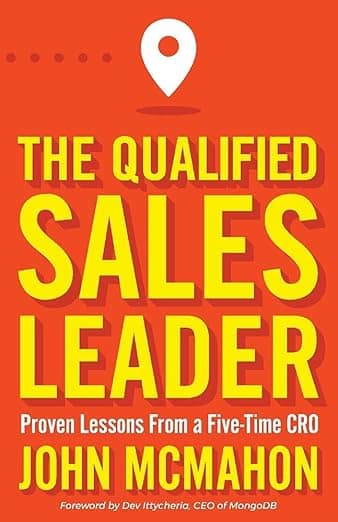
In The Qualified Sales Leader, John McMahon stresses the importance of customer-driven validation. He cautions sales leaders against relying on internal optimism or anecdotal “good signals” from prospects. Instead, McMahon emphasizes observable proof—real buyer behavior that confirms alignment, commitment, and value. Validation events are when the customer takes action to validate that what you’ve promised is accurate and valuable.

An excellent sample sale process flow looks like this:

  1. Discover
  2. Scoping
  3. Economic Buyer Meeting
  4. Validation Event
  5. Business Case and Final Proposal
  6. Negotiate and Close

As you can see, the Validation Event is the last step before creating the final business case, which will be bundled with your final proposal.

Read the rest of the article…

Two Tall Guys Talking Sales – Steve Caton Shares When to Sell, When to Coach, and When to Hire: Strategic Sales Management That Drives Growth – Episode 137

In this powerful episode of Two Tall Guys Talking Sales, Kevin Lawson and Sean O’Shaughnessey are joined once again by Steve Caton, CEO of Altezza Solutions, for a thought-provoking conversation that zeroes in on one of the toughest decisions in sales leadership: when to sell, when to coach, and when to hire. Whether you’re a business owner, VP of Sales, or a player-coach juggling a quota and a team, this episode brings clarity to the… Two Tall Guys Talking Sales – Steve Caton Shares When to Sell, When to Coach, and When to Hire: Strategic Sales Management That Drives Growth – Episode 137