Skip to content

ideal client profile

What An MBA Didn’t Teach You About Sales

The sales profession is challenging. You need to work hard at it to succeed. You need to learn from the best. You need to improve your skills continuously. If you think you can sell since you are a hit at parties and have a lot of friends, you may soon find that you are a failure as a salesperson. Blunt truth:

because the sales profession is so hard, you have to focus on doing everything in sales very well, or you will be considered a failure.

I call this blog, Skinned Knees because I try to relate all of the learning that I have done over the past 4+ decades (while skinning my knees in the learning process).

I hope that you learn from my mistakes so that your business will grow!


Stop Betting on Superstars: How Operating Standards Turn Sellers into Predictable Producers

Many teams grow, but few truly scale revenue beyond individual hero efforts. That difference changes everything for leaders today and in the future. Growth relies on hustle; scaling depends on repeatability across segments and individuals. Your strategy must reflect that hard truth in practice.

Are you relying on one standout to win deals month after month? That looks strong until risk turns visible and costly. One resignation can cripple momentum and expose brittle systems that you had previously ignored.

Scalable sales replaces heroics with defined, teachable operating rhythms that everyone follows. It turns chaos into predictable pipeline progress and results. It clarifies markets, messages, motions, and measurable expectations for every seller on a weekly basis. It builds leverage into onboarding and coaching for consistency. It protects margins while systematically accelerating win rates and velocity across territories.

The foundation begins with a clear picture of your ideal customer, including any disqualifying factors. Having an accurate Ideal Client Profile (ICP) helps minimize waste and reduce uncertainty in your efforts. Take time to define firmographics, pain points, triggers, and buying behaviors using consistent language based on shared evidence. Understand who cares about these issues and why it matters to them now. Also, identify negative personas to sharpen your focus and qualification processes in marketing and sales. A well-defined ICP can significantly boost your conversion rates and shorten the sales cycle.

Next, turn your ICP into straightforward messaging and discovery frameworks tailored for each stage. Consider what unique problems you solve for your customers. What outcomes are most important to them, and who are the key stakeholders by role and priority?

Build talk tracks that lead buyers, not chase buyers with purpose always. Anchor questions to the business metrics and risks they feel. Teach a qualification that tests mutual commitment and outlines next steps with attached dates. Avoid fluffy demos; design relevant proofs using their data. Process specificity turns B players into consistent producers without copying another personality.

I suggest you establish a practical, stage-based operating rhythm that everyone can easily understand and follow. By sharing clear definitions and expectations, managing the pipeline becomes a consistent and smooth process each week. Define each stage with specific exit criteria—avoiding vague intentions or subjective feelings. For example, discovery is considered complete when stakeholders confirm the consequences and impact, and solution fit is achieved when success criteria and ownership are clearly aligned. The commit stage should be backed by a shared plan with clear dates and assigned owners. During weekly reviews, focus on assessing quality rather than just quantity or activity counts. Ask yourself:

  • Does evidence from buyers’ backstage moves have a direct impact on their purchasing decisions?
  • Are the next steps specific, mutually agreed upon, and already scheduled on both calendars?
Read the rest of the article…

From Leads to Clients: How Aligning Sales and Marketing Fuels Sustainable Growth

There’s a common sentiment among sales teams this time of year: a sense of urgency. The calendar flips, Q4 starts, and suddenly it feels like you’re already behind. Sound familiar? That mid-Q4 pressure is real. But before you sprint into outreach and activity, step back and assess what’s actually fueling your pipeline? More importantly, is it aligned with long-term growth?

Sales leaders and CEOs often default to lead generation as the focal point. It’s understandable. More leads, more conversations, more deals, right? But that mindset skips a critical first step. You can’t scale what isn’t aligned. If your marketing message doesn’t match your sales conversations, you’re wasting time and budget. If your sales team is chasing poorly qualified leads, you’re burning cycles. And if your customers can’t articulate why they bought from you, you’ve got a positioning problem.

The foundation starts with clarity. What value do you truly deliver? Why do customers choose you over alternatives? If you can’t answer that in a clear, 50-word statement, your team is likely improvising in the field, and that’s costing you revenue. This is where sales and marketing alignment becomes more than just a buzzword. It’s operationally necessary.

Sales enablement isn’t only about tools and training. It’s about empowering sales with the right message at the right time. That starts with defining three core customer states:

  1. leads,
  2. prospects,
  3. clients.

Each phase requires different messaging, timing, and expectations. Most organizations blur those lines. That’s where inefficiency creeps in.

Leads sit at the top of the funnel. They are either unaware or only lightly aware of your offering. At this stage, marketing owns the responsibility. However, marketing without sales feedback is akin to shooting in the dark. Sales needs to inform marketing what makes a lead qualified.

  • What signals intent?
  • What common objections surface early?

Without that feedback loop, marketing tends to optimize for volume rather than quality.

Read the rest of the article…

Transforming Quota-Setting: Strategies for Sales Leaders to Optimize Performance and Revenue

Quota-setting is one of the most misunderstood elements of sales leadership. Too often, it’s treated as a spreadsheet exercise or a top-down directive, rather than a strategic lever that drives behavior, performance, and growth.

Whether you’re leading a team of 20 or you’re the founder managing three reps, how you define quotas has a direct impact on your revenue trajectory and your team’s motivation.

So, where do you start?

With timing. If you’re not delivering quotas to your team until February or March, you’re already behind. Salespeople need clarity by December. That gives them runway to plan, prioritize, and hit the ground running in January. Delayed quotas create confusion and stall momentum. To achieve a strong Q1, you need to equip your team early.

Quota-setting varies depending on the size of your company. Larger teams offer more flexibility. With 10 or more reps, you can spread risk, balance performance, and model averages. You’ll have top performers who consistently overdeliver, alongside newer reps who are still ramping up. The law of averages works in your favor. You can afford some variance. Smaller teams don’t have that luxury.

When you’re running a small team, maybe two or three reps or founder-led sales, every individual matters. One person missing quota can tank your number.

You can’t rely on averages. You need precision.

That means tying quotas to actual relationships, known opportunities, and real probability. It’s not about slicing up a target evenly. It’s about assigning numbers based on what’s realistically achievable in each territory or account list.

Territory design plays a big role here. Whether it’s geographic, vertical, or named accounts, quota must reflect the market potential. You can’t expect equal performance from unequal opportunity. If Rep A has 500 viable accounts and Rep B has 50, their quotas shouldn’t look the same unless you have data that says Rep B’s accounts are closer to your Ideal Client Profile. Use available market data to inform the number. Don’t assign quotas in a vacuum. 

In larger organizations, quotas often originate from the top down, typically from finance. The CEO and CFO commit a growth number to the board, investors, or in public filings to the SEC. They have no choice but to pass it down. It’s not uncommon for the sales team to receive the number without context. That’s a problem. If you’re in a leadership role, you need to pressure test that number. Can your team realistically hit it? If not, what additional resources are required?

  • More headcount?
  • Better enablement?
  • Marketing support?

In large organizations where the quota is driven by investor expectations, the VP of Sales must establish an organization well before the new year that achieves this year’s goal, while also meeting the expectation of growth for the next year. Planning ahead, sometimes years in advance, is part of the job.

Read the rest of the article…

Two Tall Guys Talking Sales – Sales Strategies That Outperform AI Tools: ICP, Value Selling, and Revenue Management – Episode 150

In today’s fast-changing sales landscape, everyone is talking about AI, automation, and digital tools, but are these the keys to sales success? In this episode of Two Tall Guys Talking Sales, hosts Kevin Lawson and Sean O’Shaughnessey explore why documenting your sales processes, defining your ideal client profile (ICP), and sharpening your value selling approach must come before chasing shiny new technologies. Whether you’re leading a sales team or building revenue generation strategies as a… Two Tall Guys Talking Sales – Sales Strategies That Outperform AI Tools: ICP, Value Selling, and Revenue Management – Episode 150

The Three Pillars of Sales Success: Ideal Client Profiles, Effective Messaging, and Aspirational Offers

Let’s start this article with a rhetorical question to the sales professionals, sales managers, or CEOs: Have you ever found yourself guilty of sending messages to prospects without fully considering their specific needs or how your offer aligns with them?

If so, you’re not alone—this is a common pitfall in sales. The good news is, it’s entirely fixable by developing a straightforward, strategic approach.

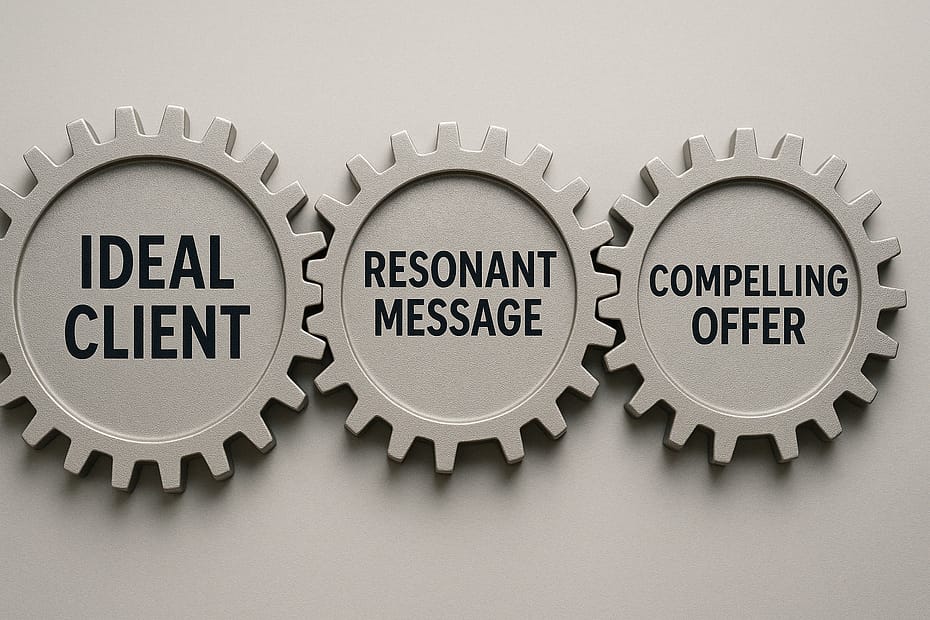
An effective sales strategy hinges on three core components: defining your ideal client profile (ICP), crafting a resonant message, and presenting a compelling offer. These elements are interconnected. Mastering their alignment will significantly enhance your sales effectiveness.

Ideal Client Profile

Let’s start with the ideal client profile. How well do you know the companies you’re targeting? Identifying your ideal customer is foundational to your entire sales approach. It’s not enough to say that your market is “small businesses” or “tech companies.” Instead, think about your best clients—the ones you genuinely enjoy working with, who value your product, and who generate profitable, sustainable business. Think about companies that rarely devalue your product or service by asking for a discount. What do these clients have in common?

Now that you have your favorite customers from above, reflect on your top five or ten accounts. Are they in the same industry? Do they share similar challenges or company structures? Perhaps they all have common goals that your product consistently solves. Pinpoint these commonalities. This process will help you create a precise and actionable ideal client profile.

But don’t stop at company-level characteristics. Remember, even in B2B sales, you’re ultimately selling to individuals. Identify the specific roles or buyers within these organizations that are responsible for making buying decisions. Who are these decision-makers? What motivates them personally and professionally? Do they all have the same kind of college education? Do they all have similar career paths? Understanding the people behind the logo makes your outreach more personal, targeted, and effective.

What is your message?

Once you’ve developed a clear picture of your ideal client and the people within those companies, the next step is crafting a message that reflects your value-selling message. This message is how you communicate your value proposition—it’s the bridge between your product and your prospect’s needs. Too often, sales messaging falls flat because it focuses heavily on the seller rather than the buyer. Statements that emphasize “we,” “I,” or “our product” rarely resonate deeply. Instead, effective messaging highlights the customer’s perspective, clearly communicating the benefits they will experience.

Read the rest of the article…

Stop Guessing, Start Growing: How Strategic Sales Assessments Drive Real Revenue

You’ll eventually hit a wall if you’re running a sales organization—or wearing multiple hats as founder, CEO, and sales manager. That wall is often invisible until growth stalls, key deals slip through the cracks, or your top salesperson burns out. So, what’s the next move? It’s not more hustle. It’s assessment.

A sales assessment isn’t about checking boxes. It’s about understanding where you are, how you operate, and what’s holding you back. Too many small business leaders assume they’re doing fine because revenue is growing or the team is hitting their quotas. But are you growing at the rate your market allows? Are your sales activities aligned with your long-term goals? Are you building a repeatable system, or are you just getting lucky?

Let’s get tactical. A sales plan isn’t just a revenue target. It’s your go-to-market strategy. It defines your audience, your message, and your motion. It answers why you’re talking to those prospects and what value you’re bringing to them. Without a plan, you’re reacting instead of executing. You’re chasing leads instead of building a pipeline.

If you’re a small company—perhaps under $30 million in revenue—and selling into a national market, chances are your market potential is hundreds of millions, maybe billions. That means your market share is a rounding error, which means there’s room to grow. The question is: Are you operating in a way that allows you to capture that growth?

Even if you’re running lean, you should benchmark your performance against top-tier organizations. Not because you’re competing with them directly, but because they set the standard. What are they doing that you’re not? Where are they more efficient? How do they structure their teams? You’re leaving money on the table if you’re not asking those questions.

Read the rest of the article…

Becoming a Trusted Advisor: Solve Problems, Not Just Sell Products

In B2B sales and sales leadership, problem-solving is an art that goes beyond selling a product or service. The secret to becoming a trusted advisor is addressing business problems, not just selling a product. This concept resonates with salespeople, sales managers, and small business CEOs who sell themselves or manage a team of salespeople. 

Sales is not just about pushing a product or closing a deal; it’s about forging relationships, understanding businesses and their unique challenges, and offering solutions to these problems. The role of a trusted advisor is not to sell a product and become a trusted advisor, but rather to become a trusted advisor who can sell a product. 

The reward for earning trusted advisor status is immeasurable. It is fantastic to receive a call from a client asking for advice on solving problems they have never discussed with you. Imagine having relationships that stand the test of time and outlast competition and challenges. 

So, how does one become a trusted advisor and solve problems for clients rather than just selling them a great product? It starts with building a relationship from scratch. When starting with a prospect list or an ideal client profile, the goal is not to find anyone who will respond but to seek opportunities to build meaningful relationships. 

The cornerstone of these relationships is reliability. 

  • Are you always punctual? 
  • Do you cancel at the last minute? 
  • Do you forget to return phone calls? 

These behaviors erode trust. On the other hand, showing up when needed, providing solutions even when they are not directly related to your product or service, and connecting clients to others who can help them are behaviors that build trust. 

Becoming a trusted advisor also involves understanding and curiosity about the client’s business. Do you ask questions about how the prospective company makes and loses money, how it dealt with past challenges like the pandemic, and how it deals with current challenges like rising inflation or supply chain disruption? The aim is to understand the client’s business, challenges, and competitors and offer insights and parallels to other companies. 

Read the rest of the article…

Two Tall Guys Talking Sales – Sales Slumps & Hot Streaks: How to Build a Predictable Pipeline – E122

Sales is a game of ups and downs, but what separates top performers from the rest is their ability to keep the funnel full—even when they’re closing deals. In this episode of Two Tall Guys Talking Sales, Kevin Lawson and Sean O’Shaughnessey dive into the art and science of building a consistent pipeline. They discuss strategic approaches to prospecting, leveraging data tools, and the importance of curiosity in sales conversations. Whether you’re starting fresh in… Two Tall Guys Talking Sales – Sales Slumps & Hot Streaks: How to Build a Predictable Pipeline – E122

Understanding Your Customers: The Role of Buyer Personas and Quarterly Business Reviews

Want to know the real secret behind successful sales? It’s not just about knowing what your customers need. The true power lies in understanding who they are at their core.

Have you ever wondered why some sales professionals consistently outperform their peers? The answer often comes down to their mastery of buyer personas and detailed profiles that capture the essence of your ideal customers.

Think of buyer personas as your secret weapon in the sales battlefield. These aren’t just random customer profiles thrown together in a rushed afternoon meeting. They represent carefully crafted composites of your most valuable clients, built from real-world data and insights. Your company might need several of these personas, each targeting different market segments with laser precision.

Creating effective buyer personas demands more than just surface-level observation. Start with a thorough analysis of your business landscape. Examine your strengths and weaknesses. Map out the opportunities that excite you and the threats that keep you up at night. This foundation helps you understand exactly where you fit in your customers’ world.

What makes your top customers tick? The answer lies in meaningful conversations with your best clients. These discussions should dig deep into both quantitative and qualitative factors. Demographics tell part of the story – age, position, education, family status. But the real gold comes from understanding their motivations. Why did they choose you? What problems do you solve that keep them coming back?

Read the rest of the article…

Driving Sales Performance with Strategic Competitive Analysis

Ever wonder why some sales teams consistently outperform their competitors while others struggle to close deals? The answer often lies in how well they understand and leverage competitive analysis in their sales process.

Let’s talk about competitive analysis in sales. It’s not just about knowing your competition – it’s about understanding how to use that knowledge to drive results. You need to grasp why prospects choose specific solutions over others and, more importantly, why they sometimes choose to do nothing at all.

Have you considered how many deals you’ve lost not to competitors but to indecision? These “no decision” outcomes often stem from a fundamental gap in prospect qualification. Intelligent sales professionals dig deeper, asking targeted questions about organizational priorities, resource allocation, and strategic initiatives. They understand that timing can be just as crucial as the solution itself.

The modern sales landscape demands a sophisticated approach to competitive analysis. Your success hinges on aligning your organization’s strengths with your prospect’s needs. But here’s the real question: Do you truly understand what your ideal client values most?

Many sales professionals miss the mark by focusing solely on feature comparisons. While product capabilities matter, they’re just one piece of the puzzle. The real power lies in understanding how your solution addresses your prospect’s challenges. This requires a comprehensive view of your competitive landscape, including direct and indirect competitors.

Think about your last few lost deals. What patterns emerge when you analyze the feedback? Every objection and hesitation after presenting pricing are valuable data points that should shape your competitive strategy. Your sales conversations must reflect a deep understanding of your prospect’s value metrics.

Read the rest of the article…